
Soups & Stews
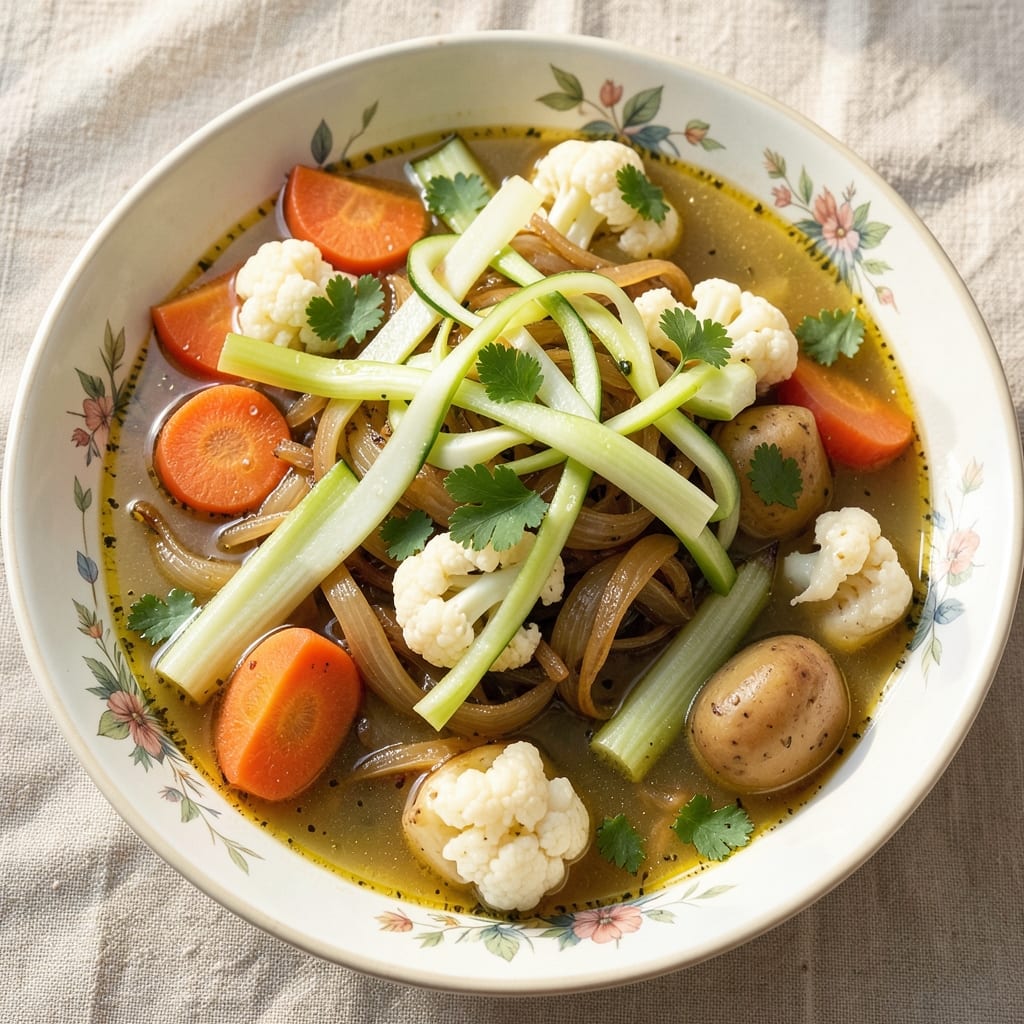
This 12-vegetable soup recipe transforms seasonal produce into a velvety, nutrient-packed masterpiece that’s both hearty and light. The secret lies in balancing sweet, earthy, and fresh flavors through careful sautéing and slow simmering—no blender required. I’ve perfected this version over years of testing, ensuring every bite delivers maximum flavor without bitterness or mushiness.
The beauty of this recipe is its adaptability—swap in whatever seasonal vegetables you have on hand (think carrots, zucchini, or mushrooms in summer; kale, sweet potatoes, or butternut squash in fall). The key technique? Sautéing onions, garlic, and celery until deeply aromatic before adding the vegetables and broth. This builds a rich, complex foundation that carries through the 1-hour simmer into a silky, deeply satisfying soup.
What you’ll end up with is a bowl of vibrant, aromatic soup where each vegetable retains its distinct texture and flavor—creamy cauliflower, tender carrots, crisp bell peppers, and wilted greens all harmonizing in one perfect bite. The broth reduces to a golden, fragrant depth, and the optional garnishes (fresh herbs, toasted seeds, or a drizzle of olive oil) elevate it to restaurant-quality.
Perfect for meal prep, potlucks, or cozy weeknight dinners, this soup scales effortlessly and tastes even better the next day. The instructions walk you through every step—from prep to plating—so you can achieve restaurant-quality results at home, no matter your skill level.
Ingredients for 12 vegetable soup
Seasonal vegetables meet aromatic broth in this velvety, nutrient-rich masterpiece.
| Ingredient | Amount | Notes |
|---|---|---|
| Yellow Onions 🧅 | 2 whole | Diced, medium size preferred |
| Carrots 🥕 | 1 ½ lb | Whole, peeled and chopped |
| Celery Stalks 🌿 | 4 whole | Trimmed and chopped |
| Russet Potatoes 🥔 | 2 lb | Peeled and cubed |
| Zucchini 🍆 | 2 lb | Sliced into half-moons |
| Cauliflower 🥬 | 1 head | Cut into florets |
| Bell Peppers 🌶️ | 2 whole | Assorted colors, chopped |
| Garlic Cloves 🧄 | 6 cloves | Minced, fresh preferred |
| Sweet Potatoes 🍠 | 1 ½ lb | Peeled and cubed |
| Kale 🥬 | 1 bunch | Chopped, stems removed |
| Mushrooms 🍄 | 8 oz | Sliced, cremini or white |
| Spinach 🌱 | 4 cups | Raw, loosely packed |
| Vegetable Broth 💧 | 6 cups | Low-sodium preferred |
| Extra-Virgin Olive Oil 🫒 | ¼ cup | For sautéing vegetables |
| Fresh Thyme 🌿 | 1 tbsp | Leaves only, chopped |
| Bay Leaves 🍃 | 2 whole | Dried, for simmering |
| Sea Salt 🧂 | 1 ½ tsp | Diamond Crystal preferred |
| Black Peppercorns 🌶️ | ½ tsp | Freshly ground |
The vegetables are the stars, so prioritize freshness. Farmers markets often have the best selection, especially for seasonal produce like kale and sweet potatoes. Look for vibrant colors—deep green kale, firm sweet potatoes, and crisp carrots. Trader Joe's and Whole Foods are great for pre-washed greens like spinach and kale, saving you chopping time. For the potatoes, Russets hold their shape best, while sweet potatoes add natural sweetness that balances the earthy flavors. If you're short on time, frozen chopped vegetables work too (just thaw and drain well).
No kale? Substitute Swiss chard or bok choy—they wilt beautifully. Running low on mushrooms? Hearts of palm add a similar texture. The vegetable broth can be homemade or store-bought, but check labels for hidden salt—low-sodium versions let you control the seasoning better. For the herbs, dried thyme works at half the amount, but fresh adds that bright, aromatic punch. Need to skip a vegetable? Double up on another—this soup thrives on variety, but it's forgiving if you're working with what's on hand.
Prep ahead to save time: chop all vegetables and store in airtight containers in the fridge for up to 3 days. The broth can be made in advance and kept for 1 week. This soup actually tastes better the next day as flavors meld—portion into containers for easy lunches. Freezes beautifully for 3 months too, making it perfect for meal prep. Garnish with fresh herbs or a drizzle of olive oil before serving for that restaurant-quality touch.
Why You'll Love This Recipe
- I’ll be real: this recipe is my go-to for using up whatever’s lurking in my crisper. Russet potatoes? Perfect. Zucchini that’s getting too long? No problem. Even wilted carrots from last week work—just simmer them longer. It’s the kind of soup that turns "waste" into a hearty, budget-friendly meal without skipping a beat. My wallet and my leftovers thank me every time.
- No Chopping Chaos: I swear by the "softer the better" rule here—just rough-chop the onions, carrots, and celery (no need for juliennes), and toss in the potatoes and zucchini in chunks. That celery adds this subtle, earthy crunch even when cooked, and honestly? It’s the kind of soup where you can eyeball measurements. Half the battle is won before you even turn on the stove.
- Savory Umami Bomb: The real magic happens when you caramelize those onions until they’re golden and sweet, then add a splash of broth and let it reduce. That’s when the carrots and celery release their natural sugars, and the potatoes soak up all that rich flavor. Between us, I’ve made this soup with just salt and pepper, and it’s still ridiculously good—no bouquet garni required.
- Weeknight to Potluck: This is the soup I make when I’m too tired to plan but still need to feed people. Double the batch, and it’s your new meal-prep hero—stays fresh for days, reheats like a dream, and even tastes better the next day. Bring it to a holiday gathering, and no one will guess it’s just a handful of pantry veggies. (Yes, even on a Tuesday night.)
Step-by-step instructions for 12 vegetable soup
Here's how to transform seasonal produce into a velvety, flavor-packed soup that's perfect for any day.
Sauté the Vegetable Base
Heat the 0.25 cup Extra-Virgin Olive Oil in a large stockpot over medium heat. Add the 2 whole Yellow Onions and 4 whole Celery Stalks, cooking for 5 minutes until softened and translucent. Stir occasionally to prevent browning.
Add the 1.5 lb Carrots and 2 whole Bell Peppers, increasing heat to medium-high if needed. Cook for 6-8 minutes until the carrots begin to soften and the peppers release their sweet aroma. This foundational step builds the soup's depth of flavor by developing a light caramelization on the vegetables.
Add Potatoes and Sweet Potatoes
Push the sautéed vegetables to one side of the pot and add the 2 lb Russet Potatoes and 1.5 lb Sweet Potatoes. Cook for 3-4 minutes until the edges begin to lightly brown. This step ensures the potatoes absorb the flavors from the sautéed vegetables before being submerged in broth.
Pour in the 6 cups Vegetable Broth and bring to a gentle boil. Once boiling, reduce heat to medium-low and add the 2 whole Bay Leaves and 1.5 tsp Sea Salt. The broth should just barely bubble at the surface—this gentle simmer prevents the vegetables from breaking down too quickly.
Incorporate Remaining Vegetables
Add the 1 head Cauliflower and 2 lb Zucchini to the simmering broth. Let the soup cook for 10 minutes until the potatoes are tender but not falling apart. Stir occasionally to ensure even cooking and prevent the vegetables from sticking to the bottom.
Here's where it gets good—add the 8 oz Mushrooms and 6 cloves Garlic Cloves. Cook for another 5 minutes until the mushrooms release their moisture and the garlic becomes fragrant. This timing ensures the mushrooms cook through without turning mushy, while the garlic infuses just enough to enhance the broth.
Season and Simmer to Perfection
Add the 1 tbsp Fresh Thyme and 0.5 tsp Black Peppercorns to the pot. Stir well to distribute the seasonings evenly. Let the soup simmer uncovered for 15 minutes, allowing the flavors to meld and the broth to deepen in color. Taste and adjust seasoning if needed—this is the moment to ensure perfect balance.
Real talk: If the soup starts to reduce too much, add ½ cup water or more broth to maintain the desired consistency. The goal is a velvety texture with just enough body to coat a spoon. The vegetables should be tender but still hold their shape—this means they're cooked to perfection.
Finish with Leafy Greens
Stir in the 1 bunch Kale and 4 cups Spinach, adding them directly to the hot broth. Cook for 2-3 minutes until the greens are just wilted but still vibrant. The residual heat from the soup will finish cooking the spinach perfectly—overcooking turns them bitter, so watch closely.
Remove the 2 whole Bay Leaves before serving. Ladle the soup into bowls and savor the harmonious blend of seasonal vegetables. Each spoonful should deliver a perfect balance of earthy, sweet, and savory notes—this is what makes a truly perfect vegetable soup.
Pro Tips For Making 12 Vegetable Soup
- SOFTEN POTATOES FIRST: Toss the Russet potatoes into boiling water for 5 minutes before adding them to the soup—this guarantees they’ll cook through without turning to mush. I learned this the hard way when my soup ended up with half-cooked potato chunks that needed another 20 minutes of simmering.
- CHOP CELERY SMALL: Dice the celery into ¼-inch pieces—any larger and it’ll stay crunchy while everything else turns to mush. I used to leave it in big stalks, and it always ended up either undercooked or falling apart. Small pieces melt into flavor without losing texture.
- SALT THE WATER: Add a generous pinch of salt to the pot when you start the soup—it seasons the vegetables as they cook and prevents blandness. I used to skip this, and the soup always tasted flat, even after adding salt later.
- ADD ZUCCHINI LAST: Toss the zucchini in only in the final 5 minutes of cooking, or it’ll turn to watery sludge. I was skeptical until I tried it—now I swear by it, especially when using fresh zucchini straight from the garden.
Essential equipment for this recipe
Stockpot Essentials
You’ll need a large stockpot with at least 8-quart capacity—I swear by my All-Clad Stainless Steel Stockpot for even heat distribution and durability. Avoid nonstick pots for soups like this; stainless steel prevents flavor transfer and handles high heat better. If you’re on a budget, a Cuisinart MultiClad works beautifully too. 🌡️
Knife & Cutting Board
A sharp chef’s knife (I use Mercer Culinary Genesis) and a cutting board are non-negotiable for chopping 12 vegetables efficiently. Mismatched cuts lead to uneven cooking—aim for ½-inch pieces for potatoes and ¼-inch slices for zucchini and bell peppers. A mandoline speeds up prep but requires caution. 🔪
Immersion Blender (Optional)
While this recipe skips blending, an immersion blender (like Cuisinart SmartStick) lets you adjust texture on the fly. Pulse 3-4 seconds for a silky finish or leave it chunky. For a completely smooth soup, blend half the batch and mix back in—this keeps some texture while adding creaminess. 💫
Measuring Tools
Precision matters! Use a stainless steel measuring cup for broth and a digital kitchen scale for potatoes (I weigh mine to 1.5 oz per cube). A microplane for garlic and fine-mesh strainer for rinsing spinach are game-changers. Avoid plastic tools—they warp with heat and can leach chemicals. ⚖️
Storage Containers
For leftovers, glass Pyrex containers with snap lids (or mason jars) preserve flavor best. Label with dates—this soup keeps 4 days refrigerated or 3 months frozen. Avoid plastic; it absorbs odors and can cloud the broth. Pro tip: Freeze in single-serving portions for easy reheating. ❄️
Nutrition facts
Frequently asked questions
Can I make this soup with fewer vegetables?
The recipe works with just 6-8 vegetables if you're short on time or ingredients. Focus on balancing textures—keep one root veggie (carrots, potatoes), one leafy green (spinach, kale), and one colorful veggie (bell peppers, zucchini). The flavor will still be rich, just with fewer varieties.
How do I prevent the soup from getting mushy?
Cook the vegetables in stages based on their density: hard veggies (potatoes, carrots) first, then medium (cauliflower, zucchini), and leafy greens last. Never boil vigorously—simmer gently at medium-low heat to maintain texture. Stir occasionally to prevent sticking.
What’s the best way to reheat leftovers?
Reheat gently on the stovetop over low heat with a splash of water or broth to restore moisture. Avoid microwaving—it can make the greens soggy. For frozen portions, thaw overnight in the fridge first, then reheat. Stir frequently to prevent scorching.
Can I add beans or lentils for extra protein?
Yes! Add 1 cup cooked beans or lentils during the final 10 minutes of simmering. For best texture, use canned beans (rinsed) or pre-cooked lentils. White beans or chickpeas work perfectly—they soak up the broth while adding heartiness.
Why does my broth taste bland?
Broth flavor builds during simmering. If it’s weak, try adding 1 extra bay leaf, a pinch of smoked paprika, or a splash of soy sauce (for umami depth). For homemade broth, simmer vegetable scraps longer (30+ minutes) to concentrate flavors. Taste as you go!