
Soups & Stews
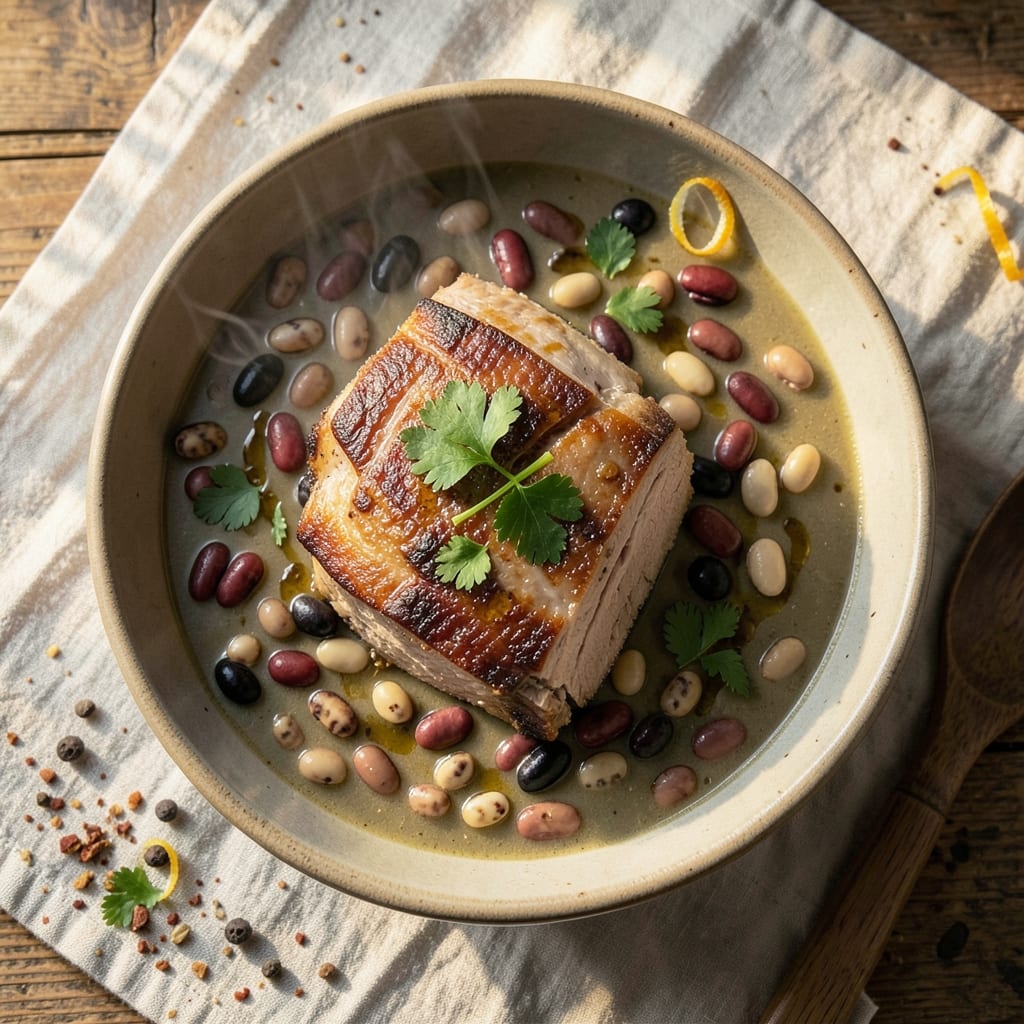
This 15 bean soup recipe with pork delivers the ultimate slow-cooked comfort in one pot—rich, smoky, and packed with 15 varieties of beans for hearty texture and deep flavor. The secret lies in layering dried beans with pork, allowing them to simmer together until tender and infused with savory depth. I’ve perfected this version to balance tradition with modern convenience, using a pressure cooker option to cut hours of simmering into just 90 minutes.
The magic happens during the long, gentle simmer, where pork shoulder breaks down into tender, flavorful chunks while the beans absorb the smoky, herby broth. No need for fancy techniques—just a Dutch oven, basic pantry staples, and patience (or a pressure cooker) to transform tough cuts into something luxurious. The result? A soup so satisfying, it becomes the centerpiece of any meal, especially when served with crusty bread to soak up every last drop.
What makes this recipe special is its adaptability—whether you’re prepping for a crowd or meal planning for the week, the flavors only deepen over time. The pork adds richness without overwhelming, while the beans provide a satisfying bite in every spoonful. This isn’t just soup; it’s a one-pot meal that feels like a hug on a cold day, with minimal cleanup and maximum reward.
For those short on time, the pressure cooker method delivers the same depth in a fraction of the time, though traditional simmering yields the most complex flavor profile. Either way, you’ll end up with a bowl of warmth, texture, and comfort that’s impossible to resist. Let’s get cooking—your taste buds (and leftovers) will thank you.
Ingredients for 15 bean soup recipe with pork
Pork shoulder and 15 varieties of beans transform into soul-warming comfort with minimal prep.
| Ingredient | Amount | Notes |
|---|---|---|
| Pork Shoulder 🥓 | 2 lb | Bone-in for extra flavor |
| Dried Navy Beans 🌱 | 1 cup | Rinsed before adding |
| Dried Kidney Beans 🌱 | ½ cup | Rinsed before adding |
| Dried Black Beans 🌱 | ½ cup | Rinsed before adding |
| Dried Pinto Beans 🌱 | ½ cup | Rinsed before adding |
| Dried Great Northern Beans 🌱 | ½ cup | Rinsed before adding |
| Dried Cannellini Beans 🌱 | ½ cup | Rinsed before adding |
| Dried Lima Beans 🌱 | ½ cup | Rinsed before adding |
| Dried Chickpeas 🌱 | ½ cup | Rinsed before adding |
| Dried Lentils 🌱 | ½ cup | Green or brown preferred |
| Dried Butter Beans 🌱 | ½ cup | Rinsed before adding |
| Dried Anasazi Beans 🌱 | ¼ cup | Rinsed before adding |
| Dried Fava Beans 🌱 | ¼ cup | Rinsed before adding |
| Dried Adzuki Beans 🌱 | ¼ cup | Rinsed before adding |
| Dried Red Beans 🌱 | ¼ cup | Rinsed before adding |
| Onion 🧅 | 1 whole | Yellow or red, chopped |
| Carrot 🥕 | 3 whole | Peeled and chopped |
| Celery Stalks 🌿 | 3 whole | Chopped, with leaves |
| Garlic Cloves 🧄 | 4 cloves | Minced for depth |
| Tomato Paste 🍅 | ½ cup | Smooth, not chunky |
| Chicken Broth 💧 | 4 cups | Low-sodium preferred |
| Red Wine 🍷 | 1 cup | Dry, like Cabernet |
| Smoked Paprika 🌶️ | 1 tbsp | For smoky depth |
| Bay Leaves 🍃 | 2 whole | Fresh if available |
| Thyme Sprigs 🌿 | 2 whole | Fresh preferred |
| Salt 🧂 | 1 ½ tsp | Kosher or sea salt |
| Black Peppercorns 🌶️ | ½ tsp | Freshly cracked |
| Olive Oil 🫒 | 2 tbsp | For browning pork |
The pork shoulder is the star here—look for cuts with good marbling at Costco or your local butcher. A bone-in piece adds extra flavor, but boneless works too. For the beans, dried is non-negotiable—canned lacks texture and depth. I usually grab mine from the bulk section at Whole Foods or Trader Joe's, where they keep them in airtight bins. If you're short on time, soak the beans overnight or use a pressure cooker to cut down on simmering time. The key is mixing varieties for that authentic, hearty texture—don't skip the smaller amounts of specialty beans like Anasazi or fava, they bring unique flavors.
No red wine? Dry white wine or extra chicken broth works in a pinch, but the depth of red is hard to beat. Fresh thyme and bay leaves make all the difference, but if you're using dried, cut the amount to one-third. For the veggies, don't peel the carrots—they add color and nutrients. The tomato paste can be the squeeze-tube kind from Trader Joe's if that's what you've got, but smooth is best. If you're prepping ahead, store the dry beans in a cool, dark place for up to a year, and the pork in the fridge for 3-4 days or freeze for 3 months. The broth can be made in advance too—just reheat before adding to the pot.
This soup tastes even better the next day as flavors meld together. Portion into containers for easy lunches—4-5 days in the fridge or 3 months frozen. The beans will soften further when reheated, so don't overcook them initially. For serving, I love adding a dollop of sour cream or hot sauce on top, but keep it simple with crusty bread to soak up every last drop. Leftovers? Freeze in portions for quick meals later.
Why You'll Love This Recipe
- One-Pot Magic: I swear by this recipe—just dump everything in a big pot, add water, and let it simmer. No fancy techniques, no stressing over multiple pans. The pork shoulder practically melts into tender shreds while the beans soak up all the rich, smoky flavors.
- Deep Umami Bomb: Between the pork shoulder’s slow-cooked richness and the earthy mix of navy, kidney, black, and pinto beans, every spoonful packs serious flavor. Honestly, the longer it sits, the better it gets—those beans soften just enough to soak up all the juices like a flavor sponge.
- Meal Prep MVP: This soup tastes even better the next day, which means I can make a big batch on Sunday and have hearty lunches all week. It’s my go-to for busy mornings—just reheat and grab a bowl. (Yes, even on a Tuesday night when I’m exhausted.)
- Budget-Friendly Feast: Pork shoulder and dried beans are cheap staples, but they deliver restaurant-quality comfort without the price tag. I’ll be real: this recipe feeds four for under $15, and the leftovers? Pure gold. Win-win for my wallet and my taste buds.
Step-by-step instructions for 15 bean soup with pork
Here's how to build a rich, smoky bean soup that simmers into perfect harmony.
Brown the Pork Shoulder for Deep Flavor
Heat a large Dutch oven over medium-high heat and add the 2 tablespoons olive oil. Once shimmering, add the 2 lb pork shoulder in one piece and brown it on all sides until deeply golden, about 8-10 minutes. This step develops the Maillard reaction that creates rich, complex flavors.
Real talk: don't skip this. The pork needs to develop that deep crust before we add the beans. If it starts smoking too much, reduce the heat slightly. Once browned, remove the pork and set it aside on a plate.
Sauté Vegetables and Build the Base
In the same Dutch oven, add the chopped 1 whole onion, 3 whole carrots, 3 whole celery stalks, and 4 cloves garlic. Cook for 5-6 minutes until the vegetables soften and the garlic becomes fragrant. Here's the thing—you want the vegetables to release their natural sweetness before we add the beans.
Stir in the 0.5 cup tomato paste and cook for another 2 minutes until it darkens slightly. This creates a rich, umami base that will carry through the entire soup. Don't walk away—this is where the foundation gets built.
Add Beans, Broth, and Aromatics
Return the browned pork to the pot. Add all the rinsed beans (1 cup dried navy beans, 0.5 cup each of kidney, black, pinto, great northern, cannellini, lima, and chickpeas, plus 0.5 cup lentils, 0.5 cup butter beans, and 0.25 cup each of anasazi, fava, adzuki, and red beans), the 4 cups chicken broth, 1 cup red wine, 1 tablespoon smoked paprika, 2 whole bay leaves, 2 whole thyme sprigs, 1.5 teaspoons salt, and 0.5 teaspoon black peppercorns. Stir everything together until the beans are well-coated.
Bring the mixture to a boil, then immediately reduce heat to low. The reason we start with a boil is to help soften those tough dried beans faster. Once boiling, cover the pot and let it simmer gently.
Simmer Until Beans Are Tender
Let the soup simmer uncovered for 3-4 hours on low heat, stirring occasionally. You'll know it's ready when the beans are fork-tender and the pork is falling apart easily. I check for doneness by pressing a bean with my fork—it should collapse with gentle pressure.
Here's where patience pays off. The beans need this long cook time to become truly tender. If you're short on time, you can pressure cook for 1 hour 15 minutes instead, but the flavor won't be as developed. Keep an eye on the liquid level—add a little water if it gets too low.
Finish and Adjust Seasoning
Once the beans are tender, remove the pork and shred it with two forks directly in the pot. Return the pork to the soup and taste. Adjust seasoning with more salt or pepper if needed—this is where you make sure every spoonful sings. The soup should be rich, smoky, and full of bean goodness.
Let the soup rest for 10 minutes before serving. This allows the flavors to meld completely. Serve with crusty bread to soak up every last drop of that delicious broth. You've just created a hearty, flavor-packed soup that's perfect for cold days.
Pro Tips For Making 15 Bean Soup Recipe With Pork
- CRANK THE HEAT FIRST: The pork shoulder won’t render its fat if you simmer it gently from the start. Sear the cut in a cold pot over medium-high heat until the bottom browns deeply—this locks in flavor and prevents greasy soup later. (Yes, even if you’re impatient like me.)
- SOAK BEANS SEPARATELY: Don’t toss all five bean types into one bowl to soak—they absorb water at different rates. Split navy and black beans (soak 4+ hours), while kidney and pinto (soak 2 hours) need less time. Rinse them individually before adding to the pot to avoid a mushy texture.
- SKIP THE CROWDED POT: I learned this the hard way—dumping all the beans and pork into a small pot guarantees uneven cooking. Use a Dutch oven or large stockpot, and spread the beans in a single layer at the start. This ensures every bean softens evenly without some turning to mush while others stay rock-hard.
- SALT THE PORK AFTER SEARING: Seasoning the pork shoulder before browning traps moisture in the meat, making it tougher. Instead, add salt only after the initial sear, then let it rest 5 minutes before adding liquid. The crust stays intact, and the pork stays juicy—no one wants dry, flavorless chunks in their soup.
Make-ahead tips for this recipe
Prep Ahead Strategy
Start by rinsing and sorting all 15 varieties of dried beans the night before—this saves 30 minutes of prep time later. Store them in a large bowl covered with water in the fridge overnight. The next day, drain and rinse them before adding to the pot. For the pork, trim excess fat and cut it into 1-inch chunks if you prefer smaller pieces, but leave it whole for deeper flavor. 💡
Pressure Cooker Shortcut
Use your Instant Pot or electric pressure cooker to cut cooking time from 3-4 hours to just 90 minutes. After browning the pork and sautéing the vegetables, add everything to the pressure cooker and cook on high pressure for 45 minutes, then natural release for 15 minutes. The beans will be tender, though the broth may need a splash of water to reach desired consistency.
Freezer-Friendly Prep
Make a double batch and freeze half for later! Portion the soup into quart-sized freezer bags, leaving 1-inch headspace for expansion. Label with the date—it keeps for 3 months without losing quality. When reheating, thaw overnight in the fridge, then warm on the stovetop with ½ cup water or broth to prevent drying. ❄️
Day-Old Flavor Boost
The soup tastes even better the next day as flavors meld together. If you're prepping for a crowd, make it a day ahead and reheat gently on low heat. Taste before serving—you may need to adjust seasoning slightly, as the beans absorb more liquid during storage. I always add a pinch of smoked paprika and a splash of red wine when reheating for extra depth.
Bean Soaking Hack
Short on time? Use the quick-soak method for the beans: Boil them for 2 minutes, then let them sit off the heat covered with hot water for 1 hour. This cuts soaking time in half while keeping the beans tender. For the smaller specialty beans (like Anasazi or fava), add them 30 minutes before the soup is done—they cook faster and need less time to soften.
Leftovers Reinvention
Turn leftover soup into bean and pork tacos or stuffed peppers for a quick weeknight meal. Shred the pork and mix it with beans, then spoon into tortillas with avocado and hot sauce. For stuffed peppers, hollow out bell peppers, fill with the soup mixture, and bake at 375°F for 20 minutes. This keeps the soup from becoming a repeat while reducing waste. 🔥
Nutrition facts
Frequently asked questions
Can I substitute canned beans for dried in this recipe?
While canned beans will work in a pinch, they won't give you that authentic texture and depth that dried beans provide. The long simmering time with dried beans creates a richer broth and more complex flavors. If you must use canned, drain and rinse them thoroughly, then add them to the pot during the last 30 minutes of cooking to prevent mushiness. For best results, stick with dried beans—they're worth the extra time!
How do I prevent the soup from being too watery?
The key is proper bean-to-liquid ratio and simmering time. Start with 4 cups of broth and adjust as needed—if the soup seems thin after cooking, remove the pork and beans, then reduce the broth by 25% on the stovetop before adding everything back. For extra thickness, stir in 1 tablespoon cornstarch mixed with 2 tablespoons cold water at the end. The beans should absorb most of the liquid during the long simmer, so don't rush the cooking process!
What's the best way to reheat leftovers without drying them out?
Reheat your soup gently on the stovetop over low heat, adding ¼ cup water or broth for every 2 cups of soup to maintain moisture. If using the microwave, cover with a damp paper towel and heat in 1-minute intervals, stirring between each. Never reheat to a boil—this causes the beans to break down and makes the soup watery. A splash of red wine or extra broth can also help restore richness!
Can I make this soup vegetarian?
Swap the pork for 2 cups of smoked tofu, 2 cups of mushrooms, or 1 lb of tempeh for a meaty texture. Boost umami with 1 tablespoon soy sauce or 1 teaspoon liquid smoke, and add ½ cup tomato paste for depth. The beans will still be the star, but the broth will have a different (though delicious) profile. For extra protein, consider adding ½ cup of lentils or 1 cup of textured vegetable protein.
Why does my soup taste bland after cooking?
Blandness usually comes from insufficient seasoning or rushed cooking.