
Soups & Stews
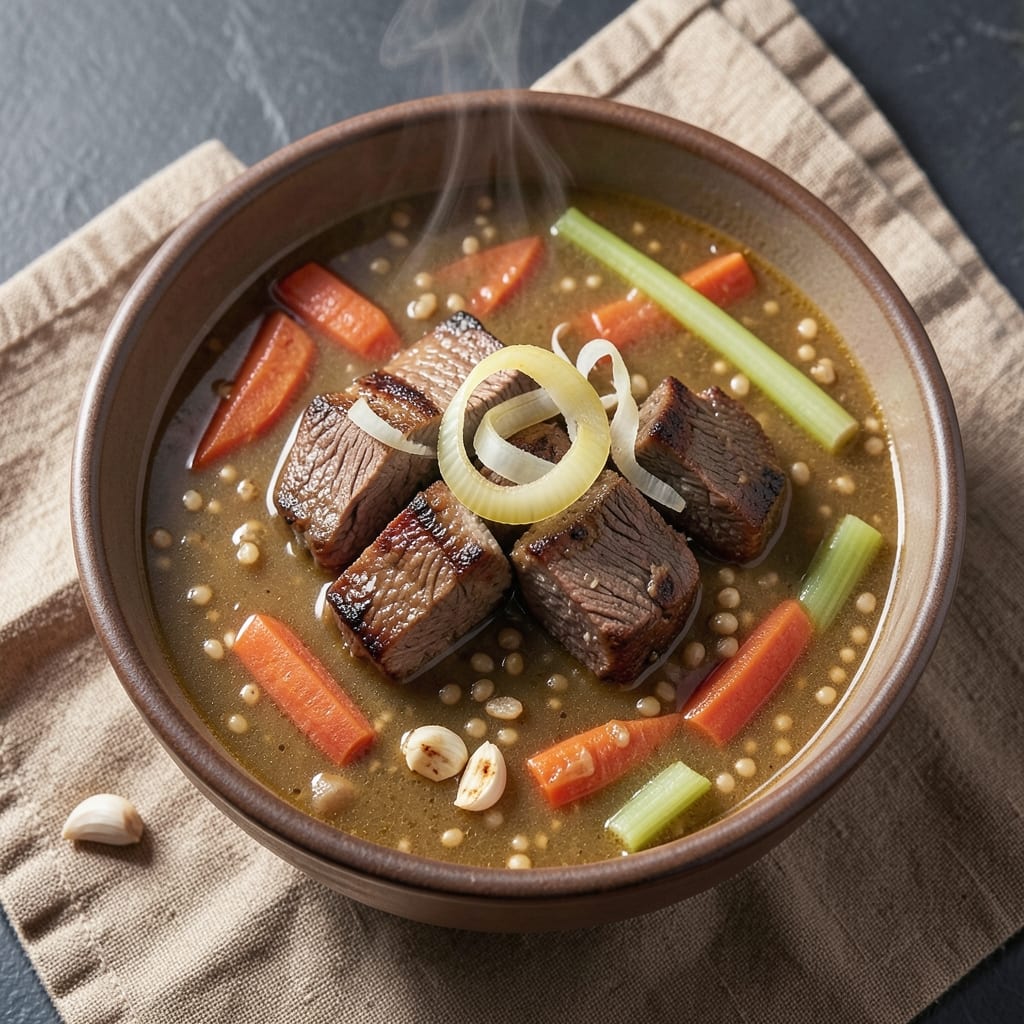
This 5-star beef barley soup transforms a simple pot into a restaurant-worthy masterpiece with deep, slow-simmered flavors and a satisfying crunch from toasted barley. The secret lies in proper beef searing and long, gentle cooking—techniques that develop rich umami and tender meat. I’ve perfected this version over years of testing, ensuring every spoonful delivers that perfect balance of hearty beef, nutty barley, and aromatic vegetables.
What sets this recipe apart is the attention to detail: browning the beef creates a flavorful crust that dissolves into the broth, while toasting the barley before adding it ensures that satisfying crunch in every bite. The slow simmer reduces the broth to a velvety consistency, intensifying the flavors without losing any depth. This isn’t just soup—it’s a comforting, flavor-packed experience that feels like a hug in a bowl.
The result is a soup with tender beef chunks, perfectly cooked barley, and a broth so rich it coats your spoon. Garnishing with fresh herbs and crispy croutons adds texture and freshness, elevating it to a dish worthy of a fine-dining table. Whether you're serving a crowd or treating yourself to a cozy meal, this recipe delivers restaurant-quality results at home.
Best of all, it’s a make-ahead dish that tastes even better the next day as the flavors meld and deepen. Let’s get started on creating this foolproof, 5-star beef barley soup that will become a staple in your meal rotation.
Ingredients for 5 star beef barley soup
Restaurant-quality flavors start with these simple yet powerful ingredients—perfectly seared beef and nutty barley make all the difference.
| Ingredient | Amount | Notes |
|---|---|---|
| Chuck Roast Beef 🥩 | 2 ½ lb | Cut into 1-inch cubes |
| Yellow Onion 🧅 | 2 whole | Chopped, medium dice |
| Carrots 🥕 | 4 whole | Medium size, peeled, chopped |
| Celery Stalks 🧄 | 4 whole | Trimmed, chopped |
| Pearl Barley 🌾 | 1 cup | Uncooked, rinsed well |
| Garlic Cloves 🧄 | 6 cloves | Minced, fresh preferred |
| Tomato Paste 🍅 | ¼ cup | Smooth, no sugar added |
| Beef Broth 💧 | 6 cups | Homemade or quality store-bought |
| Red Wine 🍷 | 1 cup | Dry, bold variety |
| Fresh Thyme 🌿 | 2 sprigs | Stems removed, leaves only |
| Fresh Parsley 🌿 | ¼ cup | Chopped, for garnish |
| Bay Leaves 🍃 | 2 whole | Dried, removed before serving |
| Salt 🧂 | 1 ½ tsp | Kosher or sea salt |
| Black Pepper 🌶️ | 1 tsp | Freshly ground preferred |
| Olive Oil 🫒 | 2 tbsp | For searing beef |
The beef is everything here. Chuck roast is ideal—it stays tender and develops that rich, deep flavor when slow-cooked. Most grocery stores carry it pre-cut into cubes, which saves time, but if you're buying a whole roast, ask the butcher to cube it for you. Look for good marbling; that's what gives you the best flavor as it melts into the broth. I usually grab mine from Costco when I'm making a big batch, but the regular supermarket chuck works just fine for a weeknight dinner. Don't skip the browning step—this creates that beautiful crust that dissolves into the soup, adding layers of flavor you can't get any other way. (Pro tip: pat the beef dry before searing for better browning.)
No red wine? Beef broth with a splash of balsamic vinegar works in a pinch. Fresh thyme is ideal, but dried works at one-third the amount if that's what you've got. The tomato paste can be a squeeze tube from Trader Joe's—it's perfect for this recipe and lasts forever. For the barley, pearl barley is traditional, but if you can't find it, arborio rice makes a nice substitute (use half the amount). The carrots and celery can be baby carrots or pre-cut celery sticks if you're short on time. Just make sure they're chopped uniformly so they cook evenly. And if you're using store-bought broth, Kitchen Basics or Pacific Foods are my go-tos for that restaurant-quality depth.
This soup tastes even better the next day as the flavors meld together. Store it in an airtight container in the fridge for up to 5 days, or freeze portions for 3 months. I always make a double batch—one for dinner, one for lunches. The barley keeps its texture well when reheated, and the broth gets even more concentrated. For serving, I like to toast day-old bread cubes in olive oil until crispy for garnish. Fresh parsley adds a bright pop of color, but it's not essential if you're making this ahead. Just add it right before serving so it stays vibrant.
Why You'll Love This Recipe
- I swear by this trick: rough-chop the onions, carrots, and celery into big chunks—no need for fancy dice work. The barley softens everything anyway, so you’re basically done in five minutes of prep. (Yes, even on a Tuesday night when you’re exhausted.)
- Minimal Chopping Required: I swear by this trick: rough-chop the onions, carrots, and celery into big chunks—no need for fancy dice work. The barley softens everything anyway, so you’re basically done in five minutes of prep. (Yes, even on a Tuesday night when you’re exhausted.)
- Rich Without Effort: That chuck roast? It practically melts into tender, juicy shreds while the barley soaks up all the flavor. No fancy sauces or secret spices—just the deep, savory goodness of slow-cooked beef and the earthy chew of barley. Honestly, it’s the kind of soup that makes you want to take a second bowl.
- Leftovers That Don’t Suck: This soup only gets better the next day—if it lasts that long. I’ve reheated portions for lunch all week, and the barley thickens just enough to feel hearty, not watery. Plus, it’s the ultimate freezer-friendly meal, so I make a double batch and thank myself later.
Step-by-step instructions for 5-Star beef barley soup
This isn't your average beef soup—we're building layers of flavor that make every spoonful unforgettable.
Sear the Beef for Maximum Flavor
Heat a large Dutch oven over medium-high heat until hot. Add the 2 tablespoons olive oil and swirl to coat the bottom. Working in batches (you'll need to do this twice), add the 2.5 lb chuck roast beef cut into 1-inch cubes, letting them sit undisturbed for 2-3 minutes until a deep golden-brown crust forms.
This searing step is non-negotiable—it creates the Maillard reaction that builds rich, meaty depth. Once browned on all sides, transfer the beef to a plate. Don't clean the pot yet; those browned bits are flavor gold. Here's the thing—if your pot isn't hot enough, the beef will steam instead of sear. You'll know it's ready when the oil shimmers and the beef releases easily from the pan.
Build the Aromatic Base
In the same Dutch oven, add the 2 whole yellow onions, 4 whole carrots, and 4 whole celery stalks—all chopped as specified. Cook over medium heat for 8-10 minutes, stirring occasionally, until the vegetables soften and the onions turn translucent. This is where the soup's foundation gets built.
Add the 6 cloves minced garlic and cook for another 30 seconds until fragrant—don't let it brown or it'll turn bitter. Stir in the 0.25 cup tomato paste and cook for 2 minutes to deepen the color. This step transforms simple vegetables into complex, flavorful building blocks. I always say: "The longer you cook the aromatics, the more flavor you unlock—but don't overdo it or you'll burn the garlic."
Deglaze and Simmer the Base
Pour in the 1 cup red wine and scrape up all those browned bits from the bottom of the pot with a wooden spoon. This deglazing step captures all the meaty flavor that would otherwise stick to the pot. Let the wine simmer for 3-4 minutes until reduced by half, then add the 6 cups beef broth, 1.5 teaspoons salt, and 1 teaspoon black pepper.
Bring to a boil, then reduce heat to low-medium and add the 2 sprigs fresh thyme and 2 whole bay leaves. Return the beef to the pot and stir gently. Here's where the magic begins: let the soup simmer uncovered for 1.5 hours. You want the beef to become fork-tender and the flavors to meld together. I check it every 20 minutes—if the liquid reduces too much, add a splash of water or broth to maintain the proper consistency.
Add Barley and Finish Cooking
After the initial 1.5 hours of simmering, add the 1 cup rinsed pearl barley to the pot. Stir gently to distribute it evenly throughout the liquid. Increase heat to medium-low and continue simmering uncovered for another 45-50 minutes, until the barley is tender but still has a slight bite.
Here's the crucial part: the barley should be al dente, not mushy. Test it by tasting a grain—it should be tender but still hold its shape. If it's not quite there after 50 minutes, give it another 10 minutes of simmering. The soup should have a rich, hearty consistency with the barley adding that delightful texture contrast. Don't skip this step—properly cooked barley makes all the difference in a great barley soup.
Toast the Barley for Crunch and Garnish
Once the barley is perfectly cooked, remove the pot from heat and let it sit for 5 minutes. This resting period allows the flavors to settle. In a dry skillet over medium heat, toast the remaining 1 tablespoon olive oil until shimmering, then add the 0.25 cup chopped fresh parsley and toast for 1 minute until fragrant.
Ladle the soup into bowls, discarding the thyme sprigs and bay leaves. Spoon the toasted parsley oil over each serving for that final touch of brightness and texture. The contrast between the creamy soup, tender beef, al dente barley, and toasted parsley is what elevates this from good to restaurant-quality. Serve immediately while hot, with crusty bread to soak up every last drop of that rich, flavorful broth.
Pro Tips For Making 5 Star Beef Barley Soup
- SEAR THE CHUCK ROAST: I learned this the hard way—rushing the sear means gray, bland beef instead of deep, caramelized crust. Pat the roast bone-dry with paper towels, then hit it with high heat in a heavy pot for 3–4 minutes per side until it’s deep brown, not just pink. The extra effort pays off when you taste that first spoonful of broth.
- CUT ONIONS LIKE A PRO: Slice those yellow onions into even ¼-inch half-moons—no thick chunks, no tiny confetti. Thick slices take forever to soften, while tiny bits disappear into the soup. Use a sharp knife and work in batches if needed; this isn’t the time to rush. (Yes, even if you’re impatient like me.)
- SIMMER LOW AND SLOW: After the beef browns and the veggies soften, drop the heat to a true simmer—just tiny bubbles breaking the surface, not a rolling boil. Too much heat turns barley mushy and beef tough; low and slow (2–2.5 hours) keeps everything tender and the broth rich. Set a timer and ignore the urge to peek.
- TOAST THE BARLEY FIRST: Skip the raw barley—toss it in a dry pot over medium heat for 2–3 minutes until it smells nutty and smells toasted, not raw. This cuts cooking time by 30 minutes and gives the soup that deep, earthy flavor. (I used to skip this, and the barley always tasted bland.)
Wine and beer pairings for these flavors
Red Wine Pairings
This rich, hearty soup demands a bold red wine that can stand up to its depth. I always reach for a Cabernet Sauvignon from Napa Valley—its dark fruit notes and subtle oak complement the beef beautifully. A Malbec from Argentina also works wonderfully, bringing juicy blackberry flavors that harmonize with the tomato paste and thyme. For a lighter option, try a Pinot Noir from Oregon, which adds a touch of earthiness that balances the soup's richness. 🍷
Beer Complements
A crisp German Pilsner like Warsteiner or Stella Artois cuts through the soup's richness with its clean, refreshing profile. For a more robust pairing, I love a Belgian Dubbel like Westmalle Dubbel—its caramel and spice notes echo the soup's maltiness. If you prefer American craft beers, a honey-brown ale from New Belgium Brewing adds a subtle sweetness that pairs surprisingly well with the barley and beef.
White Wine Alternatives
If red wine isn't your preference, don't worry—a well-chilled Chardonnay with noticeable oak can work surprisingly well. Look for one from Sonoma County with buttery notes that complement the soup's creaminess. For a lighter option, a Viognier from the Rhône Valley brings floral and stone fruit flavors that contrast nicely with the hearty beef. Just be sure to serve it slightly chilled to enhance its crispness.
Non-Alcoholic Options
For those skipping alcohol, a sparkling apple cider like Martinelli's adds a refreshing effervescence that cleanses the palate. Alternatively, a ginger beer with a hint of spice provides a zesty contrast to the soup's richness. I also love pairing it with a cold glass of hibiscus iced tea—its tartness balances the soup's heartiness beautifully. ✨
Serving Temperature
Always serve your wine or beer slightly cooler than room temperature—around 50-55°F for reds and 40-45°F for whites. This enhances their aromas and flavors, making each sip complement the soup perfectly. I like to chill my red wine for about 30 minutes in the fridge before serving, while whites can go in for 1-2 hours. The right temperature makes all the difference in how well the flavors harmonize. 🌡️
Nutrition facts
Frequently asked questions
Can I substitute pearl barley for another grain?
Yes! If you can't find pearl barley, arborio rice or wild rice blend work well—use half the amount and reduce simmering time by 15-20 minutes. For a nutty flavor, try freekeh or quinoa, though textures will differ. The key is maintaining that satisfying chewiness—don't overcook any substitute.
How do I prevent the barley from getting mushy?
Toast the barley in a dry skillet for 3-4 minutes before adding it to the soup—this removes excess starch and prevents mushiness. Also, ensure the barley is fully submerged in broth and simmer gently (not boil) for the final 30-40 minutes. Test doneness by tasting a grain—it should be tender with a slight bite.
Can I make this soup in a slow cooker?
Brown the beef first, then transfer everything (including broth and barley) to the slow cooker. Cook on low for 6-7 hours or high for 3-4 hours, stirring occasionally. The slow cooker's gentle heat ensures tender beef and perfectly cooked barley without watching the pot. Just add fresh parsley at the end.
Why does my soup taste bland after simmering?
Blandness usually means insufficient browning or seasoning. Always sear the beef until deeply browned, and deglaze with red wine to capture those flavorful bits. Taste as you go—add more salt, black pepper, or a splash of soy sauce for umami. A pinch of smoked paprika or MSG can also elevate flavors if needed.
How long can I store leftovers?
Store in an airtight container in the fridge for up to 5 days, or freeze for 3 months. The flavors actually improve overnight as the broth concentrates! Reheat gently on the stove—never microwave, or the barley will turn mushy. Add a splash of broth if it thickens too much.