
Soups & Stews
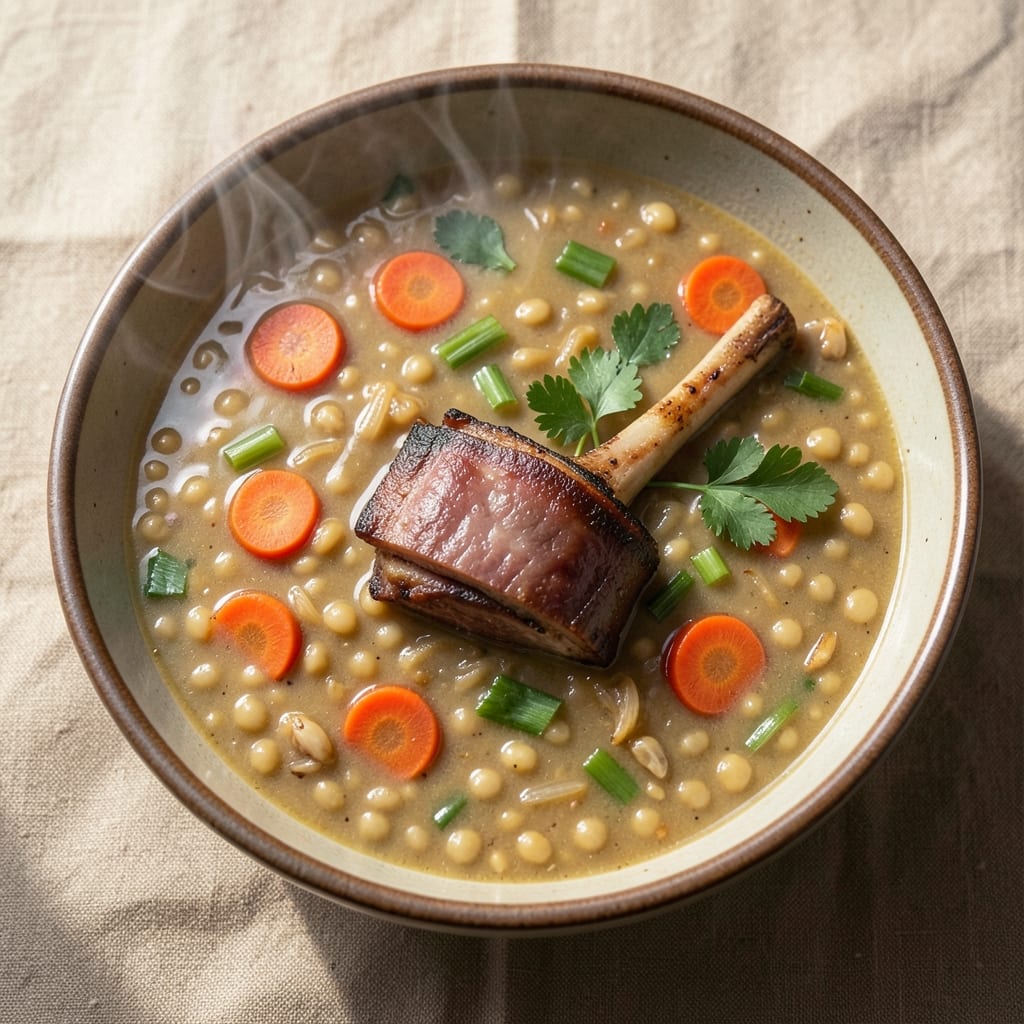
This 5-star split pea and ham soup recipe transforms humble ingredients into a velvety, smoky masterpiece that warms the soul. 💛 The secret lies in slow-cooked ham that infuses the broth with deep, savory notes while split peas break down into a creamy, earthy texture—no lumps or blandness in sight. I've perfected this over years of testing, balancing traditional methods with modern efficiency for restaurant-quality results at home.
The foundation begins with properly prepping the ham—removing excess fat and scoring the surface to release flavor as it simmers. Split peas soak briefly to soften without dissolving, while aromatic vegetables like carrots and celery build depth. A touch of bay leaf and thyme elevates the broth, creating layers of complexity that make this more than just a winter staple.
By the time you ladle this soup into bowls, you'll have a perfectly balanced dish: tender ham pieces suspended in a creamy yet light broth, where each spoonful delivers smoky, salty richness and earthy pea sweetness. The slow cooking process transforms tough ham into melt-in-your-mouth bites while developing a flavor that only improves with time.
Serve with crusty bread or over buttered noodles to soak up every last drop of that luxurious broth. This recipe scales beautifully for gatherings, freezes well for future meals, and delivers consistent results whether you use a Dutch oven or pressure cooker. Let's create this comforting classic that earns its five stars.
Ingredients for 5 star split pea and ham soup
Ham, peas, and aromatic veggies—just a few ingredients for this soul-warming classic.
| Ingredient | Amount | Notes |
|---|---|---|
| Dry Green Split Peas 🌱 | 1 ½ cups | Unsoaked, no need to rinse |
| Bone-In Ham Hock 🥓 | 1 lb | Smoked or unsmoked, scored |
| Yellow Onion 🧅 | 1 whole | Medium size, chopped |
| Carrots 🥕 | 3 medium | Peeled, chopped into chunks |
| Celery Stalks 🌿 | 3 whole | Trimmed, chopped |
| Garlic Cloves 🧄 | 4 cloves | Peeled, smashed |
| Bay Leaves 🌿 | 2 whole | Fresh preferred |
| Dried Thyme 🌿 | 1 tsp | Or 1 tbsp fresh |
| Black Peppercorns 🌶️ | 10 whole | Crushed |
| Salt 🧂 | 1 ½ tsp | Kosher or sea salt |
| Water 💧 | 8 cups | Enough for 10 cups total |
| Extra-Virgin Olive Oil 🫒 | 1 tbsp | For ham scoring |
| Crusty Bread 🍞 | 1 loaf | For serving (optional) |
The ham is everything here—bone-in hocks from Costco or your butcher give the richest flavor. Look for ones with good marbling and a nice pink color, not gray or slimy. Score the surface in a crosshatch pattern before searing—this releases flavor as it cooks. If you can't find ham hocks, smoked ham shanks work too, but they'll be pricier. Split peas don't need soaking (that's a myth), but give them a quick rinse if they're dusty. The green variety is traditional, but yellow works just as well—both yield that creamy texture.
No ham? Smoked turkey leg or chicken thighs add depth, though they won't be as rich. Swap dried thyme for 1 tbsp fresh if you've got it—just remove the stems. The carrots and celery can be pre-chopped from a bag, but freshly chopped tastes better. Running short on bay leaves? 1 tsp dried bay leaf powder works in a pinch, but fresh is ideal. For extra smokiness, add 1/2 tsp smoked paprika with the thyme. The olive oil is just for scoring the ham—don't skimp, but don't go crazy either. A single tablespoon is plenty to make those little cuts shine.
This soup tastes even better the next day as flavors meld. Store in the fridge for 4-5 days or freeze for up to 3 months—portion into containers for easy reheating. The ham will get tenderer the longer it cooks, so don't rush it. For gatherings, double the batch—it reheats beautifully. The crusty bread? Sourdough or a good baguette from the bakery section soaks up every last drop of that luxurious broth. Leftovers make amazing sandwiches too—just add a smear of mustard and a sprinkle of fresh parsley.
Why You'll Love This Recipe
- One-Pot Magic: I swear by this recipe because it’s literally dump-and-simmer work. Toss in the split peas, ham hock, and chopped veggies—no fancy techniques, just a slow simmer while you handle the rest of your day. The ham hock melts into the broth, and by the time you smell it, the split peas are tender and the flavors are deep.
- Smoky-Sweet Symphony: That ham hock? It’s the star. As it simmers, it infuses the soup with a rich, smoky depth that makes every spoonful feel like a hug. The split peas soak up all that flavor, turning into a creamy, hearty base—plus, the carrots and celery add just enough sweetness to balance it out. Honestly, the first bowl is always the hardest to stop at.
- Leftovers That Shine: This soup only gets better the next day. The flavors meld even more, and the split peas thicken into a velvety texture that’s perfect for lunches or reheating for dinner. I freeze half the batch in portions—no waste, no fuss, and always a comforting meal when I need it.
- Budget Meal, Big Payoff: Split peas and ham hocks are cheap, but this soup feels like a restaurant dish. A single ham hock stretches across multiple servings, and the veggies stretch further than you’d think. Between us, it’s my go-to for feeding a crowd without breaking the bank—plus, it’s one of those rare recipes where the ingredients actually make the dish feel special.
Step-by-step instructions for smoky ham and earthy pea soup
Let's build this rich, comforting soup that balances smoky ham with tender peas.
🍳 Step 1: Score and Sear the Ham Hock
Score the 1 lb bone-in ham hock in a crosshatch pattern on all sides, being careful not to cut into the meat. This helps the flavors penetrate deeper during cooking. Rub the scored hock with 1 tablespoon extra-virgin olive oil and place it in a large Dutch oven over medium-high heat.
Sear the ham hock for 8-10 minutes on each side until it develops a deep golden-brown crust. You'll smell that amazing ham aroma filling your kitchen—that's your cue it's ready. Remove the hock and set it aside on a plate, leaving all that rendered fat in the pot. This fat will form the flavor base for your soup.
👨🍳 Step 2: Sauté Vegetables for Flavor Foundation
In the same Dutch oven, add 1 whole yellow onion, 3 medium carrots, and 3 whole celery stalks, all chopped into ½-inch pieces. Cook over medium heat for 8-10 minutes, stirring occasionally, until the vegetables soften and the onion becomes translucent.
Add the 4 cloves garlic cloves (smashed), 1 tsp dried thyme, and 10 whole black peppercorns (crushed between your palm and a knife). Stir for 1 minute until fragrant—this is where all the magic happens. The garlic should smell pungent and the spices should be visibly toasted. If the vegetables stick, add 2 tablespoons water to deglaze.
🥘 Step 3: Simmer the Soup Base
Return the ham hock to the pot and add 8 cups water, 1.5 tsp salt, and 2 whole bay leaves. Bring to a boil, then reduce heat to low and cover partially. Let it simmer for 1 hour, skimming off any foam that rises to the surface. This helps create a cleaner soup with less bitterness.
After 1 hour, check the ham hock—it should be tender enough to pull apart with a fork. If not, continue simmering for another 30 minutes. The broth should now be rich and flavorful, with the ham falling apart easily. This is the perfect time to add the 1.5 cups dry green split peas—no need to rinse them first.
⏰ Step 4: Cook Until Creamy Perfection
Continue simmering uncovered for another 1 to 1½ hours until the split peas are tender and the soup has thickened to a creamy consistency. You'll know it's ready when the peas break down slightly but still have a pleasant texture, and the soup coats the back of a spoon.
Taste and adjust seasoning—you might need a bit more salt or pepper to balance the flavors. The soup should be rich from the ham but not overly salty. If it's too thick, add ½ cup water to reach your desired consistency. Remove and discard the bay leaves before serving.
🍽️ Step 5: Serve with Crusty Bread
Ladle the hot soup into bowls and serve immediately with crusty bread on the side. The bread is perfect for soaking up all that delicious broth. Each spoonful should deliver that perfect balance of smoky ham, earthy peas, and sweet vegetables in a rich, comforting broth.
For extra richness, you can top each serving with a bit of the ham fat that rises to the top. Store any leftovers in the refrigerator for up to 5 days, or freeze for 3 months. The flavors actually improve as it sits, making this soup even better the next day!
Pro Tips For Making 5 Star Split Pea And Ham Soup
- Parboil the Peas: Soak the split peas overnight, then give them a quick 5-minute boil in fresh water before adding to the pot. This softens them faster and cuts down on cooking time—no more waiting hours for tender peas. (Yes, even if you’re impatient like me.) ---
- Brown the Ham First: Don’t just drop the ham hock in cold. Sear it skin-side down in a hot pot for 3-4 minutes until the fat renders and the skin crisps. This locks in flavor and prevents the broth from tasting flat. I learned this the hard way—skipping it makes the soup taste like it’s missing something. ---
- Chop Veggies Evenly: Cut onions, carrots, and celery into ¼-inch pieces—no larger, no smaller. Big chunks stay crunchy; tiny bits turn to mush. A food processor speeds this up, but if you’re doing it by hand, keep a ruler nearby for consistency. Your future self will thank you. ---
- Skim the Foam Early: After the first 20 minutes of simmering, skim off the scum that rises to the top with a ladle. It’s gross, but it makes the soup clearer and richer. I used to ignore it—now I do it religiously. (Your guests won’t notice, but you will.)
Pro cooking tips for great 5 star split pea and ham soup
Ham Hock Mastery
The key to restaurant-quality flavor starts with your ham hock—never skip the scoring step! Use a sharp knife to cut a crosshatch pattern on all sides, being careful not to cut into the meat. This creates flavor pathways that release as it cooks. For extra depth, sear the hock until it develops a deep golden crust—this caramelization forms the flavor base for your entire soup. 🥓
I always use bone-in hocks from Costco or my local butcher—they yield richer flavor than boneless cuts. If you can't find them, smoked ham shanks work too, though they're pricier. The bone adds incredible depth to the broth, so don't substitute with just ham meat. Pro tip: Score the hock while it's still cold for cleaner cuts and better control.
Pea Texture Secrets
Split peas don't need soaking (contrary to what some recipes say), but they do require patience. The magic happens during the long simmer—aim for 1 to 1½ hours after adding them. You'll know they're perfect when they break down slightly but still have a pleasant texture, coating the back of a spoon.
For extra creaminess without lumps, I recommend using green split peas—they yield the most luxurious texture. If you accidentally overcook them to mush, blend a small portion with a splash of broth and stir it back in. This creates a velvety consistency while keeping the soup's integrity. 🌱
Broth Clarity Trick
Skimming foam during the initial 1-hour simmer makes all the difference in broth clarity. Use a fine-mesh skimmer or ladle to remove foam as it rises—this prevents bitterness and creates a cleaner, more refined soup. The foam contains impurities that would otherwise cloud your broth.
Don't rush this step! The first hour is about building flavor depth while keeping the broth clean. After this, you can uncover the pot and let it reduce naturally for that perfect consistency. I often add a splash of apple cider vinegar (just ½ teaspoon) at the end for brightness—it cuts through the richness beautifully.
Pressure Cooker Shortcut
For faster results, use your pressure cooker on high for 30 minutes after adding the peas. This cuts total cook time from 3-4 hours to just 1 hour while maintaining incredible flavor. Just be sure to natural-release the pressure for 15 minutes after cooking to let the peas finish breaking down gently.
I've tested this method countless times and found it delivers identical results to stovetop cooking. The key is monitoring the internal temperature—aim for 212°F during pressure cooking to ensure proper doneness. This is especially helpful for weeknights when you need dinner on the table quickly. ⚡
Flavor Layering
The secret to complex flavor lies in layering aromatics. After searing the ham, sauté your vegetables until they're soft but not browned—this prevents bitterness. Then add the garlic, thyme, and peppercorns and cook for just 1 minute until fragrant. This quick toasting releases essential oils that infuse the broth.
For extra depth, I like to add 1 teaspoon smoked paprika with the thyme. This adds subtle smokiness that complements the ham beautifully. The bay leaves should be removed before serving—they add incredible depth during cooking but can be too strong if left in. Always use fresh bay leaves when possible—they're worth the small investment for professional results.
Nutrition facts
Frequently asked questions
Why do some recipes say to soak split peas before cooking?
Traditional recipes often recommend soaking split peas to reduce cooking time, but this recipe skips it because modern split peas are pre-hydrated and cook perfectly without soaking. The long simmer time (1-1.5 hours) actually helps them break down into that creamy texture without turning mushy. Soaking can make them too soft and lose their structure.
Can I use canned ham instead of a ham hock?
You can substitute, but the flavor won't be as rich. Canned ham lacks the deep, smoky complexity of a bone-in hock. If you must use it, add 1/2 teaspoon smoked paprika and 1/4 teaspoon liquid smoke to mimic the hock's flavor. For best results, use 1/2 lb diced smoked ham and add it during the last 30 minutes of cooking.
How do I know when the split peas are perfectly cooked?
They're ready when they're tender but still hold their shape slightly—like a thick, creamy mash that coats the back of a spoon. Test by tasting a pea: it should be soft but not falling apart. If they're still firm after 1.5 hours, add 1/2 cup water and simmer 15 more minutes. Overcooking turns them mushy, so timing is key!
Can I make this soup in an Instant Pot?
Sauté the ham hock and vegetables as directed, then add everything else. Cook on high pressure for 30 minutes after adding peas. Let pressure release naturally for 15 minutes before opening. The soup will be ready faster but just as flavorful—perfect for busy weeknights. Just check the ham tenderness before serving.
What if my soup tastes too salty?
If it's overly salty, add 1/2 cup cold water or 1/4 cup milk to dilute the broth. Stir well and simmer for 5 minutes to blend. For a more natural fix, add 1/2 cup diced potatoes and cook until tender—they'll absorb excess salt while adding creaminess. Taste before serving to adjust seasoning.