
Soups & Stews
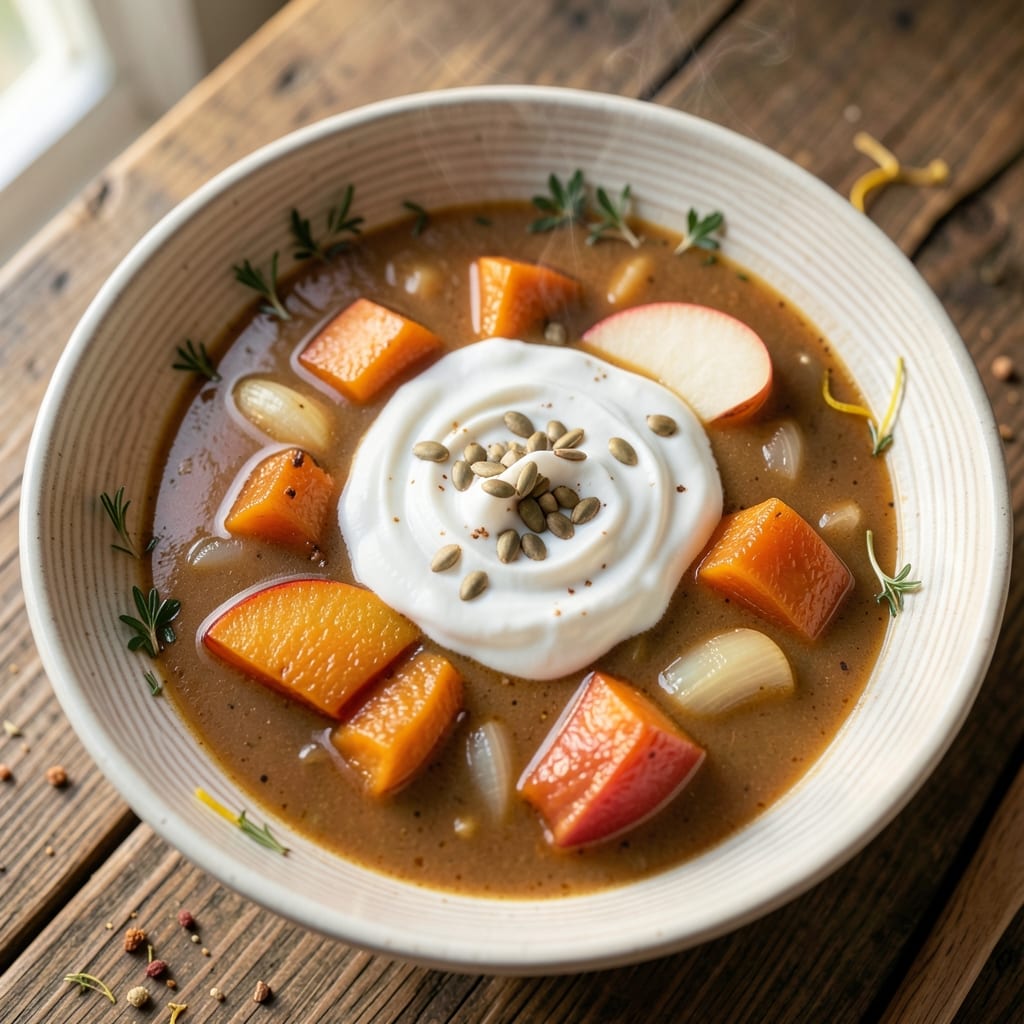
This acorn squash and apple soup recipe transforms humble ingredients into a velvety, spiced masterpiece that balances sweet and savory notes perfectly. 🍂 The secret lies in roasting the squash until tender and caramelized, then blending it with apples, onions, and aromatic spices for depth. I developed this recipe during autumn when I wanted something comforting yet sophisticated—no heavy cream or complicated techniques required.
What makes this soup special is its harmonious blend of flavors: the natural sweetness of acorn squash and apples pairs beautifully with warm cinnamon, nutmeg, and thyme. The roasting process intensifies the squash's flavor while creating a naturally sweet base that needs minimal added sugar. For extra richness, I often stir in coconut milk at the end, though the soup is delicious as-is for those watching their dairy intake.
By the time you finish, you'll have a smooth, golden soup with a subtle crunch from toasted pumpkin seeds or apple slices on top. The aroma alone will fill your kitchen with autumnal warmth, while each spoonful delivers a perfect balance of sweet, earthy, and spiced flavors. This vegetarian dish serves as both a hearty main course and a satisfying side—ideal for chilly evenings or holiday gatherings.
The best part? You can customize it easily: add a splash of maple syrup for extra sweetness, swap apples for pears, or boost protein with white beans. The instructions are straightforward, and the ingredients are likely already in your pantry. Let's get started on creating this comforting classic.
Ingredients for acorn squash and apple soup
Sweet squash, crisp apples, and warm spices—this cozy soup needs just 13 ingredients.
| Ingredient | Amount | Notes |
|---|---|---|
| Acorn Squash 🎃 | 1 medium | Peeled, cubed, seeds removed |
| Apples 🍎 | 2 medium | Sweet variety like Honeycrisp |
| Yellow Onion 🧅 | 1 whole | Diced, medium size |
| Garlic Cloves 🧄 | 3 cloves | Minced, fresh preferred |
| Vegetable Broth 💧 | 4 cups | Low-sodium preferred |
| Coconut Milk 🥥 | ½ cup | Full-fat for creaminess |
| Ground Cinnamon 🌶️ | 1 tsp | Freshly ground preferred |
| Ground Nutmeg 🌶️ | ¼ tsp | Freshly grated if possible |
| Fresh Thyme Leaves 🌿 | 1 tbsp | Or 1 tsp dried thyme |
| Maple Syrup 🍯 | 2 tbsp | Pure, grade B preferred |
| Pumpkin Seeds 🥜 | ¼ cup | Toasted for garnish |
| Salt 🧂 | ½ tsp | Kosher or sea salt |
| Black Pepper 🌶️ | ¼ tsp | Freshly ground preferred |
The acorn squash is the star here. Medium size works perfectly for 4 servings—any larger and you'll have leftovers, which is fine, but plan for storage. Look for squash with smooth, hard skin and no soft spots. Trader Joe's and Whole Foods usually carry them in fall, but regular grocery stores often have them too. If you can't find acorn squash, butternut squash works in a pinch, though the flavor will be slightly different. The apples? Honeycrisp or Fuji add natural sweetness that balances the earthy squash—no need for extra sugar if they're ripe.
No coconut milk? Greek yogurt or cashew cream adds richness without dairy. Short on thyme? Fresh rosemary at half the amount gives a different but lovely aroma. The maple syrup is optional—trust me, the roasted squash and apples are naturally sweet. For extra protein, stir in white beans or lentils at the end. The pumpkin seeds? Toast them in a dry pan for 3-4 minutes until golden—they add that perfect crunch. If you're in a hurry, skip the toasting and use pre-toasted seeds from the bulk bin.
Roasted squash keeps for 5 days in the fridge, so make a double batch. The soup itself reheats beautifully—just stir in a splash of broth or water if it thickens. For longer storage, freeze portions in airtight containers for up to 3 months. I always make extra because it's perfect for lunches. Garnish with extra seeds or apple slices right before serving—they lose their crunch when refrigerated.
Why You'll Love This Recipe
- One-Pot Wonder: I swear by this recipe—just peel, roast, and blend. No chopping mountains of veggies, no separate pans, and the acorn squash practically melts into silky perfection with zero fuss. (Yes, even on a Tuesday night.)
- Sweet-Savory Magic: That caramelized apple and roasted squash combo? It’s like autumn in a bowl—naturally sweet but balanced by the deep, toasty notes of garlic and onion simmered in broth. Honestly, the first sip makes me want to skip dessert.
- Meal Prep MVP: Make a big batch on Sunday, and you’ve got lunches for days. The flavor actually gets better the next day (seriously, the squash softens just right), and it reheats like a dream—no soggy soup here.
- Budget-Friendly Luxury: Acorn squash and apples stretch this recipe into a full bowl of comfort without breaking the bank. Between us, it’s the kind of dish that feels fancy but costs less than takeout. My wallet and taste buds thank me every time.
Step-by-step instructions for acorn squash and apple soup
Here's how to create a velvety, spiced soup with perfect balance and texture.
🔥 Step 1: Roast the Acorn Squash and Apples
Preheat your oven to 400°F. Cut the 1 medium acorn squash in half lengthwise and scoop out seeds. Place cut-side down on a parchment-lined baking sheet. Roast for 30-35 minutes until tender when pierced with a fork. Meanwhile, peel and core the 2 medium apples, then cut them into ½-inch chunks.
While the squash roasts, toss the apple chunks with 1 tablespoon maple syrup, ½ teaspoon salt, and ¼ teaspoon black pepper. Spread them on a separate baking sheet. Roast for 15-20 minutes until caramelized at the edges. The squash should be soft enough to mash easily with a fork when done—this is your signal it's ready.
🍳 Step 2: Sauté the Aromatics
Heat 1 tablespoon olive oil in a large pot over medium heat. Add the 1 whole diced yellow onion and cook for 5 minutes until softened and translucent. Add the 3 minced garlic cloves and cook for 30 seconds until fragrant—don't let it brown or it'll turn bitter.
Stir in the 1 tablespoon fresh thyme leaves, 1 teaspoon ground cinnamon, and ¼ teaspoon ground nutmeg. Toast the spices for 30 seconds until the aroma fills your kitchen. This step builds the warm, comforting spice base that makes this soup special.
🥘 Step 3: Build the Soup Base
Use a spoon to scoop the roasted acorn squash flesh directly into the pot, leaving behind the skin. Add the roasted apples and their caramelized juices. Pour in the 4 cups vegetable broth and bring everything to a gentle simmer. Let it cook for 10 minutes to meld the flavors.
Use an immersion blender to purée the soup until completely smooth. If you prefer chunks, use a regular blender (careful with hot liquids) and return the soup to the pot. Stir in the ½ cup coconut milk and 2 tablespoons maple syrup, then season with additional salt and pepper if needed. The soup should be creamy but not overly sweet—taste as you go.
⏰ Step 4: Finish and Garnish
Reduce heat to low and let the soup simmer for 5 minutes to let the flavors settle. Meanwhile, toast the ¼ cup pumpkin seeds in a dry skillet over medium heat for 3-4 minutes until golden and fragrant—watch them closely so they don't burn.
Ladle the soup into bowls and top each serving with toasted pumpkin seeds. The seeds add a delightful crunch that contrasts perfectly with the creamy soup. Serve immediately while warm, as the flavors continue to develop. This is where all your hard work pays off—each spoonful delivers that perfect balance of sweet, spiced acorn squash and apple.
Pro Tips For Making Acorn Squash And Apple Soup
- ROAST THE SQUASH FIRST: Cut the acorn squash in half, scoop out the seeds, then roast it cut-side down at 400°F (200°C) for 30–35 minutes before blending. The concentrated caramelized flavor makes the soup richer—no need to simmer it forever afterward.
- PEEL THE APPLES AFTER COOKING: Skip peeling raw apples; their skins add texture and depth. Instead, toss them in whole (peeled or not) with the onions and garlic, then remove them after 10 minutes of cooking. The flesh softens perfectly, and the skins stay intact for easy scooping.
- DON’T SKIP THE ONION SWEAT: Cook the diced onion in butter or oil until it’s translucent and slightly golden—about 8–10 minutes. Rushing this step leaves the soup tasting raw and one-dimensional. (Yes, even if you’re impatient like me.)
- BLITZ THE BROTH: Use 3 cups of broth instead of 2, then reduce it down to 2 cups while simmering the soup. The extra liquid prevents a gluey texture and gives you more control over the consistency—especially if you’re adding cream or yogurt later.
Storing and reheating this recipe
Refrigerator Storage
Let your soup cool completely before transferring to an airtight container—I use glass jars with tight-sealing lids. Store in the fridge for up to 5 days, but I find the flavors actually deepen after the first 24 hours. The coconut milk may separate slightly, so give it a good stir before reheating. The toasted pumpkin seeds should be added fresh for best crunch, but you can store them separately in a sealed container for up to 1 week. 🥥
Freezer Prep Tips
For longer storage, freeze portions in quart-sized freezer bags (they stack better than containers). Leave 1-inch headspace to prevent expansion cracks. I like to freeze in single-serving portions for easy lunches. Label with the date—this soup keeps its quality for up to 3 months. When reheating from frozen, add 2 tablespoons broth or water per serving to prevent thickening. 🧊
Stovetop Reheating
My preferred method is gentle stovetop reheating. Pour soup into a pot over medium-low heat and warm slowly for 8-10 minutes, stirring occasionally. If it thickens too much, add 1-2 tablespoons broth or water. Taste and adjust seasoning—often needs a pinch more salt after reheating. The coconut milk will re-emulsify naturally with gentle heat. 🔥
Microwave Method
For quick reheating, transfer soup to a microwave-safe bowl and cover loosely with a damp paper towel. Heat on 50% power in 1-minute intervals, stirring between each, until reaching 165°F. Avoid full power to prevent skin formation. If using leftovers with pumpkin seeds, add them fresh after reheating to maintain crunch. 💫
Garnish Refresh
Always garnish with fresh toasted pumpkin seeds or apple slices right before serving. Store-bought seeds lose their crunch when refrigerated, so toast a fresh batch in 3-4 minutes in a dry skillet. For extra flair, drizzle with a tiny bit of maple syrup or a sprinkle of fresh thyme just before eating. The contrast of warm spices and cool crunch makes every bite special. 🍏
Make-Ahead Soup
This soup is perfect for meal prep! Double the batch and store components separately: soup in jars and seeds in a container. Assemble bowls fresh when ready to eat. I often make a big pot on Sundays for quick lunches all week. The roasted squash keeps well too—store it separately and add fresh apples when reheating for extra brightness. 📅
Nutrition facts
Frequently asked questions
Can I substitute butternut squash for acorn squash?
Yes, butternut squash works beautifully! It's slightly sweeter and creamier, so you may want to reduce the maple syrup to 1 tablespoon instead of 2. The roasting time remains the same (30-35 minutes), but butternut's larger size means you'll need about 2 pounds for equivalent flavor. The texture will be smoother since butternut has less fibrous stringiness.
How do I make this soup dairy-free?
Simply omit the coconut milk and stir in ½ cup unsweetened almond milk or cashew cream instead. For extra richness, blend ½ cup cooked white beans directly into the soup—they'll add protein and creaminess without dairy. The natural sweetness of the squash and apples will still shine through beautifully.
Why does my soup taste bitter?
Bitterness usually comes from over-roasting the squash or burning the spices. Always roast acorn squash at 400°F until tender but not browned. When sautéing onions, keep heat at medium—never let garlic or spices burn. For extra sweetness, add 1 extra tablespoon maple syrup or a pinch of sugar at the end. The coconut milk also helps balance any bitterness.
Can I make this soup without apples?
Swap the apples for 1 cup pear cubes or ½ cup dried cranberries (soaked in warm water for 10 minutes first). For a savory twist, add 1 cup diced sweet potato to the roasting pan with the squash. The spices will still create that warm, comforting flavor profile—just with different sweetness levels.
How can I make this soup spicier?
Add ½ teaspoon smoked paprika with the other spices or stir in 1 teaspoon chili powder at the end. For heat, top each bowl with a pinch of cayenne pepper or a dash of hot sauce. If you love depth, roast 1 small diced jalapeño** with the apples—remove seeds and membranes first. The spices will mellow out beautifully while keeping that subtle kick.