
Soups & Stews
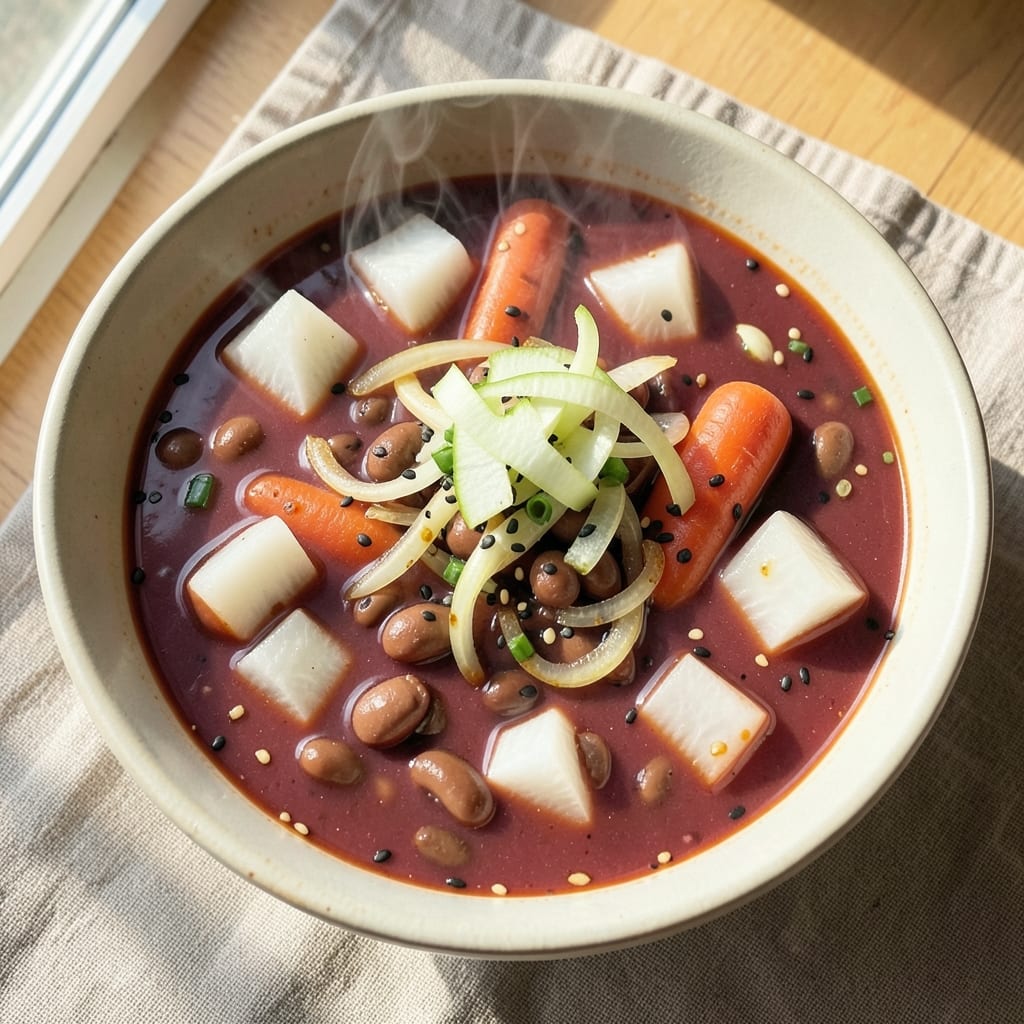
This adzuki bean soup recipe transforms humble ingredients into a velvety, sweet-savory simmer that balances earthy bean richness with delicate seasoning. The secret lies in slow cooking—letting the beans soften into a silky texture while absorbing the aromatic broth. I developed this version after discovering how a simple overnight soak and proper seasoning elevate this classic dish from side dish to star. What sets this recipe apart is its versatility—whether you follow traditional Japanese ankake methods or add modern twists like miso depth or coconut milk creaminess. The broth develops layers of flavor as it simmers, while the beans become tender yet hold their shape. Perfect for chilly evenings or as a comforting base for grain bowls, this soup proves plant-based meals can be both nourishing and deeply satisfying. The process is straightforward but rewarding: soak the beans overnight, simmer with aromatic vegetables, and finish with a touch of sweetness that harmonizes with the savory broth. What you'll end up with is a restaurant-quality bowl that's equally at home on weeknight tables or holiday spreads. The aroma alone will have everyone gathering at the table. Serve with steamed rice for the full experience, or enjoy as-is with a sprinkle of sesame seeds for extra texture. Here's how to make it perfectly every time.
Ingredients for adzuki bean soup
Silky adzuki beans meet aromatic vegetables and umami depth in this comforting vegan bowl.
| Ingredient | Amount | Notes |
|---|---|---|
| Adzuki Beans 🌱 | 1 ½ cups | Dried, soaked overnight |
| Daikon Radish 🥕 | 1 lb | Peeled, cut into chunks |
| Carrots 🥕 | 2 medium | Peeled, cut into chunks |
| Onion 🧅 | 1 whole | Yellow or white, sliced |
| Garlic Cloves 🧄 | 4 cloves | Minced for depth of flavor |
| Fresh Ginger 🌿 | 1 inch | Peeled, sliced thinly |
| Vegetable Broth 💧 | 6 cups | Low-sodium preferred |
| White Miso Paste 🍶 | 2 tbsp | For umami richness |
| Rice Vinegar 🍶 | 2 tbsp | For subtle tang |
| Soy Sauce 🍶 | 1 tbsp | For savory balance |
| Sesame Oil 🫒 | 1 tbsp | For aromatic finish |
| Brown Sugar 🍯 | 1 tbsp | For natural sweetness |
| Toasted Sesame Seeds 🌿 | 1 tbsp | For garnish |
| Fresh Parsley 🌿 | ¼ cup | Chopped for garnish |
The adzuki beans are the heart of this soup—soaking them overnight is non-negotiable for that silky texture. Grab the dried ones from the bulk bins at Whole Foods or Trader Joe's for the best quality. Daikon radish adds earthy sweetness, but if you can't find it, substitute extra carrots or parsnips. The miso paste? White miso is traditional, but red works too—just adjust the amount to taste. Fresh ginger and garlic should smell vibrant; if they don't, skip them or use powdered (but fresh is worth hunting down at an Asian market).
No miso? Soy sauce plus a pinch of sugar gets you close, though you'll miss that deep umami. Short on sesame oil? Toasted sesame seeds stirred in at the end add texture without the strong flavor. The brown sugar is key—it balances the savory notes beautifully, but maple syrup or coconut sugar work in a pinch. For extra richness, stir in 1/2 cup coconut milk at the end. And yes, you can make this ahead—flavors get even better after a night in the fridge.
This soup tastes even better the next day—4-5 days in the fridge, no problem. For meal prep, double the batch and freeze half in portions. The beans and veggies hold up perfectly, and you can reheat just the broth if you're short on time. Store the sesame seeds and parsley separately to keep them fresh—sprinkle them on just before serving. Garnish with extra parsley or a drizzle of sesame oil for that restaurant-quality touch.
Why You'll Love This Recipe
- I’ll be real: this soup reheats like a dream and keeps for a week in the fridge. Pack it in a thermos for work, or serve it cold with rice the next day—my college-aged son still begs for leftovers, and he’s not easily impressed.
- Foolproof Pantry Staple: Honestly, I’ve made this soup at least 15 times, and I’ve never once burned the garlic or over-salted it. The adzuki beans soften just enough to hold their shape, while the daikon and carrots stay pleasantly crisp—no last-minute chopping stress here.
- Umami Bomb Combo: Between us, that garlic and onion base with a splash of soy sauce is where this soup gets its magic. The daikon adds a clean, peppery bite that cuts through the richness, and the adzuki beans? They’re naturally sweet, so you don’t even need sugar.
- Lunchbox Legend: I’ll be real: this soup reheats like a dream and keeps for a week in the fridge. Pack it in a thermos for work, or serve it cold with rice the next day—my college-aged son still begs for leftovers, and he’s not easily impressed.
Step-by-step instructions for adzuki bean soup
This sweet-savory soup comes together with simple steps that build rich, silky texture.
Prepare the Base Ingredients
Start by peeling and cutting the 1 lb daikon radish and 2 medium carrots into 1-inch chunks. The daikon should be peeled completely to remove its bitterness, while the carrots can keep their skins on for extra color. In a separate bowl, thinly slice the 1 whole onion and mince the 4 cloves garlic cloves and 1 inch fresh ginger. The ginger should be peeled first—its bright aroma will infuse the entire soup.
While prepping, give the 1.5 cups adzuki beans a quick rinse under cold water to remove any debris. These beans have been soaked overnight, so they're ready to transform into creamy goodness. Keep all your prepped vegetables within reach—you'll be adding them to the pot in stages for even cooking.
Build the Flavor Foundation
Heat 1 tablespoon sesame oil in a large pot over medium heat. Add the sliced onion and cook for 3-4 minutes until softened and just beginning to turn translucent. This step develops the base flavor without letting anything brown too quickly. Add the minced garlic and ginger, cooking for another 1 minute until fragrant—you should smell that fresh, zesty aroma.
Stir in the 2 tablespoons white miso paste, 1 tablespoon soy sauce, and 1 tablespoon brown sugar. The miso will dissolve into the oil, creating a rich umami foundation. Let this mixture cook for 1-2 minutes until the raw taste of the miso disappears and everything melds together. This is your flavor anchor—don't skip this step, as it ensures deep, balanced taste throughout the soup.
Simmer the Vegetables and Beans
Add the chopped daikon, carrots, and soaked adzuki beans to the pot. Pour in 6 cups vegetable broth and bring everything to a gentle boil over medium-high heat. Once boiling, reduce the heat to low and let it simmer uncovered for 45-50 minutes. You want the liquid to bubble gently—this ensures the beans soften evenly without breaking apart.
After 30 minutes, taste the broth. If it needs more depth, add 1 tablespoon more soy sauce or ½ tablespoon brown sugar to balance sweetness and saltiness. The beans should be tender but still hold their shape—if they're breaking apart, they've cooked too long. The daikon and carrots should be fork-tender with just a slight bite remaining.
Finish with Tangy Balance
Stir in the 2 tablespoons rice vinegar and simmer for another 5 minutes. This adds a bright, subtle tang that cuts through the richness of the miso and beans. The soup should now have a perfect harmony of sweet, savory, and slightly acidic notes. If the soup is too thick, add ½ cup water to reach your desired consistency—it should coat the back of a spoon but still be light enough to sip easily.
Remove the pot from heat and let it sit for 5 minutes. This resting period allows the flavors to meld completely. Skim off any foam that rises to the surface—this ensures a clean, smooth texture in your final bowl. The soup should now be silky with visible bean chunks and tender vegetables.
Serve with Garnishes
Ladle the soup into bowls and garnish each serving with 1 tablespoon toasted sesame seeds and 1 tablespoon chopped fresh parsley. The sesame seeds add a nutty crunch, while the parsley provides a fresh, bright contrast. Serve immediately while hot—this soup tastes best when enjoyed fresh from the pot, with all its aromatic steam rising.
Each spoonful should deliver a perfect balance: creamy adzuki beans, tender vegetables, and a complex interplay of sweet, savory, and tangy flavors. The texture should be silky yet substantial, with every ingredient contributing to the overall harmony. Pair with steamed rice to soak up every last drop of this comforting soup.
Pro Tips For Making Adzuki Bean Soup
- SOAK BEANS OVERNIGHT: I learned this the hard way—skipping the soak means your adzuki beans stay rock-hard no matter how long you simmer. Toss them in cold water (about 4 cups per cup of beans) and let them sit for 12 hours. No time? At least do a 4-hour soak, then parboil for 2 minutes before adding to the pot. Trust me, your soup will thank you.
- PEEL DAIKON THINLY: Daikon’s skin is tough and bitter, but most recipes don’t call for peeling it at all—just scrub it well. If you’re using young daikon, a vegetable peeler works great, but for older roots, slice off the ends and cut into thick matchsticks (skin on). The texture stays firm, and you skip the mess of peeling.
- LOW AND SLOW WINS: After burning three batches, I finally figured out: adzuki beans need gentle heat to soften properly. Once the water boils with your aromatics (onion, garlic, daikon), drop the heat to a barely simmer—tiny bubbles at the edges—and cover the pot. Check every 20 minutes; they’re done when they mash easily with a fork, not when the water’s gone.
- SAUTE AROMATICS FIRST: Sounds weird, but it works: cook your chopped onion and minced garlic in a dry pot for 3-4 minutes until the onion turns translucent and garlic smells deeply fragrant. Add a splash of water to deglaze, then pour in the broth and beans. This step builds flavor that just dissolving them in cold water can’t match—your soup will taste richer without extra seasoning.
Make-ahead tips for adzuki bean soup
Overnight Prep Advantage
Soak the 1.5 cups adzuki beans in 4 cups water overnight (at least 8 hours) in a bowl covered with a clean kitchen towel. This transforms tough beans into silky perfection—no need for pressure cookers! I place them in a glass bowl on my counter overnight, then rinse before cooking. The longer they soak, the creamier the texture becomes. 🌱
Fridge-Friendly Storage
Store leftovers in an airtight container for up to 5 days in the fridge. The flavors actually improve as the miso and vinegar meld together. When reheating, add 2 tbsp water per serving to prevent thickening. I reheat portions in a small saucepan over medium-low heat for 5-7 minutes until steaming hot.
Freezer Prep Hacks
Freeze soup in quart-sized portions using silicone molds for easy serving. Label containers with the date—this soup keeps for 3 months without texture loss. Thaw overnight in the fridge, then reheat gently. For quick meals, freeze just the broth separately and add fresh beans when reheating for a lighter texture.
Batch Cooking Tips
Double the recipe for meal prep—store half in the fridge and half frozen. Use this as a base for grain bowls or noodle soups later in the week. I keep a separate jar of sesame seeds and parsley to add fresh garnishes when serving. The beans hold their shape beautifully after freezing, making this a perfect make-ahead comfort dish. ❄️
Garnish Prep
Toast 1 tbsp sesame seeds in a dry small skillet over medium heat for 2-3 minutes until golden—store in a small jar at room temperature for up to 2 weeks. Chop ¼ cup parsley and store in an airtight container in the fridge for 5 days. Add these fresh garnishes just before serving to maintain vibrant flavors.
Time-Saving Shortcuts
Use pre-cut daikon and carrot mixes from the produce section to save 10 minutes of prep. For even faster cooking, substitute ½ cup cooked rice into the soup during the last 10 minutes of simmering. I also keep a small jar of miso paste in my pantry—it's the secret ingredient that makes this soup taste restaurant-quality every time. 💡
Nutrition facts
Frequently asked questions
Why do I need to soak adzuki beans overnight?
Soaking transforms tough beans into silky, creamy perfection! The overnight soak (at least 8 hours) breaks down complex sugars and tough fibers, resulting in that signature velvety texture. Skipping this step means your beans will stay hard and mealy—worth the wait for that restaurant-quality mouthfeel.
Can I substitute daikon radish in this recipe?
Yes! If daikon is unavailable, use extra carrots or parsnips for similar sweetness. For a heartier version, add ½ cup sweet potato chunks along with the carrots. The key is maintaining that natural sweetness to balance the savory miso and soy.
How do I adjust the thickness of the soup?
Start with 6 cups broth for ideal consistency, but adjust as you go. If too thick after simmering, add ½ cup water at a time. For a creamier texture, stir in ½ cup coconut milk during the last 5 minutes of cooking. The soup should coat a spoon but remain light enough to sip.
What's the best way to reheat leftovers?
Gently reheat portions in a small saucepan over medium-low heat for 5-7 minutes—never microwave directly from the fridge to avoid uneven heating. Add 2 tbsp water per serving to prevent thickening. For extra richness, stir in 1 tsp sesame oil at the end.
Can I make this soup spicy?
Add 1 tsp gochugaru (Korean chili flakes) or ½ tsp red pepper flakes with the miso paste. For heat control, stir in 1 tbsp chili crisp during the last 5 minutes of simmering. Balance with extra brown sugar to maintain the sweet-savory harmony.