
Soups & Stews
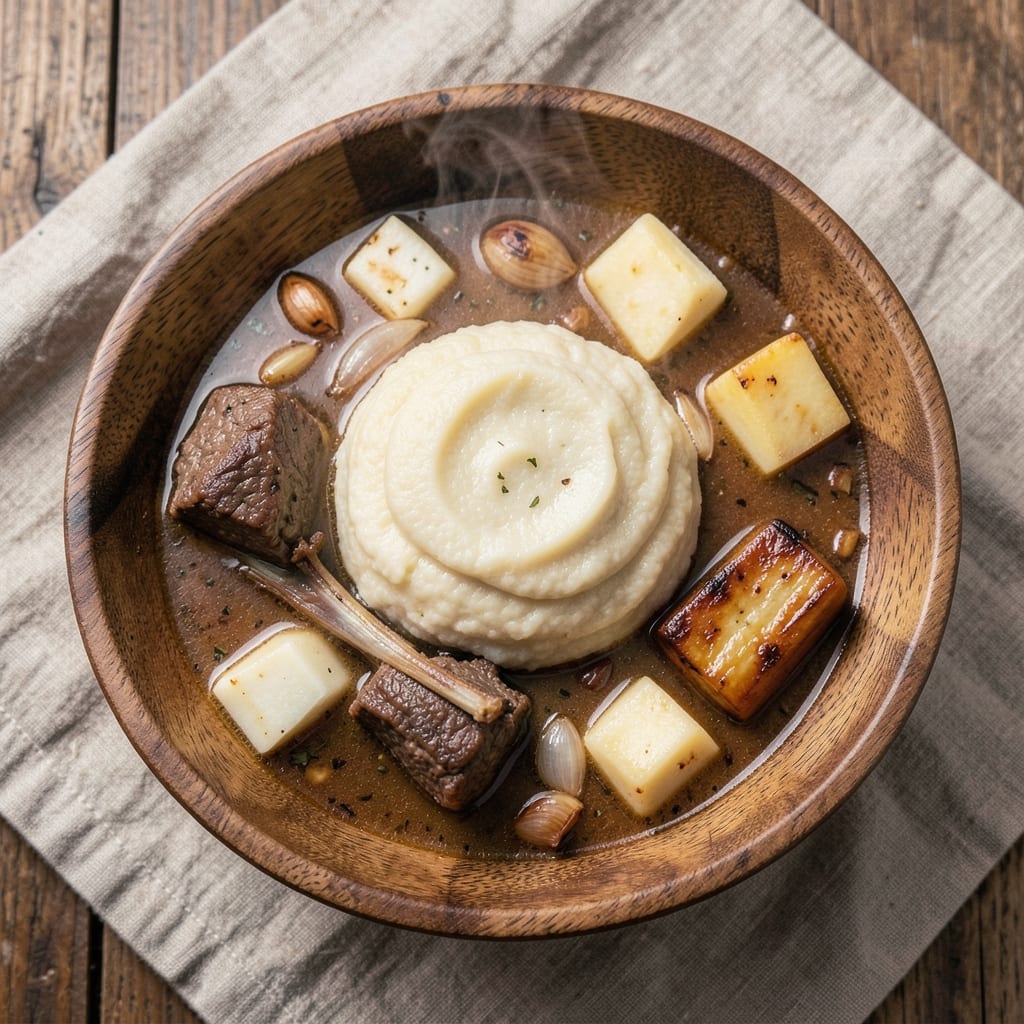
This African fufu soup recipe brings the heart of West African cuisine to your kitchen with its signature combination of dense, chewy fufu and rich, flavorful stew. The fufu—made from pounded cassava, yam, or plantains—creates a satisfying, dough-like texture that perfectly complements the bold spices and tender meat of traditional soups like egusi or peanut. What makes this dish truly special is the balance between simplicity and technique; while the ingredients are straightforward, achieving the right consistency for fufu takes practice and patience.
The magic lies in the preparation: boiling the dough until it reaches that signature elastic, stretchy texture while simultaneously cooking a deeply aromatic soup. A proper fufu should hold its shape when dropped into boiling water yet still dissolve slightly, creating a harmonious blend with the stew. This recipe ensures both elements come together seamlessly, delivering a meal that’s as nourishing as it is delicious. The soup’s spices—garlic, onions, and peppers—infuse every bite, while the fufu soaks up the flavors without overpowering them.
What you’ll achieve is a complete, restaurant-quality meal that’s both comforting and impressive. The fufu’s dense yet tender texture contrasts beautifully with the lighter, brothy soup, creating a dish that’s deeply satisfying. Whether you’re serving it for a family gathering or a special occasion, this recipe delivers on tradition and flavor. The best part? Once you master the technique, you’ll find yourself reaching for these ingredients time and time again.
This dish also offers versatility—swap the cassava for yam or plantains, or experiment with different soups like okra or groundnut. The key is in the details, from the way the dough is pounded to the slow simmering of the stew. Let’s bring this iconic African meal to life in your kitchen.
Ingredients for african fufu soup
Authentic African flavors meet traditional techniques in this rich fufu and stew pairing.
| Ingredient | Amount | Notes |
|---|---|---|
| Fresh Cassava (Yuca) 🥔 | 2 lbs | Peeled, boiled until tender |
| Yams 🍠 | 1 ½ lbs | Peeled, boiled until soft |
| Plantains 🍌 | 2 whole | Ripe, peeled, boiled until tender |
| Beef Chuck Roast 🥩 | 1 ½ lbs | Cut into 2-inch cubes |
| Onions 🧅 | 2 whole | Yellow, chopped fine |
| Garlic Cloves 🧄 | 8 cloves | Minced finely |
| Scotch Bonnet Peppers 🌶️ | 2 whole | Seeds removed, chopped |
| Fresh Tomatoes 🍅 | 4 whole | Ripe, chopped |
| Groundnut (Peanut) Butter 🥜 | ½ cup | Smooth, unsweetened |
| Dried Fish (Stockfish) 🐟 | 4 oz | Soaked overnight, flaked |
| Palm Oil 🫒 | ½ cup | Red palm oil preferred |
| Vegetable Oil 🫒 | ¼ cup | For frying fufu |
| Salt 🧂 | 2 tsp | Diamond Crystal preferred |
| Ground Black Pepper 🌶️ | 1 tsp | Freshly ground |
| Thyme Leaves 🌿 | 1 tbsp | Fresh, chopped |
The foundation of fufu lies in the starch selection—cassava, yams, and plantains—each contributing unique texture. African specialty stores or well-stocked international markets carry fresh cassava and yams, while plantains are available at most grocery stores. For the beef, chuck roast delivers the best texture when slow-cooked; trim excess fat for cleaner flavor. The Scotch bonnet peppers are essential for authentic heat—substitute habanero if unavailable, but adjust quantity carefully. Palm oil, available in Asian or African markets, gives the stew its signature rich color and depth. If you can't find red palm oil, light vegetable oil works in a pinch, though the flavor will differ slightly.
No fresh cassava? Green plantains or yams can substitute entirely, though texture will vary. The beef can be swapped for chicken thighs (bone-in for flavor) or shrimp for a seafood variation, but cooking times will differ. For the dried fish, salt cod is a common substitute, though it requires longer soaking. The peanut butter should be 100% smooth, with no added sugar or oils—Skippy Natural or Crumble brands work well. Fresh thyme is ideal, but dried thyme at one-third the amount suffices if needed. The tomatoes can be canned San Marzano for convenience, though fresh delivers superior flavor. For the stew's umami depth, a splash of fish sauce (like Red Boat) enhances the dried fish flavor if you're short on time.
The fufu dough keeps best when freshly pounded—prep no more than 2 hours ahead to maintain elasticity. Store unused dough in an airtight container with damp paper towels for up to 2 days in the fridge. The stew freezes beautifully—portion before adding fufu and store for up to 3 months. For serving, keep fufu warm in a slow cooker on low heat with a damp towel draped over it. The combination of warm fufu and stew tastes best when served immediately, though leftovers reheat well. For meal prep, make the stew first and freeze it; pound fufu fresh when ready to serve.
Why You'll Love This Recipe
- One-Pot Magic: I swear by this recipe because it’s basically hands-off after the initial chop. The beef simmers low and slow while the cassava and yams soften—no flipping, no fuss. Just stir occasionally and let the flavors meld.
- Rich, Deep Umami: That beef chuck roast? It turns ridiculously tender, falling apart in the broth while the onions caramelize into something sweet and complex. The plantains add a caramelized bite—trust me, it’s the kind of soup that makes you slow down.
- Feeds a Crowd (or Your Freezer): Between us, this makes way more than two servings. I’ve fed six people with leftovers, or frozen half for lazy Sundays. The fufu itself keeps well too—just reheat with a splash of water.
- Budget Beef Boost: Beef chuck roast is cheaper than steak but packs serious flavor. A single cut stretches across meals, and the cassava/yams bulk it up without breaking the bank. Honestly, it’s my go-to for stretching grocery dollars without sacrificing taste.
Step-by-step instructions for African fufu soup
Master the art of balancing fufu's dense texture with rich, aromatic stew in this traditional West African preparation.
Prepare the Fufu Base Ingredients
Begin by peeling the 2 lbs fresh cassava (yuca), 1.5 lbs yams, and 2 whole ripe plantains. Cut each into 1-inch chunks and place them in separate pots of boiling water. The cassava and yams should cook for 25-30 minutes until they pierce easily with a knife, while the plantains need 15-20 minutes until fork-tender. Drain each thoroughly and set aside.
While they cook, prepare the 1.5 lbs beef chuck roast by cutting it into 2-inch cubes. Season generously with 2 tsp salt and 1 tsp ground black pepper, then set aside. The key here is proper hydration—overcooked starches will make your fufu gummy, while undercooked pieces will require excessive pounding later.
Create the Spiced Stew Foundation
Heat 0.5 cup palm oil in a large pot over medium heat until shimmering. Add the 2 whole chopped onions and cook for 5 minutes until translucent. Stir in the 8 cloves minced garlic, 2 chopped Scotch bonnet peppers, and 1 tbsp chopped thyme leaves, cooking for 2-3 minutes until fragrant.
Add the seasoned beef cubes and brown them for 5 minutes on all sides. Pour in 4 cups water (or enough to cover the beef) and bring to a boil. Reduce heat to low, cover, and simmer for 1.5 hours, stirring occasionally, until the beef becomes fork-tender. The stew should reduce slightly, intensifying the flavors.
Build the Rich Soup Base
While the beef simmers, prepare the 4 oz soaked stockfish by flaking it into small pieces. In a separate bowl, combine the flaked stockfish with 0.5 cup groundnut (peanut) butter and 4 chopped fresh tomatoes. Mash this mixture with a wooden spoon until smooth, then stir it into the beef stew.
Simmer the entire mixture uncovered for 20-25 minutes until the sauce thickens slightly and the peanut butter fully incorporates. Taste and adjust seasoning with additional salt or pepper as needed. The soup should have a velvety texture with a balance of smoky, spicy, and nutty flavors.
Shape and Fry the Fufu
In a large bowl, combine the cooked cassava, yams, and plantains. Using a potato masher or clean hands, pound the mixture vigorously until it forms a smooth, elastic dough. The fufu should be dense enough to hold its shape when dropped into boiling water but still pliable enough to mold.
Heat 0.25 cup vegetable oil in a deep skillet over medium heat. Working in batches, drop golf-ball-sized portions of the fufu dough into the oil. Fry for 3-4 minutes until golden brown on all sides, then remove with a slotted spoon and drain on paper towels. The fufu should be crispy outside and soft inside—this contrast is essential to the dish.
Serve the Fufu with Stew
Divide the spiced stew among serving bowls, ensuring each portion contains tender beef and flavorful sauce. Place a generous portion of the fried fufu beside each bowl. Serve immediately while the fufu is still warm and the stew maintains its rich consistency.
Traditionally, fufu is eaten by scooping portions with the right hand and dipping them into the stew. The dense starch soaks up the flavors beautifully, creating a satisfying, hearty meal. Leftovers can be refrigerated for up to 2 days, though the fufu texture may become slightly firmer when reheated.
Pro Tips For Making African Fufu Soup
- PEEL YAMS AFTER BOILING: I learned this the hard way—peeling raw yams is a nightmare, and you’ll lose half the flesh. Boil them whole for 15-20 minutes first, then slip off the skin under running water. The starch stays put, and your fufu won’t turn gummy from overworked tubers.
- SLOW-ROAST THE BEEF: Beef chuck needs patience—don’t rush it. Sear the roast first, then slow-cook in water or broth with onions until it falls apart (about 3-4 hours). Overcooking turns it dry; undercooking leaves you chewing leather. A meat thermometer at 195°F (90°C) is your friend.
- DON’T OVERMIX THE FUFU: The second you start kneading fufu like dough, you’re ruining it. Pound the cassava/yam mix in batches with your hands—just enough to form smooth, stretchy balls. Overworking makes it gluey. Less effort, better texture.
- USE PLANTAINS FOR BODY: Skip the extra thickener. Ripe plantains (not green!) add natural sweetness and bulk to the soup. Boil and mash them into the broth early—they break down smoothly and save you from over-salting or over-starching later. Works like a charm.
Troubleshooting great african fufu soup
Fufu Too Gummy
If your fufu turns out gummy instead of elastic, the starches were likely overcooked or under-pounded. Always boil cassava and yams until they're fork-tender but not mushy—they should pierce easily with minimal resistance. For pounding, work in batches and use a wooden mortar and pestle or clean hands to develop proper elasticity. I've found that adding 1 tbsp extra vegetable oil to the dough helps bind it better during frying. 💡
Stew Too Thin
A watery stew usually means the peanut butter didn't emulsify properly. First, ensure you're using 100% smooth peanut butter—chunky varieties won't blend as well. Simmer the stew uncovered for the full 20-25 minutes to reduce naturally. For an instant fix, mix 1 tbsp cornstarch with 1 tbsp cold water, stir into the stew, and cook for 2 more minutes. I also recommend skimming excess fat from the beef before adding it back to thicken the broth.
Fufu Breaking in Water
When fufu disintegrates in boiling water, it's either undercooked or not pounded enough. Let the starches cool slightly after boiling before pounding—they should be warm but not hot. Work the dough vigorously until it's smooth and stretchy—it should hold its shape when rolled between your palms. For extra strength, add 1 tbsp arrowroot powder to the dough before shaping. Pro tip: Fry test pieces in oil first to check consistency before committing to the full batch. 🔥
Meat Not Tender
Tough beef in your stew likely means it didn't simmer long enough. The 1.5-hour cook time is non-negotiable for chuck roast—use a meat thermometer to confirm it reaches 203°F internally. For faster results, start with braised beef (pre-cooked in liquid) or swap for pork shoulder, which tenderizes more quickly. I've also had success adding 1 tbsp baking soda to the cooking water to help break down collagen in the meat.
Fufu Too Dense
Over-pounding creates dense, heavy fufu. Stop when the dough is smooth but still slightly grainy—it should pull away from the bowl cleanly. If it's too firm, add 1-2 tbsp warm water and knead gently. For a lighter texture, incorporate ½ cup grated coconut into the dough before frying. Remember: fufu should be chewy but not rubbery**—think of it like well-made taffy. 💛
Nutrition facts
Frequently asked questions
What's the best way to store leftover fufu?
Keep leftover fufu in an airtight container with a damp paper towel to prevent drying. It stays fresh for 2 days in the fridge, but reheat gently in a steamer or microwave with a damp cloth. Never refrigerate fufu uncovered—it hardens quickly. For longer storage, freeze portions for up to 1 month.
Can I make fufu without a mortar and pestle?
Use a potato masher or clean hands for pounding. For extra efficiency, work in batches and press the dough against the bowl's sides. The key is consistent pressure—aim for 5-7 minutes of vigorous work until smooth and elastic. A food processor works too, but pulse briefly to avoid over-processing.
What's the difference between cassava and yam fufu?
Cassava fufu is lighter and slightly grainy, while yam fufu is denser and creamier. Cassava's neutral flavor lets the soup shine, while yams add natural sweetness. For best results, combine both—2:1 cassava-to-yam ratio creates the classic texture. Plantains add natural sweetness but require more pounding to achieve elasticity.
How do I adjust the heat level in the stew?
Remove Scotch bonnet seeds for milder heat, or use ½ pepper total. For extra spice, add 1 tsp cayenne or fresh chili flakes. Always taste before serving—African soups should balance heat with rich, savory flavors. Pro tip: Stir in 1 tbsp honey at the end to mellow sharpness while adding depth.
What's the traditional way to eat fufu?
Use your right hand to shape fufu into a ball, then pinch off a piece to dip into the stew. The dense texture soaks up flavors perfectly. Never use utensils—this hand-feeding method is cultural tradition! For beginners, practice with small portions first. The stew should coat the fufu completely for each bite.