
Soups & Stews
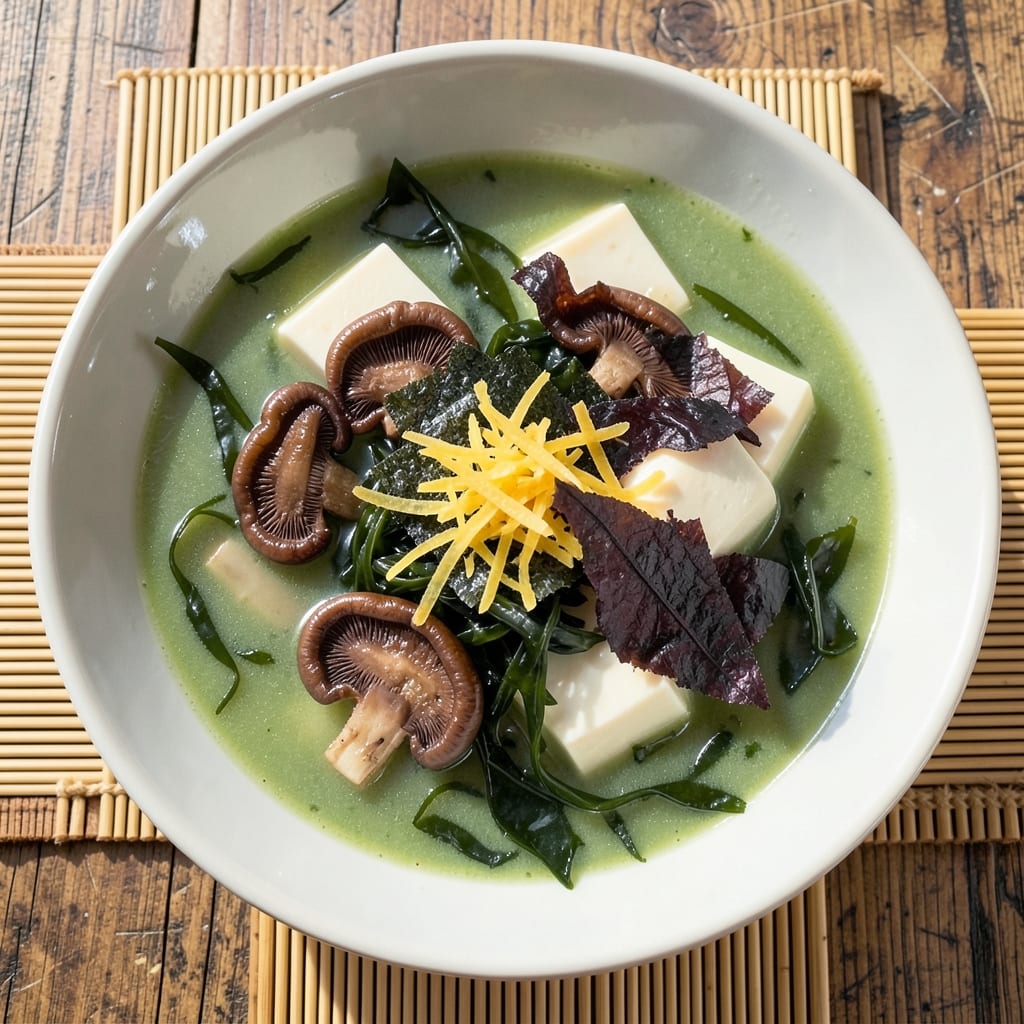
This umami-rich algae soup transforms sea vegetables into a velvety, nutrient-packed elixir that balances earthy depth with toasted sesame crunch. 🌊 The foundation begins with rehydrated wakame and nori, simmered in a vegan-friendly kombu broth until their natural sweetness unfurls—no artificial flavors needed. What sets this apart is the layered texture: silky algae base meets tender shiitake mushrooms and silken tofu, all bound by a whisper of ginger and garlic. The magic happens in the finishing touches: toasted sesame seeds add nutty contrast while fresh scallions and microgreens introduce bright, fresh notes. This isn’t just a soup—it’s a complete dish that delivers restaurant-quality umami in a single bowl, perfect for plant-based meals or anyone craving oceanic flavors without the fish. The broth reduces to a glossy, mineral-rich consistency, carrying every ingredient’s essence in every sip. For those new to sea vegetables, don’t worry—this recipe starts with easy-to-find varieties like nori and wakame, then builds complexity through technique. The tofu and mushrooms add hearty substance, while the sesame crunch elevates each spoonful. Whether you’re exploring vegan cuisine or simply seeking a bold, nutrient-dense meal, this algae soup delivers depth and satisfaction in every bite. Serve it warm with steamed rice for a balanced meal, or let it cool slightly for a refreshing chilled version. The beauty of this recipe lies in its versatility—adapt it to your pantry while keeping the core umami profile intact. Let’s create something extraordinary from humble sea vegetables.
Ingredients for algae soup
Four servings of oceanic richness start with these nutrient-dense sea vegetables and umami-packed staples.
| Ingredient | Amount | Notes |
|---|---|---|
| Dried Wakame Seaweed 🌊 | 1 oz | Rehydrated in hot water |
| Dried Kombu 🍃 | 2 inches | Cut into strips for broth |
| Dried Nori Sheets 🌿 | 4 whole | Crumbled for texture |
| Silken Tofu 🍫 | 1 block | Soft, for velvety texture |
| Shiitake Mushrooms 🍄 | 8 whole | Stems removed, sliced |
| Fresh Ginger 🧄 | 1 tbsp | Finely grated, aromatic |
| Garlic Cloves 🧄 | 3 cloves | Minced for depth |
| Toasted Sesame Seeds 🥜 | 2 tbsp | Freshly toasted for crunch |
| Scallions 🧅 | ¼ cup | Thinly sliced, fresh |
| Microgreens 🌱 | ¼ cup | Optional, for garnish |
| White Miso Paste 🍶 | 1 tbsp | For umami richness |
| Sesame Oil 🫒 | 1 tsp | For finishing aroma |
| Water 💧 | 4 cups | Filtered preferred |
| Vegetable Oil 🫒 | 1 tbsp | For tofu frying |
The kombu and wakame are the soul of this soup. Look for high-quality dried kombu at Asian markets—Koyo or Marukome are reliable brands. The wakame should be vibrant green and free of debris. For nori, Japanese brands like Nori no Kuni offer the most authentic flavor. If you can't find kombu, kelp flakes from bulk bins work in a pinch, though the broth will be slightly less complex. The shiitake mushrooms should be plump and firm, with no sliminess—Trader Joe's often carries pre-sliced ones for convenience. Fresh ginger and garlic are non-negotiable here; organic varieties minimize dirt residue when grating.
No kombu? Substitute with 1 tsp kombu powder or double the miso paste. Out of wakame? Dulse flakes or extra nori add similar depth. For the mushrooms, shiitake stems can be finely chopped and added back—zero waste. The sesame seeds must be toasted until golden for that nutty crunch; black sesame seeds add a deeper flavor if you want to experiment. Fresh scallions can be swapped for green onions or chives, though scallions have the most delicate bite. Microgreens are optional but add a luxurious finish—if unavailable, baby spinach or arugula works beautifully.
Store the dried kombu and wakame in airtight containers away from light—they last 12 months this way. Rehydrated kombu broth can be frozen for 3 months in ice cube trays for future use. The finished soup keeps 4 days refrigerated or 3 months frozen; the texture holds beautifully when reheated. For best results, reheat gently on low heat and stir in fresh sesame seeds and scallions just before serving to preserve their crunch and brightness.
Why You'll Love This Recipe
- Pantry Magic: I swear by this recipe when I forget to grocery shop. Just soak the dried wakame and kombu in hot water, toss in pre-sliced shiitake (or even canned for extra speed), and let the broth work its magic—no fresh herbs or fancy prep needed.
- Umami Bomb: That first sip? Pure flavor explosion. The kombu adds a deep, savory richness, while the nori sheets bring a briny punch—like a seafood bouillabaisse without the fish price tag. Honestly, my non-seafood-loving partner asks for seconds.
- Meal Prep MVP: This soup tastes even better the next day (yes, really). I make a big batch on Sundays, and it’s my go-to for lunches—just reheat and add a drizzle of sesame oil. Even my picky college-aged kid grabs it from the fridge.
- Budget-Friendly Luxury: For under $10, I feed four people a restaurant-worthy dish. The dried seaweeds and tofu stretch the broth, and shiitake mushrooms add texture without breaking the bank. Between us, it’s the most satisfying cheap-eats win I’ve found.
Step-by-step instructions for algae soup with umami depth
Transform simple sea vegetables into a velvety, aromatic broth with layers of texture and flavor.
🍳 Step 1: Prepare the Umami Broth Foundation
In a 4-quart pot, combine the 4 cups water with the 2 inches dried kombu cut into strips. Bring to a gentle simmer over medium heat—you'll see bubbles form at the edges but not a full boil. Simmer for 10 minutes to extract the kombu's deep, mineral-rich flavor without bitterness.
Real talk: Kombu releases its umami gradually, so patience here ensures a balanced broth. After 10 minutes, remove the kombu strips with tongs—they'll be soft and pliable. Add the 1 oz dried wakame seaweed and simmer for another 5 minutes until the wakame unfurls and softens. This step builds the soup's signature oceanic sweetness.
🍳 Step 2: Build Flavor Layers with Aromatics
Increase heat to medium-high and add the 1 tbsp vegetable oil. Swirl the pot to coat the sides, then add the 8 sliced shiitake mushrooms and 1 tbsp finely grated fresh ginger. Sauté for 3-4 minutes until the mushrooms release their moisture and the ginger becomes fragrant—you should smell that bright, citrusy aroma.
Add the 3 minced garlic cloves and cook for 30 seconds until golden. Here's the thing—garlic burns fast, so keep an eye on it. Immediately stir in the 1 tbsp white miso paste and 2 tbsp toasted sesame seeds, letting it bloom for 1 minute. This creates a rich, savory base that ties all the sea vegetable flavors together.
👨🍳 Step 3: Incorporate Tofu and Crispy Textures
In a separate pan, heat 1 tsp sesame oil over medium heat. Add the 1 block silken tofu cut into ½-inch cubes and fry for 2-3 minutes per side until golden brown. The tofu should develop a delicate crust while remaining silky inside—this contrast is key.
Return the tofu to the soup pot and add the 4 whole dried nori sheets crumbled into small pieces. Simmer together for 5 minutes to let the nori soften and infuse the broth. The nori adds a subtle briny note that elevates the entire dish. Keep the heat at medium-low to prevent the broth from boiling vigorously.
🥘 Step 4: Finish with Fresh Herbs and Garnish
Remove the pot from heat and stir in the 0.25 cup thinly sliced scallions and 0.25 cup microgreens (if using). These fresh elements add a bright, crisp contrast to the rich umami base. Taste and adjust seasoning—you might need a pinch of salt to balance the flavors, though the miso and kombu should already provide ample depth.
Ladle the soup into bowls, garnishing each serving with an extra sprinkle of toasted sesame seeds and a drizzle of sesame oil. The seeds add crunch, while the oil enhances the aroma with each spoonful. Serve immediately while the tofu maintains its perfect texture and the broth remains steaming hot.
Pro Tips For Making Algae Soup
- Soak Kombu First: Toss that dried kombu strip into cold water before heating—it’ll soften and release its umami punch faster. I used to wait until boiling, and the broth always tasted flat until I learned this. Five minutes in cold water makes all the difference. ---
- Rinse Wakame Twice: Wakame loves hiding sand and grit—give it a quick rinse in a colander, then a second rinse after soaking. I’ve had a mouthful of gritty soup more times than I’d like to admit, and this step cuts it out completely. ---
- Slice Shiitake Thin: Thin, even slices cook faster and soak up broth better than thick chunks. Use a sharp knife and aim for ⅛-inch thickness—any thicker, and they’ll turn to mush instead of tenderizing. (Yes, I’ve ruined a batch by being lazy here.) ---
- Save Nori for Serving: Skip tossing nori into the broth—it turns bitter when overcooked. Instead, tear it into strips and add it right before serving for that perfect crisp texture. Trust me, the contrast is worth the extra 30 seconds.
Pro cooking tips for this recipe
Broth Extraction Mastery
The kombu broth is where the magic starts—never boil it! Simmer kombu strips in 4 cups water at gentle bubbles (not a rolling boil) for 10 minutes to extract umami without bitterness. I use a 4-quart pot with 2 inches dried kombu cut into strips—this gives the perfect mineral depth. The key is patience: kombu releases flavor gradually, and rushing it turns the broth bitter. 🌊
Tofu Texture Secrets
Silken tofu needs gentle handling to maintain its velvety texture. Cut it into ½-inch cubes and fry in 1 tsp sesame oil over medium heat for just 2-3 minutes per side—golden brown but still silky inside. Overcooking makes it rubbery. I like to use a nonstick skillet for even browning, then return it to the soup to soak up those umami flavors. The contrast with the crispy edges is what makes this soup special.
Seaweed Rehydration
Wakame and nori behave differently—treat them separately. Add 1 oz dried wakame to the simmering kombu broth and cook for 5 minutes until it unfurls like delicate sea fronds. For nori, crumble 4 whole sheets directly into the pot during the final 5 minutes of simmering. This keeps their texture intact while infusing the broth with briny depth. Pro tip: If nori sheets are too large, tear them by hand rather than cutting with a knife—they’ll stay more intact. 🍃
Ginger Bloom Technique
Fresh ginger needs 3-4 minutes of sautéing in 1 tbsp vegetable oil until it becomes fragrant and slightly translucent. This releases its essential oils, which brighten the entire soup. I like to add it just before the mushrooms so it infuses without overpowering. A microplane gives the finest texture—no need to grate it small with a knife. The aroma alone transforms the dish from good to extraordinary. 🧄
Sesame Crunch Perfection
Toast 2 tbsp sesame seeds in a dry pan over low heat until they turn golden brown (about 2-3 minutes). Stir constantly to prevent burning—they’ll pop like tiny fireworks. Add them to the soup during the final 5 minutes of simmering, then sprinkle extra on top when serving. This two-stage approach ensures maximum crunch in every bite. For extra flavor, toast black sesame seeds separately—they add a deeper, nuttier note. 🥜
Broth Consistency Control
Simmer the soup at medium-low heat to reduce the broth to a glossy, mineral-rich consistency—it should coat the back of a spoon but still be ladle-friendly. If it gets too thick, add 1-2 tbsp water at a time. I aim for a finish where the broth clings to the ingredients without being gluey. The kombu and wakame naturally thicken as they simmer, so monitor closely in the final 10 minutes. The right texture makes all the difference in a great algae soup. 💫
Nutrition facts
Frequently asked questions
Can I make this algae soup with fresh seaweed instead of dried?
Fresh seaweed works, but you'll need 4-5 times the amount since it's less concentrated. For example, use 4 cups fresh wakame instead of 1 oz dried. The texture will be slightly different—fresh seaweed has a softer bite. Rinse thoroughly before using to remove any sand or salt residue.
Is this soup really vegan? What about the miso paste?
Yes, this recipe is completely plant-based! Most white miso pastes are vegan, but always check the label to confirm—some contain fish-based additives. For extra assurance, look for miso labeled "vegan" or made from barley, rice, and soybeans. The kombu broth and all other ingredients are naturally vegan.
How can I make this soup spicier?
Add ½ teaspoon of chili flakes or 1 teaspoon of gochujang when sautéing the mushrooms. For heat with depth, stir in ½ teaspoon of red pepper flakes with the miso paste. If you love fresh heat, top each bowl with thinly sliced jalapeño or chili oil before serving.
Can I prepare this soup ahead of time?
The broth and base can be made 2 days ahead and stored in the refrigerator. Reheat gently on low heat, then add fresh sesame seeds, scallions, and microgreens just before serving to maintain their freshness and crunch. For longer storage, freeze the broth (without garnishes) for up to 3 months.
What if I don't have kombu? Can I use something else?
Yes! Use 1 teaspoon of kombu powder or double the miso paste to 2 tablespoons. For a different umami source, add ½ teaspoon of dashi powder (if you have it) or 1 tablespoon of soy sauce to the broth. The flavor will be slightly different but still delicious.