
Soups & Stews
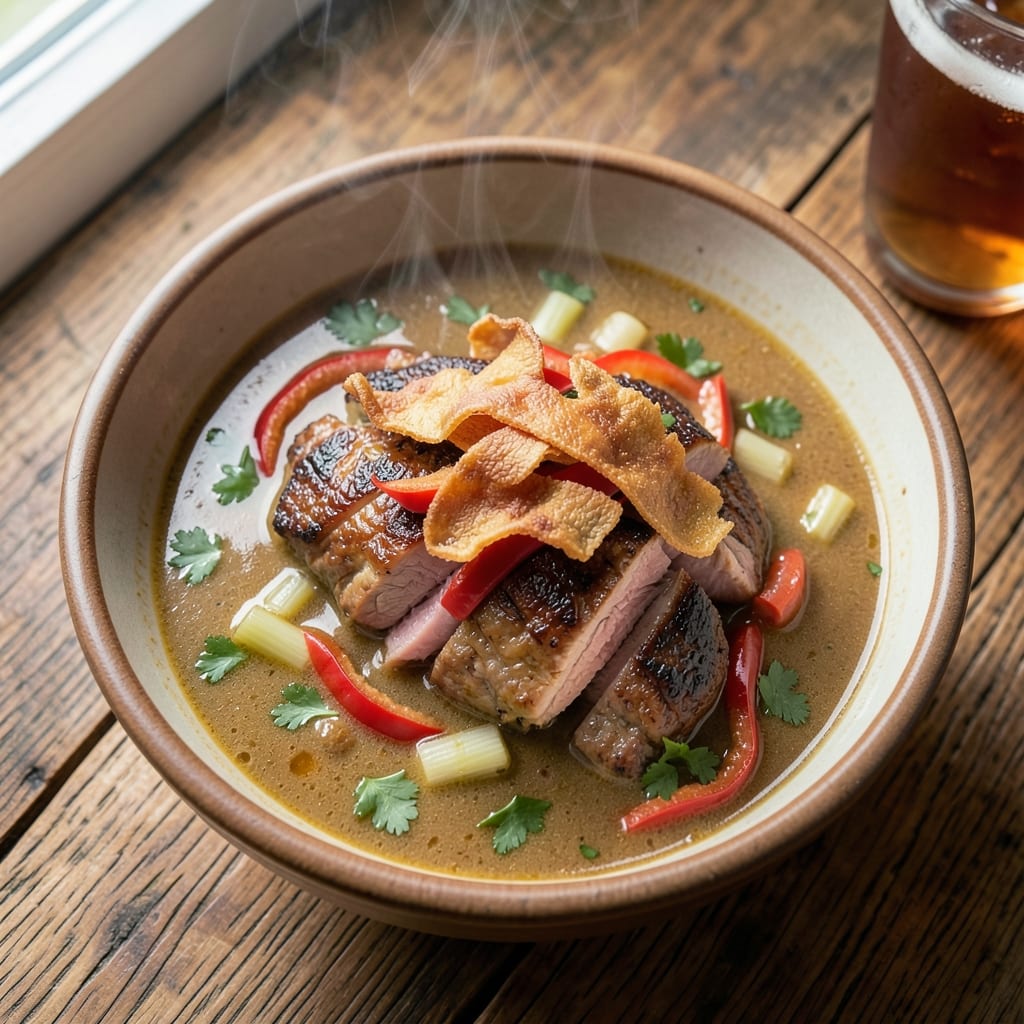
This alligator soup recipe transforms swamp-inspired flavors into a restaurant-worthy dish that balances rich broth with tender meat and a satisfying crunch. The secret lies in slow-cooking alligator meat until fork-tender while building layers of Cajun-inspired spices that create depth without overpowering the natural gamey flavor. What makes this recipe stand out is the toasted corn crunch topping, which adds texture and a subtle sweetness that contrasts beautifully with the savory broth.
The process begins with a flavorful roux—equal parts fat and flour cooked until nutty brown—before adding aromatic vegetables like onions, celery, and bell peppers. Alligator meat, cut into bite-sized pieces, simmers for hours until it becomes melt-in-your-mouth tender, absorbing the rich, spiced broth. Traditional Creole seasonings like thyme, bay leaves, and a touch of cayenne bring warmth and complexity, while a splash of cream or heavy cream at the end adds velvety richness.
By the time you serve this soup, you’ll have a dish that’s hearty enough for a cold evening but light enough to feel balanced. The alligator meat falls apart easily, releasing its savory essence into the broth, while the toasted corn topping adds a delightful contrast in both texture and flavor. Garnish with fresh parsley or green onions for brightness, and serve with crusty bread to soak up every last drop of that aromatic, spiced liquid gold.
This recipe is perfect for adventurous eaters looking to explore unique flavors or for those who enjoy traditional Southern or Creole cuisine. The technique is straightforward, but the result is anything but ordinary—proof that alligator meat can be just as satisfying as chicken or beef when prepared with care. Let’s get cooking!
Ingredients for alligator soup
Six servings of rich, aromatic alligator soup with velvety cream and toasted corn crunch.
| Ingredient | Amount | Notes |
|---|---|---|
| Alligator Meat 🐊 | 2 lb | Cut into 1-inch cubes, skin removed |
| Unsalted Butter 🧈 | ½ cup | European-style preferred for flavor |
| All-Purpose Flour 🌾 | ½ cup | For roux foundation |
| Yellow Onion 🧅 | 1 whole | Diced, Vidalia for sweetness |
| Celery Stalk 🧄 | 3 whole | Diced, leafy parts trimmed |
| Green Bell Pepper 🍅 | 1 whole | Diced, any color |
| Garlic Cloves 🧄 | 4 cloves | Minced, fresh preferred |
| Dried Thyme 🌿 | 1 tbsp | Or 1 tbsp fresh thyme leaves |
| Bay Leaves 🌿 | 2 whole | Fresh preferred, 1-inch pieces |
| Cayenne Pepper 🔥 | ½ tsp | Adjust for heat preference |
| Chicken Stock 💧 | 4 cups | Low-sodium, homemade preferred |
| Heavy Cream 🥛 | 1 cup | Full-fat for richness |
| Sweet Corn Kernels 🌽 | 2 cups | Fresh or frozen, thawed |
| Fresh Parsley 🌿 | ¼ cup | Chopped, for garnish |
| Green Onions 🧅 | 3 whole | Sliced, white and green parts |
| Diamond Crystal Kosher Salt 🧂 | 1 ½ tsp | Adjust to taste |
| Black Peppercorns 🌶️ | ½ tsp | Freshly cracked |
| Vegetable Oil 🫒 | 2 tbsp | For corn toasting |
The alligator meat is the heart of this dish—look for pre-cut cubes at specialty butchers or online suppliers like Wild Game Processors or Alligator Farms. Freshness is critical; the meat should smell clean and have a firm texture, not mushy. If you can't find alligator, substitute duck breast or chicken thighs (though flavor will differ). For the roux, European-style butter adds a nutty depth that's worth seeking out at specialty grocers like Whole Foods or Eataly. The corn should be sweet—Vidalia onions and freshly shucked corn (in season) elevate the dish significantly.
No alligator? Duck breast or chicken thighs work as substitutes, though texture will differ. The roux is non-negotiable—cook it until nut-brown for depth, but don't let it burn. For the stock, homemade chicken stock is ideal, but low-sodium store-bought works in a pinch. The corn topping requires fresh or frozen corn (thawed)—canned corn lacks the necessary sweetness. If you can't find Diamond Crystal salt, Morton kosher salt is a fine alternative, but measure carefully as it's slightly coarser. The cayenne can be adjusted—start with half the amount if you're sensitive to heat.
Store alligator meat in the freezer until ready to use—it keeps for up to 6 months. The roux can be made ahead and refrigerated for up to 2 days, though it's best used fresh. The finished soup reheats beautifully—gentle heat only to avoid breaking the corn topping. For longer storage, freeze in airtight containers for up to 3 months. The corn topping can be toasted ahead and stored in a cool, dry place for 2 days, though it's best served fresh. Garnish with parsley and green onions just before serving to maintain brightness.
Why You'll Love This Recipe
- One-Pot Wonder: I swear by this recipe because it’s all in one pot—no fussing with multiple dishes. The butter and flour make a thick, velvety base while the alligator tenderizes right in the broth, so cleanup is just a quick wipe-down.
- Rich, Unexpected Depth: That first bite of alligator—juicy yet firm—paired with the buttery roux and slow-cooked onions? It’s a flavor I didn’t expect but can’t stop craving. Honestly, it’s the kind of dish that makes you want to skip takeout.
- Weeknight or Company Ready: Make a big batch on Sunday and reheat it all week, or serve it at a dinner party when you want to impress without slaving away. The soup reheats beautifully, and the rich taste hides any shortcuts—perfect for when you’re pressed for time.
- Budget-Friendly Protein: Alligator meat is leaner than chicken but packs serious flavor, and a little goes a long way. Between us, this recipe stretches a pound into four hearty servings, so it’s my go-to for feeding the family without breaking the bank.
Step-by-step instructions for alligator soup
Here's the method to create a rich, velvety alligator soup with a satisfying crunch from toasted corn.
Sear the Alligator Meat for Deep Flavor
Heat a large Dutch oven over medium-high heat and add the 2 tablespoons vegetable oil. Once shimmering, add the 2 lb alligator meat in a single layer, working in batches if needed. Sear for 3-4 minutes per side until the meat develops a deep golden-brown crust and releases easily from the pan.
This initial searing builds a rich foundation of flavor through the Maillard reaction. Don't overcrowd the pan or the meat will steam instead of brown. Transfer the seared alligator to a plate and set aside, leaving any browned bits in the pan - these will form the base of your roux.
Build the Roux Foundation
Reduce heat to medium and add the ½ cup unsalted butter to the Dutch oven. Let it melt completely, about 1 minute, then whisk in the ½ cup all-purpose flour all at once. Cook the roux for 2-3 minutes, stirring constantly with a wooden spoon, until it turns a rich nutmeg color and smells toasty.
This roux will serve as the thickening agent for your soup. Watch it carefully - if it darkens too quickly, remove from heat for 30 seconds to cool slightly. The proper roux should coat the back of a spoon and leave a distinct mark when drawn across your palm.
Sauté the Vegetable Base
Add the diced 1 whole yellow onion, 3 whole celery stalks, and 1 whole green bell pepper to the roux. Cook for 5-6 minutes, stirring frequently, until the vegetables soften and the onion becomes translucent. Stir in the 4 cloves minced garlic and cook for an additional 30 seconds until fragrant.
This aromatic vegetable base forms the flavor foundation of your soup. The vegetables should release their moisture and blend seamlessly with the roux. If the mixture begins to stick, add 1-2 tablespoons chicken stock to loosen it.
Develop the Flavor with Herbs and Spices
Return the seared alligator to the Dutch oven and add the 4 cups chicken stock, 1 tablespoon dried thyme, 2 whole bay leaves, and ½ teaspoon cayenne pepper. Bring to a simmer, then reduce heat to low and cover partially. Let the soup cook for 45-60 minutes, stirring occasionally, until the alligator meat is fork-tender.
During this time, the flavors will meld together beautifully. The alligator should break apart easily when pierced with a fork. If the soup reduces too much, add additional chicken stock ½ cup at a time to maintain the proper consistency.
Finish with Cream and Toasted Corn
Remove the bay leaves and stir in the 1 cup heavy cream and 2 cups sweet corn kernels. Simmer for an additional 10 minutes to heat through. In a separate skillet, heat 1 tablespoon vegetable oil over medium-high heat and toast the corn kernels for 2-3 minutes until golden and slightly caramelized.
For the final touch, stir the toasted corn into the soup just before serving. Ladle the soup into bowls and garnish with ¼ cup chopped fresh parsley and 3 whole sliced green onions. The contrast of creamy soup with toasted corn kernels creates a delightful textural experience.
Season to Perfection
Taste the soup and adjust seasoning with 1½ teaspoons diamond crystal kosher salt and ½ teaspoon freshly cracked black peppercorns as needed. The soup should be rich and flavorful, with a balance of alligator meat, vegetable sweetness, and subtle spice.
Serve immediately while the corn maintains its crispy texture. This soup pairs beautifully with crusty bread to soak up every last drop of the creamy broth.
Pro Tips For Making Alligator Soup
- SEAR THE ALLIGATOR FIRST: Brown the meat in batches—don’t skip this. The crust locks in flavor, and cold chunks in hot butter just steam instead of developing that deep, savory base. I learned this the hard way when my first batch tasted bland.
- USE FLOUR SPARINGLY: Too much roux will make your soup gluey. Start with 2 tablespoons per ½ cup butter, whisking constantly until it’s a pale gold—not nutty brown. Overdoing it turns your soup into a thick paste instead of a rich, velvety broth.
- CHOP ONIONS AND CELERY SMALL: Tiny dice, not rough chunks. The alligator meat breaks down slowly, so you need those veggies to disappear into the soup, not sit as chewy reminders. My grandmother swore by this, and she was right: it’s the thing that matters most for texture.
- SIMMER LOW AND COVERED: After adding broth, keep the heat at a bare simmer—gentle bubbles, not rolling. Uncovered, the liquid reduces too fast; covered, it steams and makes the meat tough. Sounds weird, but it works: 45 minutes of steady heat gives you tender meat without drying it out.
Make-ahead tips for alligator soup
Prep Ahead Soup Base
Make the roux and vegetable base the night before for a stress-free cooking day. After cooking the roux to a nut-brown color, let it cool completely, then store in an airtight container in the refrigerator for up to 2 days. When ready to cook, simply reheat gently over low heat with a splash of chicken stock to loosen it. I find this cuts my active cooking time by nearly 30 minutes—perfect for weeknight dinners. 💫
Alligator Meat Prep
Alligator meat can be prepped and frozen up to 3 months in advance. Cut the meat into 1-inch cubes, remove any skin, and store in a freezer-safe bag with 1 tablespoon vegetable oil to prevent drying. When ready to cook, thaw in the refrigerator overnight. This method preserves texture and flavor better than microwave thawing. I always do this for my first batch to ensure the meat is ready when I am.
Corn Crunch Prep
Toast the corn topping ahead of time and store it in a cool, dry place for up to 2 days—it actually tastes better the next day as the flavors concentrate. Spread the toasted corn on a parchment-lined tray to cool completely before storing in an airtight container. Just sprinkle it over the soup when serving for that satisfying crunch. 🌽
Slow Cooker Option
For hands-off cooking, sear the alligator meat as directed, then transfer everything (except the cream and corn) to a 6-quart slow cooker. Cook on low for 6-8 hours or high for 4-5 hours. Stir in the cream and corn during the last 30 minutes of cooking. This method is ideal for busy schedules and yields equally tender results. I use my Hamilton Beach slow cooker for perfect temperature control.
Freezer-Friendly Soup
This soup freezes beautifully for up to 3 months. Let it cool completely, then transfer to freezer-safe containers, leaving 1-inch headspace for expansion. To reheat, thaw overnight in the refrigerator, then gently warm on the stovetop over low heat until heated through. Stir in the toasted corn just before serving to maintain its crisp texture. I always double the batch and freeze half for lazy evenings.
Garnish Prep
Chop the ¼ cup fresh parsley and slice the 3 green onions ahead of time and store them in a small airtight container in the refrigerator for up to 3 days. This saves time and keeps your garnishes fresh and vibrant. I keep a small container of prepped garnishes in my fridge for quick assembly—it’s a game-changer for busy weeknights. 💡
Nutrition facts
Frequently asked questions
Where can I buy alligator meat for this recipe?
Look for alligator meat at specialty butchers, wild game processors, or online suppliers like Wild Game Processors or Alligator Farms. Some larger grocery stores with exotic meat sections may carry it too. Freshness is key—ensure the meat smells clean and has a firm texture. If unavailable, duck breast or chicken thighs can substitute, though flavor will differ.
How do I know when the alligator meat is fully cooked?
The meat is done when it's fork-tender and easily pulls apart with minimal resistance. For best results, simmer for 45-60 minutes until the internal temperature reaches 165°F. Overcooking can make it dry, so check frequently during the last 15 minutes of simmering.
Can I make this soup without a Dutch oven?
A heavy-bottomed pot or large stockpot works just as well. The key is to maintain even heat for the roux and slow simmer. If your pot lacks depth, reduce the stock slightly to prevent overflowing. Stir frequently to avoid sticking, especially when building the roux.
What if I don't like spicy food? How can I adjust the heat?
Simply reduce or omit the ½ teaspoon cayenne pepper entirely. For a milder version, replace it with ¼ teaspoon smoked paprika or extra thyme for depth without heat. Taste the broth before adding cream to ensure balance.
How can I make this soup vegetarian?
Replace the alligator with mushroom medley (cremini + shiitake) or tofu cubes seared in oil. Use vegetable stock instead of chicken stock and add 1 tablespoon soy sauce for umami depth. The roux and corn topping remain the same for texture contrast.