
Soups & Stews
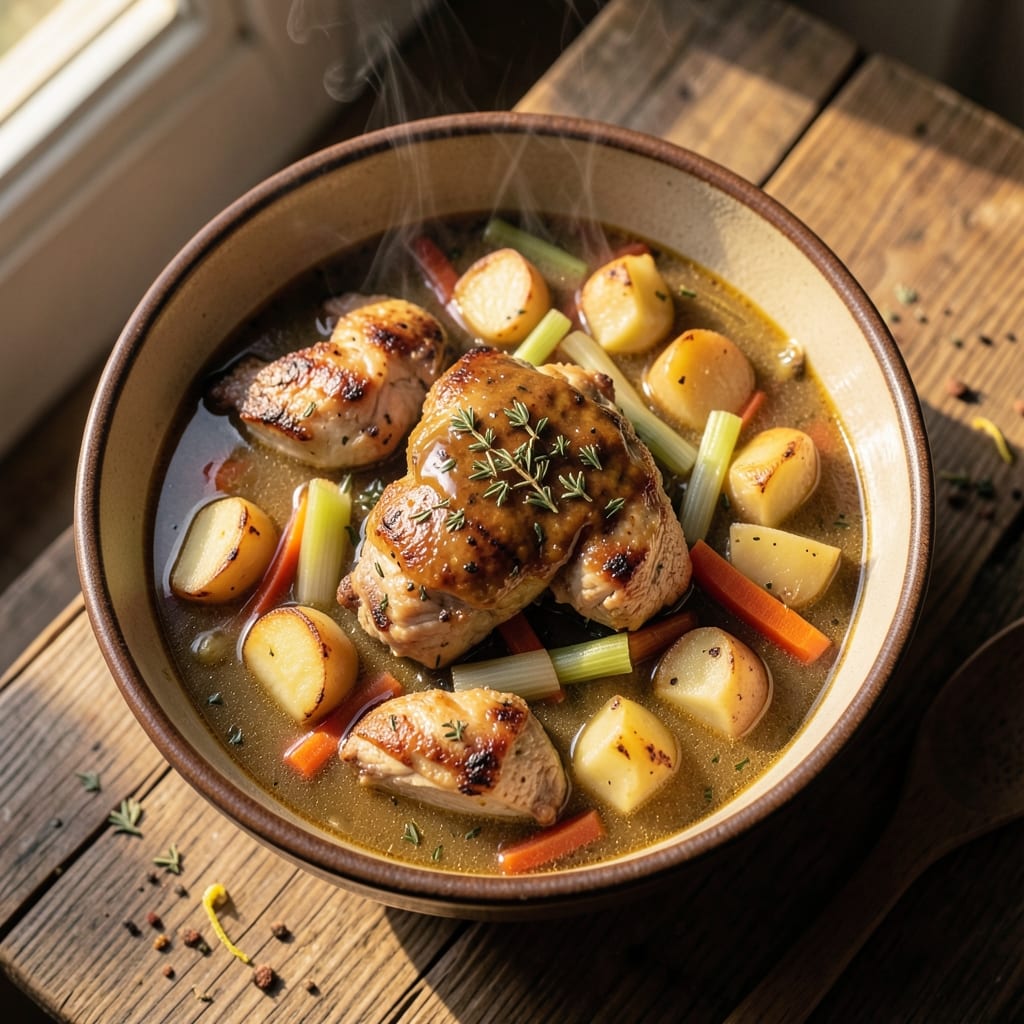
This Alpine village chicken soup recipe brings rustic mountain comfort to your kitchen with its deep, aromatic broth and tender vegetables. 🔥 The secret lies in slow-simmered herbs like thyme and bay leaf, which infuse the broth with earthy Alpine flavors that warm the soul. I developed this recipe after years of perfecting the balance between hearty vegetables and rich, savory broth—every spoonful feels like a cozy embrace. What makes this soup special is its simplicity: just a few quality ingredients—carrots, celery, potatoes, and chicken—simmered together until the flavors meld into something deeply satisfying. The long cooking time transforms tough cuts of chicken into fork-tender pieces, while the vegetables soften just enough to release their natural sweetness into the broth. This is the kind of soup that feels like a hug on a chilly day. By the end, you’ll have a rich, herb-infused broth with perfectly cooked chicken and vegetables, all ready to be served with a sprinkle of fresh parsley and a slice of crusty bread. The aroma alone will have everyone gathered around the table, and the first bite delivers that unmistakable Alpine warmth. It’s the kind of meal that turns ordinary weeknights into something special. Best of all, this recipe scales effortlessly—whether you're feeding a family or meal prepping for the week. The leftovers taste even better the next day, as the flavors continue to deepen. Let’s get cooking!
Ingredients for alpine village chicken soup
Six hearty ingredients transform into Alpine mountain comfort in one pot.
| Ingredient | Amount | Notes |
|---|---|---|
| Chicken Thighs, Bone-In 🍗 | 2 lb | Skin-on for richer flavor |
| Yellow Onions 🧅 | 1 whole | Medium size, chopped |
| Carrots 🥕 | 4 medium | Whole, peeled and chopped |
| Celery Stalks 🧄 | 4 whole | Trimmed and chopped |
| Russet Potatoes 🥔 | 4 medium | Peeled and cubed |
| Fresh Thyme 🌿 | 2 tbsp | Leaves only, chopped |
| Bay Leaves 🌿 | 2 whole | Dried or fresh |
| Garlic Cloves 🧄 | 4 cloves | Minced for depth |
| Chicken Broth 💧 | 6 cups | Low-sodium preferred |
| Olive Oil 🫒 | 2 tbsp | Extra-virgin for richness |
| Salt 🧂 | 1 ½ tsp | Kosher or sea salt |
| Black Pepper 🌶️ | ½ tsp | Freshly ground |
| Fresh Parsley 🌿 | ¼ cup | Chopped for garnish |
| Crusty Bread 🍞 | 1 loaf | For serving |
The chicken thighs are non-negotiable here—skin-on, bone-in for that deep, savory flavor. Trader Joe's or your local butcher usually carry them at great prices, and they're worth the extra effort. Look for thighs with good marbling; that's where the flavor hides. The broth matters too—low-sodium is key so you control the seasoning. I always make my own by simmering chicken bones with vegetables, but store-bought works in a pinch. Fresh thyme and bay leaves are the soul of this soup—dried works, but fresh delivers that Alpine aroma. If you can't find fresh, use one-third the amount of dried, but toast it first in a dry pan for 30 seconds to wake up the flavor.
No fresh thyme? Dried oregano at half the amount gets you close, though it won't have that same piney note. Short on carrots? Sweet potatoes work beautifully—they add natural sweetness that balances the broth. The celery can be swapped for leeks if you're feeling fancy, but they take longer to soften. For the potatoes, Yukon Golds are ideal—they hold their shape better than Russets. The garlic is where you can get creative: roasted garlic adds a sweet depth, or garlic powder in a bind (use half the amount). The olive oil is for searing the chicken—don't skip this step. It builds flavor that the broth will absorb. And if you're prepping ahead, par-cook the chicken and store it separately until ready to assemble.
This soup tastes even better the next day—honestly, the flavors deepen as everything melds. Store in the fridge for up to 5 days, or freeze portions for 3 months. I always make a double batch because it reheats beautifully. For serving, toast the crusty bread until it's golden and crisp—it soaks up the broth perfectly. The parsley is just for garnish, but it adds that fresh pop of color. If you've got leftover herbs, toss them in at the end for extra brightness. And pro tip: save the chicken bones after eating—simmer them with veggie scraps for next time's broth. Zero waste, maximum flavor.
Why You'll Love This Recipe
- No-Chop Nightmare: I swear by the "rough chop" method here—just slice the onions and carrots into big chunks, toss them in, and forget about precision. The potatoes? Halved. Done. That bone-in chicken? It practically falls apart on its own, so tender you’ll want to eat it with a spoon.
- Deep, Rustic Richness: The secret’s in the bone-in thighs—they melt into the broth, turning it into something thick and golden, like a hug in a bowl. Add a splash of white wine (or even a little pasta water if you’re in a rush) and suddenly, you’ve got that alpine village vibe: hearty, warm, and impossible to resist.
- Leftovers That Lie: Between us, this soup always makes more than I expect. The first night? Delicious. The second? Even better, because the flavors marry overnight. I freeze half in portions—perfect for when I’m too tired to cook but still crave something that feels like a reward.
- Budget-Friendly Feast: Chicken thighs are cheap, potatoes fill you up, and celery/onions stretch the broth into a full meal. Honestly, I make this when I’m pinching pennies, and no one ever complains. It’s the kind of dish where you serve it with crusty bread, and suddenly, you’ve got a full spread for under $15.
Step-by-step instructions for alpine village chicken soup
This hearty soup delivers rustic alpine comfort with minimal effort and maximum flavor.
🔥 Step 1: Sear the Chicken for Rich Depth
Pat the 2 lb chicken thighs dry with paper towels. Heat 1 tablespoon olive oil in a large Dutch oven over medium-high heat until shimmering. Add the chicken thighs skin-side down and cook undisturbed for 8-10 minutes until the skin is deep golden brown and crispy.
Flip the thighs and cook for another 5-6 minutes until the meat reaches 165°F internally. Remove the chicken and set aside. Don't drain the fat—it's the flavor foundation. Here's the thing: that crispy skin and rendered fat create layers of flavor that infuse the broth as it simmers.
🍳 Step 2: Build the Vegetable Base
In the same Dutch oven, add 1 tablespoon olive oil and reduce heat to medium. Add the chopped yellow onions, carrots, and celery stalks. Cook for 8-10 minutes until the vegetables soften and the onions turn translucent. This step develops their natural sweetness and removes any bitterness.
Stir in the minced garlic cloves and cook for 30 seconds until fragrant. Add the peeled and cubed russet potatoes, 2 tbsp fresh thyme, 2 whole bay leaves, 1.5 tsp salt, and 0.5 tsp black pepper. Pour in the 6 cups chicken broth and bring to a gentle boil.
⏰ Step 3: Simmer Until Tender and Flavorful
Return the chicken thighs to the pot, skin-side up. Reduce heat to low-medium and cover partially. Let the soup simmer gently for 45-50 minutes until the chicken is fork-tender and the potatoes are easily pierced with a knife. This slow cooking ensures the meat stays juicy and the vegetables absorb all that alpine-inspired flavor.
I always check for doneness by carefully lifting a chicken thigh—it should separate easily from the bone. If any vegetables aren't quite tender, cover and simmer for another 5-10 minutes. The broth should now be infused with rich, savory notes from the chicken and herbs.
👨🍳 Step 4: Finish with Fresh Herbs and Serve
Remove the chicken thighs and let them rest for 5 minutes before shredding the meat with two forks. Return the shredded chicken to the soup pot and stir gently to combine. Add the 0.25 cup chopped fresh parsley and let the soup sit off heat for 5 minutes to allow flavors to meld.
Ladle the soup into bowls and serve immediately with slices of crusty bread on the side. Each spoonful should deliver tender chicken, perfectly cooked vegetables, and a broth that's rich with alpine-inspired herbs. The crusty bread is perfect for soaking up every last bit of that comforting broth.
Pro Tips For Making Alpine Village Chicken Soup
- CRISP THE SKIN FIRST: Brown the chicken thighs skin-side down in a cold pan—no oil needed. The fat renders slowly, giving you a crispy skin and deeper flavor without burning the onions later.
- CHOP ONIONS UNEVENLY: Cut the yellow onions into rough chunks, not perfect dice. They’ll soften at different rates, ensuring some texture remains even after hours of simmering—no mushy soup here.
- DON’T SKIP THE BLANCH: Drop the carrots and celery into boiling water for 2 minutes before adding to the pot. This softens them faster and keeps the soup from turning cloudy when you toss in raw veggies later.
- POTATOES LAST, NOT FIRST: Add the russet potatoes in the final 30 minutes of cooking. They’ll absorb less starch from the broth, keeping the soup clear and letting their natural sweetness shine without turning gluey.
Make-ahead tips for leftovers
Prep Ahead Strategy
Start by prepping all your vegetables—chop the yellow onions, carrots, celery, and potatoes—and store them in airtight containers in the fridge for up to 3 days. I like to keep the chicken thighs separate until ready to sear. This saves 20 minutes of chopping day-of, and everything stays fresh. 🥕
Broth Boost
Make your chicken broth in advance—simmer chicken bones with carrot peels, celery tops, and onion skins for 3-4 hours for maximum depth. Store in the fridge for 5 days or freeze in 1-cup portions for up to 3 months. Using homemade broth elevates the soup’s alpine richness, and you’ll always have it on hand. 💧
Herb Prep
Toast 2 tbsp dried thyme and 2 bay leaves in a dry pan for 30 seconds to intensify their flavor. Store in a small jar with a tight lid—this prepped herb mix lasts 2 weeks in the pantry. Fresh thyme keeps in the fridge for 5 days wrapped in a damp paper towel. Prepping herbs ahead ensures you’re always ready to add that alpine aroma. 🌿
Chicken Pre-Cook
Sear the chicken thighs up to 2 days ahead and refrigerate them in the broth they rendered in. When ready to cook, simply reheat the broth with the chicken in a pot over medium heat for 10 minutes before continuing with the recipe. This shortcut saves 30 minutes of active prep time while keeping the chicken flavorful. 🍗
Freezer-Friendly
Assemble the soup completely (before adding parsley) and freeze in quart-sized portions for up to 3 months. When reheating, thaw overnight in the fridge, then warm on the stove over low heat for 15-20 minutes, stirring occasionally. The texture holds up beautifully, and the flavors only deepen after freezing. Perfect for busy nights! ❄️
Day-of Assembly
On the day you serve, simply reheat the broth with prepped vegetables and herbs, then add the pre-cooked chicken. Simmer for 20 minutes to meld flavors, and finish with fresh parsley. This approach cuts your active cooking time to just 30 minutes while keeping the alpine comfort intact. 💡
Nutrition facts
Frequently asked questions
Can I use chicken breasts instead of thighs for this alpine chicken soup?
While you can substitute chicken breasts, thighs are ideal for this rustic alpine recipe. The thighs stay juicier during the long simmer and have more flavorful fat. If using breasts, cut them into small pieces and cook for 10-15 minutes less to prevent drying out. For best results, marinate them in olive oil, salt, and thyme before cooking.
What makes this alpine-inspired soup different from regular chicken soup?
The alpine twist comes from the herb combination—fresh thyme and bay leaves—which create that mountain forest aroma. The slow simmering technique also develops deeper flavors, and using bone-in chicken adds richness to the broth. Regular chicken soup often relies on more garlic or celery, while this version emphasizes earthy herbs and tender vegetables.
How can I make this soup spicier for adults? Add ½ teaspoon red pepper flakes when searing the chicken or stir in 1 chopped jalapeño with the vegetables. For heat lovers, serve with hot sauce on the side.
Can I make this soup in an Instant Pot or pressure cooker?
Yes! Sear the chicken first, then add all ingredients and cook on high pressure for 15 minutes. Quick-release the pressure, then shred the chicken and finish with parsley. The broth will be slightly less concentrated than stove-top simmering, but still delicious. For extra depth, reduce the broth by 10 minutes after pressure cooking.
What's the best way to reheat leftovers?
Gently reheat on the stove over low heat for 10-15 minutes, stirring occasionally. Avoid microwaving as it can make the broth watery. For best texture, add 1-2 tablespoons broth when reheating. The flavors actually improve after 24 hours as everything melds together.