
Soups & Stews
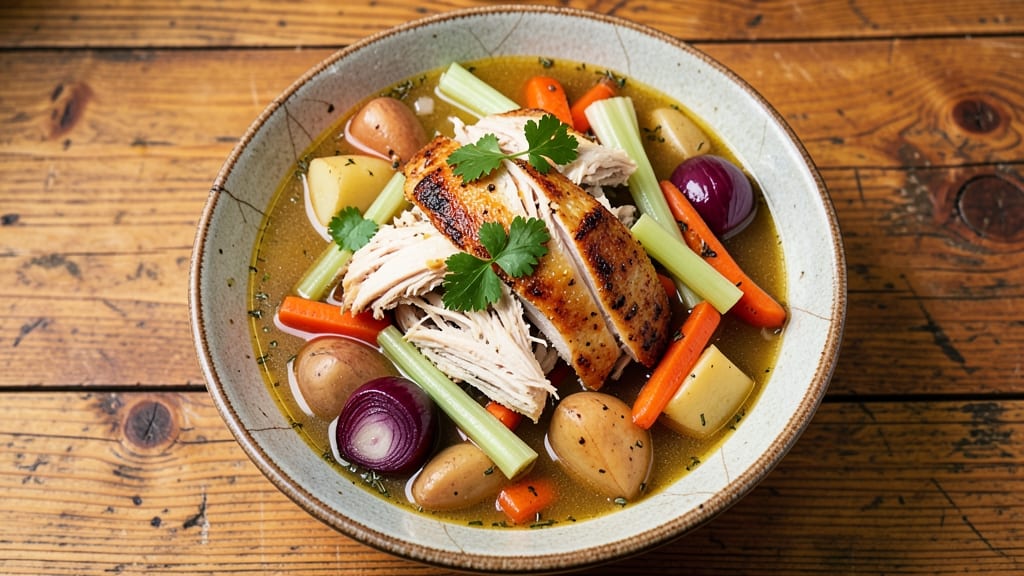
This American chicken soup recipe delivers the ultimate in classic comfort, blending rich broth with tender chicken and hearty vegetables for a bowl that warms both body and soul. 💛 The rotisserie chicken shortcut transforms what could be a time-consuming process into a foolproof weeknight solution without sacrificing depth of flavor.
What makes this version special is the balance—creamy enough to satisfy, but never heavy, with a golden crust of toasted bread cubes that add satisfying texture.
The foundation begins with a robust broth, built from chicken stock and enhanced with aromatics like celery, carrots, and onions—what we call the "holy trinity" of soup-making. I've found that simmering these vegetables until deeply caramelized creates a flavor base that elevates everything else.
The chicken, poached just until tender, becomes the heart of the soup, while egg noodles or orzo add the perfect bite. This isn't just soup; it's a restaurant-quality bowl of nostalgia in every spoonful.
What sets this recipe apart is its versatility—you can adjust the creaminess by adding a splash of milk or a dollop of cream, or keep it classic with just the broth. The vegetables—carrots, celery, and potatoes—cook until they're fork-tender, absorbing the rich flavors while maintaining their structure.
The result is a soup that's hearty enough for a family dinner but simple enough to make when you're craving comfort on a cold evening.
Perfect for meal prepping, this soup tastes even better the next day as the flavors meld together. Serve with crusty bread for dipping, or garnish with fresh parsley for a pop of color.
The key to great chicken soup lies in the details—don't skip the simmering time, and taste as you go. Here's how to make it.
Ingredients for american chicken soup
Rotisserie chicken shortcut meets restaurant-quality comfort in this classic bowl.
| Ingredient | Amount | Notes |
|---|---|---|
| Rotisserie Chicken 🍗 | 3 cups | Shredded meat, skin removed |
| Chicken Broth 💧 | 6 cups | Low-sodium preferred |
| Carrots 🥕 | 1 ½ lb | Peeled, cut into chunks |
| Celery Stalk 🧅 | 4 whole | Trimmed, cut into pieces |
| Yellow Onion 🧅 | 1 whole | Peeled, chopped |
| Russet Potatoes 🥔 | 2 lb | Peeled, cubed |
| Egg Noodles 🍝 | 2 cups | Uncooked, medium width |
| Heavy Cream 🥛 | ½ cup | Full-fat for creaminess |
| Fresh Parsley 🌿 | ¼ cup | Chopped for garnish |
| Garlic Cloves 🧄 | 4 cloves | Minced for depth |
| Salt 🧂 | 1 ½ tsp | Adjust to taste |
| Black Pepper 🌶️ | ½ tsp | Freshly ground |
| Baguette 🍞 | 1 whole | Crusty, cubed for topping |
| Olive Oil 🫒 | 1 tbsp | For toasting bread cubes |
| Dried Thyme 🌿 | 1 tsp | Or 1 tbsp fresh |
The rotisserie chicken is your secret weapon here—Costco or Trader Joe's have the best options, but any store-bought works. Look for one with crispy skin (save some for croutons!). The carrots, celery, and onions are the flavor base—sweat them slowly until they're golden brown, not just soft. I always double-check the chicken broth label for sodium—low-sodium lets you control the seasoning better. Fresh herbs make all the difference, but dried thyme in a pinch works too (just use half the amount).
No rotisserie chicken? Poach your own chicken breasts—simmer them in broth with thyme until tender. Short on carrots? Swap in parsnips or sweet potatoes for a different twist. The baguette cubes should be golden and crispy—toast them in olive oil until they're almost brown. For extra richness, stir in a splash of milk instead of cream. The soup tastes even better the next day as flavors meld, so make extra if you can—leftovers keep for 5 days in the fridge.
Store any leftovers in airtight containers—the flavors deepen overnight. Freeze portions for up to 3 months by portioning into meal-sized containers. The bread cubes stay crispy for about 2 days if stored separately. Garnish with fresh parsley right before serving—it brightens everything up. This soup is the ultimate comfort food, perfect for chilly evenings or when you need a quick, hearty meal.
Why You'll Love This Recipe
- Rotisserie Hack: I swear by this shortcut—just shred that leftover rotisserie chicken (or buy one fresh) and dump it in. No raw meat to trim, no bones to pick, just tender, juicy chunks ready to go.
- Carrot-Celery Crunch: That classic trio—carrots, celery, onion—simmered just enough to soften but still hold shape. It’s the backbone of the flavor, crisp enough to bite into, salty-sweet in every spoonful.
- Weeknight Warrior: Between us, this is my go-to when I’m exhausted but still need to feed the family. Toss in some noodles or skip ‘em—it’s always forgiving, always satisfying, and ready in under 30 minutes.
- Leftover Goldmine: Make a double batch and thank me later. The broth thickens beautifully the next day, and the chicken gets even more flavorful. Freeze half for those nights when takeout feels like too much effort.
Step-by-step instructions for American chicken soup
This classic comfort dish comes together with minimal effort—rich, hearty, and perfect for chilly days.
🍳 Step 1: Sauté the Aromatic Vegetables
Heat 1 tablespoon olive oil in a large pot over medium heat. Add the chopped yellow onion, trimmed celery stalk pieces, and minced garlic cloves. Sauté for 5-6 minutes until the vegetables soften and the mixture becomes fragrant—you'll smell that sweet, savory aroma filling your kitchen.
Here's the thing—don't rush this step. The vegetables should release their moisture and turn tender before you add anything else. If they start to brown too quickly, reduce the heat slightly. This foundational flavor carries through the entire soup, so take your time.
🔥 Step 2: Build the Soup Base
Add the 1.5 lb cubed russet potatoes and 1.5 tsp dried thyme to the pot. Pour in the 6 cups chicken broth and bring everything to a gentle boil. Once boiling, reduce heat to medium-low and let it simmer for 10 minutes until the potatoes begin to soften.
While it simmers, add the 3 cups shredded rotisserie chicken and 1.5 tsp salt. Stir gently to distribute the chicken evenly. This is where the magic happens—the broth absorbs the chicken's flavor while the vegetables release their sweetness. You'll notice the soup starting to thicken slightly as the starches from the potatoes release.
🥘 Step 3: Add Vegetables and Season
Cut the 1.5 lb carrots into chunks and add them to the pot. Let the soup simmer for another 10-12 minutes until all the vegetables are fork-tender. The carrots should be soft but still hold their shape—you're aiming for that perfect texture where they're easy to eat but still recognizable.
Taste the soup and adjust the seasoning with 0.5 tsp black pepper if needed. This is your chance to make sure every spoonful is perfectly balanced. If the soup tastes flat, add a pinch more salt or a splash of broth. The goal is a rich, savory flavor that makes you want seconds.
🍲 Step 4: Cook the Noodles and Finish
Add the 2 cups egg noodles to the pot and stir gently. Let the soup simmer for another 8-10 minutes until the noodles are al dente—you'll know they're ready when they float to the surface and have a slight bite to them. Don't overcook them or they'll turn mushy and ruin the texture.
Once the noodles are perfect, stir in the 0.5 cup heavy cream and let it warm through for 2-3 minutes. The cream will give the soup a velvety finish and balance the hearty flavors. Remove the pot from heat and let it sit for 5 minutes to allow the flavors to meld together.
🍽️ Step 5: Toast the Baguette and Serve
While the soup rests, cut the whole baguette into cubes. Heat a skillet over medium heat and add the bread cubes. Drizzle with a little more olive oil if needed and toast until golden brown on all sides—this adds a wonderful crunchy contrast to the creamy soup.
Ladle the soup into bowls and top with the toasted bread cubes and chopped fresh parsley. The parsley adds a fresh pop of color and a hint of brightness that cuts through the richness. Serve immediately while the bread is still crispy and the soup is steaming hot—this is pure comfort food at its best.
Pro Tips For Making American Chicken Soup
- SAVE THE SKIN: Take 5 minutes to remove every last bit of crispy skin from the rotisserie chicken before shredding—it’s the only way to avoid a soup that tastes like it’s swimming in grease. (Yes, even if you’re impatient like me, trust me on this.)
- CUT VEGETABLES UNIFORM: Slice carrots, celery, and onion into ¼-inch pieces—no smaller, no larger. Uneven sizes mean some veggies stay crunchy while others turn to mush, and that’s just annoying.
- STRAIN THE BROTH: Unless you’re using a fancy low-sodium broth, strain it through a fine-mesh sieve to remove any cloudiness or sediment—it makes the soup look (and taste) cleaner without extra effort.
- SHRED THE CHICKEN HOT: Pull the chicken off the bone while it’s still warm, and the fibers will separate more easily. Cold chicken clings in stubborn clumps, and no one wants to fight their soup.
Common mistakes when making this dish
Overcooking the Vegetables
One of the most common mistakes is letting the vegetables—especially potatoes and carrots—become mushy. The goal is tender but still recognizable texture, not a soup where you can't tell what's in it. I've seen people simmer for too long, resulting in a gluey consistency.
Keep a close eye on the cooking time and test with a fork—it should pierce easily but not fall apart. 🥔
Skipping the Sauté
Many recipes call for simply dumping everything into the pot, but that's a missed opportunity. Sautéing the onions, celery, and garlic first develops deep, caramelized flavors that elevate the entire soup.
I always take the extra 5-6 minutes to cook these aromatics until they're soft and fragrant—this step is non-negotiable for flavor depth.
Adding Cream Too Early
If you add the heavy cream before the soup is fully cooked, it can curdle and create an unappealing texture. Always wait until the very end to stir in the cream, letting it warm through gently for just 2-3 minutes.
This ensures a silky finish without breaking. The last thing you want is a soup that looks like it separated.
Ignoring the Resting Time
After adding the cream, let the soup rest for 5 minutes before serving. This allows flavors to meld and the cream to fully incorporate. I've rushed this step before and ended up with a soup that tasted disjointed.
Patience here makes all the difference—it's worth the wait for that restaurant-quality bowl. ⏳
Using High-Sodium Broth
Store-bought chicken broth often contains excessive sodium, which can make your soup taste bland if you don't adjust seasoning properly. Always opt for low-sodium broth and taste as you go.
I keep a small bowl of broth nearby to add as needed—this gives me full control over the final flavor profile.
Neglecting the Bread Cubes
Toasted bread cubes are the perfect textural contrast to creamy soup, but many people skip this step or don't toast them enough. Use a crusty baguette and toast until golden brown—this adds a satisfying crunch that makes every spoonful better.
I like to drizzle them with a little extra olive oil for that perfect golden finish. 🍞
Nutrition facts
Frequently asked questions
Can I make this chicken soup without rotisserie chicken?
Use 2-3 boneless, skinless chicken breasts instead. Poach them in the broth with thyme until fully cooked (165°F internal temperature), then shred before adding back to the soup. This adds about 15-20 minutes to prep time but gives you control over seasoning and texture.
How can I make this soup dairy-free?
Skip the heavy cream and replace it with ½ cup coconut milk or ¼ cup cashew cream for richness. For extra flavor, add 1 tsp nutritional yeast when you'd normally add the cream. The soup will still be creamy but with plant-based alternatives.
What's the best way to reheat leftovers?
Gently reheat on the stove over low heat until steaming hot—never microwave directly as it can make the noodles mushy. Stir occasionally and add a splash of broth if needed. For extra flavor, toast fresh bread cubes separately and add them when serving.
Can I add other vegetables to this recipe?
Yes! Try adding spinach or kale (wilted at the end) or diced zucchini (cooked for 5 minutes with other veggies). For heartier versions, include peas or corn. Just adjust cooking times so softer veggies don't turn to mush.
Why did my soup turn out too bland?
Most likely, you used high-sodium broth or didn't season properly. Always taste as you go and adjust with extra salt, pepper, or a splash of broth. For depth, add a pinch of MSG (optional) or a dash of Worcestershire sauce—both enhance umami flavors without overpowering.