
Soups & Stews
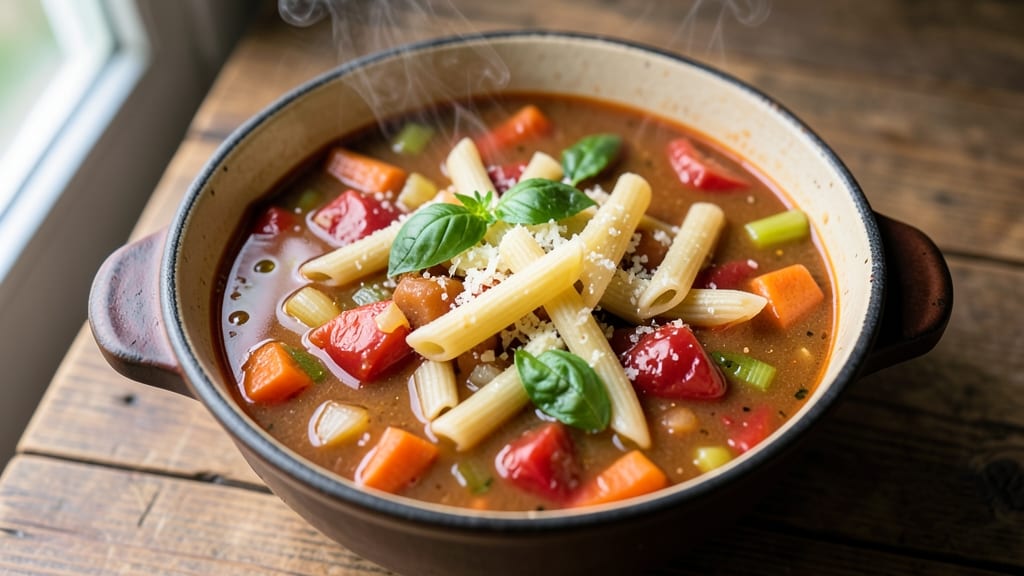
This Amy's Minestrone Soup Recipe delivers the ultimate vegetarian comfort in every steaming bowl—packed with tender beans, al dente pasta, and a vegetable-rich broth that simmers into deep, savory perfection.
The secret lies in slow-cooked aromatics and a balance of seasonal vegetables, creating a dish that feels both rustic and refined. What makes this version special is how the flavors meld together over time, transforming simple ingredients into something heartwarming and deeply satisfying.
The beauty of this minestrone is its flexibility—build it with your favorite seasonal vegetables while keeping the core technique intact. A 30-minute prep followed by a 45-minute simmer ensures the broth develops maximum flavor without requiring constant attention.
The pasta cooks directly in the broth, absorbing all those rich, vegetable-infused flavors for a truly cohesive dish. It's the kind of soup that gets better with each passing day, making it perfect for meal prep or feeding a crowd.
What you'll end up with is a vegetable-rich, hearty soup that's comforting yet light enough for any meal. The beans add protein and texture, the pasta provides substance, and the broth delivers layers of umami and freshness.
Each spoonful is a perfect balance of earthy, tangy, and savory notes—ideal for chilly evenings or as a wholesome lunch. Serve it with crusty bread to soak up every last drop of that flavorful broth.
For those who prefer a meatier version, simply add diced chicken or Italian sausage during the final 15 minutes of cooking. The same principles apply—just let the meat absorb all those wonderful flavors.
This minestrone is as versatile as it is delicious, making it a staple for any kitchen. Let's get cooking!
Ingredients for amy's minestrone soup
Sixteen ingredients transform into a soul-warming vegetarian masterpiece—rustic yet refined.
| Ingredient | Amount | Notes |
|---|---|---|
| Extra-Virgin Olive Oil 🫒 | 2 tbsp | For sautéing aromatics |
| Yellow Onion 🧅 | 1 whole | Diced, medium size |
| Carrots 🥕 | 2 medium | Peeled, diced into 1/4-inch pieces |
| Celery Stalks 🧅 | 3 whole | Diced, including leaves |
| Garlic Cloves 🧄 | 4 cloves | Minced, fresh preferred |
| Canned Diced Tomatoes 🍅 | 2 cans | 28 oz each, San Marzano preferred |
| Kidney Beans 🌱 | 1 can | 15 oz, drained and rinsed |
| Cannellini Beans 🌱 | 1 can | 15 oz, drained and rinsed |
| Vegetable Broth 💧 | 4 cups | Low-sodium preferred |
| Penne Pasta 🍝 | 10 oz | Dry weight, al dente preferred |
| Fresh Spinach 🌿 | 4 cups | Chopped, packed |
| Dried Oregano 🌿 | 1 tsp | Italian preferred |
| Dried Basil 🌿 | 1 tsp | Or 1 tbsp fresh |
| Bay Leaves 🍃 | 2 whole | Fresh preferred |
| Salt 🧂 | 1 ½ tsp | Diamond Crystal preferred |
| Black Pepper 🌶️ | ½ tsp | Freshly ground |
| Red Wine Vinegar 🍷 | 1 tbsp | For brightness |
The vegetables are where this soup shines. San Marzano canned tomatoes bring unmatched sweetness—don't skimp on quality here. For the beans, Trader Joe's or Whole Foods carry the best canned varieties with no added salt. Fresh spinach is ideal, but frozen works in a pinch—just thaw and drain well. The celery leaves add subtle bitterness that rounds out the flavor, so don't trim them all off. For the broth, Homemade is best, but Pacific Foods or Imagine brands are solid store-bought options. The pasta should be al dente—De Cecco or Barilla are my go-tos for that perfect texture.
No fresh herbs? Dried oregano and basil at half the amount work perfectly. Short on tomatoes? Fresh plum tomatoes roasted with olive oil make a stunning substitute—just peel and chop them. The red wine vinegar might seem like an afterthought, but it's what cuts through all the richness and makes each spoonful sing. Balsamic vinegar in a pinch, but it won't have the same bright acidity. For the beans, if you're using dried, soak overnight and cook until tender—they'll have more texture than canned. The onions and carrots can be swapped for leeks or parsnips if you're feeling adventurous, but stick with the classic combo for that authentic minestrone flavor.
This soup tastes even better the next day as the flavors meld together. Store in an airtight container in the fridge for up to 5 days, or freeze portions for 3 months. I always make a double batch—one for dinner, one for lunches. The pasta holds up well when reheated, though you might want to add a splash of broth to loosen it up. For serving, crusty bread and extra Parmesan (even though it's vegetarian) are musts—trust me on this. The soup reheats beautifully, so it's perfect for meal prep or feeding a crowd.
Why You'll Love This Recipe
- One-Pot Magic: I swear by this recipe because it’s literally one pot—no chopping board chaos, no extra pans. Sauté the onion, carrots, and celery in that golden olive oil until they’re soft enough to disappear into the soup, and boom. Done.
- Garlic Kiss: That moment when you crush fresh garlic into the simmering broth? Pure flavor payoff. It’s not overpowering—just enough to make every spoonful taste like you spent hours stirring, not 20 minutes.
- Leftovers That Don’t Suck: Between us, most soups turn into sad, watery meals by day three. Not this one. The carrots stay tender-crisp, the beans hold their shape, and the broth? Still rich. I’ve had it cold the next day—yes, even on a Tuesday night—and it’s still solid.
- Budget-Friendly Flex: Onion, carrots, celery, garlic—these are the ingredients that don’t judge your wallet. I’ve made this soup for $3 a bowl, and my picky eaters still ask for seconds. Honestly, it’s the kind of recipe that makes grocery day feel like a win.
Step-by-step instructions for amy's vegetable-rich minestrone soup
This hearty minestrone delivers bold flavors and perfect al dente pasta every time. Here's how I build it layer by layer.
Sauté the Aromatic Vegetable Base
Heat the 2 tablespoons extra-virgin olive oil in a large Dutch oven over medium heat. Add the diced yellow onion, diced carrots, and diced celery stalks, stirring occasionally for 8-10 minutes until the vegetables soften and begin to caramelize. You'll know they're ready when they release their natural juices and develop a golden hue.
Add the minced garlic cloves and cook for another 30 seconds until fragrant—don't let it brown, or it'll turn bitter. This aromatic base forms the flavor foundation for the entire soup, so take your time and let the vegetables develop depth. If they start sticking, add a splash of vegetable broth to deglaze.
Build the Tomato and Herb Broth
Pour in the 2 cans diced tomatoes (with juices), 4 cups vegetable broth, 1 teaspoon dried oregano, 1 teaspoon dried basil, and 2 whole bay leaves. Bring everything to a gentle boil, then reduce heat to medium-low and let it simmer uncovered for 15 minutes. This allows the flavors to meld and the tomatoes to break down slightly, creating a rich, velvety base.
Here's where the magic happens: the bay leaves infuse subtle earthy notes, while the oregano and basil add bright Mediterranean warmth. Stir occasionally to prevent the broth from sticking to the bottom. If it reduces too much, add a splash of water to maintain the proper consistency.
Add Beans and Pasta for Hearty Texture
Drain and rinse the 1 can kidney beans and 1 can cannellini beans, then add them to the simmering broth along with 10 ounces penne pasta. Stir gently to distribute the beans evenly. The pasta will cook in the broth, absorbing those deep tomato and herb flavors while maintaining its al dente bite.
Let the soup simmer uncovered for 12-15 minutes, stirring occasionally, until the pasta is al dente—when you taste a piece, it should have a slight resistance in the center. The beans will soften slightly but retain their shape. If the soup gets too thick before the pasta is done, add ½ cup more vegetable broth to loosen it.
Finish with Spinach and Bright Acid
Remove the 2 bay leaves and stir in the 4 cups chopped fresh spinach and 1 tablespoon red wine vinegar. The vinegar adds a bright, tangy finish that cuts through the richness of the tomatoes and beans. Cook for just 2-3 minutes—the spinach wilts quickly, so don't let it overcook or it'll turn mushy.
Taste and adjust seasoning with the 1.5 teaspoons salt and ½ teaspoon black pepper as needed. The vinegar should brighten the flavors without overpowering them, and the spinach should be tender but still vibrant. If the soup tastes flat, a pinch more salt or a splash of vinegar can elevate it.
Rest and Serve with Confidence
Let the minestrone sit off the heat for 5 minutes before serving. This resting period allows the flavors to fully meld and the pasta to finish cooking slightly from the residual heat. The soup should be thick but still spoonable, with a perfect balance of tender vegetables, al dente pasta, and hearty beans.
Ladle into bowls and garnish with extra black pepper if desired. Each spoonful delivers layers of texture—creamy beans, chewy pasta, silky spinach, and a vibrant broth that sings with tomato and herb notes. Serve with crusty bread to soak up every last drop of this comforting classic.
Pro Tips For Making Amy'S Minestrone Soup
- Sweat the Veggies Slow: This isn’t a race—take 8-10 minutes over medium-low heat until onions are translucent and carrots/celery release their sweetness. I used to rush it, and the soup always tasted raw and dull afterward. Let that oil bubble gently, and resist the urge to crank the heat.
- Chop Celery Like a Pro: Dice celery into ¼-inch pieces—smaller than you’d think. Big chunks stay tough and chewy, while uniform sizing means even cooking. (Yes, it’s tedious, but your soup will thank you.) Use the root end too—it’s packed with flavor and rarely gets used.
- Salt the Water Generously: Add 1½ teaspoons of salt to the broth before tossing in the beans and pasta—this guarantees they absorb flavor, not just water. I learned this the hard way when my minestrone tasted bland until the very last bite. Trust me, your taste buds will notice.
- Toast the Garlic Right: Cook garlic in the olive oil until it’s golden, not brown—about 30 seconds after it’s fragrant. Burned garlic turns bitter and overpowers the soup. Pull the pot off heat just before it looks done, then stir in the rest of the ingredients. (Your nose will guide you better than the clock.)
Regional styles of this amy's minestrone soup
Classic Italian Roots
This minestrone traces its origins to Italy's Emilia-Romagna region, where peasant families transformed simple ingredients into nourishing meals. The name "minestrone" means "big soup" in Italian, and it was traditionally made with whatever vegetables were available—think zucchini, potatoes, and cabbage alongside the classic trio of onions, carrots, and celery.
The addition of beans and pasta came later as these ingredients became more accessible. I love that this soup embodies the Italian philosophy of pasta e fagioli—using humble ingredients to create something deeply satisfying. 🍝
New England Twist
In the United States, minestrone evolved with regional adaptations. In New England, cooks often added potatoes and corn to reflect local harvests. Some versions even included clams or fish stock for a coastal touch.
The New England style tends to be heartier, with more substantial vegetables and a slightly thicker broth. I've made this version with Yukon Gold potatoes diced into the soup during the final 10 minutes of simmering—it adds a creamy texture that balances the earthiness of the beans. 🥔
California Fusion
West Coast chefs put their own spin on minestrone by incorporating fresh, seasonal produce like zucchini, bell peppers, and even avocado. In California, you'll find versions with black beans instead of cannellini, reflecting Mexican influences. Some modern takes even include quinoa or farro for added protein and texture.
I've experimented with adding roasted red peppers and sun-dried tomatoes for a smoky depth that pairs beautifully with the bright acidity of the red wine vinegar. This fusion style is perfect for those who love bold, vibrant flavors. 🌶️
Southern Italian Adaptation
In Southern Italy, minestrone often includes eggplant and tomatoes that are slow-cooked until caramelized. The broth might be enriched with a splash of white wine or a sprinkle of fresh ricotta at the end. This version is lighter but equally flavorful, with a focus on fresh, vibrant ingredients.
I've made this adaptation by adding diced eggplant along with the other vegetables and simmering it until tender. The result is a soup that's rich in texture and flavor, with a delicate balance of sweet and savory notes. 🍆
Modern Vegetarian Upgrades
Today's minestrone often incorporates heirloom vegetables and global spices to elevate the classic recipe. Some modern takes include mushrooms for umami depth or kale for a peppery kick. I've even seen versions with toasted pumpkin seeds for crunch and nutritional yeast for a cheesy flavor without dairy.
These upgrades keep the soup exciting while staying true to its rustic roots. The key is to maintain the balance of textures and flavors that make minestrone so universally loved. ✨
Nutrition facts
Frequently asked questions
Can I make this minestrone soup without canned beans?
Use 1 cup dried kidney beans and 1 cup dried cannellini beans instead. Soak them overnight in water with a pinch of salt, then simmer for 1.5-2 hours until tender. Dried beans add more texture and earthiness to the soup. For faster cooking, use a pressure cooker (30 minutes after soaking).
How do I adjust the soup for a meatless meal?
This recipe is already vegetarian, but for a vegan version, skip the Parmesan and use nutritional yeast for a cheesy flavor. For extra protein, stir in 1 cup cooked lentils or ½ cup crumbled tempeh during the final 5 minutes of cooking. The red wine vinegar keeps the dish bright and tangy without dairy.
Why does my minestrone turn out too thick?
Minestrone thickens as it simmers, but if it's too thick, add ½ cup vegetable broth or water and stir well. The pasta absorbs liquid, so cooking it separately and adding it at the end helps maintain the right consistency. For a creamier texture, blend ½ cup of the soup and stir it back in—this adds body without thinning it too much.
What’s the best way to reheat leftovers?
Reheat gently on the stove over low heat with 2-3 tablespoons broth to loosen the soup. Avoid microwaving—it can make the pasta mushy. If the soup seems too thick after reheating, add a splash more broth. Leftovers taste even better the next day as flavors meld further!
Can I freeze this minestrone?
Yes! Let the soup cool completely, then transfer to airtight containers or freezer bags. It keeps for 3 months. Thaw overnight in the fridge and reheat on the stove with a splash of broth. The pasta may soften slightly, but the flavors stay rich and comforting. Avoid refreezing after thawing.