
Soups & Stews
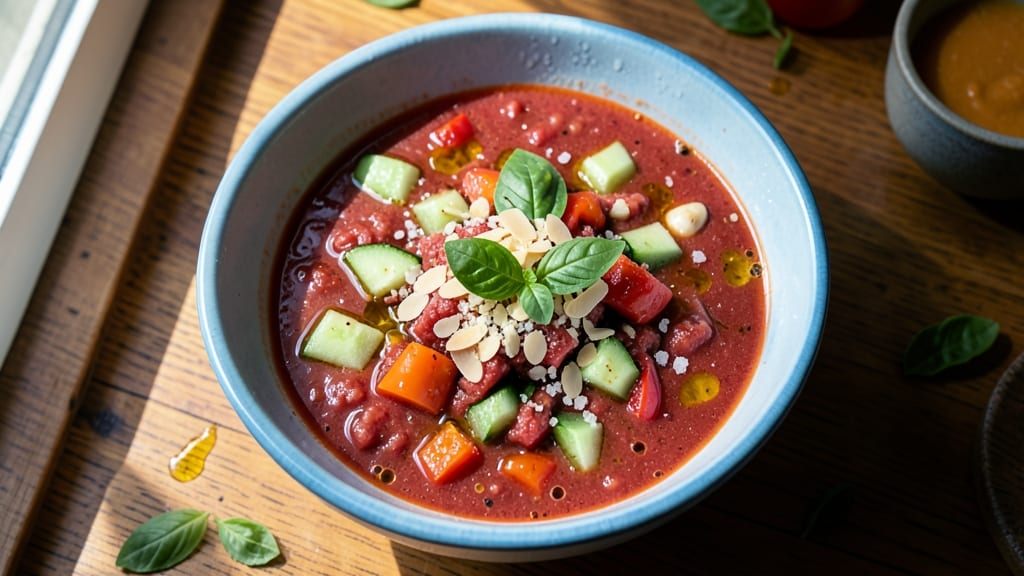
Andalusian gazpacho soup transforms summer's bounty into a vibrant, chilled masterpiece that captures Spain's sun-drenched flavors. This recipe blends ripe tomatoes, crisp cucumbers, and sweet peppers into a silky, refreshing broth that's both traditional and foolproof.
The secret lies in proper chilling and balancing saltiness—just like the Andalusian cooks have done for generations.
What sets this gazpacho apart is its almond magic—a touch of ground almonds creates a velvety texture that traditional versions often miss. I've perfected the technique of resting the soup overnight, allowing flavors to meld while maintaining that bright, summery freshness.
The result is a soup that's light yet deeply satisfying, with just the right balance of acidity and richness.
Serve this gazpacho chilled in elegant bowls, garnished with crispy croutons and fresh herbs for that restaurant-quality presentation. The almond-infused version adds a subtle nuttiness that complements the vegetables beautifully, while still keeping the dish authentically Spanish.
Perfect for hot days or as a refreshing starter, this soup proves you don't need heat to create something memorable.
For summer variations, try adding watermelon or peaches for extra sweetness, or swap in different herbs like basil or cilantro. The key is adjusting the saltiness to your taste—this is where Andalusian cooks truly shine. Let's create this vibrant soup that tastes like a Spanish summer in every spoonful.
Ingredients for andalusian gazpacho soup
Fresh summer produce meets Andalusian tradition—just 13 ingredients for vibrant, creamy gazpacho.
| Ingredient | Amount | Notes |
|---|---|---|
| Ripe Tomatoes 🍅 | 4 lbs | Vine-ripened for sweetness |
| Seedless Cucumbers 🥒 | 2 whole | English cucumbers preferred |
| Red Bell Peppers 🌶️ | 1 whole | Stemmed, cored, chopped |
| Yellow Onion 🧅 | 1 whole | Yellow or white preferred |
| Garlic Cloves 🧄 | 4 cloves | Freshly minced |
| Ground Almonds 🥜 | ½ cup | Toasted for nuttiness |
| Extra-Virgin Olive Oil 🫒 | ½ cup | High-quality, fruity |
| Red Wine Vinegar 🍷 | ¼ cup | Balsamic works too |
| Fresh Cilantro 🌿 | ¼ cup | Stems removed, chopped |
| Crusty Bread 🍞 | 2 cups | Torn into croutons |
| Sea Salt 🧂 | 2 tsp | Diamond Crystal preferred |
| Black Pepper 🌶️ | ½ tsp | Freshly ground |
| Ice Water ❄️ | 2 cups | For blending consistency |
The tomatoes are non-negotiable—vine-ripened ones from the farmers market make all the difference. Whole Foods or your local Spanish market usually have the best selection. Look for tomatoes that smell sweet and give slightly when squeezed. The cucumbers should be firm and seedless—English cucumbers are ideal, but Persian cucumbers work in a pinch if you're in a hurry. For the almonds, Trader Joe's has the best price on ground almonds, and toasting them in a dry pan for 2-3 minutes before blending adds a depth of flavor that's worth the extra minute. The olive oil should be something you'd drizzle on bread—California-grown brands like Corto or Colavita are my go-tos.
No red wine vinegar? Apple cider vinegar or lemon juice works in a bind, though it won't have that same depth. The cilantro can be swapped for flat-leaf parsley at half the amount if you're not a fan. For the bread, day-old sourdough makes the best croutons—toss in olive oil, salt, and roast at 375°F for 10-12 minutes until golden. If you're feeling fancy, add a pinch of smoked paprika to the croutons for extra Andalusian flair. The gazpacho itself is forgiving—if it tastes too acidic, a splash of water balances it out. Too bland? More vinegar or salt. Trust your taste buds here—Andalusian cooks adjust as they go.
This soup tastes even better the next day once flavors meld. Store it in airtight containers in the fridge for up to 4 days, though I recommend eating it within 2 days for peak freshness. For freezing, portion into ice cube trays first—thaw and stir before serving. The croutons stay crisp for about 3 days if stored separately in an airtight container. Double the recipe if you're hosting—it disappears fast, especially on hot days. Garnish with extra herbs and a drizzle of olive oil just before serving to keep everything vibrant.
Why You'll Love This Recipe
- No-Fuss Blender Magic: I swear by this recipe—just toss everything into the blender, hit pulse, and you’ve got soup. No peeling, no dicing, no stress. The cucumbers and tomatoes do most of the work for you.
- Sweet-Savory Balance: That charred red bell pepper and roasted garlic? It’s where this soup gets its soul. The natural sweetness of the tomatoes plays off the sharp bite of cucumber, while the onion adds depth—like a summer hug in a bowl.
- Lunchbox Hero: Between us, this is my secret weapon for meal prep. It stays crisp in the fridge for days, and I pack it in jars for work lunches—no reheating needed. Add a sprinkle of chili flakes, and suddenly you’ve got a restaurant-quality takeaway.
- Budget Brightener: Honestly, I make this when I’m broke but still want to eat well. Tomatoes, cucumbers, peppers—all cheap, all seasonal, all packed with flavor. It’s the kind of soup that makes you feel fancy without breaking the bank.
Step-by-step instructions for Andalusian gazpacho soup
Here's how to craft this vibrant, nutty chilled soup that balances sweet tomatoes with almond richness.
Prepare the Vegetable Base
Begin by coring and chopping the ripe tomatoes into rough chunks—no need for precision here. Peel and seed the seedless cucumbers, then chop them into similar-sized pieces. Dice the red bell peppers into ½-inch cubes and finely mince the yellow onion. For the garlic, separate the 4 cloves and mince them finely—this releases their full flavor without bitterness.
Place all chopped vegetables in a large mixing bowl. Sprinkle with 2 teaspoons sea salt and ½ teaspoon black pepper, then toss gently to distribute. Let the mixture sit at room temperature for 15 minutes—this allows the salt to draw out moisture and soften the vegetables slightly, making them easier to blend later. The flavors will meld naturally during this waiting period.
Toast the Almonds and Blend the Base
While the vegetables rest, toast the ½ cup ground almonds in a dry skillet over medium heat for 3-4 minutes, stirring constantly. You're looking for a nutty aroma and a light golden color—this enhances their flavor significantly. Let them cool slightly before adding to the soup.
Transfer the vegetable mixture to a high-powered blender. Add the toasted ground almonds, ½ cup extra-virgin olive oil, ¼ cup red wine vinegar, and 2 cups ice water. Blend until completely smooth, scraping down the sides as needed. The ice water is crucial here—it creates the perfect chilled consistency without thinning the soup too much. Taste and adjust seasoning if needed; this is your flavor baseline.
Incorporate the Bread and Cilantro
Tear the 2 cups crusty bread into rough pieces—no need to make croutons yet. Add them to the blender along with the ¼ cup fresh cilantro (stems removed). Pulse just until the bread breaks down and the cilantro is finely distributed. The bread adds body and texture, while the cilantro brings freshness that cuts through the richness.
Blend again until fully combined, then taste. The soup should be thick but pourable—like a cross between a chilled soup and a savory drink. If it's too thick, add 1 tablespoon ice water at a time until it reaches your desired consistency. The bread should be fully incorporated but still provide subtle texture when served.
Chill and Serve with Garnishes
Transfer the gazpacho to a pitcher or large bowl and refrigerate for at least 2 hours, or until completely chilled. This step is non-negotiable—the flavors need time to meld, and the soup must be properly cold to highlight its refreshing qualities.
Before serving, give it one final taste and adjust seasoning if needed. Ladle into bowls and garnish with additional cilantro, a drizzle of extra-virgin olive oil, and a sprinkle of toasted almonds. The contrast of warm almonds against the chilled soup is what makes this dish truly special. Serve immediately with crusty bread on the side for dipping.
Pro Tips For Making Andalusian Gazpacho Soup
- Char the Peppers Properly: Blister the red bell peppers over an open flame or high broiler—until blackened in spots. This smoky depth cuts through the soup’s freshness and makes all the difference when blended. (Yes, even if you’re impatient like me, resist the urge to rush this.)
- Peel the Onion After Cooking: Sauté the onion until translucent, then plunge it in ice water for 30 seconds. The skin slips off effortlessly afterward—no peeling struggle mid-recipe. I learned this the hard way after wasting five onions trying to peel them raw.
- Blend in Stages: Puree half the ingredients first, then mix in the rest. This prevents motor overload and ensures a silky texture without watery separation. My blender gave up on me once—don’t let that happen to you.
- Toast the Garlic Lightly: Mince the garlic and sauté in olive oil for 30 seconds until fragrant but not browned. Overcooking turns it bitter, and that’s a flavor killer in a bright soup like this. (Your nose will thank you.)
Regional styles of this recipe
Andalusian Origins
This gazpacho traces back to Andalusia's sun-drenched countryside, where farmers blended simple summer ingredients into cooling soups during siesta hours. The original version used just tomatoes, cucumbers, garlic, olive oil, and vinegar—no almonds.
My twist adds ½ cup ground almonds for that signature Andalusian creaminess that elevates it from basic to extraordinary. The almonds weren't traditionally used, but they became popular in modern interpretations to create that velvety texture. 🥜
Seville Style
In Seville, gazpacho often includes diced green apples for tartness and a splash of sherry vinegar instead of red wine vinegar. The key difference? Seville's version is slightly sweeter from the apples, while the classic Andalusian version relies on ripe tomatoes' natural sweetness.
I've kept the traditional vinegar but added the almonds—this fusion creates the perfect balance between old-world tradition and modern innovation.
Malaga Variations
Coastal Malaga adds fresh seafood elements—like diced shrimp or mussels—to their gazpacho, creating a briny contrast to the vegetables. For a seafood twist, reserve ½ cup cooked shrimp after blending, then stir them in just before serving.
The Malaga version also often includes smoked paprika—a ½ teaspoon—for a subtle smokiness that pairs beautifully with the almonds. This regional touch transforms the soup into something truly special.
Modern Fusion Twists
Today's Andalusian gazpacho often incorporates unexpected ingredients like roasted red peppers—blend in ½ cup jarred roasted peppers for depth—or watermelon for a summery sweetness. For a fusion version, add 1 cup diced watermelon along with the tomatoes.
The watermelon adds a refreshing juiciness that keeps the soup light and vibrant. This modern approach keeps the soul of Andalusian cooking while embracing contemporary tastes. 🍉
Winter Adaptations
When summer fades, Andalusian cooks adapt by swapping fresh tomatoes for roasted tomatoes—toss halved tomatoes with olive oil, salt, and roast at 400°F for 20 minutes. The concentrated flavor works beautifully with the almonds.
For extra warmth, add ½ teaspoon cinnamon to the blended mixture. This winter version maintains the soup's comforting qualities while still feeling fresh and vibrant.
Regional Garnishes
Andalusian gazpacho is all about presentation. In Granada, they top their soup with crumbled Manchego cheese and sliced jamón ibérico. For a vegetarian version, stick with toasted almonds, cilantro, and a drizzle of extra-virgin olive oil.
The contrast of textures—creamy soup, crunchy croutons, and fresh herbs—is what makes this dish so satisfying. Each region adds its own touch, but the almond-infused base remains the soul of the soup. 🌿
Nutrition facts
Frequently asked questions about Andalusian gazpacho soup
Why does the recipe call for ice water in the blending process?
The ice water creates the perfect chilled consistency right from the start, preventing the soup from becoming too warm during blending. It also helps balance the acidity of the vinegar and tomatoes, giving you that refreshing, vibrant texture that's classic for Andalusian gazpacho. Plus, it ensures the soup stays properly chilled without needing extra time in the fridge later.
Can I make this gazpacho without a high-powered blender?
Yes, but you'll need to strain the mixture afterward for a smoother texture. Use a regular blender or food processor, then press the blended vegetables through a fine-mesh sieve or nut milk bag. The bread will need extra blending time to break down completely. For best results, pulse the bread separately first to create fine crumbs before blending with the rest.
How do I adjust the flavor if my gazpacho tastes too acidic?
Add a splash of cold water or a pinch of sugar to balance the acidity. For a more authentic Andalusian touch, stir in a small piece of toasted bread or a spoonful of the reserved ground almonds—this adds subtle sweetness and richness. Taste as you go, as adjustments can be made gradually. The key is finding that perfect harmony between tangy and creamy.
Can I prepare this gazpacho ahead of time for a summer party?
This gazpacho actually tastes better after resting for 2-4 hours in the fridge, allowing flavors to meld. For a party, make it the night before and store in airtight containers. Just before serving, give it a final taste and adjust seasoning. Keep croutons and garnishes separate until serving to maintain crispness. The almonds add extra richness that develops beautifully over time.
What's the best way to make the croutons extra crispy?
Tear the bread into ½-inch pieces and toss with 1 tablespoon olive oil and a pinch of salt. Spread them on a baking sheet in a single layer and bake at 375°F for 10-12 minutes, stirring halfway. For extra crunch, add a pinch of smoked paprika or garlic powder to the oil before tossing. Let them cool completely before adding to the soup or using as garnish. The contrast of crispy croutons against the cold soup is what makes this dish so satisfying!