
Soups & Stews
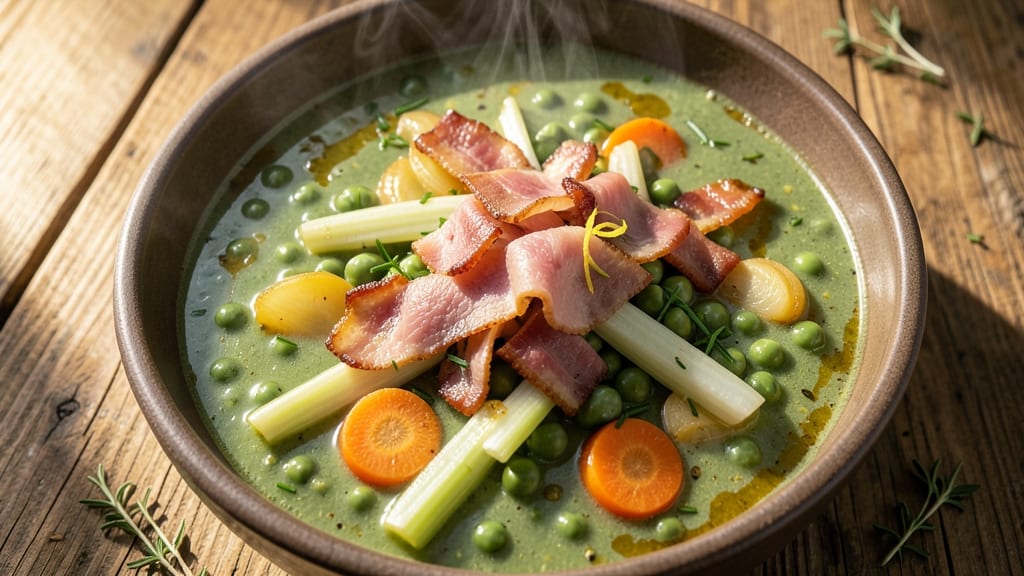
Andersen's pea soup recipe with ham delivers the kind of hearty, smoky comfort that transforms a simple weeknight into a cozy gathering. The secret lies in slow-simmered ham and bacon that infuse the soup with deep, savory richness while keeping the peas tender and vibrant. This one-pot recipe builds flavor layer by layer, starting with crispy bacon and finishing with a touch of cream that makes every spoonful irresistible.
The beauty of this soup is its balance—earthy peas meet salty ham, while herbs and aromatic vegetables round out the profile. No fancy techniques required; just a Dutch oven, 30 minutes of active prep, and 45 minutes of simmering time to let the flavors meld.
The result? A velvety, golden broth with chunks of ham that practically melt in your mouth and peas that stay bright and sweet.
What sets this version apart is the smoky depth from both bacon and ham, which creates a complexity you won’t find in basic pea soups. The optional garnish of fresh parsley and a drizzle of cream adds a touch of elegance without overpowering the rustic charm.
Perfect for chilly evenings or holiday gatherings, this soup is the kind of dish that feels like a hug in a bowl.
Pair it with crusty bread for dipping or a glass of crisp white wine to cut through the richness. The leftovers reheat beautifully, making it ideal for meal prep—just stir in a splash of water or broth if it thickens. Here’s how to make it perfectly every time.
Ingredients for andersen's pea soup recipe with ham
Six hearty ingredients plus a few pantry staples create Andersen's signature smoky, comforting pea soup.
| Ingredient | Amount | Notes |
|---|---|---|
| Fresh Peas 🌱 | 2 cups | Frozen or fresh, shelled |
| Smoked Bacon 🥓 | 8 oz | Thick-cut, chopped small |
| Diced Ham 🍖 | 1 cup | Low-sodium preferred |
| Yellow Onion 🧅 | 1 whole | Medium size, diced |
| Carrots 🥕 | 3 medium | Peeled, chopped small |
| Celery Stalks 🧅 | 3 whole | Chopped fine |
| Garlic Cloves 🧄 | 4 cloves | Minced finely |
| Vegetable Broth 💧 | 4 cups | Low-sodium preferred |
| Heavy Cream 🥛 | ½ cup | Full-fat for richness |
| Fresh Parsley 🌿 | ¼ cup | Chopped, for garnish |
| Salt 🧂 | 1 ½ tsp | Kosher or sea salt |
| Black Pepper 🌶️ | ½ tsp | Freshly ground |
| Bay Leaf 🍃 | 1 whole | Remove before serving |
| Thyme 🌿 | 1 tsp | Dried, or 1 tbsp fresh |
The bacon and ham are where the magic happens. Look for thick-cut smoked bacon at Costco or local butcher shops—it renders fat beautifully and adds that deep, smoky flavor. For the ham, pre-diced low-sodium from the deli section saves time, but a whole ham bone would add even more depth if you're feeling ambitious. The peas? Fresh are ideal, but frozen peas work perfectly—just don't thaw them first. Fresh herbs like thyme and parsley elevate the dish, but dried will work in a pinch if you're short on time. The key is balancing the saltiness of the bacon and ham with the earthy sweetness of the peas and carrots.
No smoked bacon? Regular bacon with a pinch of smoked paprika gets you close. Swapping ham for diced chicken thighs keeps it hearty, though you'll lose that signature smokiness. Vegetable broth can be homemade or store-bought—Pacific Foods or Imagine brands are my go-to for clean flavor. The carrots and celery can be swapped for turnips or parsnips if you're feeling adventurous. Fresh herbs like parsley and thyme are best, but dried works at one-third the amount. And if you're watching calories, use light cream instead of heavy—it won't be as rich, but still delicious.
This soup tastes even better the next day as the flavors meld together. Store in an airtight container in the fridge for up to 5 days, or freeze for 3 months. I like to portion it into individual containers for easy lunches—just reheat with a splash of water or broth if it thickens. The bacon and ham can be cooked ahead and stored in the fridge for up to 3 days before adding to the soup. Fresh herbs, on the other hand, should be added just before serving to keep their vibrant color and flavor.
Why You'll Love This Recipe
- Foolproof Freshness: The second the peas hit the pot still bright green, you know this isn’t some mushy afterthought—just 10 minutes of simmering keeps them tender-crisp. I swear by using fresh peas (or frozen, no judgment), and that snap? Pure victory.
- Smoky-Sweet Magic: Between the crispy bacon edges and the ham’s salty depth, this soup sings. The onions caramelize just enough to melt into the broth, while the carrots add that subtle sweetness that makes every spoonful feel like a hug.
- Lunchbox Hero: Pack this warm or cold—it’s my go-to for work lunches or kids’ school thermoses. The ham holds up perfectly, and the peas? Still hold their shape. Honestly, I’ve sent this in jars for 3 days straight without complaint.
- Budget Booster: You’re getting protein from the ham and bacon, fiber from the veggies, and all for half the cost of takeout. I’ll be real: this feeds four for under $10, and the leftovers? Even better the next day when the flavors meld.
Step-by-step instructions for Andersen's pea soup with ham
This one-pot method delivers rich, smoky depth with tender vegetables and creamy texture.
Render the Bacon and Build the Flavor Base
In a large Dutch oven or heavy pot, cook the 8 oz smoked bacon over medium heat for 8-10 minutes, stirring occasionally, until the fat is rendered and the bacon is deep golden brown. This step creates the smoky foundation that defines Andersen's signature flavor.
Use a wooden spoon to scrape up any browned bits from the bottom of the pot as they form—these contain concentrated flavor that will dissolve into your soup. Once the bacon is crisp, remove it with a slotted spoon and set it aside on a paper towel-lined plate, reserving the fat in the pot.
Sauté the Vegetables Until Tender
Add the 1 whole yellow onion, 3 medium carrots, and 3 whole celery stalks to the pot with the bacon fat. Cook over medium heat for 5-7 minutes, stirring frequently, until the vegetables begin to soften and the onion becomes translucent. This step develops their natural sweetness and removes any raw taste.
Add the 4 cloves minced garlic, 1 tsp thyme, and 1.5 tsp salt, stirring for 30 seconds until fragrant. The thyme adds earthy warmth while the garlic infuses its pungent aroma. This is where the soup's aromatic profile begins to come together—don't rush this step or the flavors won't meld properly.
Simmer the Vegetables in Broth
Pour in the 4 cups vegetable broth and bring the mixture to a boil. Once boiling, reduce heat to low and add the 1 whole bay leaf and 0.5 tsp black pepper. Cover the pot and let it simmer for 15 minutes, stirring occasionally, until the vegetables are tender but not mushy. The bay leaf adds subtle herbal depth while the pepper provides a gentle warmth.
This simmering time is crucial—it allows the vegetables to break down just enough to release their natural sweetness into the broth without turning to mush. If the soup reduces too much before the vegetables are tender, add a splash of water to maintain the proper consistency.
Add Peas, Ham, and Finish with Cream
Stir in the 2 cups fresh peas and 1 cup diced ham, then return the reserved bacon to the pot. Simmer uncovered for an additional 5 minutes to allow the peas to soften slightly while maintaining their vibrant color. The ham and peas should be heated through but still retain their distinct textures.
Remove the bay leaf and stir in the 0.5 cup heavy cream, simmering for 2-3 minutes until the soup reaches your desired creaminess. The cream adds richness without overpowering the vegetables' natural flavors. Taste and adjust seasoning with additional salt or pepper if needed—this is where you fine-tune the balance of flavors.
Garnish and Serve Warm
Ladle the soup into bowls and garnish each serving with 0.25 cup chopped fresh parsley. The parsley adds a bright, fresh contrast to the rich, smoky soup. Serve immediately while hot, as the flavors continue to develop and meld together.
This soup is best enjoyed fresh from the pot, where the bacon maintains its crisp texture and the cream remains silky. The combination of smoky bacon, sweet vegetables, and creamy broth creates a comforting, hearty meal perfect for chilly days.
Pro Tips For Making Andersen'S Pea Soup Recipe With Ham
- CRISP THE BACON FIRST: Don’t toss that smoky bacon straight into the pot—render it in a cold skillet over medium heat until the fat runs clear and the edges get crisp. That extra fat is liquid gold for the soup, and the crispy bits add texture no amount of stirring later can replicate. (Yes, even if you’re in a hurry, skip the microwave shortcut—it’s not worth it.)
- SWEAT ONIONS LOW AND SLOW: After adding the onions, drop the heat to medium-low and let them sweat for 8-10 minutes until they’re soft and translucent, not browned. I used to rush this, and the soup always tasted raw and sharp—like the onions were still fighting the peas for attention. Patience here makes the whole dish smoother.
- HAM IN LAYERS: Add the diced ham in two batches: first with the onions, then again after the peas soften but before the final simmer. The first batch gets infused with flavor, while the second stays juicier and melts into the broth at the end. (Pro move: Pat the ham dry first—wet meat steams instead of browning.)
- PEAS: DON’T OVERCOOK: Fresh peas cook faster than you think—test them at 5 minutes, not 10. The moment they’re tender but still hold their shape, pull the pot off the heat. Overcooking turns them mushy and turns your soup into a sad, gray purée. (If using frozen peas, add them last and count on 2-3 minutes max.)
Essential equipment for this dish
Dutch Oven Essentials
A 5-6 quart Dutch oven is your best friend for this recipe—it distributes heat evenly and handles the thick, smoky broth beautifully. I recommend a Lodge cast iron Dutch oven for its durability and heat retention, but any heavy-bottomed pot will work.
The deep sides prevent spills while simmering, and the tight-fitting lid traps steam for even cooking. 🔥
Knife & Cutting Board
Invest in a sharp chef’s knife (like the Victorinox Fibrox) and a sturdy cutting board for efficient prep. The bacon, ham, and vegetables need precise, even cuts to cook uniformly.
A mandoline can speed up chopping carrots and celery, but hand-cutting ensures better control over size. I swear by my Acrylic cutting board—it’s gentle on knives and easy to clean.
Wooden Spoon & Slotted Spoon
A heat-resistant wooden spoon (I use Oxo Good Grips) is perfect for stirring without scratching your Dutch oven. For removing crispy bacon, a slotted spoon with a long handle keeps your fingers safe from splatters.
Both tools are must-haves for this recipe—they’re lightweight, easy to grip, and last for years.
Measuring Cups & Spoons
Precision matters with broth, cream, and seasonings. Use stainless steel measuring cups (like OXO Good Grips) for liquids and spoon rests to keep them clean. For spices, a small scoop or measuring spoons ensures you don’t over-salt.
I keep my set on a magnetic strip near the stove for quick access during cooking.
Immersion Blender (Optional)
If you prefer a smoother texture, an immersion blender (like Ninja Foodi) lets you blend directly in the pot. Pulse for 10-15 seconds to achieve a velvety consistency without losing the chunky bacon and ham.
Skip this step for a rustic, textured soup—it’s all about preference! The immersion blender also saves cleanup by eliminating extra bowls.
Storage Containers
For leftovers, use glass Pyrex containers with tight-sealing lids to preserve flavor and texture. I portion the soup into individual servings for easy reheating—just add a splash of water if it thickens.
For freezing, quart-sized freezer bags work best, leaving 1 inch of headspace for expansion. Label with the date to track freshness! ❄️
Nutrition facts
Frequently asked questions
Can I substitute chicken for the ham in this recipe?
Yes, you can use diced chicken thighs (about 1 cup) instead of ham for a lighter option. The flavor will be milder, but the texture remains hearty. If using chicken, season it with 1/2 teaspoon smoked paprika to mimic the ham's depth. For extra richness, add 1/4 cup chicken broth when simmering to balance the flavors.
How do I make this soup creamier without heavy cream?
For a lighter version, replace the heavy cream with 1/2 cup Greek yogurt or 1/4 cup sour cream. Both add creaminess while reducing fat. Alternatively, blend 1/4 cup of the soup until smooth, then stir it back in. The immersion blender method works best for this—just pulse briefly to avoid over-blending.
Can I use canned peas instead of fresh or frozen?
Canned peas will work, but they're softer and release more starch, making the soup thicker. Drain and rinse them well to remove excess liquid. For best results, use 1 cup canned peas (well-drained) instead of the 2 cups fresh/frozen called for. Add them with the ham and simmer for just 3 minutes to prevent mushiness.
Why does my soup taste too salty?
If the bacon or ham is high-sodium, the soup may taste too salty. Reduce the added salt to 1 teaspoon instead of 1.5 teaspoons. For extra flavor without salt, add 1 teaspoon lemon juice or 1/2 teaspoon Dijon mustard—both brighten the soup and balance saltiness. If using low-sodium broth and ham, you may not need extra salt at all.
How can I make this soup ahead of time?
This soup reheats beautifully! Cook it completely, then let it cool to room temperature. Store in an airtight container in the fridge for up to 5 days. When reheating, warm over medium-low heat and stir in 1-2 tablespoons water or broth if it thickens. For freezing, portion into quart-sized bags and freeze for up to 3 months. Thaw overnight in the fridge before reheating.