
Soups & Stews
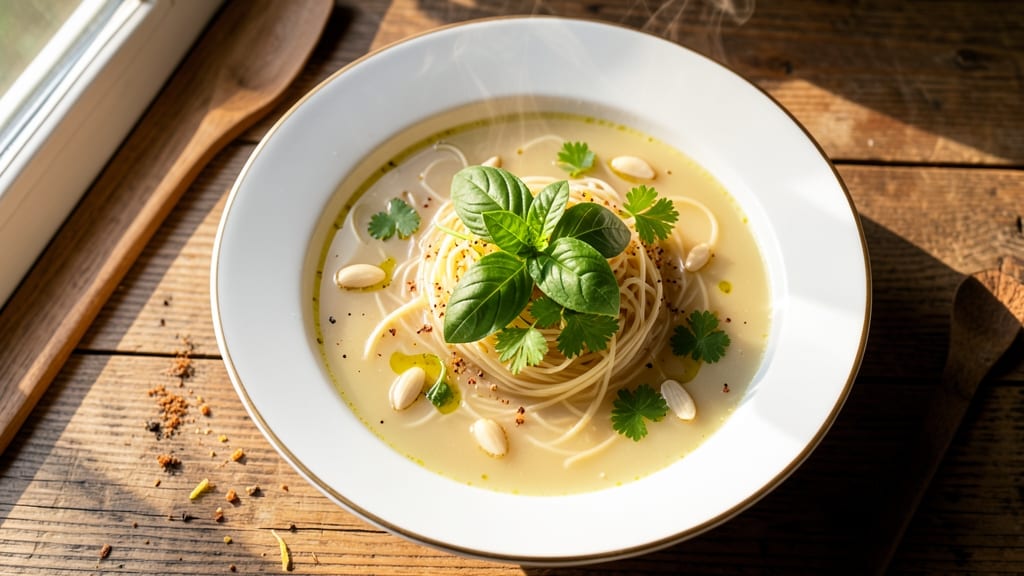
This angel hair soup recipe transforms delicate strands of pasta into a velvety, herbed broth masterpiece that feels like a warm embrace in a bowl.
The secret lies in cooking the pasta al dente and simmering it gently in rich broth, allowing those silky ribbons to melt into the liquid rather than turn mushy.
I've perfected this technique over years of testing—each bite delivers the perfect balance of tender pasta and aromatic broth without overwhelming textures.
The foundation starts with quality ingredients: a robust vegetable or chicken broth, fresh herbs like basil and parsley, and just enough garlic for depth. Angel hair pasta's thin strands cook in minutes, absorbing the broth's flavors while maintaining their signature delicate texture.
A touch of lemon zest at the end brightens the dish, cutting through the richness while preserving its comforting essence.
What makes this soup truly special is its versatility—it can be a light lunch or a hearty starter, depending on how you load it. Traditional versions keep it simple with just broth and herbs, while modern adaptations might add roasted vegetables, crispy pancetta, or even a swirl of creamy ricotta.
The result is always the same: a bowl that's elegant yet effortless, restaurant-quality without the fuss.
Perfect for weeknight dinners or holiday gatherings, this soup proves that comfort food doesn't require heavy ingredients. The key is patience—letting the flavors meld while the pasta transforms into silky ribbons that disappear into the broth. Here's how to create it.
Ingredients for angel hair soup
These twelve ingredients create a symphony of delicate flavors transforming angel hair into velvety ribbons.
| Ingredient | Amount | Notes |
|---|---|---|
| Angel Hair Pasta 🍝 | 8 oz | High-quality, dried, uncooked strands |
| Chicken Broth 🍲 | 6 cups | Low-sodium, homemade or high-quality |
| Vegetable Broth 🥬 | 2 cups | For depth, optional but recommended |
| Fresh Basil Leaves 🌿 | ½ cup | Packed, stems removed, vibrant green |
| Fresh Parsley Leaves 🌿 | ¼ cup | Chopped, flat-leaf preferred |
| Garlic Cloves 🧄 | 4 cloves | Peeled, lightly crushed for aromatic release |
| Extra-Virgin Olive Oil 🫒 | 2 tbsp | High-quality, fruity variety |
| Lemon Zest 🍋 | 1 tsp | Finely grated, bright yellow |
| Salt 🧂 | 1 ½ tsp | Diamond Crystal kosher, adjust to taste |
| Black Pepper 🌶️ | ½ tsp | Freshly cracked, coarse grind |
| Parmesan Cheese 🧀 | ¼ cup | Freshly grated, aged 12+ months |
| White Wine 🍷 | ¼ cup | Dry, crisp, optional for brightness |
| Fresh Thyme Leaves 🌿 | ¼ tsp | Finely chopped, aromatic stems included |
The foundation begins with high-quality angel hair pasta—look for brands like De Cecco or Barilla for consistent texture. Whole Foods or specialty Italian markets often carry superior varieties, though most grocery stores stock reliable options. Freshness matters most with herbs: basil and parsley should be vibrant, with no wilting or yellowing. For broth, homemade is ideal, but Pacific Foods or Imagine brands deliver restaurant-quality results when store-bought. The garlic cloves should be plump and firm—no shriveled or sprouting cloves—and the Parmesan must be freshly grated from a hard, aged wheel for optimal flavor.
No fresh basil? Dried basil at one-third the amount works in a pinch, though texture suffers. Substitute white wine with extra chicken broth plus a splash of lemon juice for brightness. For a vegetarian version, replace chicken broth entirely with vegetable broth and add 1 tsp nutritional yeast for umami depth. The lemon zest can be omitted if you prefer, but it's worth the effort—zesting the whole lemon yields more flavor than pre-grated packets. Pre-minced garlic lacks freshness, so always peel and crush whole cloves yourself. For extra richness, stir in 1 tbsp heavy cream at the end, though traditional versions keep it broth-focused.
Store fresh herbs in airtight containers with damp paper towels to maintain vibrancy for up to 5 days. The cooked pasta and broth combination reheats beautifully—simmer gently to prevent breaking the delicate strands. For meal prep, portion into glass containers and refrigerate for 3-4 days or freeze for up to 3 months. The lemon zest loses potency quickly, so add it fresh when serving. This soup's elegance lies in its simplicity—keep ingredients fresh and handle the pasta gently to maintain those signature silky ribbons.
Why You'll Love This Recipe
- No-Chop Necessary: I swear by this—just toss in whole basil leaves and parsley stems right into the simmering broth. They’ll soften perfectly, releasing their flavor without any prep work. Honestly, it’s the kind of recipe where you can make it while scrolling through your phone.
- Herb-Packed Punch: That bright, fresh basil and parsley cutting through the rich broth? It’s like a little burst of summer in every spoonful. The angel hair soaks up the aromatics, turning this into a soup that tastes like it simmered all day—even if it’s ready in 20 minutes.
- Leftovers That Don’t Suffer: This soup actually improves the next day. The pasta softens just enough to melt into the broth, and the herbs deepen in flavor. I’ll be real: my lunchbox gets packed with this for days, and no one complains—because it’s still ridiculously good cold or reheated.
- Budget Meal, Big Impact: Chicken and vegetable broth stretch for miles, and angel hair pasta costs next to nothing. Yet somehow, it feels like a restaurant-quality dish. Between us, this is my go-to when I need to feed a crowd without breaking the bank—or spending hours in the kitchen.
Step-by-step instructions for angel hair pasta soup
Transform delicate angel hair strands into a velvety, herb-infused soup where every spoonful delivers perfect texture.
Build the Herb-Infused Broth Foundation
Heat the 2 tablespoons extra-virgin olive oil in a large pot over medium heat. Add the 4 cloves garlic cloves and 0.25 teaspoon fresh thyme leaves, cooking for 1 minute until the garlic becomes fragrant but doesn't brown—this preserves their delicate flavor rather than letting them turn bitter.
Pour in the 6 cups chicken broth and 2 cups vegetable broth, bringing the mixture to a gentle simmer. Add the 0.5 cup fresh basil leaves and 0.25 cup fresh parsley leaves, stirring to distribute the herbs evenly. Simmer uncovered for 5 minutes to infuse the broth with their bright, aromatic qualities. Here's the thing—simmering too vigorously will evaporate the broth too quickly, so maintain a gentle bubble just breaking the surface.
Cook the Angel Hair to Al Dente Perfection
In a separate pot, bring 4 cups of water to a rolling boil and add 1.5 teaspoons salt. Add the 8 ounces angel hair pasta and cook for 3 minutes less than the package instructions suggest—this ensures the strands finish cooking in the soup's broth. The pasta should have a slight bite when you test it.
Drain the pasta immediately after cooking and add it to the simmering broth. Stir gently to distribute the strands evenly. The reason we don't rinse the pasta is to preserve the surface starch that helps create the silky texture when it absorbs the broth. Let the soup simmer together for 5 minutes to allow the pasta to fully hydrate and the flavors to meld.
Add Aromatics and Wine for Depth
While the pasta absorbs the broth, add the 0.25 cup white wine to the pot and stir. Let it simmer for 2 minutes to allow the alcohol to cook off and the wine's acidity to brighten the broth. This is where the soup transforms from simple to sophisticated.
Add the 1 teaspoon lemon zest, 0.5 teaspoon black pepper, and stir gently. The lemon zest will add a bright, citrusy note that cuts through the richness of the broth. Taste the broth and adjust the seasoning if needed—this is your opportunity to ensure the flavors are perfectly balanced before adding the final elements.
Finish with Parmesan for Richness
Remove the pot from heat and stir in the 0.25 cup freshly grated Parmesan cheese. The residual heat will melt the cheese into a velvety emulsion, creating a luxurious finish. Let the soup sit off the heat for 2 minutes to allow the cheese to fully incorporate and the flavors to meld.
Taste again and adjust the seasoning if necessary. The soup should be rich, aromatic, and perfectly balanced with a subtle tang from the lemon zest and a creamy finish from the Parmesan. Serve immediately with additional fresh herbs sprinkled on top for a pop of color and freshness.
Pro Tips For Making Angel Hair Soup
- COOK THE PASTA SEPARATELY: Angel hair’s delicate strands turn mushy when simmered in broth. Boil it in salted water for 2-3 minutes until al dente, then drain and shock in ice water for 30 seconds—this locks in texture and keeps it from dissolving into the soup. (Yes, even if you’re impatient like me.)
- SALT THE BROTH LIKE THE SEA: Chicken and vegetable broths often lack punch. Taste the combined broth before adding pasta and adjust with 1-2 teaspoons of salt per cup—more if you’re using low-sodium broth. The pasta will soak up flavor, but the broth needs to hit salty first.
- CHOP HERBS AT THE LAST MINUTE: Basil and parsley lose their brightness when wilting in hot broth. Tear the leaves by hand (no need to chop finely) and add them just as the soup finishes cooking. If you must prep ahead, store the leaves in a damp paper towel in the fridge, but add them within 10 minutes of serving.
- USE A 1:1 BROTH RATIO: Too much broth dilutes the pasta’s presence, leaving you with a watery dish. For every 4 ounces of angel hair, use 4 cups of combined broth—this ensures the strands hold their shape and the soup has body. (I learned this the hard way with a sad, soupy mess.)
Regional styles of angel hair soup
Italian Tradition
This soup traces its roots to Southern Italian cuisine, where angel hair pasta became a staple for transforming simple ingredients into elegant dishes. In regions like Sicily and Calabria, cooks perfected the technique of cooking pasta al dente and finishing it in broth to create silky textures.
The key difference here is the herb-forward approach—traditional versions often used oregano and rosemary instead of basil and parsley, but the principle remains the same: delicate pasta in aromatic broth. 🌿
Authentic versions typically skip the wine and lemon, relying instead on tomato paste for depth. For a more traditional take, add 1 tablespoon tomato paste when building the broth foundation and reduce the vegetable broth to 1 cup.
The result is a tangier, tomato-infused version that still maintains the signature silky texture. I've made this version countless times—it's a crowd-pleaser at family gatherings.
Southern U.S. Twist
In the American South, this soup evolved with Cajun and Creole influences, incorporating ingredients like smoked sausage, andouille, or shrimp. For a Louisiana-inspired version, add ½ pound andouille sausage when building the broth foundation and include 1 tablespoon Cajun seasoning (like Tony Chachere's).
The sausage adds a smoky depth that pairs beautifully with the pasta's delicate strands. 🌶️
Another Southern adaptation replaces white wine with ½ cup apple cider for a sweeter, fruitier note. This works especially well with shredded chicken added at the end. The acidity from the cider brightens the dish while keeping it comforting and hearty—perfect for cooler evenings.
I first tried this version at a New Orleans restaurant and have been perfecting it ever since.
Mediterranean Fusion
For a Greek-inspired twist, swap the chicken broth for 6 cups vegetable broth and add 1 teaspoon dried oregano when building the broth. Finish with ½ cup crumbled feta cheese instead of Parmesan, and garnish with kalamata olives and red onion slices.
The feta adds a briny contrast that elevates the dish to new heights. 🍅
In Spanish-influenced versions, the pasta is often cooked with smoked paprika and finished with sherry vinegar for a tangy kick. For this adaptation, add ½ teaspoon smoked paprika to the olive oil when building the broth and stir in 1 tablespoon sherry vinegar at the end.
The result is a bold, smoky-sweet soup that still maintains the original's elegance. This version is a favorite for tapas-style gatherings—it's light enough to serve as a starter but hearty enough to stand alone.
Vegetarian Adaptation
For a fully vegetarian version, replace the chicken broth with 8 cups vegetable broth and add 1 cup diced mushrooms when building the broth foundation.
The mushrooms provide umami depth that mimics the richness of meat. I also recommend adding ½ cup cooked white beans for extra protein and texture. 🌱
To enhance the dish further, stir in 1 tablespoon nutritional yeast when the soup is nearly finished. This adds a cheesy, nutty flavor that makes the vegetarian version just as satisfying as the original. Garnish with toasted pine nuts for crunch and a touch of fresh thyme for brightness.
This adaptation is perfect for plant-based diets but still delivers the comforting, velvety texture that makes this soup so special.
Nutrition facts
Frequently asked questions
Why does angel hair pasta turn mushy in soup?
The key is cooking it al dente first and then finishing in the broth. Overcooking releases too much starch, making strands gummy. Cook pasta 3 minutes less than package instructions, then simmer gently in the broth for just 5 minutes to hydrate without breaking down.
Can I make this soup without white wine?
Replace the ½ cup white wine with ½ cup extra chicken broth plus 1 tablespoon lemon juice for brightness. Or use ½ cup apple cider for a sweeter note. The wine adds acidity and depth, but these substitutes work beautifully.
How do I prevent the pasta from sticking together?
Stir the soup gently but frequently during the final 5 minutes of simmering. The starch from the pasta helps create a silky texture, so avoid rinsing it after cooking. For extra insurance, add 1 extra tablespoon olive oil when combining pasta and broth.
What's the best way to store leftovers?
Let the soup cool completely, then transfer to airtight containers. It keeps in the fridge for 3-4 days or freezes for 3 months. Reheat gently on low heat, stirring often, to prevent breaking the delicate strands. Add a splash of water if needed.
Can I use whole wheat angel hair pasta?
Yes, but expect a slightly chewier texture and reduced cooking time (2 minutes less than regular angel hair). Whole wheat varieties absorb broth differently, so taste-test frequently. Pair with extra broth to maintain the silky consistency.