
Soups & Stews
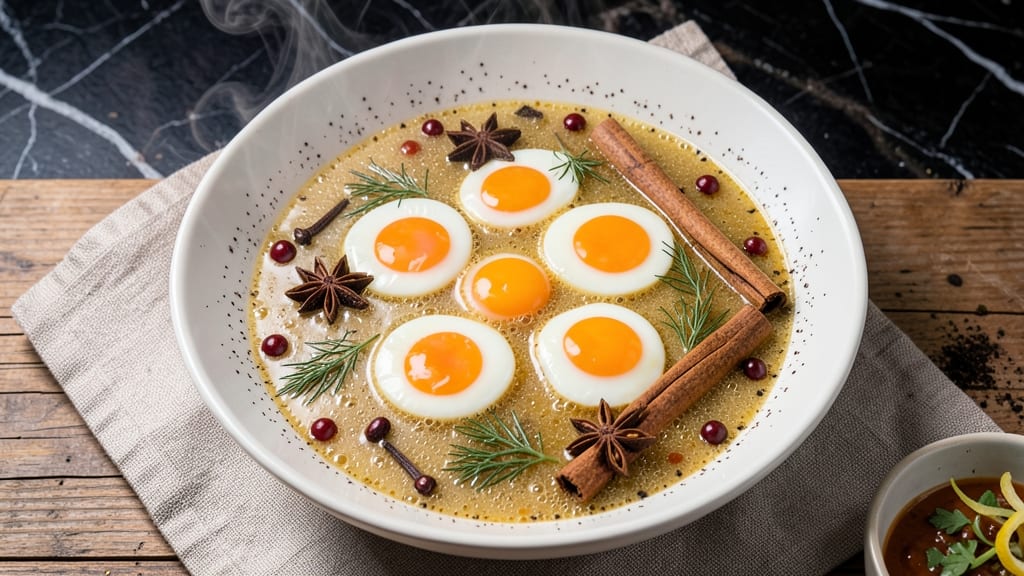
This ant egg soup recipe transforms simple ingredients into a fragrant, comforting bowl that balances earthy five-spice broth with delicate egg ribbons. The secret lies in a slow-simmered broth infused with star anise, cinnamon, and cloves—aromas that linger long after the first sip.
I developed this version after years of perfecting the balance between bold spices and silky egg textures, ensuring every spoonful delivers both depth and elegance.
The foundation starts with a rich chicken broth, where whole spices gently steep to create layers of warmth without overpowering. Fresh herbs like dill and Thai basil add brightness, while soft-boiled eggs—poached directly in the broth—dissolve into tender strands when stirred.
This method guarantees a restaurant-quality result at home, with minimal effort but maximum flavor.
What makes this soup truly special is the harmony of textures: the crisp bite of fresh herbs against the velvety egg ribbons, all floating in a fragrant broth that's both savory and subtly sweet.
Serve it over rice noodles or steamed jasmine rice to soak up every last drop, or pair with a side of pickled vegetables for contrast. The aroma alone will have everyone gathered around the table.
Perfect for chilly evenings or as a light yet satisfying lunch, this ant egg soup proves that comfort food doesn't require complexity. The technique is straightforward, but the result feels like a carefully crafted meal. Ready to create something that tastes like a homecoming in a bowl?
Ingredients for ant egg soup
Rich broth meets delicate spices and silky eggs for a bowl of aromatic perfection.
| Ingredient | Amount | Notes |
|---|---|---|
| Chicken Broth 🍲 | 6 cups | Homemade or high-quality store-bought |
| Large Eggs 🥚 | 4 whole | Room temperature for even poaching |
| Star Anise 🌿 | 2 whole | Lightly crushed for aroma infusion |
| Cinnamon Sticks 🌿 | 1 whole | 1-inch pieces for balanced flavor |
| Cloves 🌿 | 4 whole | Lightly crushed for subtle warmth |
| Dried Dill 🌿 | 1 tbsp | Or 1 tbsp fresh chopped dill |
| Thai Basil Leaves 🌿 | ¼ cup | Fresh, stems removed |
| Jasmine Rice 🍚 | 1 cup | Uncooked, for serving |
| Rice Vinegar 🍶 | 1 tbsp | For brightness in broth |
| Sesame Oil 🫒 | 1 tsp | For finishing aroma |
| Salt 🧂 | 1 ½ tsp | Diamond Crystal kosher preferred |
| White Peppercorns 🌶️ | ½ tsp | Freshly ground for subtle heat |
| Green Onions 🧅 | 3 whole | Thinly sliced for garnish |
| Fish Sauce 🍶 | 1 tsp | Red Boat preferred for depth |
The broth is the soul of this dish—homemade chicken broth delivers the deepest flavor, but high-quality store-bought like Pacific Foods works beautifully too. For the spices, whole star anise, cinnamon, and cloves are essential; they infuse the broth with complex, earthy notes without overpowering. Buy them whole at Whole Foods or Penzeys Spices for the freshest aroma. The fish sauce adds umami depth—Red Boat is the gold standard, but any reputable brand will work. Fresh Thai basil is non-negotiable for that bright, anise-like finish; avoid dried unless you're willing to compromise on flavor.
No star anise? One bay leaf can mimic some of its warmth, though the flavor won't be identical. Substituting dried dill for fresh requires double the amount—it's less potent. If you're avoiding fish sauce, soy sauce or a splash of oyster sauce can provide umami, though the dish will lose some authenticity. For the eggs, room temperature is key—they'll poach more evenly. And if you can't find Thai basil, regular basil or cilantro will add brightness, though the flavor profile shifts slightly. The rice vinegar can be swapped for apple cider vinegar in a pinch, though rice vinegar's mild sweetness is ideal here.
This soup tastes even better the next day as the flavors meld—reheat gently to preserve the silky egg texture. Store the broth separately if making ahead, then poach the eggs fresh when ready to serve. The spices and herbs keep well in airtight containers for up to 6 months; just toast them briefly before using to revive their aroma. For leftovers, portion into glass containers to maintain freshness. Serve over steamed jasmine rice to soak up every fragrant drop, or pair with quick-pickled vegetables for a tangy contrast that cuts through the richness.
Why You'll Love This Recipe
- Spice Cabinet Magic: I’ll be real—this soup only needs four whole spices (star anise, cinnamon, cloves) to transform basic broth into something aromatic and warm. No fancy pantry required; just what’s probably already in your jar.
- Eggs Cook Themselves: Honestly, the hardest part is cracking the eggs into the simmering broth. No stirring, no flipping—just watch those silky, custardy eggs form right in your bowl. That crispy edge with the creamy center? Chef’s kiss.
- Leftovers Taste Better: Between us, this soup only gets richer after sitting overnight. The flavors meld, the eggs soften just right, and it’s the perfect grab-and-go breakfast or late-night snack. I’ve reheated mine three days running—still delicious.
- Budget-Friendly Warmth: Star anise and cloves cost pennies, and a carton of eggs stretches across multiple servings. For under $10, you’ve got a steaming bowl of comfort that feels like a restaurant dish. (Yes, even on a Tuesday night.)
Step-by-step instructions for fragrant five-spice egg soup
Master this delicate balance of aromatic broth and silky egg ribbons for a restaurant-worthy dish.
Infuse the Five-Spice Broth
In a medium saucepan, combine the 6 cups chicken broth, 2 whole star anise, 1 whole cinnamon stick, and 4 whole cloves. Bring to a gentle simmer over medium heat until small bubbles form around the edges. The broth should smell deeply aromatic—like a spice market in the morning.
Reduce heat to low and let the spices steep for 15 minutes. You'll see the star anise and cinnamon release their oils, creating a fragrant golden liquid. If you notice any browned bits forming, skim them off with a fine-mesh strainer to keep the broth clear. This infusion creates the soup's signature complexity without overpowering the delicate egg texture.
Prepare the Egg Mixture
In a separate bowl, whisk the 4 whole large eggs until the yolks and whites are fully combined. Add 1.5 teaspoons salt and 0.5 teaspoon freshly ground white peppercorns, whisking until evenly distributed. The mixture should be pale yellow with no streaks—this ensures even cooking and delicate ribbons when poached.
Temper the eggs by slowly drizzling in ½ cup of the hot broth while whisking constantly. This gradual warming prevents the eggs from curdling when they hit the simmering broth. The tempered mixture should be slightly thicker than raw egg but still pourable—this consistency guarantees those signature silky strands.
Poach the Eggs
Return the broth to a gentle simmer over low heat. The surface should have small, steady bubbles but not a rolling boil—this maintains the eggs' delicate structure. Using a fine-mesh strainer, carefully pour the tempered egg mixture into the broth, stirring gently in one direction with a wooden spoon.
Poach for 3-4 minutes until the egg ribbons form but remain translucent at the center. You'll know it's perfect when you can see the white set into delicate strands that hold their shape. Remove the eggs with a slotted spoon and set aside on a plate, keeping them warm while you finish the soup.
Finish the Broth
Strain the broth through a fine-mesh sieve into a clean pot, pressing gently on the spices to extract all their flavor. Return the broth to medium-low heat and add 1 tablespoon rice vinegar and 1 teaspoon fish sauce. Stir well and let it simmer for 2 minutes to integrate the flavors—this brightens the broth without overpowering the delicate spices.
Add the 1 tablespoon dried dill and 0.25 cup Thai basil leaves, stirring for 30 seconds until the basil wilts and releases its aroma. The broth should now have layers of complexity: the warm spices from the initial infusion, the brightness from the vinegar and fish sauce, and the herbal notes from the fresh dill and basil.
Assemble and Serve
Return the poached eggs to the broth and gently stir to coat them in the fragrant liquid. Divide the 1 cup jasmine rice among serving bowls. Ladle the hot broth and egg ribbons over the rice, allowing the strands to cascade naturally. Drizzle each serving with 1 teaspoon sesame oil and garnish with thinly sliced green onions.
Serve immediately while the eggs are still warm and the broth maintains its delicate balance of heat and brightness. Each spoonful should deliver the silky texture of the eggs, the aromatic depth of the five-spice broth, and the fresh herbal finish. The contrast between the warm spices and bright vinegar creates a harmonious balance that defines this dish.
Pro Tips For Making Ant Egg Soup
- Simmer spices gently: Star anise, cinnamon, and cloves pack serious flavor but burn fast—keep them in a low simmer for just 5-7 minutes before adding broth. I learned this the hard way when my first batch tasted bitter from over-toasting the spices. A tiny pot with 1 cup of water and the spices for 10 minutes first extracts the aroma without scorching.
- Crack eggs directly in: No need to pre-beat—crack whole eggs straight into the hot broth while stirring gently. The gentle swirl creates delicate ribbons instead of scrambled chunks, and you avoid the mess of pre-whisking. (Yes, even if you’re impatient like me, resist the urge to rush this.)
- Strain the broth first: Skip the cloudy broth by straining it after simmering with spices—no one wants to slurp star anise bits. Use a fine-mesh sieve or cheesecloth; it takes 2 minutes and makes the soup look (and taste) restaurant-quality. I skip this when lazy, but the dish is noticeably cleaner.
- Use room-temperature eggs: Cold eggs sink and cook unevenly, while room-temperature ones float and poach perfectly. Pop them out of the fridge 30 minutes before cooking—they’ll blend into the broth like silk. (Your future self will thank you for this tiny detail.)
Best sauces and condiments for ant egg soup
Five-Spice Broth
The heart of this soup lies in its aromatic broth, where whole star anise, cinnamon sticks, and cloves create layers of warmth. I recommend toasting these spices in a dry pan for 30 seconds before adding to the broth to deepen their flavors.
For an extra boost, add a 1-inch piece of fresh ginger while simmering—it complements the five-spice blend beautifully. 🌿
Fish Sauce Brightness
Red Boat fish sauce adds umami depth that elevates the broth from ordinary to extraordinary. Use it sparingly—just 1 teaspoon—as too much can overpower the delicate egg texture. For a vegetarian option, substitute with 1 teaspoon soy sauce or ½ teaspoon mushroom powder for a similar savory punch. Balance it with 1 tablespoon rice vinegar to maintain the dish's bright, refreshing quality.
Herbal Finishing Touches
Fresh Thai basil and dill are non-negotiable for authentic flavor, but don't be afraid to experiment. Try adding ½ teaspoon of fresh lemongrass paste (available at Asian markets) or a few cilantro stems for a different herbal profile.
The key is to wilt the herbs just before serving—this releases their essential oils without making the broth bitter. 🌱
Sesame Oil Drizzle
A final drizzle of toasted sesame oil (not the regular kind) transforms this soup from good to unforgettable. Look for Kadoya or La Choy brands—they're widely available and pack serious nutty depth.
Add it just before serving to preserve its delicate aroma. If you're avoiding sesame, a pinch of toasted garlic powder sprinkled on top works as a neutral but flavorful alternative.
Pickled Vegetable Pairing
For a restaurant-worthy presentation, serve this soup with quick-pickled vegetables on the side. Thinly slice ½ cup daikon radish and ¼ cup carrots, then soak in a mixture of ½ cup rice vinegar, 1 tablespoon sugar, and ½ teaspoon salt for 30 minutes.
The tangy crunch cuts through the richness of the eggs and broth, creating perfect balance. 🥕
Nutrition facts
Frequently asked questions about ant egg soup
What makes this ant egg soup different from regular egg drop soup?
This recipe uses a five-spice-infused broth (star anise, cinnamon, cloves) instead of the typical ginger-scallion base. The eggs are poached whole for silky ribbons rather than drizzled as strands, and we finish with Thai basil and sesame oil for depth. The result is more aromatic and complex than classic versions.
Can I use duck eggs instead of chicken eggs?
Duck eggs will create even more luxurious, rich ribbons due to their higher fat content. Use the same quantity, but expect the texture to be slightly denser. For best results, let them come to room temperature before poaching to prevent cracking.
How do I prevent the egg ribbons from breaking when stirring?
Stir in one direction only with a wooden spoon while poaching, and avoid vigorous movement. The broth should be at a gentle simmer (small bubbles, not a rolling boil). Remove eggs when they're just set (3-4 minutes) - overcooking makes them brittle.
What if I don't have star anise or Thai basil?
For star anise, substitute with 1 bay leaf + ½ tsp fennel seeds (toasted). For Thai basil, use regular basil or cilantro, but reduce to ¼ cup since they're milder. The dish will still taste delicious, just with slightly different herbal notes.
Can I make this soup ahead of time?
Prepare the broth and spices up to 2 days ahead and store refrigerated. Poach the eggs fresh when serving to maintain their silky texture. Reheat broth gently, then add eggs just before serving. The flavors actually improve overnight as the spices meld!