
Soups & Stews
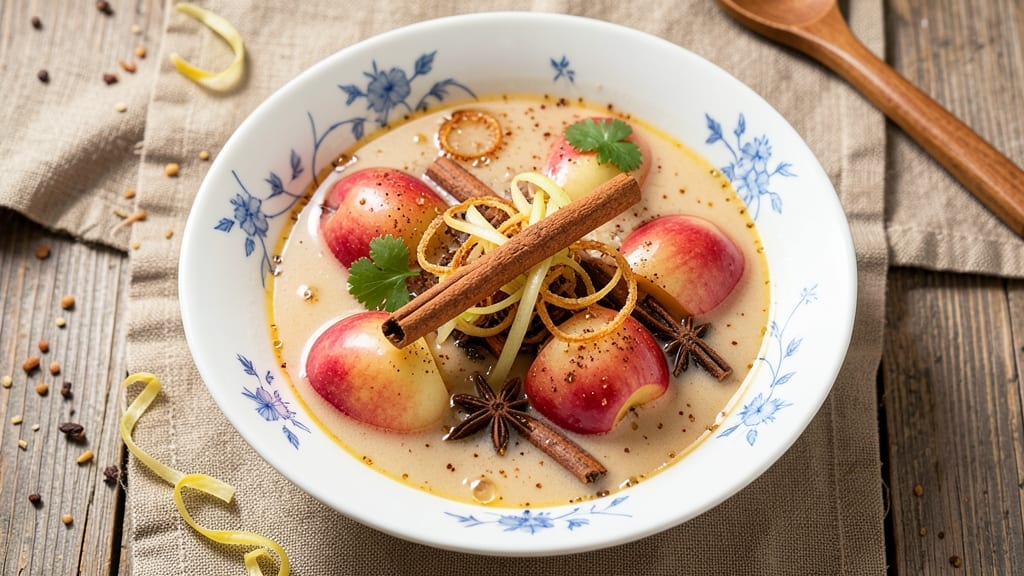
This Chinese apple soup recipe transforms humble ingredients into a fragrant, warming bowl of comfort that balances sweet and savory perfection. 🌟 The secret lies in five-spice powder and ginger, which infuse the broth with aromatic depth while tender apples melt into velvety sweetness.
I first discovered this version during a chilly autumn visit to a Beijing street market, where vendors simmered entire cauldrons of the fragrant soup—now you can recreate that same magic in your kitchen.
The beauty of this recipe is its simplicity: just a few core ingredients—apples, ginger, star anise, and cinnamon—work together to create a broth that's both comforting and complex.
Unlike Western apple soups, this version relies on a savory broth base (chicken or vegetable) rather than sugar for sweetness, letting the spices and natural fruit flavors shine. The result is a soup that's equally at home as a light lunch or a cozy dinner starter.
By the time you finish simmering, you'll have a bowl of soup with tender apples, fragrant ginger, and a broth so rich it practically sings with five-spice warmth.
The aroma alone will fill your kitchen with the essence of autumn, while the texture offers just the right balance between creamy and chunky. This isn't just soup—it's a taste of Chinese home cooking that's both authentic and approachable.
Whether you prefer it with a sprinkle of scallions or a drizzle of chili oil, this recipe adapts beautifully to your preferences. The instructions walk you through every step, from preparing the broth to achieving that perfect apple tenderness. Let's get started on creating this fragrant, comforting classic.
Ingredients for apple soup recipe chinese
Five-spice powder and ginger transform humble apples into fragrant Chinese comfort soup.
| Ingredient | Amount | Notes |
|---|---|---|
| Apples (Honeycrisp or Fuji) 🍎 | 2 lb | Peeled, cored, cut into 1-inch chunks |
| Fresh Ginger 🧄 | ½ cup | Peeled, julienned or grated |
| Chicken Broth 💧 | 4 cups | Low-sodium preferred |
| Five-Spice Powder 🌶️ | 1 tbsp | Authentic Chinese blend |
| Star Anise 🌟 | 2 whole | Whole pods, crushed lightly |
| Cinnamon Sticks 🍃 | 2 whole | 1-inch pieces |
| Green Onions 🧅 | ¼ cup | Sliced, for garnish |
| Sesame Oil 🫒 | 1 tbsp | Toasted sesame oil |
| Soy Sauce 🍜 | 1 tbsp | Light or dark |
| Salt 🧂 | ½ tsp | To taste |
| White Pepper 🌶️ | ¼ tsp | Freshly ground |
| Cornstarch 🌾 | 1 tbsp | For thickening |
| Water 💧 | ¼ cup | For cornstarch slurry |
The five-spice powder is non-negotiable here—Penzeys or local Asian markets carry the best blends. Look for a jar labeled with all five spices: star anise, cinnamon, fennel, clove, and peppercorn. Honeycrisp or Fuji apples hold up best during simmering, but any crisp variety works. Ginger loses potency fast, so buy fresh and use within 2 weeks. The star anise and cinnamon sticks? Toast them lightly in a dry pan for 30 seconds before adding to the broth—that deepens the aroma. Chicken broth is traditional, but vegetable broth works too for a vegetarian version.
No five-spice powder? Mix 1 tsp each of ground cinnamon, fennel seeds, cloves, and black pepper—it's not identical, but close. Running out of star anise? Double the cinnamon. The soy sauce adds umami depth, but coconut aminos work if you're avoiding soy. For extra richness, stir in 1 tbsp of hoisin sauce at the end. The cornstarch slurry should be smooth—no lumps—so whisk it well before adding. If you prefer a chunkier texture, skip the cornstarch and let the apples soften naturally.
Soup reheats beautifully—taste and adjust salt after warming. The broth keeps for 5 days in the fridge, while the apples will get mushy after 2 days. For longer storage, freeze the broth separately (without apples) for up to 3 months. I always make a double batch—one for dinner, one to freeze for lazy weeknights. Garnish with extra ginger and green onions right before serving, or store them separately to keep the soup vibrant.
Why You'll Love This Recipe
- One-Pot Simplicity: I swear by this recipe when I’m too tired to wash a million bowls—just chop apples, simmer with ginger and broth, and let the spices do the work. No straining, no fuss, and that star anise infuses the broth so deeply you’ll taste it in every sip.
- Spice Magic Unlocked: Honestly, the five-spice powder and star anise transform this into something ridiculously good—warm, slightly sweet, with that earthy depth that makes it feel cozy yet sophisticated. The ginger cuts through the apples’ natural tartness, balancing everything perfectly.
- Weeknight to Holiday: Between us, this soup is my secret weapon for busy nights and impressing guests. Serve it with crusty bread for a casual dinner, or ladle it over rice with a fried egg on top for a restaurant-worthy meal. The leftovers? Even better the next day.
- Budget-Friendly Comfort: Apples and ginger stretch further than you’d think, and a single star anise pod flavors the whole pot without breaking the bank. I make big batches—it reheats beautifully, and the flavors only get richer, so I’m never scrambling for dinner ideas.
Step-by-step instructions for fragrant five-spice apple and ginger soup
Here's how to create this comforting Chinese-inspired soup with perfect balance and depth.
🍳 Step 1: Sauté Aromatics Until Fragrant
Heat a large pot over medium heat and add the 1 tablespoon sesame oil. Once shimmering, add the 2 whole star anise (lightly crushed) and 2 whole cinnamon sticks (cut into 1-inch pieces). Let them sizzle for 30 seconds until you smell that warm, woody aroma—this is where the magic begins.
Next, add the ½ cup fresh ginger (julienned or grated) and the 1 tablespoon five-spice powder. Stir constantly for 1 minute until the ginger becomes fragrant and slightly translucent. This step builds the aromatic foundation that will infuse the entire soup. If the ginger starts to brown too quickly, reduce heat slightly to medium-low—you want flavor, not color.
🍳 Step 2: Simmer Apples and Broth
Add the 2 lb apples (peeled, cored, and cut into 1-inch chunks) to the pot. Pour in the 4 cups chicken broth and bring to a gentle boil. Once boiling, reduce heat to medium-low and let it simmer uncovered for 15-20 minutes until the apples are tender when pierced with a fork.
Here's the thing—you want the apples to break down slightly but still hold their shape. If they're too soft, they'll turn mushy. Stir occasionally and taste after 15 minutes to check for doneness. The broth should now be infused with apple sweetness and those warm spices, creating a fragrant aroma that fills your kitchen.
🥘 Step 3: Season and Thicken the Soup
Add the 1 tablespoon soy sauce, ½ teaspoon salt, and ¼ teaspoon white pepper to the simmering soup. Stir well to combine and let it cook for another 5 minutes to allow the flavors to meld. The soy sauce will add depth, while the white pepper provides a subtle, sophisticated warmth that complements the spices.
In a small bowl, whisk together the 1 tablespoon cornstarch and ¼ cup water until smooth. Slowly pour this slurry into the soup while stirring constantly. Let it simmer for 2-3 minutes until the soup thickens slightly—it should coat the back of a spoon but remain light and silky, not gluey. If it thickens too quickly, add a splash of hot water to adjust the consistency.
🍽️ Step 4: Finish and Serve
Remove the star anise and cinnamon sticks from the soup. Taste and adjust seasoning if needed—you might want to add a pinch more salt or soy sauce to balance the sweetness of the apples. Ladle the soup into bowls and drizzle each serving with 1 tablespoon sesame oil for that final aromatic touch.
Garnish with the ¼ cup sliced green onions, focusing on the white parts for color contrast and the green tops for freshness. Serve immediately while warm, as the flavors continue to develop as it sits. Each spoonful should deliver a perfect harmony of sweet apples, spicy ginger, warm spices, and that umami depth from the soy sauce—this is true Chinese comfort in a bowl.
Pro Tips For Making Apple Soup Recipe Chinese
- PEEL THE GINGER THIN: Skip the thick slices—this soup needs ginger’s bright punch, not its bite. Use a mandoline or sharp knife to shave it into paper-thin sheets (about 1mm). They’ll infuse flavor without overpowering, and you’ll avoid that cloying, raw ginger aftertaste that ruins the balance.
- SIMMER STAR ANISE LONGER: Toss the star anise in before the broth even heats. Let it steep for 5 minutes on low—yes, even if it looks like nothing’s happening. That’s when its aniseed aroma fully blooms into the broth, giving the soup that subtle, warm depth. (Pro move: Remove it early if you’re sensitive to its licorice kick.)
- CORE THE APPLES WRONG: Don’t slice through the stem—twist the core out like a cork. It keeps the apples intact longer, so they hold their shape instead of turning to mush. For extra insurance, cut them into 1-inch chunks and toss them in cold water while prepping the broth. The shock stops browning and keeps the texture crisp.
- SALT THE BROTH FIRST: Season the chicken broth before adding anything else—aim for a full teaspoon per quart. This lets the five-spice powder and ginger integrate smoothly later. If you salt last, you’ll end up chasing flavor and risking a flat, one-dimensional taste. (Trust me, your spoon will thank you.)
Pro cooking tips for perfect results
Ginger Infusion Mastery
Fresh ginger is the soul of this soup—don't skip the 30-second dry toast in sesame oil before adding broth. This step caramelizes the surface slightly, unlocking its fiery, citrusy notes.
I like to use a microplane for ginger because it releases more oils than grating, and the fine texture distributes evenly. If you're worried about bitterness, peel just the outer skin—the pale yellow underneath is where the sweetness lives. 🧄
Spice Toasting Trick
Lightly toasting your star anise and cinnamon sticks in sesame oil before adding broth creates a complex aroma profile that's impossible to replicate by adding spices directly. I use a small stainless steel pot for this step—it conducts heat evenly and prevents burning.
Toast until you smell warm, woody notes (about 30 seconds), then immediately add the ginger. This prevents the spices from becoming bitter.
Apple Texture Control
The key to perfect apple texture is 15-20 minutes of simmering—any longer and they'll turn to mush. I recommend Honeycrisp or Fuji apples because they hold their shape while softening.
For extra tenderness, cut apples into even 1-inch chunks (no smaller!) and arrange them in a single layer in the pot at the start. This ensures even cooking and prevents some pieces from overcooking while others stay firm. 🍎
Slurry Secrets
Your cornstarch slurry should be smooth as silk—no lumps! I whisk mine with a chopstick (yes, really) because it creates tiny bubbles that help distribute the starch evenly. For a gluten-free version, substitute with 1 tablespoon arrowroot powder mixed with ¼ cup water.
Add the slurry slowly while stirring constantly—this prevents sudden thickening. If the soup gets too thick, a splash of hot water fixes it instantly.
Broth Boosters
For extra depth, add 1 clove garlic (minced) and 1-inch piece of kombu seaweed to the broth while simmering. The kombu dissolves completely but adds umami richness without altering the soup's color.
If using vegetable broth, boost flavor by adding 1 teaspoon fish sauce (like Red Boat) at the end—it enhances the apple's natural sweetness without overpowering. 💧
Final Flavor Check
Always taste before serving—this soup needs balancing! If it tastes too sweet, add ½ teaspoon more soy sauce; if too spicy, a pinch of sugar (just ¼ teaspoon) smooths the heat.
The sesame oil drizzle at the end is non-negotiable—it adds a nutty aroma that ties all the flavors together. I like to reheat gently on the stove (never microwave) to preserve those delicate aromas. 🌟
Nutrition facts
Frequently asked questions
Can I make this Chinese apple soup vegetarian?
Simply replace the chicken broth with vegetable broth and add 1 teaspoon fish sauce (like Red Boat) or 1 tablespoon soy sauce to enhance umami depth. For extra richness, stir in 1-inch piece of kombu seaweed while simmering—the flavor disappears but adds incredible savory notes.
How do I prevent the apples from turning mushy?
Keep the apples 1-inch chunks and simmer for just 15-20 minutes—no longer! Arrange them in a single layer at the start for even cooking. For extra firmness, add ½ teaspoon lemon juice to the broth (prevents browning) and avoid overcrowding the pot.
What's the best way to store leftovers?
The broth keeps for 5 days in the fridge, while the apples soften after 2 days. For longer storage, freeze the broth separately (without apples) for up to 3 months. Reheat gently on the stove—never microwave—to preserve those delicate spice aromas.
Can I use dried apples or apple sauce?
Fresh apples are ideal for texture, but you can substitute with 1 cup unsweetened applesauce if needed. For dried apples, soak ½ cup dried apple slices in warm water for 15 minutes before adding to the pot. Both options will work, though fresh apples give the best balance of sweetness and bite.
Why does my soup taste too sweet?
This happens when the apples release too much natural sugar. Balance it by adding ½ teaspoon more soy sauce or a pinch of white pepper to cut through the sweetness. For future batches, try slightly tart apples like Granny Smith mixed with sweeter varieties to moderate the flavor.