
Soups & Stews
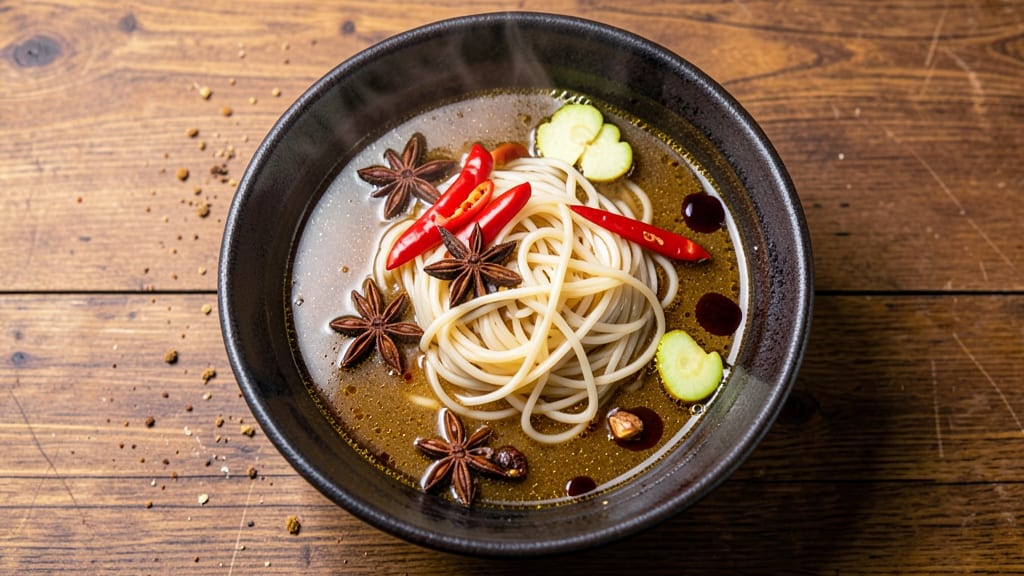
This Asian noodle soup base recipe delivers the aromatic foundation every great ramen, pho, or noodle dish needs. The secret lies in a balanced blend of five-spice powder, fresh ginger, and star anise that simmers into a complex, fragrant broth.
I developed this recipe after years of testing—it's the one I return to whenever I need restaurant-quality depth without the full cooking process.
The broth builds on a simple framework of chicken or pork stock, soy sauce, and fish sauce for that signature umami punch. What makes this base special is the five-spice blend, which adds warmth and depth without overpowering.
The ingredients come together in just 30 minutes, but the flavor develops even more when stored properly—making it perfect for meal prep.
What you'll end up with is a concentrated soup base that transforms any noodle dish into something extraordinary. One batch makes enough for multiple servings—just dilute with hot water or stock when ready to use.
The result is a fragrant, aromatic broth that's rich enough to stand alone or flexible enough to adapt to any Asian noodle recipe.
Store it in the refrigerator for up to 5 days or freeze for months, ensuring you always have the foundation for a perfect bowl of noodle soup. Let's build this flavorful base!
Ingredients for asian noodle soup base
Nine essential ingredients create this aromatic broth foundation for any Asian noodle dish.
| Ingredient | Amount | Notes |
|---|---|---|
| Chicken or Pork Stock 🍗 | 4 cups | Homemade or high-quality store-bought |
| Five-Spice Powder 🌶️ | 1 ½ tbsp | Authentic blend for authentic flavor |
| Fresh Ginger 🧅 | 1 tbsp | Finely grated, aromatic |
| Star Anise 🌟 | 2 whole | Whole pods for infusion |
| Light Soy Sauce 🥢 | 2 tbsp | For umami depth |
| Fish Sauce 🐟 | 1 tbsp | Authentic umami source |
| Garlic Cloves 🧄 | 3 cloves | Minced for aromatic punch |
| Sesame Oil 🫒 | 1 tsp | Toasted for nutty aroma |
| Sugar 🍬 | 1 tbsp | Balances flavors |
| Green Onion 🧅 | 2 whole | Chopped for garnish |
The five-spice powder is non-negotiable—Penzeys or Spicewalla carry authentic blends that make all the difference. Fresh ginger should be vibrant and firm, not shriveled. Star anise pods can be found in the international aisle at Whole Foods or Asian markets. For stock, Kettle & Fire or Imagine brands deliver consistent quality. The fish sauce should smell pungent but not fishy—Red Boat is the gold standard. Toast your sesame oil gently to enhance its aroma before adding to the broth.
No five-spice powder? Combine 1 tsp cinnamon, 1 tsp fennel seeds, 1/2 tsp cloves, 1/2 tsp star anise, 1/2 tsp black pepper for a DIY version. Out of fish sauce? Mushroom sauce or soy sauce with extra umami seasoning works in a pinch. Fresh ginger not available? Powdered ginger at half the amount suffices. For a vegetarian version, replace fish sauce with vegetable bouillon or soy sauce with a splash of balsamic vinegar. The sugar can be swapped for coconut sugar or mirin for subtle variations.
This broth keeps beautifully—5 days refrigerated or 6 months frozen. Store in airtight containers with a layer of oil on top to preserve freshness. When ready to use, thin with hot water or additional stock to desired consistency. The flavors deepen overnight, so making a batch ahead is ideal. Portion into ice cube trays for easy single-use servings—perfect for quick noodle bowls.
Why You'll Love This Recipe
- Pantry to Pot: I swear by this base because it uses things I always have—stock, a spice blend, a knob of ginger. No last-minute grocery runs, no fancy tools. Just heat the pot, toss in the star anise and five-spice, and let it simmer while I chop veggies or stir-fry proteins. That’s the magic: it’s ready when I am.
- Umami Bomb: The star anise and five-spice powder? They’re the secret weapons here. You won’t find this depth in store-bought broths—it’s warm, slightly sweet, with that lingering spice that makes every slurp feel like a hug. And the light soy sauce? Just enough to tie it all together without overpowering. Honestly, I’ve had takeout that wasn’t this good.
- Weeknight Swiss Army: This base is my meal-prep MVP. Use it for quick noodle bowls, dump it into ramen, or even stretch it into a stir-fry sauce. I’ve made it work for lazy Mondays, potlucks, and even a last-minute dinner when my partner’s friend dropped by. The beauty? It’s the same core flavors, but the toppings change based on what I’m craving—or what’s in the fridge.
- Budget Magic: A big batch costs pennies but lasts forever. Freeze what you don’t use, and boom—you’ve got a flavorful shortcut for days when you’d normally order in. Between us, I’ve saved hundreds by making this instead of buying pre-made broths or takeout. Plus, the five-spice and star anise are so versatile; I use the leftovers in marinades and rice dishes too. Smart move.
Step-by-step instructions for Asian noodle soup base
This fragrant five-spice broth forms the aromatic foundation for any Asian noodle soup.
Toast the Spices and Aromatics
In a medium saucepan over medium heat, add the 2 whole star anise and 3 cloves garlic cloves. Toast them for 1-2 minutes until you notice a warm, aromatic scent filling the kitchen. This step develops their natural oils and intensifies their flavors.
Next, add the 1 tbsp fresh ginger and 1.5 tbsp five-spice powder. Stir constantly for 30 seconds until the spices begin to sizzle gently. The five-spice powder will darken slightly—this is normal and indicates proper activation of the aromatic compounds. Remove from heat immediately to prevent burning, which would create bitterness.
Infuse the Stock with Flavor
Return the pan to medium heat and add the 4 cups chicken or pork stock. Bring to a gentle simmer, then reduce heat to maintain a barely bubbling state. The stock should not boil vigorously, as this would dissipate the delicate aromatics you've just developed.
Add the 2 tbsp light soy sauce and 1 tbsp fish sauce to the simmering stock. Stir well to distribute these umami-rich ingredients evenly. Let the mixture simmer uncovered for 10 minutes, allowing the flavors to meld together. You'll notice the broth developing a rich, golden hue and a complex aroma that combines sweet, savory, and herbal notes.
Balance and Finish the Broth
After 10 minutes of simmering, remove the star anise pods using a slotted spoon—they've fulfilled their purpose and will become bitter if left in too long. Add the 1 tbsp sugar and 1 tsp sesame oil, stirring gently to incorporate. The sugar will help balance the savory elements while the sesame oil adds a nutty depth.
Taste the broth and adjust seasoning if needed. You're aiming for a harmonious blend where all the flavors—sweet, salty, umami, and aromatic—are present but none dominate. The broth should be rich and fragrant, with a lingering warmth from the five-spice. If it needs more depth, add a pinch of salt or a splash more fish sauce, but typically this base will be perfectly balanced.
Prepare for Serving
Remove the pan from heat and let the broth cool slightly for 5 minutes. This resting period allows any floating aromatics to settle and the flavors to fully integrate. The broth should now be ready to use as a base for your noodle soup.
For serving, stir in the 2 whole green onion that have been chopped. These will add a fresh, bright note that cuts through the richness of the broth. Keep the broth warm over low heat until ready to use, adding a splash of hot water if it reduces too much. This five-spice broth will elevate any noodle dish, transforming simple ingredients into a restaurant-quality meal.
Pro Tips For Making Asian Noodle Soup Base
- TOAST THE SPICES FIRST: I learned this the hard way—adding whole star anise and five-spice powder directly to cold stock means you’ll just be simmering raw spices for hours. Instead, dry-toast them in a clean pan over medium heat for 30 seconds until fragrant (you’ll smell it). This releases their oils instantly, giving your soup depth from minute one.
- PEEL AND SLICE GINGER THIN: Thick ginger chunks sink to the bottom and turn mushy, while tiny slivers burn before they even infuse. Use a mandoline or sharp knife to slice 1/8-inch-thick rounds—enough surface area to flavor the stock without overpowering it. (Yes, even if you’re impatient like me.)
- SIMMER LOW AND COVERED: High heat = cloudy stock. After adding your stock, reduce to the gentlest simmer possible—barely any bubbles, just a slow shiver. Keep the pot covered to retain heat and aromatics, and resist the urge to peek. Thirty minutes of steady, quiet cooking makes all the difference.
- STRAIN OUT STAR ANISE: Star anise is delicious in small doses, but one whole pod left in your soup will make it taste like cough syrup. Strain it out before adding soy sauce—this is the thing that matters most if you want a clean, balanced flavor. (I skip this sometimes, and I always regret it.)
Essential equipment for asian noodle soup base
Stockpot Essentials
Start with a heavy-bottomed stockpot—I recommend a 5-quart enameled cast iron like the Le Creuset or a stainless steel model from All-Clad for even heat distribution.
These pots maintain steady temperatures, preventing scorching when toasting spices. A slotted spoon is crucial for removing star anise pods without losing broth. 🔥
For precise temperature control, add a candy or instant-read thermometer—I use the ThermoWorks Thermapen ONE—to monitor simmering at 185-195°F. This ensures delicate aromatics develop without boiling off. A fine-mesh strainer helps filter out any lingering spice particles after simmering.
Spice Activation Tools
Toast spices properly, use a small, heavy skillet like a 10-inch Lodge cast iron on medium heat. This gives you better control than a large pot.
A mortar and pestle comes in handy if you're making a homemade five-spice blend from whole spices—just crush the toasted star anise and fennel seeds before adding to the broth.
For measuring five-spice powder accurately, a small scoop or spice funnel prevents spills. I keep a Penzeys spice scoop on hand—it’s perfect for these small quantities. A microplane is ideal for grating fresh ginger finely and evenly, releasing maximum flavor into the broth. 🧅
Storage Containers
Store your finished broth in glass mason jars or BPA-free plastic containers with tight-sealing lids. Ball or Le Parfait jars work beautifully—they’re sturdy and stackable in the freezer. For portion control, freeze in ice cube trays and transfer cubes to a freezer bag for single-use servings.
Label containers with the date and contents using a waterproof marker. I like the Sharpie Ultra-Fine—it won’t smudge in the freezer. When reheating, use a wide-mouth funnel to transfer broth back into your pot without spills.
A ladle with a strainer helps skim off any congealed oils or spices before serving. ❄️
Optional Upgrades
For a professional touch, invest in a Chinese wok for toasting spices—its sloped sides prevent burning. A digital scale ensures precise measurements of five-spice powder (especially important for balanced flavor). I use the OXO Good Grips for accuracy down to 0.1 grams.
For vegetarian versions, a high-quality vegetable bouillon cube like Pacific Foods or Better Than Bouillon works well. Keep a small whisk handy to emulsify the sesame oil smoothly into the broth. A fine-mesh sieve helps strain out any unwanted particles after simmering. 💡
Nutrition facts
Frequently asked questions
Can I substitute chicken stock with vegetable stock for this recipe?
Yes, but you'll need to adjust the umami balance. Use vegetable stock instead of chicken or pork, then add 1 extra tablespoon of soy sauce and 1 teaspoon of mushroom powder to compensate for the lost depth. For vegetarian versions, consider adding 1 teaspoon of miso paste for authentic umami richness. The five-spice blend will still shine through, but the overall flavor profile will be lighter.
How do I know when the star anise pods are properly toasted?
Look for 2 visual cues: the pods should darken slightly and release an intense, sweet, licorice-like aroma that fills your kitchen. Toast for 1-2 minutes until you smell this fragrance—over-toasting can make them bitter. Remove them immediately after simmering to prevent bitterness in your broth.
Can I make this broth without five-spice powder?
Create a DIY blend using ½ teaspoon each of cinnamon, fennel seeds, cloves, and black pepper, plus ¼ teaspoon star anise. Toast these whole spices together for 1 minute before adding to the stock. This homemade version will have a slightly different flavor profile but still deliver warm, aromatic depth to your noodle soup.
What's the best way to store and reheat this broth?
Store in airtight glass containers in the fridge for 5 days or freeze for up to 3 months. For reheating, thaw overnight in the fridge, then warm gently on low heat while stirring occasionally. Never microwave directly from frozen—this creates hot spots. Add a splash of water if the broth thickens too much during reheating.
How can I adjust the spice level for different noodle dishes?
For mild dishes like udon, reduce the five-spice to 1 teaspoon and add ½ teaspoon sugar. For bold flavors like pho, increase to 2 teaspoons five-spice and add 1 extra clove garlic**.