
Soups & Stews
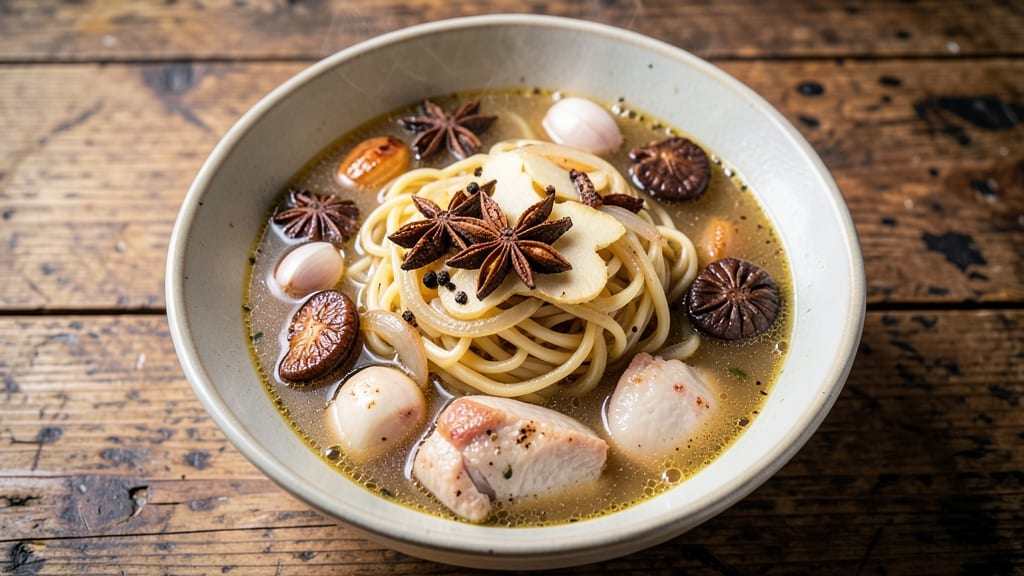
This Asian noodle soup broth recipe transforms your kitchen into a fragrant haven with just a few aromatic spices and patient simmering.
The star anise and ginger create a complex, warming base that forms the heart of every satisfying bowl, while the slow-cooked proteins infuse the broth with deep, savory richness.
I developed this version after years of experimenting with traditional techniques, ensuring every sip delivers that perfect balance of umami and brightness.
The beauty of this recipe lies in its flexibility—whether you're making a quick weeknight ramen or a weekend pho-style feast, the broth serves as the foundation.
We'll build it by toasting whole spices to unlock their flavors, then simmering them with ginger, garlic, and aromatics until the kitchen fills with that irresistible aroma.
The key is low-and-slow cooking to develop depth without bitterness, resulting in a clear, golden broth that's rich yet light enough to let the noodles and toppings shine.
By the time you're ready to assemble your bowls, you'll have a fragrant broth that's ready to be paired with chewy noodles, fresh herbs, and your choice of protein. The technique is straightforward but yields restaurant-quality results—no pressure cooker or fancy equipment required.
What makes this recipe truly special is how it transforms simple ingredients into something extraordinary through careful technique and attention to detail.
Once you've mastered this broth, you can customize it endlessly—add mushrooms for earthiness, a splash of fish sauce for depth, or a squeeze of lime at the end for brightness.
The possibilities are limited only by your imagination. Let's get started on creating broth that will become the centerpiece of your meal rotations.
Ingredients for asian noodle soup broth
Eight aromatic ingredients transform your kitchen into a fragrant Asian noodle soup haven.
| Ingredient | Amount | Notes |
|---|---|---|
| Star Anise Pods 🌿 | 4 whole | Lightly toasted for aroma |
| Fresh Ginger Root 🧄 | ½ lb | Peeled and sliced into coins |
| Garlic Cloves 🧄 | 6 cloves | Smashed for deeper flavor |
| Dried Shiitake Mushrooms 🍄 | 4 whole | Rehydrated for umami depth |
| Onions 🧅 | 1 whole | Yellow, halved and charred |
| Chicken Thighs 🍗 | 1 ½ lb | Bone-in, skin-on preferred |
| Vegetable Oil 🫒 | 2 tbsp | High smoke point for toasting |
| Water 💧 | 8 cups | Filtered preferred for clarity |
| Fish Sauce 🍶 | 1 tbsp | Red Boat brand recommended |
| Soy Sauce 🥢 | 2 tbsp | Light or dark preferred |
| Sesame Oil 🫒 | 1 tsp | Toasted, for finishing |
| Salt 🧂 | 1 tsp | Diamond Crystal kosher salt |
| Black Peppercorns 🌶️ | 6 whole | Cracked for subtle heat |
| Cinnamon Sticks 🌿 | 2 whole | Lightly toasted for aroma |
The star anise and cinnamon sticks are non-negotiable for that signature Asian warmth. Grab them from the spice aisle—they keep for months in a cool, dark place. For ginger, organic from the farmers market has more punch than the pre-peeled grocery store kind. The shiitake mushrooms? Dried at Asian markets are a game-changer—they rehydrate beautifully and add incredible depth. I always buy mine in bulk from H Mart or Trader Joe's—they're shelf-stable for years. The chicken thighs? Bone-in, skin-on gives you the richest broth possible. If you're using boneless, add an extra 15 minutes to the simmer time.
No star anise? One bay leaf plus 1/4 tsp ground anise gets you close. Fresh ginger too fibrous? Powdered ginger at half the amount works in a pinch. Short on shiitake? Dried porcini mushrooms are a great swap. The fish sauce can be omitted for a vegetarian version—just add 1 tbsp soy sauce plus 1 tsp mushroom sauce instead. For the onions, charring them on the stove before adding to the broth intensifies their sweetness. The sesame oil is purely for finishing—don't cook with it. And if you're making this ahead, freeze the broth in ice cube trays for easy portioning later.
This broth tastes even better the next day as flavors meld. Store it in the fridge for 5-6 days or freeze for up to 3 months. I always make a double batch—one for immediate use, one to freeze for lazy weeknights. For serving, strain out the aromatics before adding to bowls, but save those spices! Toss them in a jar with a bit of oil and store for your next batch. The broth keeps its vibrant color and aroma remarkably well when properly stored.
Why You'll Love This Recipe
- Pantry Magic: I swear by this broth—no fancy shopping required. The star anise and dried shiitake mushrooms turn basic pantry staples into something that smells like a late-night noodle shop, and honestly? That’s half the battle.
- Umami Bomb: Between the garlic, ginger, and shiitake mushrooms simmering together, every sip is like a flavor explosion. The onions caramelize just enough to add that sweet depth, and the star anise? It’s the secret weapon—warm, aromatic, and impossible to resist.
- Weeknight Superstar: This broth is my go-to when I’m too tired to think. Toss in ramen, add some greens, and you’ve got dinner in 20 minutes. (Yes, even on a Tuesday night when takeout menus feel overwhelming.)
- Budget-Friendly Goldmine: A single batch stretches for days—freeze extras for when you’re sick or just craving comfort. The dried mushrooms and star anise last forever, so you’re basically getting endless flavor for pennies. My wallet thanks me every time.
Step-by-step instructions for Asian noodle soup broth
This fragrant broth builds layer upon layer of flavor—start with aromatic spices and work toward a rich, umami-packed base.
Toast the Spices for Deep Aroma
Heat a dry skillet over medium heat and add the 4 whole star anise pods, 2 whole cinnamon sticks, and 6 whole black peppercorns. Toast for 2-3 minutes until fragrant—you'll smell the warm, earthy notes of star anise and the sweet, woody cinnamon. Remove immediately and set aside in a small bowl.
Next, add 2 tablespoons vegetable oil to the same skillet and heat until shimmering. Add the 0.5 lb peeled and sliced fresh ginger root and 6 smashed garlic cloves, stirring constantly for 1-2 minutes until the ginger softens and the garlic turns golden. This step unlocks their natural oils, which infuse the broth with bright, zesty warmth.
Char the Onions and Rehydrate Shiitakes
Cut the 1 whole onion in half and place cut-side down in a cold skillet. Cook over medium heat for 8-10 minutes until deeply charred—you want blackened edges and caramelized sweetness. Remove the charred onion and set aside.
In a separate bowl, soak the 4 whole dried shiitake mushrooms in 8 cups water at room temperature for 20 minutes. This rehydration step transforms them into meaty, umami-rich additions. Strain the mushrooms, reserving the soaking liquid (this becomes part of your broth). Finely chop the rehydrated mushrooms and set aside.
Build the Broth Foundation
In a large pot, combine the toasted spices, ginger-garlic mixture, charred onion, chopped shiitake mushrooms, and the 1.5 lb chicken thighs (skin-on for extra richness). Pour in the reserved mushroom soaking liquid and bring to a boil over high heat. Once boiling, reduce heat to low and skim off any foam that rises to the surface.
Simmer uncovered for 45 minutes, stirring occasionally. The broth should reduce slightly, intensifying its flavor. Here's the thing—don't rush this step. The chicken needs time to break down, releasing collagen that transforms into gelatin, which gives your broth that silky, luxurious texture.
Season and Finish the Broth
Remove the chicken thighs from the pot and let them cool slightly before shredding or discarding the bones (if you prefer boneless broth). Return the shredded chicken to the pot. Stir in 1 tablespoon fish sauce, 2 tablespoons soy sauce, and 1 teaspoon salt. Taste and adjust seasoning—you want a balance of salty, umami, and subtle sweetness.
Strain the broth through a fine-mesh sieve into a clean pot, pressing gently on the solids to extract maximum flavor. Return the broth to the stove and stir in 1 teaspoon toasted sesame oil just before serving. This final touch adds a nutty depth that ties all the flavors together. For maximum freshness, use immediately or store in the refrigerator for up to 5 days.
Pro Tips For Making Asian Noodle Soup Broth
- CRUSH THE STAR ANISE: Toss the whole pods into a spice grinder for 10 seconds—this releases their oils without turning the broth bitter. I learned this the hard way after a batch tasted like medicine. (Yes, even if you’re impatient like me, the extra 30 seconds saves you from regret.)
- TOAST THE SHIITAKES: Dry the mushrooms first, then toast them in a dry pan for 2 minutes until fragrant—this deepens their umami. Skip this, and your broth will taste flat, like you used sawdust instead of mushrooms. (Your nose will thank you.)
- SIMMER LOW AND SLOW: Once the broth hits a boil, drop the heat to a bare simmer—just small, occasional bubbles. Rushing it burns the ginger and garlic, leaving a harsh aftertaste. (I know, I know—you want dinner now, but trust the process.)
- PEEL THE ONIONS LAST: Add the onions after the broth has simmered for 20 minutes—they’ll soften and sweeten without turning mushy. Toss them in raw, and you’ll end up with a watery, sad base. (This is the thing that actually changes the outcome.)
Flavor customization for asian noodle soup broth
Spice Level Control
Adjust the heat to your preference by tweaking the black peppercorns and adding red chili flakes or Sichuan peppercorns for a tingling kick. For a mild broth, reduce peppercorns to 4-5 and skip the chili.
For spice lovers, add 1 tsp gochujang (Korean chili paste) or ½ tsp cayenne at the end. I love a subtle warmth, so I often add 1 tsp of toasted chili oil just before serving—it adds depth without overwhelming. 🌶️
Sweet-Savory Balance
Enhance the natural sweetness by adding 1 tbsp honey or 1 tsp brown sugar during the final 10 minutes of simmering. This works especially well with charred onions and shiitake mushrooms to create a caramelized depth.
For a more complex flavor, swap the honey for 1 tbsp of mirin or 1 tsp of palm sugar. Balance with 1 extra tsp of fish sauce if you add sweetness—it keeps the umami in check.
Vegetarian Umami Boost
Skip the chicken and replace it with 1 lb of kombu seaweed (dried) or 8 oz of extra-firm tofu for a vegetarian version. Simmer the kombu for 30 minutes to extract its oceanic depth, then remove it before straining.
For tofu, press and cube it, then add it to the broth during the final 15 minutes of cooking. Boost umami further with 1 tbsp of vegetarian fish sauce (like Annie Chun’s) or 1 tsp of mushroom powder.
Herbal Freshness
Brighten the finished broth with fresh herbs like cilantro, Thai basil, or mint. Add them just before serving—2 tbsp per bowl works perfectly. For a citrusy twist, stir in 1 tsp of lime zest or 1 tbsp of fresh lime juice at the end.
If you love floral notes, add 1 tsp of jasmine tea leaves while simmering (remove before straining). These herbs elevate the broth without overpowering its depth. ✨
Regional Twists
Transform this broth into a Japanese-inspired miso ramen by adding 1 tbsp of white miso paste during the final 5 minutes of simmering.
For a Vietnamese pho vibe, include 1 cinnamon stick, 1 star anise, and 1 cardamom pod in the initial spice toast, then finish with 1 tsp of fish sauce and 1 tsp of sugar.
For a Korean-inspired version, add 1 tbsp of doenjang (fermented soybean paste) and 1 tsp of sesame seeds at the end. Each twist keeps the core technique but shifts the flavor profile dramatically.
Protein Swaps
Replace chicken thighs with pork shoulder for a richer, fattier broth (simmer for 1.5 hours instead of 45 minutes). For seafood lovers, use 1 lb of shrimp shells (simmer for 20 minutes to extract flavor, then strain).
For a beefy version, swap in 1.5 lb of chuck roast and simmer for 2 hours. Each protein changes the broth’s body and depth—experiment to find your favorite. The key is always to simmer long enough to break down the collagen for that silky texture. 💪
Nutrition facts
Frequently asked questions
Can I make this broth in a slow cooker? Transfer all ingredients to your slow cooker after toasting the spices and charring the onions. Cook on low for 6-8 hours or high for 3-4 hours—the longer cook time enhances the depth. The slow cooker's gentle heat helps tenderize the chicken and develop rich flavors without risking overcooking. Just
How do I adjust the broth for spicier noodle soups?
Add 1-2 slices of fresh chili (like Thai bird's eye) or ½ tsp of chili flakes during the final 10 minutes of simmering. For a smoky kick, stir in 1 tsp of toasted chili oil before serving. If you love heat, try 1 tsp of gochujang (Korean chili paste) at the end—it adds both spice and umami depth. Adjust to taste!
Can I use this broth for other dishes besides noodle soup?
Yes! This aromatic broth works beautifully for rice bowls, stir-fries, or even steamed dumplings. Use it as a base for baked tofu or grilled proteins by reducing it slightly first. The flavors also shine in pasta dishes—just toss with cooked noodles and fresh herbs. Store extra broth in the freezer for up to 3 months.
Why does my broth turn cloudy or greasy?
Cloudiness often comes from fat rising to the surface—skim it off before serving. For a clearer broth, chill it overnight, then remove the hardened fat. Greasiness usually means the chicken wasn't cooked long enough. If using boneless chicken, simmer for 10-15 minutes longer to break down collagen. For a lighter texture, strain through a cheesecloth-lined sieve after the initial straining.
What's the best way to store leftovers?
Let the broth cool completely, then transfer to airtight containers. It keeps in the fridge for 5-6 days or freezes for up to 3 months. For freezing, portion into ice cube trays—perfect for adding to future meals! Reheat gently on the stove, avoiding boiling to preserve clarity. The flavor actually improves after 24 hours as ingredients meld.