
Soups & Stews
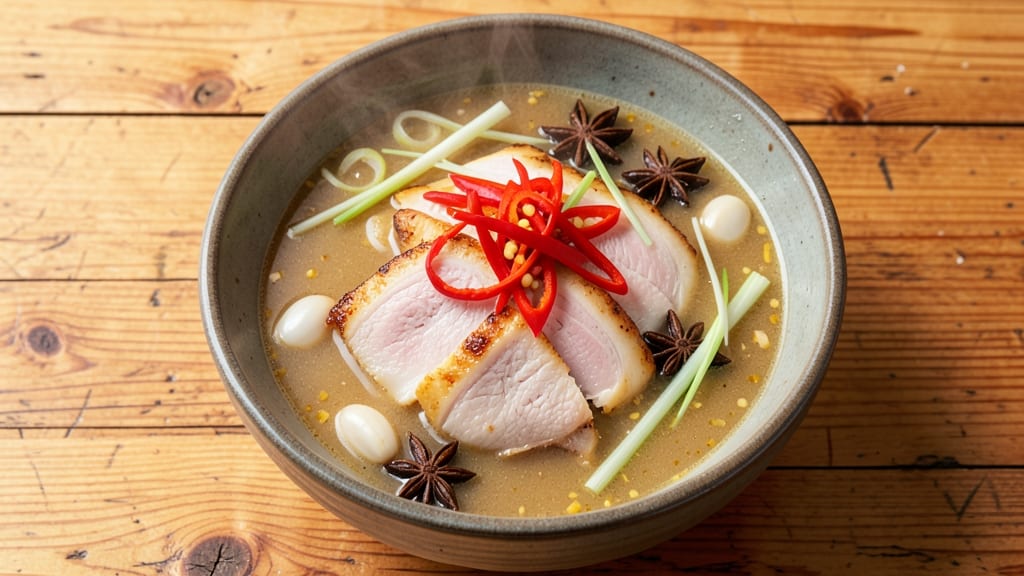
This Asian-style chicken soup recipe delivers a fragrant, silky broth that balances umami, freshness, and delicate textures—perfect for comforting weeknights or healing meals. 🌿 The secret lies in slow-simmered ginger, star anise, and lime zest, which transform simple chicken into a deeply aromatic base.
Unlike heavy Western soups, this version stays light yet satisfying, with rice noodles that soften just enough to soak up every drop of flavor.
The broth builds complexity through layered aromatics: garlic, lemongrass, and a touch of chili, while poached chicken remains tender and juicy. Traditional sides like bok choy, shiitake mushrooms, and fresh herbs (cilantro or Thai basil) add crunch and brightness.
Whether you lean toward Vietnamese pho’s herbal notes, Japanese ramen’s richness, or Chinese tonkotsu’s depth, this recipe adapts effortlessly—all while keeping prep straightforward.
What sets this apart is the silky rice noodles, which cook in minutes and hold their shape, creating a satisfying bite. The broth’s clarity and balance of citrusy, savory, and herbal notes make it versatile for any meal.
Serve steaming hot with lime wedges and extra herbs for that restaurant-quality finish.
Ready in under an hour, this soup proves comfort food doesn’t require complicated techniques—just patience and the right ingredients. Let’s make it step by step.
Ingredients for asian style chicken soup
These aromatic ingredients transform simple chicken into a fragrant, silky Asian-inspired broth with perfect balance of umami and citrus.
| Ingredient | Amount | Notes |
|---|---|---|
| Boneless, Skinless Chicken Breast 🍗 | 1 ½ lb | Pounded to even thickness for even cooking |
| Fresh Ginger Root 🌿 | ½ cup | Peeled and thinly sliced (about 3 oz) |
| Star Anise Pods 🌟 | 2 whole | Lightly crushed for aromatic release |
| Lemongrass Stalks 🌱 | 3 whole | Bruised and cut into 2-inch pieces |
| Garlic Cloves 🧄 | 6 cloves | Smashed for maximum flavor infusion |
| Red Chili Peppers 🌶️ | 2 whole | Thinly sliced (seeds removed for mild heat) |
| Fresh Lime Zest 🍋 | 1 tbsp | Bright citrus notes essential for balance |
| Low-Sodium Chicken Broth 💧 | 4 cups | Homemade or high-quality store-bought |
| Rice Noodles 🍜 | 8 oz | Silken or medium-width for delicate texture |
| Bok Choy 🥬 | 1 lb | Baby or regular, cut into bite-sized pieces |
| Shiitake Mushrooms 🍄 | 8 whole | Stemmed and sliced (fresh or rehydrated) |
| Thai Basil Leaves 🌿 | ½ cup | Fresh, for aromatic garnish (cilantro substitute) |
| Sesame Oil 🫒 | 1 tbsp | Toasted for nutty aroma (optional finishing touch) |
| Diamond Crystal Kosher Salt 🧂 | 1 ½ tsp | For seasoning broth and noodles |
| Black Peppercorns 🌶️ | ½ tsp | Freshly cracked for subtle heat |
The ginger and lemongrass are non-negotiable for authentic aroma—look for plump, firm stalks at the market or Asian grocery. Whole Foods or local farmers' markets often carry the freshest lemongrass, while star anise should be whole and fragrant (not dusty). For the chicken, boneless, skinless breasts ensure tender results; avoid pre-marinated varieties to control flavor balance. The bok choy should have crisp stems and vibrant leaves—wilted greens indicate age. Shiitake mushrooms add earthy depth; if using dried, soak them first in warm broth for 20 minutes. Fresh Thai basil elevates the dish—substitute with cilantro if unavailable, but the flavor profile shifts slightly.
No fresh lemongrass? Lemongrass paste from a tube works in a pinch (reduce by half), though texture differs. Star anise lacking? 1 cinnamon stick or 1/2 tsp ground anise mimics the warmth. For heat, swap chili peppers with 1/2 tsp red pepper flakes or 1 tsp sambal oelek. The rice noodles must be silken—regular egg noodles won't hold shape. Substitute with vermicelli noodles if needed, but adjust cooking time. For the broth, homemade chicken stock delivers superior flavor, but Swanson or Pacific Foods low-sodium broth are reliable store-bought options. Lime zest can be pre-zested and frozen in ice cube trays for convenience.
Store fresh ginger and lemongrass wrapped in damp paper towels in the fridge for up to 2 weeks. The chicken broth can be prepped ahead and refrigerated for 4 days or frozen for 3 months. For make-ahead convenience, cook the noodles separately and store in a sealed container for 2 days—they’ll soften further when reheated. Reheat the soup gently on the stove, adding a splash of water if it thickens. Garnish with fresh herbs and a drizzle of toasted sesame oil just before serving to preserve aroma. Leftover broth freezes beautifully for future use.
Why You'll Love This Recipe
- Here’s what sold me: a whole chicken breast, a ginger root, and a few dried spices stretch into four hearty servings. I’ve fed my whole family (plus my dog, who’s not allowed but judges me) for under $10. That’s a win for my wallet and my soul.
- No Chopping Chaos: I swear by this recipe—just slice the chicken, smash the garlic, and bruise the ginger. No fancy techniques here, just a pot, some water, and those aromatic pods (star anise and lemongrass) doing all the work while you sip tea.
- Umami Bomb: That first spoonful? Chef’s kiss. The star anise and lemongrass steep into the broth like a slow dance, while the garlic and ginger hit you with bright, punchy heat. It’s the kind of flavor that makes you pause mid-sip and think, “Wait, how much did I eat already?”
- Lunchbox Hero: Between us, this soup is my go-to for packed lunches. The broth stays rich overnight (seriously, it gets better), and the chicken shreds like a dream—no soggy sandwiches here. Just reheat, grab a spoon, and you’ve got a meal that feels fancy but costs pennies.
Step-by-step instructions for fragrant ginger-lime broth with silky rice noodles
Master this aromatic broth technique and you'll create a restaurant-quality Asian-style soup.
🍳 Step 1: Build the Aromatic Broth Base
Heat a large pot over medium heat and add the 1.5 lb boneless, skinless chicken breast. Cook for 3-4 minutes per side until the exterior develops a light golden crust. Remove the chicken and set aside temporarily.
In the same pot, add 1 tbsp sesame oil and swirl to coat. Add the 6 cloves smashed garlic, 0.5 cup sliced fresh ginger, 3 bruised lemongrass stalks, 2 lightly crushed star anise pods, and 2 sliced red chili peppers. Sauté for 2-3 minutes until the aromatics release their fragrance and the garlic turns golden. Here's the thing—don't let the garlic burn, or you'll get bitter notes instead of sweet aroma.
🍳 Step 2: Simmer the Flavorful Broth
Pour in the 4 cups low-sodium chicken broth and bring to a gentle simmer. Add the seared chicken back to the pot along with 1.5 tsp kosher salt and 0.5 tsp cracked black peppercorns. Partially cover and simmer for 20-25 minutes until the chicken is cooked through and the broth develops a rich aroma.
I press down on the chicken with a spoon occasionally to ensure even cooking. The broth should reduce slightly but remain flavorful. When the chicken reaches an internal temperature of 165°F, remove it from the broth and let it rest on a cutting board for 5 minutes before shredding. This resting period prevents the meat from becoming dry when shredded.
🥘 Step 3: Prepare the Vegetable Components
While the broth simmers, prepare the vegetables. Cut the 1 lb bok choy into bite-sized pieces and separate the leaves from the stems. Slice the 8 whole shiitake mushrooms into ¼-inch thick pieces. The mushrooms should be evenly sized to ensure they cook at the same rate as the bok choy.
Heat a separate pan over medium heat and add 1 tbsp sesame oil. Add the mushrooms and cook for 3-4 minutes until they release their moisture and begin to brown. Add the bok choy stems first and cook for 2 minutes, then add the leaves and cook for another 1 minute. Remove from heat and set aside.
🍳 Step 4: Assemble the Soup
Shred the rested chicken using two forks, removing any large bones or connective tissue. Return the shredded chicken to the broth along with the 1 tbsp fresh lime zest. Stir gently to combine, allowing the lime zest to infuse the broth with bright citrus notes.
Add the 8 oz rice noodles to the broth and cook according to package instructions, usually 3-5 minutes, until the noodles are tender but still have a slight bite. The noodles should absorb the fragrant broth while maintaining their delicate texture. Here's where it gets fun—taste the broth and adjust the seasoning if needed, adding a pinch more salt or a splash of lime zest if desired.
🍽️ Step 5: Finish and Serve
Divide the cooked rice noodles among four bowls. Ladle the hot broth over the noodles, ensuring each serving has an even distribution of chicken, vegetables, and aromatic broth. Top each serving with the sautéed bok choy and shiitake mushrooms.
Garnish each bowl with 0.5 cup Thai basil leaves and a drizzle of any remaining sesame oil. Serve immediately while the noodles are hot and the broth is fragrant. The combination of the silky noodles, tender chicken, and aromatic broth creates a harmonious balance of flavors and textures that's truly satisfying.
Pro Tips For Making Asian Style Chicken Soup
- Char Chicken First: I learned this the hard way—skipping the sear means bland broth. Pat the chicken breasts dry, then cook them in a hot pan for 3-4 minutes per side until golden before adding liquid. The crust locks in flavor and prevents them from turning into rubbery mush.
- Bruise the Ginger: Don’t just slice it—smash the ginger root with the flat side of your knife first. This releases more oils and aroma into the broth, giving that deep, warm kick without overpowering. (Yes, it’ll look like a mess, but trust me.)
- Tie the Lemongrass: Skip the hassle of chopping stalks by tying them into a knot with kitchen twine before adding to the pot. It infuses the broth perfectly, then you just fish it out later—no tiny pieces floating around. (Bonus: It looks impressive when you serve it.)
- Simmer Low and Slow: After the initial boil, drop the heat to the lowest setting where you barely see bubbles. Chicken breasts cook in 15-20 minutes at this stage, and rushing it turns them into dry, stringy disappointment. A thermometer reading 165°F (74°C) is your goal.
Pro cooking tips for perfect results
Broth Layering Secrets
Start by searing the chicken until golden—this creates the Maillard reaction that forms deep flavor. Remove it immediately to prevent overcooking. Then, sauté your aromatics (garlic, ginger, lemongrass) in sesame oil over medium heat for just 2-3 minutes.
The key is to let them release fragrance without burning—this is where the magic happens. 🌿
Simmer Control Matters
Simmer the broth gently—never boil vigorously. A rolling boil can turn your delicate aromatics bitter. Keep the heat at a low simmer (small bubbles occasionally breaking the surface) for 20-25 minutes.
I like to partially cover the pot to retain moisture while still allowing steam to escape. This keeps the broth clear and flavorful, not cloudy.
Chicken Resting Technique
After cooking, let the chicken rest for 5 minutes before shredding. This crucial step prevents dry, stringy meat. Use two forks to shred it against the grain—this creates tender, bite-sized pieces that stay moist. Return the shredded chicken to the broth just before serving to maintain its perfect texture. 🍗
Noodle Timing Trick
Add rice noodles only at the very end—about 3-5 minutes before serving. They cook almost instantly in hot broth. If you add them too early, they’ll turn mushy. I like to divide the noodles into bowls first, then ladle the hot broth over them to ensure even distribution of flavors.
This keeps the noodles al dente and silky.
Vegetable Prep Matters
Cook mushrooms and bok choy separately to control texture. Sauté mushrooms until just browned (3-4 minutes) to develop their umami. Bok choy stems take longer than leaves, so cook them first.
This ensures everything finishes at the same time. Add them to the soup last so they stay vibrant and crisp-tender. 🥬
Final Flavor Boost
Finish with lime zest and a drizzle of toasted sesame oil right before serving. The zest brightens the broth while the sesame oil adds nutty depth. Taste and adjust seasoning—sometimes a pinch more salt or a splash of lime juice makes all the difference.
Serve immediately for the best texture and aroma. ✨
Nutrition facts
Frequently asked questions
Can I substitute chicken thighs for breasts in this recipe?
Yes, but adjust the cooking time! Chicken thighs stay juicier and add richer flavor, but they cook faster than breasts. Use 1.5 lb boneless, skinless thighs and reduce simmering time to 15-18 minutes (until internal temp reaches 165°F). The skin can be removed before shredding for a cleaner presentation.
What if I don't have fresh lemongrass or star anise?
No problem! For lemongrass, use 1 tbsp lemongrass paste (reduce by half) or 1 tsp lime zest + 1 tsp lime juice for brightness. Star anise can be replaced with 1 cinnamon stick or ½ tsp ground anise. Both substitutions will alter the aroma slightly but still deliver delicious results.
How can I make this soup spicier?
Add more chili! For mild heat, include 1 extra sliced red chili pepper or ½ tsp red pepper flakes>. For fiery kick, add 1 tsp sambal oelek> or a dash of Sichuan peppercorn powder at the end. Always taste before serving—you can adjust to preference.
Can I prepare this soup ahead of time?
Cook the broth and chicken completely, then refrigerate for up to 4 days or freeze for 3 months. Reheat gently on the stove, adding water if it thickens. Cook noodles and vegetables fresh before assembling. The flavors actually improve overnight as aromatics meld!
What's the best way to store leftovers?
Store in an airtight container with the broth and chicken separated from noodles/vegetables. Refrigerate for 3-4 days or freeze broth/chicken separately for up to 3 months. Reheat broth first, then add noodles/vegetables just before serving to maintain texture. Never reheat noodles directly from cold—they'll turn mushy.