
Soups & Stews
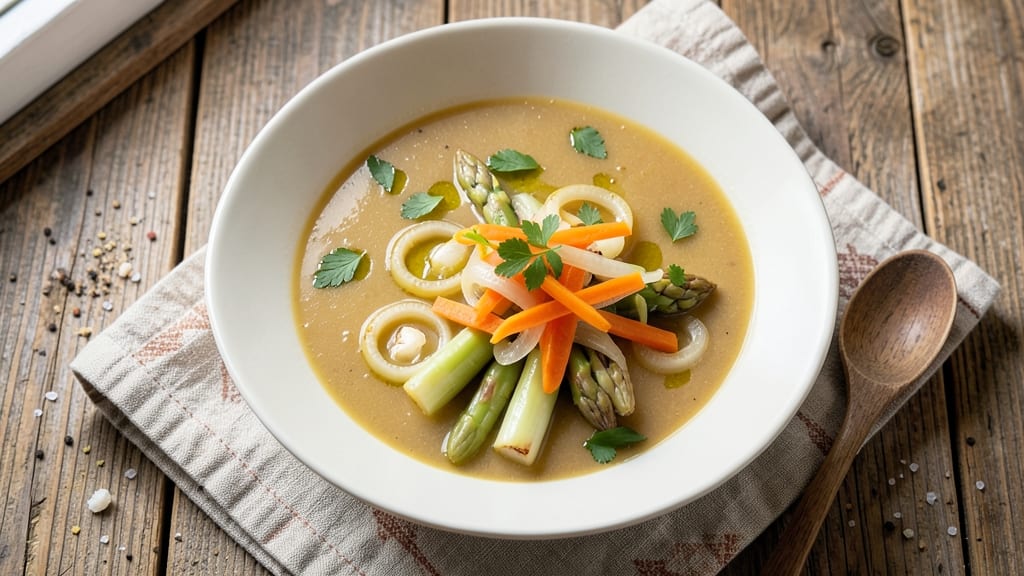
This asparagus broth soup recipe transforms simple ingredients into a velvety, herb-infused bowl of comfort that tastes like spring in every spoonful. The foundation lies in a rich, flavor-packed broth made from asparagus stems and aromatic vegetables, simmered low and slow to extract deep, earthy notes.
What sets this apart is the balance—creamy yet light, with just enough body to satisfy without feeling heavy.
The key technique is reducing the broth to concentrate its flavors, then blending half for silky smoothness while leaving the other half chunky for texture contrast. Fresh herbs like tarragon and thyme add layers of brightness, while a touch of lemon zest brightens the finish.
It’s the kind of soup that feels both rustic and refined, perfect for chilly evenings or as a light lunch when you crave something nourishing.
What you’ll end up with is a vegetarian soup that’s rich in umami from the asparagus and depth from the herbs, yet still light enough to enjoy in larger bowls.
The broth is aromatic, the texture is luxurious, and the flavor is undeniably comforting—without relying on heavy cream or excessive salt. This is the kind of recipe that proves simple ingredients can deliver restaurant-quality results with just a little patience and attention.
Serve it with a drizzle of olive oil, a sprinkle of fresh parsley, and crusty bread for dipping, or keep it simple with a swirl of crème fraîche.
The beauty of this soup is its versatility—it works as a standalone meal or pairs beautifully with grilled fish or roasted vegetables. Let’s get cooking!
Ingredients for asparagus broth soup
Simple vegetables and fresh herbs create a velvety soup rich with earthy asparagus flavor and herbal brightness.
| Ingredient | Amount | Notes |
|---|---|---|
| Asparagus Stems 🥦 | 2 cups | Trimmed, tough ends removed |
| Yellow Onion 🧅 | 1 whole | Chopped, medium size |
| Carrots 🥕 | 3 medium | Peeled, chopped into chunks |
| Celery Stalks 🧄 | 3 whole | Chopped, including leaves |
| Garlic Cloves 🧄 | 4 cloves | Peeled, smashed slightly |
| Fresh Tarragon 🌿 | ¼ cup | Chopped, stems removed |
| Fresh Thyme 🌿 | ¼ cup | Leaves only, chopped |
| Vegetable Broth 💧 | 4 cups | Low-sodium preferred |
| Extra-Virgin Olive Oil 🫒 | ¼ cup | For sautéing vegetables |
| Fresh Lemon Zest 🍋 | 1 tbsp | From 1 medium lemon |
| Lemon Juice 🍋 | 2 tsp | Freshly squeezed |
| Crème Fraîche 🧀 | ¼ cup | For finishing, optional |
| Fresh Parsley 🌿 | ⅛ cup | Chopped, for garnish |
| Sea Salt 🧂 | 1 tsp | Adjust to taste |
| Black Pepper 🌶️ | ½ tsp | Freshly ground |
The asparagus stems are the secret to depth—save them from your next bunch. They’re fibrous but packed with umami. Whole Foods and Trader Joe's often sell asparagus with the stems separated, making this even easier. If you can’t find them pre-trimmed, just snap off the tough ends. For the carrots and celery, organic is ideal—they’ll have more vibrant color and natural sweetness. The tarragon and thyme should smell fresh and aromatic; if they’re wilted or smell musty, skip them. Penzeys or bulk bins at natural markets are great for fresh herbs.
No tarragon? Substitute more thyme or a pinch of basil—it won’t be identical, but it’ll work. Running low on vegetable broth? Water plus 1 tsp bouillon powder gets you close, though the flavor won’t be as layered. The crème fraîche is optional, but if you skip it, a swirl of Greek yogurt adds creaminess. For lemon zest, use a fine grater—avoid the pith, as it’s bitter. If you’re short on time, jarred lemon juice works, but fresh is always better. The asparagus stems can be prepped ahead and frozen for up to 3 months—just thaw before using.
This soup tastes even better the next day as flavors meld. Store leftovers in the fridge for up to 5 days, covered. For freezing, portion into containers and leave out the crème fraîche—it doesn’t freeze well. If reheating, stir in a splash of water or broth to restore creaminess. The parsley and lemon zest can be added fresh after reheating for maximum brightness. Double the recipe and freeze half for a quick meal on busy days.
Why You'll Love This Recipe
- Uses Every Scrap: I swear by this recipe because it turns asparagus stems—usually tossed—into liquid gold. That fibrous core? Perfect for broth, no waste, just flavor.
- Garlic-Bomb Depth: Between the caramelized onion and crushed garlic cloves, this soup has a richness that lingers. Honestly, the first sip makes me pause mid-spoonful.
- Weeknight to Party: Same ingredients, different vibes: serve it with crusty bread for a lazy Tuesday or add a splash of cream for dinner guests. It’s the chameleon of soups.
- Budget-Friendly Powerhouse: Carrots, celery, onion—all the cheap veggies you already buy. The asparagus stems? Often free if you ask the grocery store. Frugal but never bland.
Step-by-step instructions for asparagus broth soup
Transform simple vegetables into a rich, aromatic soup with layers of herbal brightness.
Sauté the Vegetable Base
Heat the 0.25 cup extra-virgin olive oil in a large pot over medium heat until shimmering. Add the chopped yellow onion, carrots, and celery stalks all at once. Cook for 8-10 minutes until the vegetables soften and the onion becomes translucent.
I press down occasionally with a wooden spoon to ensure even cooking. The vegetables should release their natural juices and develop a golden hue at the edges. This foundational step builds the soup's depth of flavor—don't rush it. If the vegetables start to brown too quickly, reduce the heat slightly to maintain gentle cooking.
Add Aromatics and Herbs
Stir in the 4 smashed garlic cloves, 0.25 cup chopped fresh tarragon, and 0.25 cup chopped fresh thyme leaves. Cook for another 2-3 minutes until the garlic becomes fragrant but doesn't brown. The tarragon and thyme will release their essential oils, infusing the vegetables with their bright, herbal notes.
Here's where the magic happens: the combination of these fresh herbs creates that signature earthy depth that sets this soup apart. I like to taste the vegetables at this stage—they should be sweet and aromatic, with no bitterness remaining. If you notice any harsh flavors developing, add a splash of water to mellow them out.
Simmer with Broth and Asparagus
Pour in the 4 cups vegetable broth and bring the mixture to a gentle boil. Once boiling, reduce heat to medium-low and add the 2 cups trimmed asparagus stems. Simmer uncovered for 12-15 minutes until the asparagus is tender and the vegetables are completely soft.
The asparagus should break down into fine strands that blend seamlessly with the broth, creating a velvety texture. I check for doneness by piercing a piece with a fork—it should slide in easily with no resistance. If the soup starts to reduce too quickly, add a small amount of water to maintain the proper consistency.
Finish with Bright Citrus and Crème Fraîche
Remove the pot from heat and stir in the 1 tablespoon fresh lemon zest and 2 teaspoons lemon juice. The citrus will brighten the soup's flavor profile, cutting through the richness of the vegetables. Let the soup sit for 5 minutes to allow the flavors to meld together.
Just before serving, stir in the 0.25 cup crème fraîche (if using) and adjust seasoning with 1 teaspoon sea salt and 0.5 teaspoon black pepper. The crème fraîche adds a luxurious creaminess without overwhelming the herbal notes. Taste and make any final adjustments—this is where you ensure the soup sings with perfect balance.
Garnish and Serve
Ladle the soup into bowls and garnish each serving with 1 tablespoon chopped fresh parsley. The parsley adds a final pop of color and freshness that makes the dish visually appealing. Serve immediately while the soup is hot, as the flavors continue to develop and intensify with each passing minute.
For best results, I recommend serving this soup with crusty bread to soak up every last drop of that aromatic broth. The combination of the earthy vegetables, bright herbs, and citrus finish creates a harmonious balance that's both comforting and sophisticated—perfect for any season.
Pro Tips For Making Asparagus Broth Soup
- CHAR THE ONIONS FIRST: I used to toss everything in the pot at once—big mistake. Get that onion chopped small (1/4-inch dice) and cook it in 1 tablespoon of oil over medium-high heat until it’s a deep golden brown, not just soft. That caramelization adds sweetness the raw onion can’t match, and it’s the foundation of your broth’s depth.
- USE THE STEMS, NOT THE TIPS: Asparagus tips are for salads, not soup. Chop the woody stems into 1-inch chunks—they’re packed with flavor and won’t turn your broth into mush. Skip peeling them; just trim the tough ends and let the natural texture work for you.
- SIMMER LOW AND LONG: After adding your veggies and water (or stock), resist the urge to blast it. A gentle simmer—just small bubbles breaking the surface—for at least 45 minutes (longer if you can) extracts the best flavor without bitterness. Cover it loosely and let it do its thing; this isn’t a race.
- SALT THE WATER HEAVILY: If you’re using plain water instead of stock, add 1 tablespoon of salt upfront. It seasons the broth from the start and prevents blandness later. I know it sounds like a lot, but trust me—you’ll adjust it down later, not up. (And no, you’re not making the water taste like the ocean.)
Make-ahead tips for leftovers
Broth Prep Ahead
Make the broth base 2 days ahead by sautéing the onion, carrots, celery, and garlic, then simmering with broth and asparagus stems for 12-15 minutes. Cool completely, then store in an airtight container in the fridge. This concentrated flavor will deepen overnight—just reheat gently before blending or serving. 💫
Herb Infusion Trick
Chop the tarragon and thyme the night before and store in a sealed container with a damp paper towel to preserve freshness. When you’re ready to cook, simply add them directly to the pot—they’ll release their aromatic oils more efficiently.
This small step makes a big difference in flavor intensity. ✨
Freezer-Friendly Portions
Portion the finished soup into quart-sized freezer bags or airtight containers, leaving 1 inch headspace for expansion. Label with the date—it keeps for 3 months. When reheating, thaw overnight in the fridge, then warm on the stovetop over low heat with a splash of water to restore creaminess. ❄️
Double the Recipe
This soup scales perfectly for meal prep. Double the recipe and freeze half in individual portions for quick lunches. The asparagus stems and herbs can be prepped separately and frozen in a bag—just thaw and add directly to the pot when cooking. It’s a game-changer for busy weeks! 💡
Lemon Zest Boost
Zest 2 lemons ahead of time and store the zest in a small jar in the freezer. Use it fresh when serving to brighten the soup’s flavor—frozen zest retains its potency surprisingly well. A quick 10-second zest at the end elevates the dish without extra effort. 🍋
Crème Fraîche Hack
Skip the crème fraîche in the recipe but keep it on hand for serving. Stir 1 tablespoon per bowl just before eating to add richness without altering the soup’s texture. If you’re out, a dollop of Greek yogurt works in a pinch—just add it after reheating. 🧀
Nutrition facts
Frequently asked questions
Can I use asparagus spears instead of stems?
Yes! While stems create the richest broth, you can use 1 cup chopped asparagus spears along with the stems for extra freshness. Just trim the tough ends and chop them into 1-inch pieces. The spears will add a subtle sweetness and vibrant color to your soup.
How do I make this soup creamier without dairy?
Blend half the soup until smooth for a velvety texture, then stir it back in. For extra richness, add 2 tablespoons nutritional yeast or 1/4 cup silken tofu at the end. Both options add creaminess without dairy while keeping the soup vegetarian.
What if I can't find tarragon?
No problem! Substitute with 1/4 cup fresh basil or 1 teaspoon dried tarragon (reduce by half). For a different flavor profile, try 1/4 cup fresh dill—it'll give a bright, slightly tangy note instead of tarragon's anise-like flavor.
Can I make this soup in an Instant Pot?
Sauté the onion, carrots, celery, and garlic as directed, then add all remaining ingredients except crème fraîche. Cook on high pressure for 8 minutes, then quick-release. Finish with lemon zest, crème fraîche, and parsley. The pressure cooker reduces cooking time while keeping flavors intense.
Why does my soup taste bitter?
Bitterness usually comes from overcooked asparagus or herbs. Simmer for no longer than 15 minutes and add a splash of lemon juice or a pinch of sugar to balance. Fresh herbs should be added at the end to preserve their bright flavors. Taste as you go!