
Soups & Stews
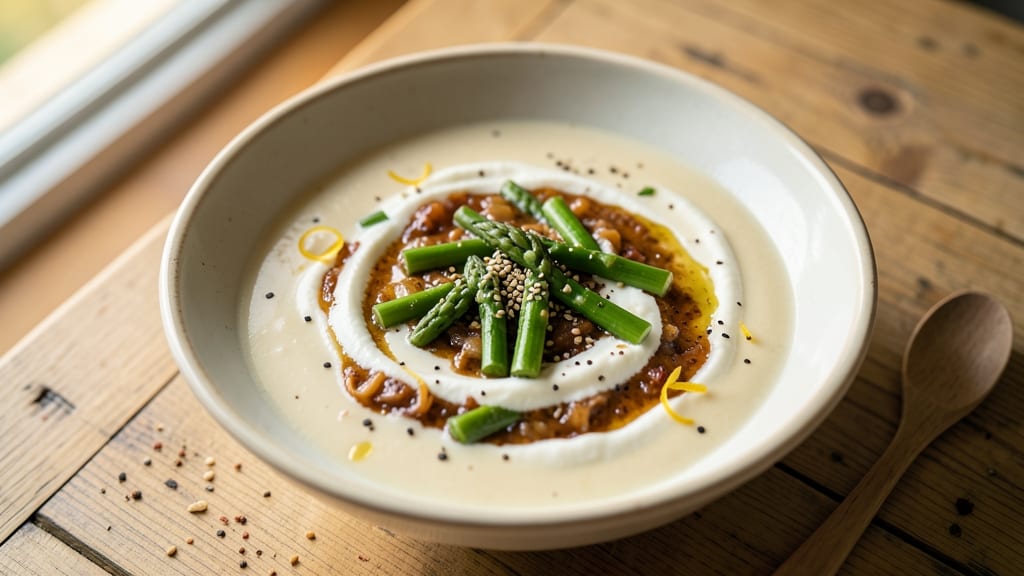
This asparagus and coconut milk soup recipe delivers restaurant-quality creaminess without a drop of dairy. The secret lies in balancing tender asparagus with rich coconut milk, creating a velvety texture that's both comforting and sophisticated.
I developed this recipe after realizing how underrated asparagus could be when properly prepared—its natural sweetness shines through when paired with coconut's subtle sweetness.
The process is straightforward yet impressive: sauté fresh asparagus until tender, simmer in vegetable broth until flavors meld, then blend with coconut milk until silky smooth. What makes this recipe special is how it transforms simple ingredients into something luxurious—perfect for spring menus or cozy weeknight dinners.
The coconut milk adds depth while keeping the dish light and refreshing.
By the time you finish, you'll have a soup that's creamy yet not heavy, aromatic with earthy asparagus notes, and perfectly balanced with coconut's tropical warmth. Garnish with toasted coconut flakes or fresh herbs to elevate the presentation without complicating the process.
It's the kind of dish that feels indulgent yet remains healthy and satisfying.
This recipe works beautifully as a vegetarian main course or light lunch, and it scales effortlessly for gatherings. The coconut milk base makes it naturally dairy-free while delivering that coveted velvety texture. Here's how to make it perfectly every time.
Ingredients for asparagus soup recipe with coconut milk
Twelve ingredients transform simple asparagus into velvety, restaurant-worthy coconut milk soup.
| Ingredient | Amount | Notes |
|---|---|---|
| Fresh Asparagus 🌱 | 1 lb | Trimmed, woody ends removed |
| Yellow Onion 🧅 | 1 whole | Medium size, diced finely |
| Garlic Cloves 🧄 | 4 cloves | Fresh, peeled and minced |
| Vegetable Broth 💧 | 4 cups | Low-sodium preferred |
| Full-Fat Coconut Milk 🥥 | 1 can (13.5 oz) | No additives, unsweetened |
| Extra-Virgin Olive Oil 🫒 | 2 tbsp | For sautéing asparagus |
| Lemon Juice 🍋 | 1 tbsp | Freshly squeezed |
| Fresh Thyme Leaves 🌿 | ¼ cup | Chopped, stems removed |
| Salt 🧂 | 1 ½ tsp | Diamond Crystal preferred |
| Black Pepper 🌶️ | ½ tsp | Freshly ground preferred |
| Unsweetened Toasted Coconut Flakes 🥥 | 2 tbsp | For garnish, optional |
| Fresh Parsley Leaves 🌿 | 0.1 cup | Chopped, for garnish |
The asparagus quality is non-negotiable—farmers' market stalks with tight tips and vibrant green color make all the difference. Whole Foods or Trader Joe's consistently carry the best, though any grocery store's pre-trimmed asparagus works in a pinch. For coconut milk, Aroy-D or Thai Kitchen brands deliver the richest texture without additives, and the full-fat version is worth the extra cost for that luxurious mouthfeel. Fresh thyme and parsley elevate the dish, so if you're using dried, reduce to one-third the amount and toast the leaves lightly before adding to intensify the flavor.
No fresh thyme? Dried thyme at one-third the amount works, but toast it first for depth. Out of coconut milk? Silken tofu blended with vegetable broth creates a similar creaminess, though the flavor won't be identical. The vegetable broth should be low-sodium—Pacific Foods or Imagine brands are reliable choices, or make your own with vegetable scraps and bouillon. For a brighter finish, key lime juice can replace lemon juice, though the acidity will differ slightly. The asparagus can be blanched ahead of time for quicker assembly later, and the coconut milk should be shaken well before opening to redistribute the natural fats.
This soup reheats beautifully—simmer gently on the stove or microwave until just warmed through, as overcooking can make the coconut milk separate. Store in an airtight container for 3-4 days in the fridge, though the flavors peak within the first 24 hours. For longer storage, freeze portions in ice cube trays for up to 3 months, then transfer to a freezer bag. Garnish with toasted coconut flakes and parsley just before serving to maintain vibrant presentation. The soup thickens as it cools, so a splash of warm water or extra broth can restore its silky consistency if needed.
Why You'll Love This Recipe
- Here’s what sold me: that full-fat coconut milk turns the soup rich without a single drop of cream. The asparagus keeps its bright snap against the velvety broth, and the onion adds this deep, caramelized sweetness that’s pure comfort.
- Minimal Chopping Required: I swear by this trick—just trim the asparagus ends and halve the stalks. No fancy dicing, no onion tears, just a quick sauté with garlic while the broth heats. Ten minutes max before you’re blending.
- Creamy Without Dairy: Here’s what sold me: that full-fat coconut milk turns the soup rich without a single drop of cream. The asparagus keeps its bright snap against the velvety broth, and the onion adds this deep, caramelized sweetness that’s pure comfort.
- Leftover Goldmine: Between us, this soup tastes better the next day. I make a big batch on Sundays—it reheats beautifully—and by Wednesday, I’m scraping the pot clean. The flavors meld into something even smoother, and it’s still light enough for lunch.
Step-by-step instructions for asparagus and coconut milk soup
This method delivers a silky, dairy-free soup where asparagus's natural sweetness shines alongside coconut's rich depth.
Prepare the Asparagus and Aromatics
Trim the woody ends from the 1 lb fresh asparagus, then cut the spears into 1-inch pieces. Set aside. In a large pot over medium heat, add 2 tbsp extra-virgin olive oil and the 1 whole yellow onion (finely diced). Sauté for 5 minutes until the onion softens and becomes translucent.
Add the 4 cloves minced garlic and the 0.25 cup chopped fresh thyme leaves, stirring constantly for 1 minute until fragrant. Here's where the flavor foundation builds—don't rush this step. The thyme should release its piney aroma, and the garlic should just begin to color without browning. This ensures you capture all the aromatic compounds before they burn.
Sauté the Asparagus and Develop Depth
Add the prepared asparagus pieces to the pot and cook for 4-5 minutes, stirring occasionally, until they begin to soften slightly. The asparagus should maintain its vibrant green color—overcooking here will turn them mushy. Season immediately with 1 tsp salt and 0.25 tsp black pepper, stirring to distribute evenly.
Pour in the 4 cups vegetable broth, scraping up any browned bits from the bottom of the pot. Bring to a gentle simmer and let cook uncovered for 8-10 minutes until the asparagus is fork-tender but still holds its shape. The soup should reduce slightly, concentrating its flavors. Taste and adjust seasoning with additional salt if needed—this is your opportunity to balance before adding the coconut milk.
Blend for Silky Texture
Remove the pot from heat and let cool slightly for 2-3 minutes. Using an immersion blender, blend the soup directly in the pot until completely smooth. For best results, work in batches if needed—this ensures you capture all the asparagus's natural sweetness without leaving fibrous bits. If you prefer a slightly textured soup, blend only until smooth but leave some asparagus pieces intact.
Return the blended soup to medium-low heat and stir in the 1 can (13.5 oz) full-fat coconut milk. The soup should immediately take on a velvety appearance. Add the 1 tbsp freshly squeezed lemon juice and remaining 0.5 tsp black pepper, stirring gently to combine. The acidity from the lemon brightens the coconut's richness and balances the earthy asparagus notes. Simmer gently for 3-4 minutes to let the flavors meld completely.
Finish and Serve Professionally
Taste the soup again and adjust seasoning if needed—this is your final opportunity to perfect the balance. Ladle the soup into bowls and garnish each serving with 0.5 tbsp unsweetened toasted coconut flakes and 1 tbsp chopped fresh parsley leaves. The coconut flakes add a delightful crunch contrast, while the parsley introduces a fresh herbal note that elevates the dish.
For an enhanced presentation, drizzle a thin stream of the soup over the garnish to create visual appeal. Serve immediately while hot, as the flavors continue to develop during the first few minutes after blending. Each spoonful should deliver a harmonious blend of asparagus's natural sweetness, coconut's creamy richness, and thyme's subtle earthiness—proof that dairy isn't required for velvety texture.
Pro Tips For Making Asparagus Soup Recipe With Coconut Milk
- CHAR THE ASPARAGUS FIRST: Blister the asparagus spears in a dry skillet for 2-3 minutes before adding them to the pot. The caramelized edges add depth—skip this, and your soup tastes like it’s missing something.
- PEEL THOSE ONIONS THIN: Slice the yellow onion paper-thin (almost translucent) so it dissolves into silkiness, not chunks. Thick slices turn to mush and make the soup taste dull—patience here pays off.
- DON’T BOIL THE COCONUT MILK: Simmer the coconut milk on low heat just until the soup thickens—boiling it curdles the fat and turns the soup greasy. Stir gently and pull it off the heat the second it coats the back of a spoon.
- SAVE TIME WITH FROZEN GARLIC: Mince 2 cloves of frozen garlic straight from the bag—no thawing needed—and toss it in with the onions. It browns just like fresh but cuts prep time by half (and your hands stay dry).
Troubleshooting this recipe
Coconut Milk Separation
If your coconut milk separates during blending or reheating, don't panic—this happens when the natural fats and water in coconut milk aren't properly emulsified. To fix it, whisk in 1 tbsp cornstarch mixed with 2 tbsp cold water and simmer for 2-3 minutes until the soup thickens.
For prevention, always use full-fat coconut milk and avoid overheating after blending. I've found that shaking the can vigorously before opening helps redistribute the natural oils. 🥥
Asparagus Turns Mushy
Overcooking asparagus is the #1 reason for a mushy texture. The moment your asparagus becomes fork-tender (about 8-10 minutes in broth), remove it from heat immediately.
If it's already too soft, strain out the asparagus and re-blend the broth with ½ cup fresh asparagus puree (blend blanched asparagus with a splash of broth) to restore body. For next time, cut asparagus into ½-inch pieces instead of 1-inch to ensure even cooking. 🌱
Broth Too Weak
If your soup tastes bland, it's likely because the vegetable broth lacked depth. Boost flavor by adding 1 tsp soy sauce or ½ tsp miso paste to the broth while simmering. For a richer base, use ½ cup tomato paste when sautéing the onions.
I also recommend reducing the broth by 10-15% more before blending to concentrate flavors. Store-bought broth often lacks complexity—homemade or high-quality brands like Pacific Foods make a noticeable difference. 💧
Grainy Texture After Blending
Uneven blending creates a grainy texture, usually from asparagus fibers. For a silky finish, strain the blended soup through a fine-mesh sieve before adding coconut milk. If you don't have one, blend again with ¼ cup warm water to help break down fibers.
I've also had success adding 1 tsp arrowroot powder before blending—it helps create a smoother consistency. Always let the soup cool slightly before blending to prevent splattering. 💡
Lemon Juice Too Overpowering
Too much acidity from lemon juice can make the coconut milk taste harsh. Start with just ½ tbsp lemon juice and adjust gradually. If it's already too bright, balance it with a pinch of salt or 1 tsp maple syrup.
For a more subtle acidity, try ½ tsp white wine vinegar instead. I've found that letting the soup sit for 10 minutes after adding lemon juice allows flavors to mellow naturally. 🍋
Soup Too Thin After Chilling
Coconut milk-based soups thicken as they cool, but sometimes they become too thin. Fix this by simmering the chilled soup with 1 tbsp cornstarch mixed with 2 tbsp water for 3-4 minutes until it reaches your desired consistency.
For prevention, reduce the soup slightly longer before blending or add ½ cup mashed potatoes (cooked in the broth) for natural thickening. I keep a small bowl of mashed potatoes on hand for just this purpose. ❄️
Nutrition facts
Frequently asked questions
Can I use canned asparagus instead of fresh?
Fresh asparagus delivers the best texture and flavor, but you can use canned in a pinch. Drain and rinse well to remove excess sodium, then chop into ½-inch pieces. For a smoother texture, blend the canned asparagus with ¼ cup broth before adding to the pot. The flavor won't be as vibrant, but it works for a quick version.
What if I don't have an immersion blender?
No problem! Transfer the soup to a blender in batches and blend until completely smooth. For best results, let the soup cool slightly first to prevent splattering. Return the blended soup to the pot and stir in the coconut milk. If you prefer a slightly textured soup, blend only until you achieve your desired consistency.
How can I make this soup spicier?
Add heat by stirring in ½ tsp red pepper flakes when sautéing the onions, or finish each bowl with a sprinkle of chili crisp or fresh chili oil. For a smoky kick, add ½ tsp smoked paprika to the broth. If you love Thai flavors, a pinch of Thai bird's eye chili (adjust to taste) works beautifully with the coconut milk.
Can I make this soup ahead of time?
This soup actually tastes better the next day as flavors meld. Store in an airtight container in the fridge for up to 3 days. Reheat gently on the stove, stirring occasionally, and add a splash of warm water or broth if it thickens too much. For freezing, cool completely first, then freeze for up to 3 months. Thaw overnight in the fridge before reheating.
What are good sides to serve with this soup?
This creamy soup pairs beautifully with light, fresh sides. Try garlic toast, crusty sourdough, or warm naan for dipping. For a complete meal, add a simple mixed greens salad with lemon vinaigrette or grilled shrimp skewers for a protein boost. The coconut flavor also complements steamed jasmine rice or coconut rice perfectly.