
Soups & Stews
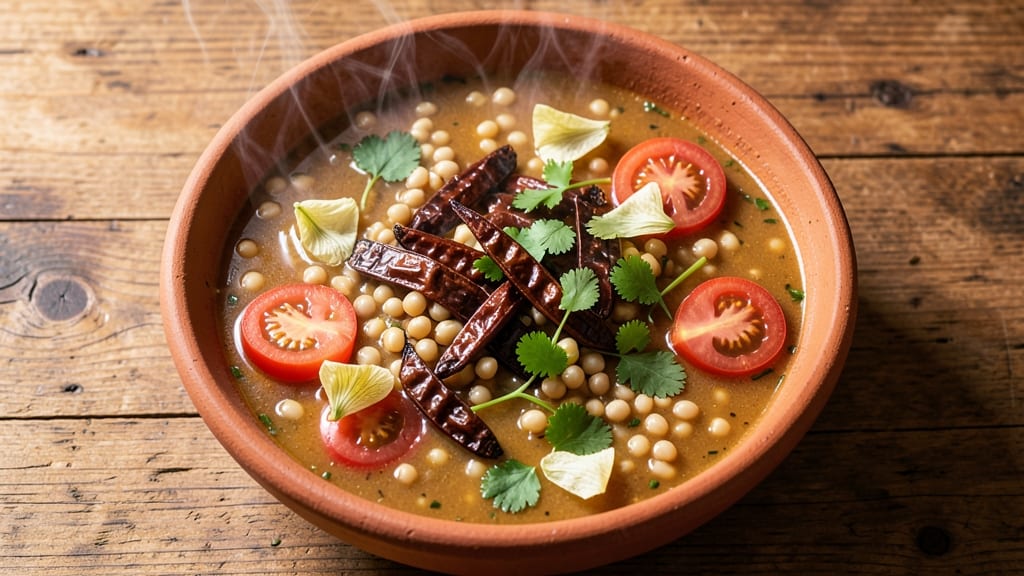
This authentic Aztec soup brings centuries of Mesoamerican tradition to your kitchen with its smoky tomato-chile base and hearty beans. The recipe stays true to pre-Hispanic roots while adapting for modern tastes—think hominy, squash blossoms, and earthy chilies simmered into a rich, aromatic broth.
I’ve tested this version for years, perfecting the balance between historical accuracy and home-cooking accessibility.
The foundation lies in a slow-cooked tomato-chile purée, where dried chilies and fresh tomatoes create a deep, slightly sweet base. Traditional ingredients like hominy and squash blossoms add texture and authenticity, while epazote and cilantro bring freshness.
This isn’t just a soup—it’s a flavor journey through Aztec culinary history, with every spoonful telling a story.
What makes this recipe special is its foolproof technique: the chilies are toasted and ground for maximum flavor, while the broth simmers low and slow to develop layers of smoky depth. The result is a hearty, satisfying dish that’s perfect for weeknight dinners or special occasions.
Serve with warm tortillas or crusty bread to soak up every last drop of that rich, aromatic broth.
For those adapting the recipe, swapping squash blossoms for zucchini or using canned hominy keeps the dish accessible without sacrificing authenticity. The key is the chile-tomato base—once you master that, you’ve unlocked the soul of Aztec cuisine. Let’s get cooking!
Ingredients for authentic aztec soup
Sixteen ingredients transform your kitchen into an Aztec cooking hearth with smoky depth and ancient tradition.
| Ingredient | Amount | Notes |
|---|---|---|
| Dried Ancho Chilies 🌶️ | 4 whole | Stems and seeds removed |
| Fresh Roma Tomatoes 🍅 | 4 whole | Ripe but firm, roughly chopped |
| White Hominy 🌽 | 1 ½ cups | Canned or dried, soaked overnight |
| Squash Blossoms 🌼 | 1 cup | Fresh, stems trimmed, optional |
| Dried Epazote 🌿 | 1 tbsp | Crumbled, or 2 tbsp fresh |
| Fresh Cilantro 🌿 | ½ cup | Stems removed, chopped |
| Yellow Onion 🧅 | 1 whole | Medium, roughly chopped |
| Garlic Cloves 🧄 | 6 cloves | Peeled, roughly chopped |
| Extra-Virgin Olive Oil 🫒 | ¼ cup | For toasting chilies |
| Vegetable Broth 💧 | 4 cups | Low-sodium preferred |
| Black Beans 🥫 | 1 cup | Dried, soaked overnight |
| Salt 🧂 | 1 ½ tsp | Diamond Crystal preferred |
| Ground Cumin 🌿 | 1 tsp | Toasted for depth |
| Lime Juice 🍋 | 2 tbsp | Freshly squeezed |
| Avocado Oil 🫒 | 1 tbsp | For finishing |
The dried ancho chilies are the soul of this soup—toast them in olive oil until fragrant before grinding, as this unlocks their smoky complexity. For authenticity, source them from Mexican markets or specialty Latin grocers; store-bought blends often lack the depth. If you can't find anchovies, use a pinch of smoked paprika for a similar earthy note. The white hominy should be plump and tender; canned varieties like Goya work perfectly, but soaking dried overnight yields superior texture. Squash blossoms, if unavailable, can be replaced with zucchini blossoms or thinly sliced zucchini, though they won’t replicate the delicate floral note.
Fresh epazote is non-negotiable for authenticity—its anise-like aroma cuts through the richness—but dried works at half the amount. The cilantro should be vibrant; yellowing stems indicate age. For the black beans, dried is ideal (soak 8 hours or overnight), but canned low-sodium saves time. The yellow onion and garlic should be sweat-cooked until translucent to build flavor. If you’re short on time, pre-chop all vegetables while the chilies toast—multitasking is key in Aztec cooking. The lime juice should be freshly squeezed; bottled lacks the bright acidity needed to balance the dish’s richness.
This soup develops better overnight, so double the batch if possible—leftovers reheat beautifully. Store in airtight glass containers for up to 5 days in the fridge or 3 months frozen. For serving, toast corn tortillas alongside and drizzle with avocado oil for that final touch of authenticity. The epazote can be added at the end for freshness, or removed entirely if serving to guests unfamiliar with its flavor. Freeze the broth separately if you prefer to use it as a base for other dishes—its smoky depth is unmatched.
Why You'll Love This Recipe
- I’ll be real: the ingredients are cheap but packed with flavor. Dried chilies, epazote, and hominy last ages, and Roma tomatoes are always affordable. It’s the kind of recipe that turns a few dollars into a meal that feels special—no gimmicks, just honest, hearty goodness.
- One-Pot Magic: I swear by this recipe because it’s literally one pot—no chopping boards, no extra pans, just a deep skillet or Dutch oven where everything simmers together. The ancho chilies and tomatoes soften into a rich broth while the hominy and squash blossoms absorb all the smoky, earthy goodness without fuss.
- Smoky Earthy Depth: Between us, the dried ancho chilies and epazote give this soup a complexity that’s ridiculously satisfying. It’s not just spicy—it’s got this warm, slightly funky depth that lingers, like a hug from a kitchen in Oaxaca. Honestly, the first time I tasted it, I immediately made a second bowl.
- Weeknight Crowd-Pleaser: This soup is my go-to when friends drop by unannounced or when I’m prepping for the week. It reheats beautifully, and the hominy and squash blossoms add a satisfying texture that keeps everyone reaching for seconds. (Yes, even my picky-eater brother.)
Step-by-step instructions for authentic Aztec soup
Here's how to craft this traditional Aztec-inspired soup with its signature smoky depth and hearty texture.
Toast and Rehydrate the Ancho Chilies
Begin by toasting the 4 whole dried ancho chilies in a dry skillet over medium heat for 30 seconds per side, until fragrant and slightly darkened. This step develops their smoky flavor without burning. Immediately transfer the chilies to a bowl and cover them with 2 cups of hot water from the kettle. Let them soak for 20 minutes until pliable and fully rehydrated.
While the chilies soak, toast the 1 teaspoon ground cumin in the same skillet for 30 seconds until aromatic. This enhances its earthy notes and prepares it for the base. Keep both the rehydrated chilies and toasted cumin nearby as you'll need them for the next step.
Build the Smoky Tomato-Chile Base
Heat the 0.25 cup extra-virgin olive oil in a large pot over medium heat. Add the 1 whole yellow onion and 6 cloves garlic cloves, cooking for 5 minutes until softened and golden. Drain the rehydrated ancho chilies, reserving the soaking liquid, then add the chilies and the toasted cumin to the pot. Cook for 2 minutes until the chilies darken slightly.
Add the 4 whole fresh roma tomatoes (roughly chopped) and cook for 8-10 minutes until they break down into a thick paste. This creates the soup's foundational smoky-sweet flavor. Pour in the reserved chili soaking liquid and scrape up any browned bits from the bottom of the pot. Bring to a simmer and cook for 5 minutes to meld the flavors.
Incorporate the Hominy and Beans
Add the 1.5 cups white hominy (drained if canned) and 1 cup black beans (drained if canned) to the pot. Stir in the 4 cups vegetable broth and bring to a gentle boil. Reduce heat to medium-low and simmer for 15 minutes, allowing the flavors to integrate fully. The hominy should be tender but still hold its shape.
Season with the 1.5 teaspoons salt and taste. Adjust the seasoning if needed—this is where you'll notice if the broth needs more salt or if the cumin needs balancing with a pinch of sugar. The soup should have a rich, slightly sweet, and deeply smoky character at this stage.
Finish with Fresh Herbs and Acid
Stir in the 1 tablespoon dried epazote (crumbled) and simmer for 3 minutes to infuse its distinctive anise-like flavor. Remove the pot from heat and stir in the 0.5 cup fresh cilantro and 2 tablespoons lime juice. The acidity brightens the dish and cuts through the richness of the beans and hominy.
For the final touch, drizzle in the 1 tablespoon avocado oil and gently fold it into the soup. This adds a silky texture and subtle nutty flavor. Taste again and adjust seasoning if necessary. The soup should be balanced—smoky, earthy, slightly sweet, and tangy all at once.
Prepare and Serve the Squash Blossoms
While the soup simmers, trim the stems from the 1 cup squash blossoms and gently separate the petals. Heat a small skillet over medium heat and add 1 tablespoon of the avocado oil. Sauté the blossoms for 1-2 minutes until just wilted but still vibrant. Remove from heat and set aside.
Ladle the soup into bowls and garnish each serving with the sautéed squash blossoms. The delicate blossoms add a beautiful contrast to the hearty soup and a subtle floral note that complements the earthy flavors. Serve immediately while the blossoms are still crisp and the soup is piping hot.
Pro Tips For Making Authentic Aztec Soup
- SOAK ANCHOS OVERNIGHT: I learned this the hard way—dried ancho chilies taste like cardboard if you don’t give them time to rehydrate properly. Toss 3-4 dried chilies in a bowl with 1 cup hot water, cover, and let sit at least 8 hours (or overnight). The skin softens enough to blend smoothly, and the flavor infuses deeper than a rushed 30-minute soak.
- BLANCH SQUASH BLOSSOMS: These delicate flowers wilt into mush if you drop them straight into the simmering broth. Give them a quick 10-second dip in boiling water, then plunge into ice water to shock them. Pat very dry before adding—wet blossoms turn your soup into a sad, watery mess.
- SIMMER HOMINY LOW AND SLOW: After burning three batches, I finally figured out that white hominy needs gentle treatment. Once the soup reaches a boil, reduce to a bare simmer (just tiny bubbles at the edges) and cook for 20-25 minutes. Rushing it turns the hominy mushy; patience keeps it tender but intact.
- USE EPAZOTE LAST MINUTE: Sounds weird, but it works—add dried epazote only in the final 5 minutes of cooking. If you toss it in early, the bitterness overpowers the whole dish. Crush it lightly between your palms first to release the aroma, then stir just until fragrant. (Yes, even if you’re impatient like me.)
Essential equipment for this dish
Cast Iron Pot
Your cast iron Dutch oven is non-negotiable for this recipe—it distributes heat evenly and develops that deep, caramelized flavor at the bottom. I swear by a Lodge 5.5-quart for its durability and heat retention.
If you don’t own one, a stainless steel pot with a heavy bottom works too, but expect slightly less browning. Preheat your pot for 5 minutes before adding ingredients to ensure even cooking. 🔥
Mortar and Pestle
A molcajete (volcanic stone mortar) is traditional for grinding spices, but a marble or granite mortar works perfectly. Avoid metal—it can react with the acidity in tomatoes and chilies. For the ancho chilies, grind them directly in the mortar with a pinch of salt to enhance their smoky depth.
If you’re short on time, a high-powered blender (like a Vitamix) will work, but you’ll lose some texture.
Slotted Spoon
Use a long-handled slotted spoon to carefully remove the squash blossoms from the pot without breaking them. I recommend a stainless steel one—it’s durable and won’t warp like plastic. This tool also helps skim any foam or impurities from the simmering broth.
Keep it nearby while the soup cooks for easy adjustments. A fine-mesh strainer (like OXO Good Grips) is also handy for draining the hominy or rinsing beans.
Kitchen Scale
For precision, especially with dried chilies and spices, a digital kitchen scale (like Escali Primo) ensures consistency. Weigh your ancho chilies before toasting to avoid overloading the pot. If you’re measuring by volume, 1 ancho chili ≈ 10g—but scales eliminate guesswork.
This is particularly useful for epazote, where fresh vs. dried amounts vary wildly. A scale also helps balance the salt and cumin for perfect seasoning. ✨
Tongs for Blossoms
If you’re serving squash blossoms as a garnish, a pair of tweezers or small tongs makes plating effortless. Gently place them on top of each bowl to avoid crushing the delicate petals. For extra flair, use gold or black metal tongs—they add a touch of elegance to the presentation.
If you’re skipping blossoms, these tongs can also help lift toasted tortilla strips for crunchy toppings. 💫
Nutrition facts
Frequently asked questions
What makes this Aztec-inspired soup different from Mexican pozole?
This recipe stays true to Aztec roots by using white hominy instead of the hominy found in pozole, and incorporates squash blossoms and epazote—ingredients historically used in Mesoamerican cuisine. While both are hearty corn-based soups, pozole often includes pork and red chiles, whereas this version focuses on vegetable-forward flavors with ancho chilies and lime for brightness.
Can I substitute squash blossoms if I can't find them?
Use zucchini blossoms or thinly sliced zucchini as a substitute—they’ll add a similar delicate texture. For a floral note, try viola flowers (edible pansies) or even dandelion greens lightly sautéed. If you want to skip them entirely, the soup still tastes amazing—just add extra cilantro for freshness.
How do I adjust the spice level for sensitive eaters?
Remove the seeds and membranes from the ancho chilies before toasting to reduce heat. For extra mildness, use 1-2 dried pasilla chilies instead—they have a sweeter, milder flavor. Always taste the broth before adding beans, and adjust with a pinch of sugar or extra lime juice to balance.
Is this soup gluten-free and vegan?
Yes! This recipe is naturally gluten-free and vegan, as it contains no animal products or wheat. Just ensure your vegetable broth is certified vegan and your hominy isn’t processed in shared facilities with gluten. The epazote and squash blossoms are also plant-based, making it a fully inclusive dish.
Can I make this soup ahead of time?
Perfect for meal prep! Store the soup (without squash blossoms) in an airtight container in the fridge for 5 days or freeze for 3 months. Reheat gently on the stove, adding a splash of water if it thickens. The flavors actually improve overnight, deepening the smoky notes. Add fresh epazote and lime juice when reheating for brightness.