
Soups & Stews
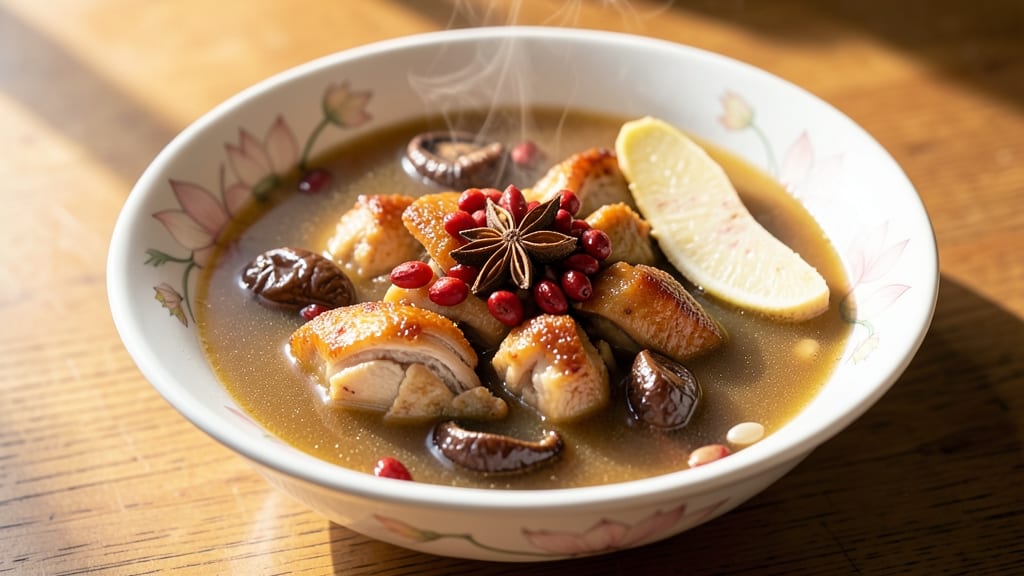
This authentic Chinese chicken soup recipe delivers the comforting flavors of home-style Chinese cooking, where aromatic ginger, star anise, and goji berries create a fragrant broth that warms the soul. 🌟 The secret lies in slow-simmered chicken bones and a balance of traditional spices that transform simple ingredients into a deeply satisfying dish.
Unlike many Western-style soups, this version relies on bone broth for rich, collagen-packed depth, while silky egg ribbons add texture and visual appeal.
The recipe begins with a fragrant base of ginger, garlic, and star anise, which infuse the broth with their signature warmth. Chicken bones are simmered low and slow to extract maximum flavor, while goji berries and shiitake mushrooms contribute subtle sweetness and earthiness.
The broth is then strained and enriched with a touch of soy sauce and sesame oil, creating a harmonious balance of savory and umami notes that define authentic Chinese cuisine.
What sets this soup apart is the delicate addition of silky egg ribbons, made by whisking eggs into the hot broth and gently stirring them into delicate strands. These ribbons not only elevate the presentation but also add a luxurious texture that complements the tender chicken and vegetables.
The result is a soup that’s both comforting and refined—perfect for nourishing meals or special occasions.
Serve with steamed rice or dumplings to complete the experience, and garnish with fresh green onions and cilantro for brightness. This recipe is naturally gluten-free if tamari is used, making it versatile for various dietary needs.
Let’s create a bowl of warmth and tradition that feels like a hug in every spoonful.
Ingredients for authentic chinese chicken soup
Six aromatic ingredients transform simple chicken bones into a fragrant broth that defines authentic Chinese comfort.
| Ingredient | Amount | Notes |
|---|---|---|
| Chicken Bones 🍗 | 3 lb | With meat still attached, for rich broth |
| Ginger Root 🌿 | ½ cup | Freshly grated, peeled |
| Garlic Cloves 🧄 | 8 cloves | Minced, aromatic base |
| Star Anise 🌶️ | 4 whole | For authentic Chinese aroma |
| Dried Shiitake Mushrooms 🍄 | 6 whole | Rehydrated, earthy depth |
| Goji Berries 🍇 | ¼ cup | Dried, subtle sweetness |
| Large Eggs 🥚 | 4 whole | Fresh, room temperature |
| Green Onions 🧅 | ½ cup | Sliced, for garnish |
| Cilantro 🌿 | ¼ cup | Chopped, fresh brightness |
| Light Soy Sauce 🍶 | ¼ cup | Gluten-free tamari preferred |
| Sesame Oil 🫒 | 1 tbsp | Toasted, for aroma |
| White Rice Vinegar 🍶 | 1 tbsp | Balances flavors |
| Salt 🧂 | 1 ½ tsp | Adjust to taste |
| Black Peppercorns 🌶️ | ½ tsp | Freshly cracked |
| Daikon Radish 🥕 | 1 whole | Julienned, for texture |
The star anise and ginger are non-negotiable for that signature Chinese warmth. Whole star anise from Penzeys or your local Asian market delivers the best flavor—ground versions lack depth. Fresh ginger is a must; the dried kind just can't compete. For the chicken bones, ask your butcher for a mix of neck and back bones—they yield the richest broth. The shiitake mushrooms should be dried and rehydrated separately—never use canned. Their umami punch is worth the extra 10 minutes of soaking. Goji berries? Look for organic at Whole Foods or specialty stores; cheaper brands often contain fillers.
No star anise? Double the cinnamon sticks, but it won't be the same. Fresh ginger unavailable? Use 1/3 the amount of dried, but toast it first in a dry pan. The daikon radish can be swapped for jicama or regular carrots if needed. For the eggs, room temperature is key—they'll ribbon better. The soy sauce: tamari for gluten-free, but regular light soy works too. Pro tip: Toast your sesame oil lightly before adding—it'll sing with aroma. And if you're short on time, chicken bouillon cubes can jumpstart the broth, though nothing beats homemade.
This broth gets better the next day—make extra and freeze portions for up to 3 months. Store the eggs separately until ready to ribbon; they'll keep 1 week in the fridge. The ginger and garlic can be prepped ahead and stored in the freezer for 6 months. For presentation, keep the egg ribbons separate until serving—they'll dissolve if added too early. Garnish with cilantro and green onions just before eating; their freshness brightens every bowl. The daikon holds up well in the fridge for 1 week, so slice it last thing.
Why You'll Love This Recipe
- No-Chop Nightmare: I swear by this one—just toss in whole ginger slices and smashed garlic cloves. No mincing, no mess, and the broth still tastes like it simmered for hours. (Yes, even on a Tuesday night.)
- Umami Bomb: That combo of star anise and dried shiitake? It’s the secret weapon. The mushrooms soak up the broth’s depth, while the star anise adds this warm, spicy-sweet note that makes every spoonful feel like a hug.
- Leftovers That Don’t Suck: Between us, most soups turn sad after day two. Not this one. The flavors actually get better as the broth reduces—perfect for packing lunches or reheating when you’re too tired to cook.
- Budget Bone Magic: Chicken bones are cheap, and this recipe turns them into liquid gold. I buy them in bulk, freeze them, and boom—rich, restaurant-quality broth without the $20 takeout price tag. (My wallet thanks me.)
Step-by-step instructions for fragrant Chinese chicken soup
Here's how to build a rich, aromatic broth with silky egg ribbons and tender ingredients.
🔥 Step 1: Char the Chicken Bones for Deep Flavor
Preheat your oven to 450°F. Place the 3 lb chicken bones on a baking sheet and roast for 20-25 minutes until they develop a deep golden-brown color. This caramelization creates complex flavors that infuse the broth.
While the bones roast, I like to sprinkle them lightly with 1 tsp salt and ½ tsp black peppercorns to enhance their natural sweetness. Turn them occasionally so they brown evenly. The charred bones will form the foundation of your soup's rich umami depth.
🍳 Step 2: Build the Aromatic Base
Transfer the charred bones to a large stockpot and add 8 cups cold water (enough to cover the bones by 2 inches). Bring to a boil over high heat, then reduce to a simmer. Skim off any foam that rises to the surface during the first 10 minutes of simmering.
Add the 0.5 cup freshly grated ginger root, 8 cloves minced garlic, 4 whole star anise, and 6 whole dried shiitake mushrooms (soaked in hot water for 20 minutes and drained). Simmer uncovered for 45 minutes—this allows the spices to infuse without overpowering the broth.
🥘 Step 3: Develop the Broth and Add Vegetables
After 45 minutes, remove the star anise and ginger. Add the 1 whole daikon radish (julienned) and simmer for another 20 minutes until the radish is tender but still holds its shape. This adds subtle sweetness and texture to the soup.
Stir in the 0.25 cup goji berries and 0.25 cup light soy sauce, then simmer for 10 minutes to meld the flavors. The goji berries will soften slightly, releasing their natural sweetness, while the soy sauce adds depth. Taste and adjust seasoning with additional salt if needed.
🍳 Step 4: Prepare the Silky Egg Ribbons
While the broth simmers, prepare the eggs by whisking the 4 whole large eggs in a bowl until fully combined. The eggs should be at room temperature for even cooking. In a separate small bowl, mix 1 tbsp white rice vinegar and 1 tbsp toasted sesame oil—this will be used to gently poach the eggs.
Here's the key: bring 4 cups of the hot broth to a gentle simmer in a clean pot. Slowly pour the whisked eggs into the broth while stirring gently in one direction with a wooden spoon. The eggs will form delicate ribbons as they cook. Simmer for 2-3 minutes until just set—you want them silky, not scrambled.
🍽️ Step 5: Finish and Serve
Strain the broth through a fine-mesh sieve into a clean pot, discarding the solids. Return the broth to a simmer and add the egg ribbons. Stir in the 0.5 cup sliced green onions and 0.25 cup chopped cilantro, reserving some for garnish. Ladle the soup into bowls, garnishing each serving with additional green onions and cilantro.
Serve immediately while hot. The soup should be fragrant with notes of ginger, star anise, and umami from the chicken bones. Each spoonful delivers a balance of savory broth, delicate egg ribbons, and fresh herbs. The daikon radish adds subtle crunch, while the goji berries provide a gentle sweetness that rounds out the flavors.
Pro Tips For Making Authentic Chinese Chicken Soup
- BLANCH BONES FIRST: I learned this the hard way—skipping the quick blanch in boiling water for 2-3 minutes means your broth will turn cloudy instead of crystal clear. Rinse them afterward to remove impurities, then start your simmer with fresh, clean bones.
- SLICE GINGER THIN: Thick chunks of ginger just sit there like stubborn guests. Thinly slice it—almost translucent—and it’ll infuse flavor without overpowering the broth. Trust me, your soup will thank you.
- DON’T BOIL STAR ANISE: After burning three batches, I finally figured out that star anise needs a gentle touch. Add it early, but keep the heat low—high heat turns it bitter, and you’ll be left with a strange, medicinal aftertaste instead of warm, aromatic depth.
- SOAK MUSHROOMS SHORT: I skip this when I’m lazy, but the dish is noticeably better when I don’t: soak dried shiitakes for just 10 minutes in hot water, not 30. They’ll rehydrate enough to soften but won’t turn to mush—keeping that perfect texture in every spoonful.
Flavor customization for these flavors
Spicy Sichuan Twist
For a bold Sichuan kick, add 1 tbsp Sichuan peppercorns (toasted and crushed) and 1 tbsp chili bean paste to the broth during the final 10 minutes of simmering. The numbing-spicy sensation from Sichuan peppercorns elevates the soup's complexity.
Garnish with thinly sliced red chili oil (about 1 tsp per bowl) and extra green onions. Use Kosher salt instead of regular salt to balance the heat. 🌶️
Sweet and Tangy Cantonese
Transform this into a Cantonese-style soup by adding 1 tbsp Shaoxing wine when you introduce the goji berries, and finish with 1 tsp rock sugar (or brown sugar) to enhance natural sweetness.
Swap daikon for baby bok choy (blanched for 2 minutes) and garnish with crispy fried shallots for texture. The wine adds depth while the sugar rounds out the broth's savory profile. 🍯
Herb-Forward Shanghai Style
For a Shanghai-inspired version, stir in 2 tbsp chopped cilantro stems (not just leaves) and 1 tbsp chopped coriander root during the final simmer. Add ½ tsp white pepper instead of black for a more refined spice profile.
Top with thinly sliced scallions and a drizzle of light oyster sauce (about 1 tsp per bowl). The herbs create a fresh, aromatic finish that's quintessential Shanghai. 🌿
Vegetarian Adaptation
Replace chicken bones with 3 lb dried shiitake stems (soaked overnight) and 1 lb kombu seaweed for umami depth. Use 1 cup dried wood ear mushrooms (rehydrated) instead of daikon.
Add 1 tbsp miso paste during the final simmer for richness. The egg ribbons remain a star element, creating a protein-rich vegetarian bowl that still feels hearty and satisfying. 🌱
Winter Comfort Version
Boost warmth by adding ½ cup chopped Chinese yam (simmered for 30 minutes) and 1 tbsp dried tangerine peel (soaked in hot water for 15 minutes before adding). Finish with 1 tsp toasted sesame seeds and a drizzle of chili crisp for contrast.
The yam adds natural sweetness while the tangerine peel brightens the broth—perfect for chilly days. ❄️
Quick Weeknight Hack
Short on time? Use 1 lb chicken thighs (bone-in, skin-on) instead of bones, and 4 cups store-bought chicken stock (like Kirkland Signature). Simmer the thighs for 20 minutes before removing, then shred the meat.
Add 1 tsp fish sauce for instant umami depth. The result is still deeply flavorful with minimal effort. 💡
Nutrition facts
Frequently asked questions
Why does this recipe use chicken bones instead of just chicken breast?
The bones create a richer, more flavorful broth packed with collagen and gelatin, which gives the soup its authentic Chinese texture and depth. Simmering bones for 45 minutes extracts maximum flavor, while chicken breast would make a thinner, less satisfying soup. For best results, use a mix of neck and back bones—they yield the most gelatin.
Can I make this soup without star anise? What's the best substitute?
Star anise is key for that signature Chinese aroma, but you can substitute with 2 cinnamon sticks or 1 tsp anise seeds. For a closer match, toast whole cloves or fennel seeds lightly before adding. Just know the flavor won't be identical—star anise has a unique licorice-like quality that's hard to replicate.
How do I get the egg ribbons to look perfect every time?
The secret is using room-temperature eggs and stirring one direction only with a wooden spoon. Pour the eggs slowly into gently simmering broth (not boiling) and cook for just 2-3 minutes. If they curdle, your broth may be too hot—reduce heat slightly next time. For extra silkiness, whisk the eggs with 1 tsp cornstarch.
Is this soup gluten-free? How can I make it dairy-free too?
Yes! Use tamari instead of regular soy sauce for gluten-free. For dairy-free, this recipe already works—just ensure your broth has no hidden dairy (some chicken stocks contain it). The egg ribbons are naturally dairy-free, but if avoiding eggs entirely, replace them with tofu cubes (simmered separately) or thinly sliced mushrooms.
What if my soup tastes too salty? Can I fix it?
Add ½ cup hot water to dilute the broth, then simmer for 5 more minutes to rebalance flavors. For extra depth, stir in 1 tsp cornstarch mixed with 2 tbsp water to thicken slightly—this helps mask saltiness. If using tamari, remember it's saltier than regular soy sauce, so reduce to 2 tbsp instead of ¼ cup.