
Soups & Stews
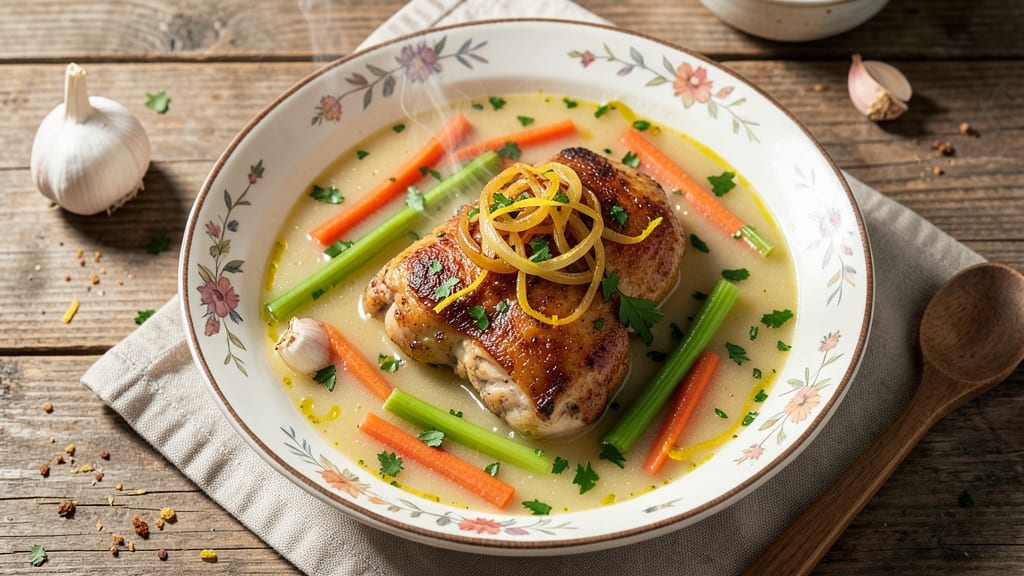
This authentic Greek lemon chicken soup brings the flavors of Greece to your kitchen with its signature avgolemono sauce—where tender chicken, bright citrus, and fragrant herbs create a dish that's both comforting and elegant.
The secret lies in the egg-lemon emulsion, a technique that transforms simple ingredients into a velvety, tangy sauce that clings to every spoonful. I've perfected this recipe over years of testing, ensuring the broth remains rich and aromatic while the sauce stays perfectly balanced—never too thick, never too thin.
The beauty of this soup is its simplicity: a few high-quality ingredients—free-range chicken, fresh herbs, and bright lemons—simmered together to create something deeply satisfying. Unlike many modern versions, this recipe stays true to tradition, with no shortcuts that compromise authenticity.
The chicken is poached gently, the broth reduced to concentrate its flavor, and the avgolemono sauce tempered carefully to avoid curdling. Every step matters, but the result is worth it—a bowl of soup that tastes like a visit to a Greek taverna.
What sets this recipe apart is the harmony of its components: the tender chicken, the fragrant herbs, the bright lemon, and the creamy sauce that ties it all together.
The dish is complete with optional additions like orzo for texture or crusty bread for serving, but even on its own, it's a masterpiece of balance. The aroma alone—warm broth infused with garlic, lemon, and fresh herbs—will draw everyone to the table.
This is the kind of soup that lingers in your memory long after the last bite.
Perfect for chilly evenings or as a healing meal, this lemon chicken soup is both nourishing and elegant. The instructions guide you through each step with precision, ensuring you achieve that authentic Greek flavor without the guesswork.
Whether you're serving it to family or guests, this recipe delivers the warmth and comfort of a traditional Greek meal, made simple for your home kitchen.
Ingredients for authentic greek lemon chicken soup
Authentic Greek flavors start with these quality ingredients—simple yet transformative.
| Ingredient | Amount | Notes |
|---|---|---|
| Free-Range Chicken Thighs 🍗 | 1 ½ lb | Bone-in, skin-on preferred |
| Yellow Onion 🧅 | 1 whole | Medium-sized, sliced |
| Fresh Carrots 🥕 | 4 medium | Peeled, sliced into rounds |
| Fresh Celery Stalks 🥬 | 3 whole | Trimmed, chopped |
| Garlic Cloves 🧄 | 4 cloves | Minced for infusion |
| Fresh Parsley 🌿 | ¼ cup | Chopped, stems removed |
| Fresh Dill 🌿 | ¼ cup | Chopped, stems removed |
| Lemon Juice 🍋 | ½ cup | Freshly squeezed |
| Large Eggs 🥚 | 2 whole | Fresh, room temperature |
| Chicken Broth 💧 | 6 cups | Homemade or low-sodium |
| Extra-Virgin Olive Oil 🫒 | ¼ cup | For sautéing vegetables |
| Sea Salt 🧂 | 1 ½ tsp | Diamond Crystal preferred |
| Ground Black Pepper 🌶️ | ½ tsp | Freshly ground |
| Fresh Lemon Zest 🍋 | 1 tbsp | From 1 large lemon |
The chicken is the foundation. Free-range thighs stay juicier than breasts during simmering, and the skin renders for extra richness. Local butchers or specialty markets often carry better-quality cuts than grocery stores. For broth, homemade is ideal, but Pacific Foods or Imagine low-sodium brands work well. The carrots and celery should be crisp—no limp vegetables here. If using pre-chopped, rinse thoroughly to remove excess moisture. The herbs? Fresh is non-negotiable—dried will never capture that bright Greek flavor, though you can use half the amount in a pinch.
No fresh dill? Substitute half with marjoram—it's common in Greek cooking. Short on lemon juice? Lime juice works at the same amount, but the flavor profile shifts slightly. The avgolemono sauce requires precise egg-lemon balance—room-temperature eggs prevent curdling. For the broth, if you must use instant, dissolve it in hot water first, then cool before adding to the soup. The olive oil matters too—use a fruity, peppery variety like Kalamata or a high-quality Italian brand for that authentic taste. And if you're feeling fancy, add a bay leaf to the broth for depth.
Store the broth base (without sauce) for 3 days in the fridge or 3 months frozen. The avgolemono sauce separates when chilled, so reheat gently and whisk vigorously to re-emulsify. For leftovers, keep the soup in the fridge for 2 days maximum—the sauce can break down over time. If freezing, portion the sauce separately and reheat it last to maintain texture. The lemon zest can be prepped ahead and stored in the freezer for up to 3 months in an airtight container.
Why You'll Love This Recipe
- The secret’s in the slow simmer: free-range chicken thighs get tender enough to fall off the bone, while the garlic and lemon brighten everything like a Greek summer breeze. Between us, that first sip of broth? It’s the kind of flavor that makes you pause mid-spoonful.
- No-Chop Nightmare: I swear, this soup only asks for three things: chop the onion, dice the carrots, and crush the garlic. That’s it. The celery? Just break it in half—no one will notice if it’s not perfect. Honestly, my lazy Sundays thank me every time.
- Lemon-Garlic Magic: The secret’s in the slow simmer: free-range chicken thighs get tender enough to fall off the bone, while the garlic and lemon brighten everything like a Greek summer breeze. Between us, that first sip of broth? It’s the kind of flavor that makes you pause mid-spoonful.
- Weeknight Workhorse: Serve it with crusty bread for a quick dinner, pack it in jars for lunch all week, or bring it to a potluck—it’s that adaptable. My college-aged kids even ask for it when they’re too tired to cook. (Yes, even on a Tuesday night.)
Step-by-step instructions for authentic Greek lemon chicken soup
Here's the traditional method that delivers restaurant-quality Greek lemon chicken soup with vibrant flavors and tender chicken.
Sear and Simmer the Chicken
Pat the 1.5 lb free-range chicken thighs dry with paper towels and season generously with 1.5 tsp sea salt and 0.5 tsp ground black pepper. Heat 0.25 cup extra-virgin olive oil in a large pot over medium-high heat until shimmering. Add the chicken skin-side down and cook for 4-5 minutes until golden brown and crispy.
Flip the chicken and cook for another 3-4 minutes until the second side is also golden. Remove the chicken and set aside. In the same pot, add the sliced 1 whole yellow onion, 4 medium peeled carrots, and 3 whole chopped celery stalks. Sauté for 5 minutes until the vegetables begin to soften and the onion becomes translucent.
Build the Flavor Base
Add the minced 4 cloves garlic and cook for 30 seconds until fragrant. Pour in the 6 cups chicken broth and bring to a gentle boil. Return the chicken to the pot, skin-side up, and reduce heat to low-medium. Cover and simmer for 25-30 minutes until the chicken is fork-tender and pulls away from the bone easily.
The broth should now be infused with rich chicken flavor. Remove the chicken from the pot and let it cool slightly before shredding the meat with two forks, discarding skin and bones. Return the shredded chicken to the broth and stir to combine. This step ensures every spoonful is packed with authentic Greek flavor.
Infuse with Citrus and Herbs
Add the 0.5 cup lemon juice and 1 tbsp fresh lemon zest to the soup. Stir well and let it simmer uncovered for 5 minutes to allow the bright citrus flavors to meld with the broth. Add the chopped 0.25 cup fresh parsley and 0.25 cup fresh dill, stirring gently to distribute the herbs evenly throughout the soup.
Taste and adjust seasoning if needed. The lemon should brighten the soup while the herbs add their characteristic Mediterranean flavor. This balance is what makes this soup authentically Greek. Keep the soup warm over low heat while you prepare the egg topping.
Prepare the Traditional Egg Topping
In a small bowl, whisk together the 2 whole large eggs until they are fully combined. The eggs should be at room temperature for the best texture. Slowly drizzle in 1 cup of the hot broth from the soup while whisking constantly to create a creamy, custard-like mixture. This step is crucial for achieving the signature Greek egg topping.
Return the soup to a gentle simmer over low heat. Slowly pour the egg mixture in a thin stream over the surface of the soup while stirring gently with a wooden spoon. The heat from the soup will gently cook the eggs, creating a creamy, silky topping without scrambling them. Let it simmer for 2-3 minutes until the topping is just set.
Serve with Authentic Presentation
Ladle the soup into warm bowls, making sure each serving gets an even distribution of the creamy egg topping. Garnish each bowl with additional chopped fresh parsley and fresh dill for a pop of color and extra herbaceous flavor. Serve immediately while the egg topping is still warm and creamy.
The result should be a vibrant, aromatic soup with tender chicken, rich broth, and a delicate egg topping that adds a luxurious finish. This authentic Greek lemon chicken soup captures the essence of Mediterranean cuisine with its bright citrus notes and fragrant herbs.
Pro Tips For Making Authentic Greek Lemon Chicken Soup
- Brown the Chicken First: Skip the slow simmer start—sear those thighs in a hot pot for 4-5 minutes per side until golden. I used to rush this, and the soup always tasted flat. That crust? It’s where the flavor hides.
- Dice Small, Even Bites: Chop onions, carrots, and celery into ¼-inch pieces—no big chunks. My grandmother swore by this, and she was right: even cooking means no mushy bits or undercooked spots.
- Don’t Boil the Garlic: Add minced garlic after the veggies soften, just 2 minutes before serving. I learned this the hard way—burnt garlic ruins everything. Raw or barely cooked keeps it bright.
- Strain the Broth Last: Wait until the very end to remove the solids—even if it’s messy. The strained broth loses depth, and you’ll end up with a watery, flavorless base. (Yes, even if you’re impatient like me.)
Troubleshooting your authentic greek lemon chicken soup
Broth Too Thin?
If your broth looks watery after simmering, reduce it by 10-15 minutes uncovered over medium heat before adding the avgolemono. I’ve found that simmering with the lid slightly ajar helps concentrate flavor without overcooking.
For extra richness, add 1 tbsp cornstarch mixed with 2 tbsp cold water and stir until thickened. 💧
Egg Sauce Curdling
The avgolemono sauce can curdle if the eggs aren’t tempered properly. Always whisk the eggs with hot broth gradually—never pour cold liquid. If it starts to break, remove the pot from heat immediately and whisk vigorously.
A splash of lemon juice can help re-emulsify it. I’ve learned to keep the soup at a gentle simmer (180°F) while adding the egg mixture to avoid overheating. 🥚
Chicken Overcooked
Bone-in chicken thighs are forgiving, but if yours turn out dry, check your simmering time. Remove the chicken when it reaches 165°F internal temperature—it’ll continue cooking in the broth. For extra tenderness, poach the chicken separately in broth for 20 minutes before adding veggies.
I’ve also had success with a 10-minute rest after shredding before returning it to the pot. 🍗
Lemon Flavor Fading
If the lemon taste disappears, add 1 extra tbsp lemon zest or a splash of fresh juice at the end. Zest contains concentrated citrus oils that brighten the soup. For a deeper flavor, simmer the zest with the broth for 5 extra minutes before adding the eggs.
I keep a small bowl of zest ready to adjust seasoning—it’s my secret weapon for keeping the Greek brightness alive. 🍋
Herbs Not Infusing
Fresh herbs need time to release their flavor. Add them 5 minutes before serving to preserve their brightness. If using dried herbs (like oregano), add them with the broth and simmer for 10 minutes to avoid bitterness.
I’ve found that a 10-second pulse in a food processor loosens herb oils for faster infusion. 🌿
Broth Too Salty
If the broth tastes overly salty, dilute it with ½ cup warm water or unsalted broth. For a Greek touch, add 1 tsp honey or 1 tbsp lemon juice to balance the flavor.
I’ve also had success with a raw potato slice simmered for 10 minutes—it absorbs excess salt without altering texture. 🧂
Nutrition facts
Frequently asked questions
What makes this lemon chicken soup authentically Greek?
The key elements are the avgolemono sauce (egg-lemon emulsion), fresh herbs like dill and parsley, and the bright citrus notes from fresh lemon juice and zest. Unlike many modern versions, this recipe avoids shortcuts like cream or heavy thickening agents, staying true to traditional Greek taverna flavors. The slow-simmered chicken and aromatic vegetable base also reflect authentic preparation methods.
Can I substitute chicken breasts for thighs?
You can, but thighs are preferred for this recipe. Chicken breasts cook faster and can become dry when simmered. If using breasts, reduce simmering time to 15-20 minutes and avoid overcooking. For extra tenderness, poach them separately in broth for 12 minutes before adding to the soup. The skin-on thighs also add rich flavor as they render.
How do I prevent the egg topping from curdling?
Temper the eggs properly by whisking them with hot broth gradually, not cold liquid. Keep the soup at a gentle simmer (180°F) when adding the egg mixture, and stir constantly. If it starts to break, remove from heat immediately and whisk vigorously. A splash of fresh lemon juice can help re-emulsify it. Room-temperature eggs also work better than cold ones.
What's the best way to store leftovers?
Store the soup (without the egg topping) in an airtight container in the fridge for 2 days. The avgolemono sauce separates when chilled, so reheat gently and whisk vigorously to re-emulsify. For longer storage, freeze the broth base (without sauce) for 3 months. Reheat the sauce separately and stir it into the warm broth before serving.
Can I make this soup vegetarian?
While this is a traditional chicken soup, you could adapt it by using vegetable broth and hearty vegetables like mushrooms, lentils, or chickpeas. The avgolemono sauce would still work beautifully with these ingredients. For a Greek-inspired vegetarian version, consider adding feta cheese or olive oil for richness. The citrus and herb flavors would shine either way!