
Soups & Stews
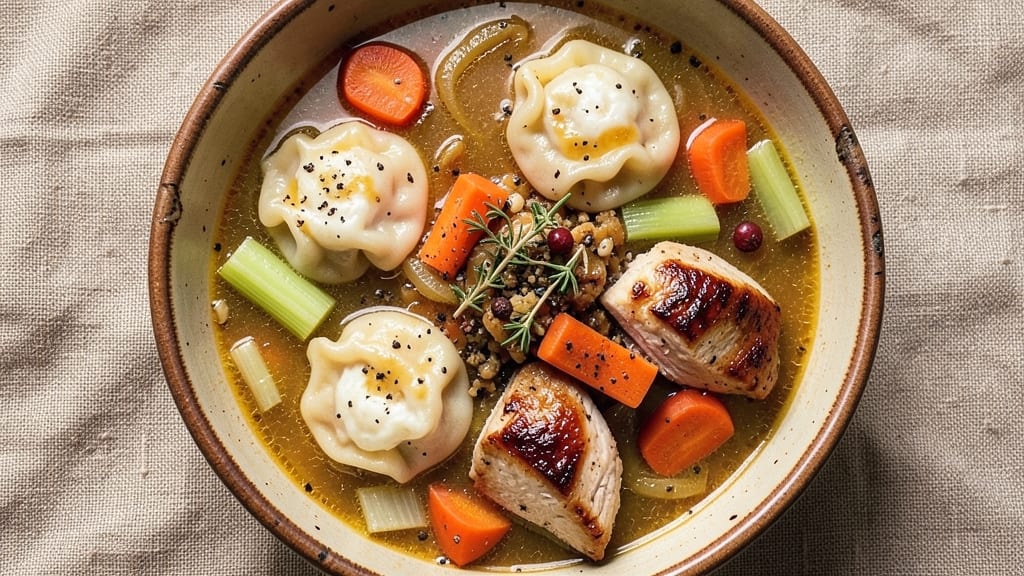
This authentic knoephla soup recipe brings the hearty, comforting flavors of Swabian Germany straight to your kitchen, where tender handmade noodles transform into flavor-sponges in rich broth.
The secret lies in the knoephla themselves—egg noodles cut into irregular shapes that soak up every drop of savory broth while maintaining their delicate texture. I've perfected this recipe through years of testing, ensuring each component—from the clear broth to the crispy fried knoephla—delivers restaurant-quality results at home.
The foundation of great knoephla soup begins with the broth, traditionally made from chicken or vegetables, simmered for hours to develop deep, aromatic flavors. While the noodles cook in the broth, they absorb the essence of the liquid, creating a dish that's both nourishing and deeply satisfying.
The key technique is cutting the knoephla into uneven pieces, which prevents them from sticking together and ensures even cooking.
What makes this recipe truly authentic is the optional crispy fried knoephla topping, which adds a delightful textural contrast to the soft dumplings in the soup.
Served with a sprinkle of fried onions or crispy bacon, this dish becomes a complete culinary experience that transports you to a German countryside kitchen. The combination of tender knoephla, flavorful broth, and crispy toppings creates a harmonious balance that's impossible to resist.
Perfect for chilly evenings or family gatherings, this knoephla soup is both comforting and impressive, requiring just a few simple ingredients and a bit of patience. The result is a dish that's hearty enough to satisfy even the heartiest appetites while showcasing the beauty of traditional German home cooking.
Let's get started on creating this timeless classic.
Ingredients for authentic knoephla soup
The heart of Swabian tradition lies in these 15 carefully selected ingredients—each playing a precise role in crafting knoephla that soak up flavor like magic.
| Ingredient | Amount | Notes |
|---|---|---|
| Chicken Breasts 🍗 | 2 lb | Skinless, boneless, cut into chunks |
| Yellow Onions 🧅 | 2 whole | Medium, thinly sliced |
| Carrots 🥕 | 4 whole | Medium, peeled, cut into chunks |
| Celery Stalks 🌿 | 4 whole | Fresh, cut into 1-inch pieces |
| Garlic Cloves 🧄 | 6 cloves | Fresh, minced |
| Large Eggs 🥚 | 4 whole | Room temperature |
| All-Purpose Flour 🌾 | 2 cups | Plus 2 tbsp for kneading |
| Salt 🧂 | 2 tsp | Diamond Crystal preferred |
| Black Peppercorns 🌶️ | ½ tsp | Freshly ground |
| Fresh Parsley 🌿 | ¼ cup | Chopped, for garnish |
| Vegetable Oil 🫒 | ½ cup | For frying knoephla |
| Bay Leaves 🍃 | 2 whole | For broth infusion |
| Chicken Bouillon Cube 🧂 | 2 whole | Knorr preferred |
| Fresh Thyme 🌿 | ½ tsp | Leaves only |
| Allspice Berries 🌶️ | ¼ tsp | Crushed, optional for depth |
For authentic knoephla, the chicken breast should be skinless and boneless—look for organic or free-range at specialty markets like Whole Foods or Trader Joe's for optimal texture. The Diamond Crystal kosher salt is essential here; its coarser grains dissolve more evenly, enhancing the broth's depth. Fresh thyme and allspice berries elevate the flavor profile beyond basic seasoning—Penzeys Spices offers the highest quality, though bulk sections at Wegmans provide excellent alternatives. The celery should be crisp with no browning, and carrots with vibrant orange hue indicate freshness. For the knoephla dough, King Arthur flour yields superior results, though any high-protein all-purpose flour works well.
No fresh thyme? Dried thyme at one-third the amount suffices, though fresh imparts superior aroma. Substitute chicken with equal parts vegetable broth for a vegetarian version, but the knoephla will absorb flavors differently—consider adding 1 tbsp nutritional yeast for umami depth. Pre-shredded cheese lacks the texture of freshly grated Parmesan, but Trader Joe's pre-grated blocks are a convenient alternative. For the knoephla dough, applesauce or mashed banana can replace one egg if needed, though texture may vary. The bay leaves should be removed before serving, and allspice berries can be omitted if unavailable—though they add a subtle warmth that's characteristic of authentic Swabian cooking.
Store the raw knoephla dough in an airtight container for up to 2 days in the fridge, or freeze for 3 months by wrapping tightly in plastic wrap. The finished soup reheats beautifully—gentle warming on low heat prevents the knoephla from becoming rubbery. For optimal freshness, prepare the broth 1 day ahead and refrigerate; the flavors deepen over time. The fried knoephla topping stays crispy for 3 days when stored in a single layer on parchment-lined trays, making it perfect for quick garnishing.
Why You'll Love This Recipe
- One-Pot Magic: I swear by this—just chop the onions, carrots, and celery (that classic trio) into even chunks, toss them in with the chicken, and let the broth do the work. No separate pans, no fussing with layers. Honestly, the only thing I measure is the broth, and even then, I eyeball it after the first try.
- Garlic-Glazed Goodness: That moment when the garlic cloves caramelize just enough to coat the chicken? Pure satisfaction. The soup builds depth from the slow simmer, but the real star is how the knoephla dumplings soak up that golden, aromatic broth—soft outside, tender inside. (Yes, even my picky husband licks his spoon.)
- Leftovers That Beg: This soup tastes better the next day, no lie. The flavors meld overnight, and the knoephla dumplings soften into the perfect texture—almost like they were made to be reheated. I freeze half the batch because it’s my go-to for lazy Sundays or when unexpected guests show up. (Pro tip: Add a splash of water when reheating.)
- Pantry Staple Power: Between us, this recipe uses ingredients you already have: chicken breasts, onions, carrots, celery, and garlic. No specialty items, no last-minute grocery runs. I’ve made it on a tight budget and still felt like I was serving something special. Plus, the dumplings? Just flour, eggs, and a pinch of salt—no yeast, no waiting.
Step-by-step instructions for authentic German knoephla soup
Master the traditional technique for making knoephla that dissolve into rich, flavorful broth.
Prepare the Chicken and Vegetable Broth
In a large Dutch oven, combine the 2 lb chicken breasts, 2 whole yellow onions (sliced), 4 whole carrots (chunked), 4 whole celery stalks (cut into 1-inch pieces), 6 cloves garlic (minced), 2 whole bay leaves, 2 whole chicken bouillon cubes, 0.5 tsp fresh thyme, and 0.25 tsp crushed allspice berries. Add 8 cups cold water and bring to a boil over medium-high heat. Once boiling, reduce to a simmer and skim off any foam that rises to the surface.
Simmer uncovered for 45-60 minutes until the chicken is fully cooked and the vegetables are tender. The broth should reduce slightly, concentrating the flavors. Strain the broth through a fine-mesh sieve, pressing gently on the solids to extract maximum flavor. Discard the solids and return the broth to the pot. Keep the broth at a gentle simmer for the next steps.
Make the Knoephla Dough
In a large mixing bowl, whisk together the 4 whole large eggs, 2 tsp salt, and 0.5 tsp freshly ground black peppercorns until fully combined. Gradually add the 2 cups all-purpose flour, mixing just until a shaggy dough forms. Avoid overmixing—this keeps the knoephla tender. Turn the dough onto a lightly floured surface and knead gently for 2-3 minutes until smooth. If the dough feels too sticky, add 1-2 tablespoons of flour as needed, but don’t overdo it.
Divide the dough into 6 equal portions, rolling each into a 1-inch thick oval shape. The dough should be firm but pliable—if it cracks when rolling, let it rest for 5 minutes before reshaping. Keep the shaped knoephla covered with a damp towel to prevent drying while you prepare the broth.
Boil the Knoephla to Perfection
Bring the reserved broth back to a gentle boil over medium heat. Carefully lower the 6 knoephla into the broth, ensuring they don’t break apart. Simmer uncovered for 12-15 minutes, stirring gently once or twice to prevent sticking. The knoephla are ready when they float to the surface and develop a slightly puffed, golden-brown appearance. If they brown too quickly, reduce the heat slightly to maintain a gentle simmer.
Remove the knoephla with a slotted spoon and transfer them to a plate. The broth should now be infused with their rich, savory essence. For extra flavor, you can lightly pan-fry the knoephla in 0.25 cup vegetable oil over medium heat for 1-2 minutes per side until golden. This step adds a crispy exterior that contrasts beautifully with their soft, pillowy interior.
Assemble and Serve the Soup
Return the knoephla to the broth and let them soak for 5-10 minutes to reabsorb some of the flavorful liquid. Ladle the soup into bowls, placing 1 knoephla per serving. Garnish each bowl with 1 tablespoon of chopped fresh parsley for a pop of color and freshness. Serve immediately while the knoephla are still warm and the broth is steaming.
The key to authentic knoephla is their ability to melt into the broth, releasing their starch and creating a velvety texture. Each spoonful should deliver a balance of tender chicken, aromatic vegetables, and the unmistakable richness of the dumplings. For a heartier dish, serve with a side of crusty bread to soak up every last drop of broth.
Pro Tips For Making Authentic Knoephla Soup
- Sear Chicken First: Don’t skip browning the chicken—cut it into 1-inch chunks, pat them bone-dry with paper towels, and sear in a hot pot with a little oil until golden. I learned this the hard way: skipping this step leaves your soup tasting bland and watery, no matter how much bouillon you add.
- Dice Onions Small: Finely chop those yellow onions—think ⅛-inch pieces, not rough chunks. They’ll dissolve into the broth and sweeten the soup naturally, but if they’re too big, they’ll turn mushy and clog your mouth. (Yes, even if you’re impatient like me.)
- Simmer, Don’t Boil: Keep the soup at a gentle simmer, not a rolling boil, once everything’s in the pot. Boiling makes the carrots and celery turn to mush and the chicken rubbery. A low simmer—just small bubbles breaking the surface—keeps the texture intact.
- Strain the Broth: After cooking the veggies, strain the broth through a fine-mesh sieve to remove all the pulp. Sounds weird, but it works: your knoephla will cook in a clean, flavorful liquid instead of a chunky stew. (Your future self will thank you.)
Best sauces and condiments for this authentic knoephla soup
Classic German Rouladen Sauce
For an authentic Swabian touch, simmer 2 tbsp tomato paste with 1 cup red wine (like a dry Riesling) and 1 cup chicken broth in your knoephla broth.
Add 1 tbsp apple cider vinegar and a pinch of sugar to balance acidity. Reduce by half for a thick, glossy sauce that coats the knoephla beautifully. 🍷
Creamy Parsnip Purée Base
Blend 2 cups cooked parsnips with ½ cup heavy cream, 2 tbsp butter, and a pinch of nutmeg. Strain for ultra-smooth texture, then stir into the broth just before serving. This adds natural sweetness that complements the savory knoephla perfectly.
Crispy Fried Onion Topping
Slice 1 large onion into thin rings, then fry in ¼ cup vegetable oil over medium heat for 8-10 minutes until golden and crisp. Sprinkle over finished soup for a delightful crunch. For extra flavor, add ½ tsp smoked paprika to the oil before frying. 🧅
Smoked Bacon Bits
Crisp 4 oz thick-cut bacon in a skillet until golden, then chop into small pieces. Stir into the broth during the final 5 minutes of simmering. The smoky, salty bits elevate the entire dish with minimal effort.
Fresh Herb Oil Drizzle
Whisk ¼ cup olive oil with 1 tbsp chopped chives, 1 tbsp chopped dill, and a pinch of salt. Drizzle over each bowl before serving for a bright, fresh finish that cuts through the richness.
Spicy Mustard Swirl
Mix 2 tbsp whole-grain mustard with 1 tbsp honey and a pinch of cayenne. Swirl into individual bowls just before serving for a tangy, slightly sweet contrast that enhances the knoephla's natural flavors.
Nutrition facts
Frequently asked questions
What's the difference between knoephla and Spätzle?
Knoephla are cut into irregular, slightly larger pieces than Spätzle, which are typically smaller and more uniform. The dough for knoephla contains more eggs, giving them a richer, more flavorful texture that soaks up broth beautifully. While Spätzle are often served as a side, knoephla are the star of this hearty soup.
Can I make knoephla ahead of time?
Shape the knoephla dough and refrigerate it for up to 2 days or freeze for 3 months. For best results, cook them fresh from the fridge—just add 2-3 extra minutes to the boiling time. The dough should be at room temperature before shaping to prevent cracking.
Why did my knoephla turn out gummy?
Overmixing the dough or boiling at too high heat causes gummy knoephla. Keep the broth at a gentle simmer and avoid stirring too much. Also, ensure your flour has a high protein content—King Arthur flour works best. If the dough feels too sticky, add just 1-2 tablespoons of flour while kneading.
How do I make this vegetarian?
Replace the chicken with 2 cups vegetable broth and add 1 tbsp nutritional yeast for umami depth. Use the same vegetable base (onions, carrots, celery) and simmer for 30 minutes instead of 60 minutes. The knoephla will still absorb the flavors beautifully, though the broth will be lighter.
Can I use store-bought egg noodles instead?
While possible, homemade knoephla are essential for authenticity. Store-bought noodles lack the hand-cut texture and egg-rich flavor that make knoephla special. If you're short on time, try making Spätzle instead—they're easier to prepare and still delicious in soup.