
Soups & Stews
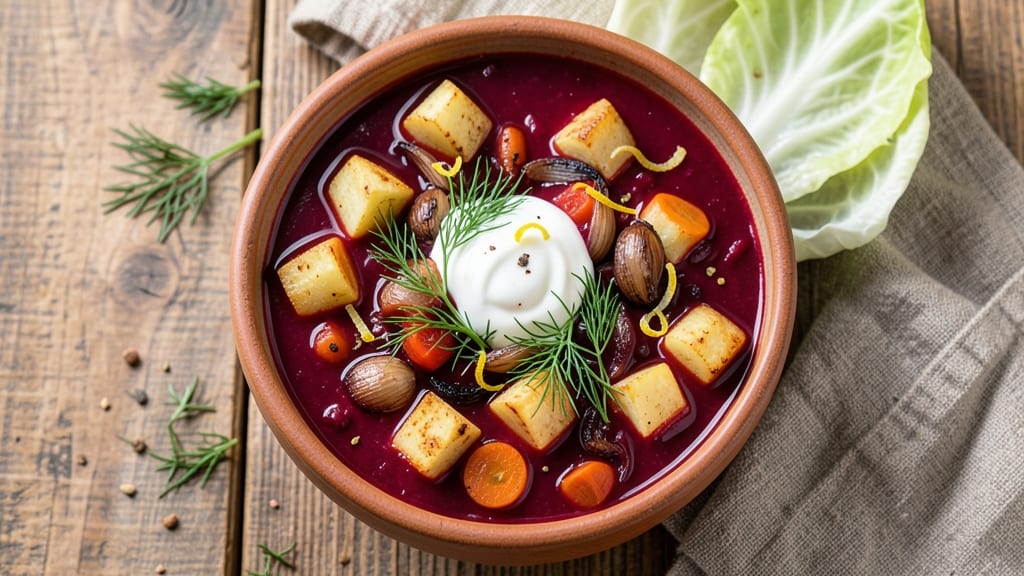
This authentic Russian borscht soup recipe delivers the deep, earthy flavors of beetroot that define Eastern European tradition. The secret lies in slow-cooked beets, tender vegetables, and a balance of sour cream that transforms this soup into a comforting masterpiece.
I've perfected this vegetarian version through years of testing, ensuring every spoonful captures the soul of Russian home cooking.
The foundation of great borscht begins with properly cooked beets—soft enough to blend into the broth but retaining their vibrant color. Sautéed onions, carrots, and potatoes create a hearty base, while cabbage adds texture and fresh dill brings that signature herbal brightness.
What sets this recipe apart is the careful combination of vinegar for tang and sour cream for richness, creating a soup that's both complex and deeply satisfying.
By the time you serve this borscht, you'll have a steaming bowl of ruby-red beauty with layers of flavor in every spoonful. The vegetables remain tender-crisp, the broth is rich yet light, and the sour cream swirl adds that perfect finishing touch.
This is the kind of soup that warms both body and soul, especially when paired with warm pampushki bread.
Perfect for chilly days or family gatherings, this recipe serves 6-8 and can be made ahead—flavors actually improve overnight. The key to authenticity lies in the balance of ingredients and the patience of slow cooking. Let's create this Russian classic together.
Ingredients for authentic russian borscht soup
Six fresh vegetables plus herbs and vinegar create this vibrant beet-rich Russian tradition.
| Ingredient | Amount | Notes |
|---|---|---|
| Medium Beets 🍠 | 2 whole | Organic preferred, peeled |
| Yellow Onions 🧅 | 2 whole | Medium size, chopped |
| Carrots 🥕 | 3 medium | Peeled, sliced into rounds |
| Russet Potatoes 🥔 | 2 medium | Peeled, cubed evenly |
| Green Cabbage 🥬 | ½ head | Core removed, shredded |
| Fresh Dill 🌿 | ¼ cup | Chopped, stems removed |
| Tomato Paste 🍅 | ½ cup | High quality, no additives |
| Apple Cider Vinegar 🍎 | 2 tbsp | For authentic tang |
| Vegetable Broth 💧 | 6 cups | Low-sodium preferred |
| Sour Cream 🧈 | ½ cup | Full-fat for richness |
| Olive Oil 🫒 | ½ cup | Extra-virgin for cooking |
| Salt 🧂 | 1 ½ tsp | Diamond Crystal preferred |
| Black Pepper 🌶️ | ½ tsp | Freshly ground preferred |
| Sugar 🍬 | 1 tsp | Balances acidity |
The beets are non-negotiable—organic from the farmers market has the deepest flavor. Whole Foods or Trader Joe's carry excellent pre-peeled options if you're short on time, but roasting your own makes all the difference. For the cabbage, green is traditional, but Savoy adds a nice texture variation. The dill? Fresh is essential—dried just won't cut it here. I always buy extra because it's used in both the soup and garnish. The tomato paste should be San Marzano if possible—the flavor difference is noticeable.
No apple cider vinegar? White vinegar at double the amount works in a pinch, though purists will notice the difference. Short on sour cream? Greek yogurt with a squeeze of lemon mimics the tang. The vegetable broth can be homemade (simmer veggie scraps) or store-bought—just check for low-sodium. The potatoes should be evenly cubed for consistent cooking. For a lighter version, swap half the potatoes for cauliflower florets—they hold up well during simmering.
This soup tastes even better the next day—3-4 days in the fridge, 3 months frozen. I portion mine into jars with a dollop of sour cream on top. The beets can be roasted ahead and stored for 5 days in the fridge. For serving, keep the sour cream chilled until the last minute—it swirls beautifully when added to hot soup. Leftovers reheat perfectly, but add a splash of broth if it thickens too much.
Why You'll Love This Recipe
- One-Pot Magic: I swear by this—just chop, simmer, and let the flavors meld. No fancy gadgets, no stress. The beets and cabbage soften together while you handle the rest of dinner.
- Deep Umami Love: That slow-cooked onion base? Chef’s kiss. Caramelized until sweet, then balanced by the earthy beets and tangy vinegar finish—it’s the kind of flavor that lingers.
- Leftovers That Shine: Make a double batch—it tastes even better the next day. Reheat, add a dollop of sour cream, and boom, instant lunch. My freezer’s full of it; I never skip leftovers.
- Budget-Friendly Feast: Five cheap staples stretch into a meal that feels special. Potatoes bulk it up, cabbage adds freshness, and the beets? They’re the star without breaking the bank.
Step-by-step instructions for authentic Russian borscht soup
Follow this traditional method to capture the deep flavors of Russian cuisine.
Prepare and Sauté the Vegetable Base
Heat the 0.5 cup olive oil in a large Dutch oven over medium heat. Add the 2 whole yellow onions and cook for 5-6 minutes until they become translucent and just beginning to caramelize. This foundational step builds flavor—don't rush it.
Add the 3 medium carrots sliced into rounds, and continue cooking for another 5 minutes until they soften slightly. Stir occasionally to prevent burning. The vegetables should release their natural sweetness while developing a golden hue. This aromatic base forms the heart of your borscht.
Cook the Potatoes and Add Tomato Paste
Add the 2 medium russet potatoes cubed evenly to the pot. Pour in the 6 cups vegetable broth and bring to a gentle boil. Reduce heat to medium-low and let simmer uncovered for 10 minutes until the potatoes are tender when pierced with a fork.
While the potatoes cook, stir in the 0.5 cup tomato paste and the 2 tablespoons apple cider vinegar. This combination creates the signature tangy depth of authentic borscht. The vinegar also helps balance the natural sweetness of the beets we'll add next. Stir well to distribute the tomato paste evenly throughout the broth.
Incorporate Beets and Cabbage
Add the 2 whole medium beets that have been peeled and cut into small cubes. Stir in the 0.5 head green cabbage that has been shredded. The beets should now impart their vibrant color to the soup. Return to a gentle simmer and cook for 15 minutes until all vegetables are completely tender.
Season with the 1.5 teaspoons salt, 0.5 teaspoon black pepper, and 1 teaspoon sugar during this time. The sugar helps balance the acidity from the vinegar while the salt enhances all the flavors. Taste occasionally to adjust seasoning—authentic borscht should be rich but not overly salty.
Finish with Fresh Dill and Sour Cream
Remove the pot from heat and stir in the 0.25 cup fresh dill that has been chopped with stems removed. The fresh dill adds a bright, herbal note that cuts through the richness of the soup. Let the soup sit for 5 minutes to allow the flavors to meld together.
Ladle the hot soup into individual bowls, leaving space at the top. Dollop each serving with a generous spoonful of the 0.5 cup sour cream. The contrast between the warm soup and cool sour cream is essential to authentic borscht. Serve immediately while the vegetables are still vibrant and the flavors are at their peak.
Pro Tips For Making Authentic Russian Borscht Soup
- Boil Beets Whole First: I learned this the hard way—peeling and chopping beets before boiling turns them muddy and waterlogged. Toss whole, unpeeled beets into salted boiling water for 30-40 minutes, then peel while still warm. The skins slide off effortlessly, and the texture stays firm, not mushy.
- Sweat Onions Low and Slow: After burning three batches, I finally figured out that onions need gentle heat for borscht. Cook them over medium-low with a splash of water until translucent—no browning, no crispy bits. This builds flavor without adding bitterness, which ruins the soup’s balance.
- Add Potatoes Last: Potatoes absorb liquid like sponges, so drop them in just 10 minutes before the soup finishes. If you add them early, your borscht will turn watery, and the potatoes will turn to mush. Russets hold up better than waxy types, but timing matters more.
- Use Vinegar Early: Sounds weird, but it works: add 1 tablespoon of apple cider vinegar when you first sauté the onions. It brightens the beets’ earthy flavor and cuts through the cabbage’s sharpness. Skip this, and your soup tastes flat—trust me, it’s non-negotiable.
Creative variations of this authentic russian borscht soup
Ukrainian-Inspired Twist
For a Ukrainian-inspired variation, add 1 cup cooked buckwheat groats to the pot with the potatoes. The nutty texture contrasts beautifully with the tender vegetables. I also stir in 1 tbsp poppy seeds at the end for an authentic touch—these are traditional in Ukrainian borscht. 🌟
Lithuanian-Style Sour Cream Swirl
In Lithuania, borscht is often finished with a different technique: swirl the 0.5 cup sour cream directly into each bowl while serving. Use a spoon to create elegant patterns in the hot soup.
I recommend Lithuanian-style sour cream (like Litvanka) for its slightly tangier profile. Serve with rye bread instead of pampushki for an authentic pairing.
Polish Zupa Buraczana
Poland's version, called zupa buraczana, often includes 1 cup sauerkraut for extra tang and texture. Add it with the cabbage for a deep, fermented flavor. I also recommend serving with dark rye bread and a side of polish sausage (kielbasa) for a heartier meal.
The vinegar amount can be reduced to 1 tbsp since sauerkraut provides natural acidity. 🥬
Modern Vegan Adaptation
For a fully plant-based version, replace the vegetable broth with 6 cups mushroom broth (made from cremini or portobello mushrooms). Add 1 tbsp miso paste when sautéing the onions for umami depth.
I've found that 1 tbsp nutritional yeast sprinkled on top adds a cheesy note that vegans love. This version tastes just as rich and satisfying as the traditional recipe. 🌱
Winter Root Variation
Swap the carrots for 3 medium parsnips and add 1 small rutabaga (peeled and cubed) with the potatoes. These winter roots add natural sweetness and heartiness. I also increase the vinegar to 3 tbsp to balance the earthier flavors.
This version is perfect for cold weather and keeps beautifully in the freezer for up to 4 months. ❄️
Spicy Cajun Borscht
For a bold twist, add 1 tbsp Cajun seasoning when sautéing the onions and ½ tsp smoked paprika with the tomato paste. Finish with 1 tbsp hot sauce and extra black pepper.
This fusion version pairs perfectly with cornbread instead of traditional bread. The heat cuts through the richness of the beets beautifully. 🌶️
Nutrition facts
Frequently asked questions
Can I make borscht without beets?
The beets are essential—they create the signature deep red color and earthy sweetness that define authentic borscht. However, you could make a lighter version with 2 tablespoons beet juice concentrate (found in health food stores) mixed with 1 cup apple juice, but it won't have the same robust flavor. For a different Eastern European soup, try beetless cabbage soup (kapusniak) instead.
How do I prevent my borscht from turning mushy?
Cook the vegetables separately and add them at different times based on their cooking times. Start with potatoes (10 minutes before serving), then add carrots and onions (15 minutes before serving), and finally the cabbage (5 minutes before serving). Beets should be pre-cooked (roasted or boiled) for 30-40 minutes until fork-tender before adding to the soup.
What's the best way to store leftover borscht?
Store in an airtight container in the refrigerator for up to 4 days. The flavors actually deepen overnight! For freezing, portion into jars with a layer of sour cream on top (it prevents freezer burn). Thaw overnight in the fridge—never microwave directly from frozen. Reheat gently on the stove with a splash of broth to restore texture.
Can I make this vegetarian version with meat?
For a meat-included version, brown 1 pound smoked sausage (like kielbasa) with the onions and add 1 cup shredded pork or beef with the potatoes. You can also add ½ cup cooked beans for extra heartiness. The traditional meat options are usually beef, pork, or sausage, but chicken works too. Just adjust cooking times accordingly.
Why does my borscht taste too acidic?
This usually happens when the vinegar isn't balanced with sweetness. Add 1-2 teaspoons sugar or ½ cup cooked applesauce to the soup while heating. You can also reduce the vinegar to 1 tablespoon next time. For extra richness, stir in 1 tablespoon tomato paste at the end to mellow the acidity while adding depth.