
Soups & Stews
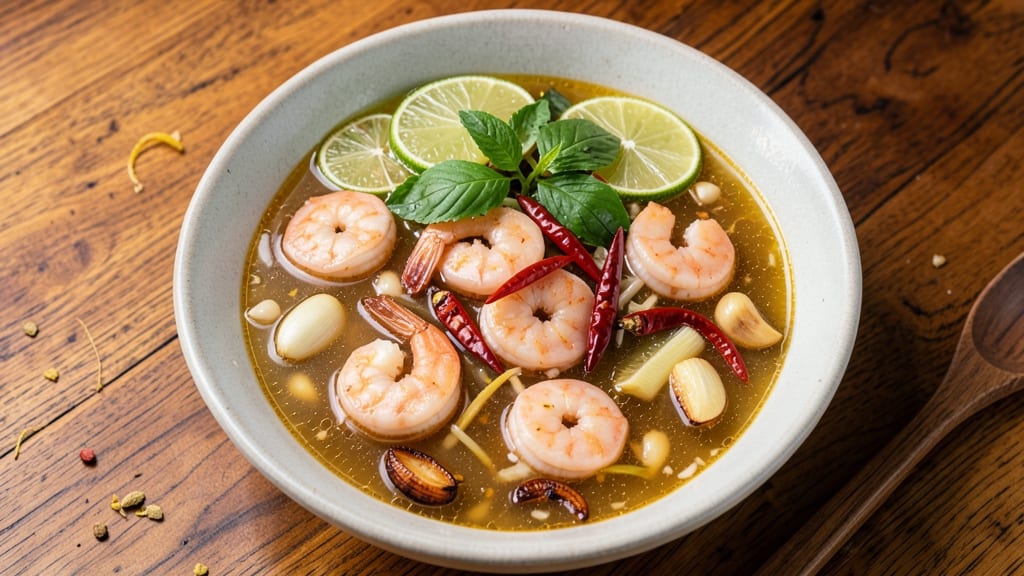
This authentic Tom Yum Goong soup recipe delivers the perfect balance of sour, spicy, and umami flavors that define Thailand's most beloved dish. 🌟 The secret lies in fresh herbs like lemongrass and galangal, which infuse the broth with aromatic depth while keeping it crystal clear.
I've perfected this version after years of testing—no shortcuts, just traditional techniques that create a soup so vibrant, it'll transport you to Bangkok with every spoonful.
The foundation of great Tom Yum is a properly balanced broth, where tart lime juice cuts through the heat of Thai chilies while shrimp stock provides rich umami depth.
We'll build flavor layer by layer—starting with toasted spices, then simmering aromatics until fragrant, and finally adding shrimp at the perfect moment to ensure they stay tender and succulent. The result? A soup that's both restaurant-quality and achievable at home with simple ingredients.
What sets this recipe apart is the attention to detail that most home cooks miss: the proper preparation of galangal (peeled in thick slices, never grated), the right amount of fish sauce for depth without saltiness, and the precise simmering time to develop flavors without overcooking.
The broth should be clear with just a hint of cloudiness from the aromatics—never murky or heavy.
Serve this soup piping hot with fresh garnishes like Thai basil, cilantro, and lime wedges for that final burst of brightness. The shrimp should be just cooked through, their edges curled from the heat, while the broth remains vibrant and fragrant.
This is the kind of dish that disappears faster than you can say "mai pen rai"—and leaves everyone asking for seconds.
Ingredients for authentic tom yum goong soup
Fresh aromatics and simple pantry staples create this vibrant, restaurant-quality Tom Yum Goong.
| Ingredient | Amount | Notes |
|---|---|---|
| Shrimp (Prawns) 🦐 | 1 lb | Large, peeled, deveined, tail-on |
| Lemongrass Stalks 🌿 | 3 whole | Bruised, bottom 3 inches only |
| Galangal Slices 🌱 | 3 pieces | Thick, peeled, skin removed |
| Thai Chilies 🌶️ | 4 whole | Seeds removed for mild heat |
| Shallots 🧅 | 4 whole | Peeled, thinly sliced |
| Garlic Cloves 🧄 | 4 cloves | Smashed, skin-on |
| Shrimp Stock 🍲 | 4 cups | Homemade or high-quality store-bought |
| Fish Sauce 🐟 | 2 tbsp | Red Boat preferred |
| Lime Juice 🍋 | ½ cup | Freshly squeezed |
| Coconut Milk 🥥 | ¼ cup | Full-fat, chilled |
| Brown Sugar 🍚 | 1 tbsp | Light or dark |
| Thai Basil Leaves 🌿 | ¼ cup | Fresh, whole |
| Cilantro Leaves 🌱 | ¼ cup | Fresh, chopped |
| Lime Wedges 🍋 | 2 whole | For garnish |
| Kaffir Lime Leaves 🍋 | 2 whole | Bruised, for aroma |
The shrimp stock is non-negotiable for authentic flavor—Red Boat or homemade makes all the difference. For galangal, Asian markets carry the best quality, but if you can't find it, substitute with ginger (though it won't be identical). The Thai chilies should be bright red and firm—Thai Kitchen brand is widely available. Bruise the lemongrass and galangal with the side of a knife to release their oils without breaking them apart. Look for Red Boat fish sauce for that signature umami punch, but Three Crabs is a solid backup. The shrimp should be fresh, with a clean ocean smell—U.S. Farmed or wild-caught from the seafood counter works best.
No shrimp stock? Clam juice or oyster juice works in a pinch, though the flavor won't be identical. Fresh galangal unavailable? Ginger plus a pinch of turmeric mimics the earthy notes, but expect a slightly different profile. The coconut milk is optional—traditional Tom Yum is coconut-free, but adding it creates a creamier texture (like Tom Yum Nam Khon). For extra heat, leave the chili seeds in, but remove them for a milder soup. The brown sugar balances the acidity, so don't skip it—light and dark varieties work equally well. Thai basil is essential for that signature aroma, but if you can't find it, regular basil plus a pinch of anise gets you close.
Prep the aromatics first—they release flavor as they simmer. Store fresh galangal and lemongrass in plastic bags in the fridge for up to 2 weeks. The broth keeps for 3 days refrigerated or 3 months frozen, but the shrimp should be added fresh when reheating. Garnish with Thai basil and cilantro just before serving—they wilt quickly in hot soup. For leftovers, store the broth and garnishes separately to keep everything vibrant. The soup tastes even better the next day as flavors meld.
Why You'll Love This Recipe
- No-Fuss Simmer: I swear by this—just a pot, a few stalks of lemongrass, and 10 minutes of chopping (shallots and galangal included). The broth builds itself while I prep the shrimp, and honestly? That’s my kind of magic.
- Punch of Perfection: The moment those Thai chilies hit the pot with the shrimp—whoosh—it’s like a flavor explosion. Bright, tangy, spicy, but balanced by the galangal’s earthy depth. My partner calls it "dangerously addictive," and he’s not wrong.
- Crowd-Pleaser Flex: This soup works for date nights (add a splash of fish sauce for richness), lazy Sundays (dump in some mushrooms), or even kids’ birthdays (mild the chilies). Between us, it’s the one dish I make when I’m hosting—and no one ever asks for seconds.
- Leftovers That Shine: Make a double batch, and you’ve got lunch sorted. The broth stays vibrant for days, and reheating? Just a splash of water and a quick stir. My college dorm freezer was full of this stuff—I’d argue it’s the most practical soup ever.
Step-by-step instructions for authentic Tom Yum Goong soup
This traditional Thai recipe delivers bold, balanced flavors with precise technique.
🔥 Step 1: Build the Spiced Base
Heat a large pot over medium-high heat until hot. Add the 3 pieces galangal slices and 3 whole lemongrass stalks (bruised bottoms only) and cook for 2 minutes until fragrant. You'll smell the galangal's citrusy aroma—this is your signal to proceed.
Add the 4 whole shallots and 4 cloves garlic cloves (skin-on) and cook for 1 minute until shallots soften and garlic turns golden. Watch carefully—the garlic burns easily. Immediately add the 4 whole Thai chilies (seeds removed) and stir for 30 seconds to infuse the oil with heat.
🍳 Step 2: Develop the Broth
Pour in the 4 cups shrimp stock and bring to a rolling boil. Reduce heat to medium-low and simmer for 5 minutes to let the aromatics steep. You'll see the broth turn a vibrant golden color—this indicates the flavors are melding properly.
Add the 2 tbsp fish sauce and 1 tbsp brown sugar, stirring to dissolve completely. Taste the broth—it should be tangy, salty, and slightly sweet. This is the foundation of your soup, so don't rush this step. The broth should taste like it needs more shrimp to balance the flavors.
🥘 Step 3: Add Shrimp and Acid
Gently add the 1 lb shrimp (prawns) to the simmering broth. Cook for 2-3 minutes until they turn opaque and curl slightly. You'll see them float to the surface—this means they're done. Remove them with a slotted spoon and set aside temporarily.
Stir in the 0.5 cup lime juice and 0.25 cup coconut milk (chilled). The coconut milk will create a delicate sheen on the broth. Simmer for 1 minute—this balances the acidity and adds richness without overpowering the bright flavors.
🍽️ Step 4: Finish and Serve
Return the shrimp to the pot and add the 2 bruised kaffir lime leaves. Simmer for 1 minute to infuse the aroma. The soup should be steaming hot and smell like a mix of citrus, lemongrass, and chili. Taste and adjust seasoning—add more fish sauce for saltiness or lime juice for acidity if needed.
Divide the soup among bowls and garnish with 0.25 cup Thai basil leaves and 0.25 cup cilantro leaves. Serve immediately with 2 whole lime wedges on the side. The basil and cilantro should float on top, adding freshness with each bite. This soup tastes best piping hot when all the aromatics are at their peak.
Pro Tips For Making Authentic Tom Yum Goong Soup
- BLEND LEMONGRASS FIRST: Toss the lemongrass stalks into the pot before heating the broth—no chopping needed. The heat softens the fibers so they release their citrusy aroma properly. I used to strain it afterward, but now I leave it in for depth (just fish out the toughest bits at the end).
- CHAR SHALLOTS UNTIL GOLDEN: Don’t rush this—cook the shallots in oil over medium-high until they’re deep golden, not just translucent. That caramelization builds the soup’s umami base. I learned this the hard way when my first batch tasted flat.
- SALT THE SHRIMP LAST: Add shrimp only after the broth is fully seasoned—otherwise, they’ll turn rubbery from absorbing too much liquid too soon. Toss them in with lime juice and a pinch of salt at the very end for that signature tender bite.
- USE GALANGAL LIKE GINGER: Slice galangal thinly (1/8-inch) and toast it in the pot for 30 seconds before adding liquid—it mellows the sharpness and deepens the aroma. Skip the pre-grating; fresh slices work better and look more impressive.
Creative variations of authentic tom yum goong soup
Spicy Tom Yum Nam Khon
Transform this classic into a creamy Tom Yum Nam Khon by adding ½ cup full-fat coconut milk during the final simmer. This fusion version from Central Thailand balances heat with richness—perfect for those who love depth.
I use Thai Bird's Coconut Milk for its smooth texture, and add 1 tsp palm sugar to enhance the caramel notes. The broth remains aromatic but gains a velvety mouthfeel that pairs beautifully with the shrimp's sweetness. 🥥
Vegetarian Tom Yum
Swap shrimp for 1 lb mushrooms (shiitake or oyster) and 1 block firm tofu (pressed and cubed). Boost umami with 1 extra tbsp fish sauce and 1 tsp soy sauce, then add 1 zucchini and 1 carrot (julienned) in the final minute.
The mushrooms provide meaty texture while keeping the broth's signature clarity. Garnish with extra Thai basil to highlight the earthy flavors. 🌱
Tom Yum with Chicken
Replace shrimp with 1 lb boneless chicken thighs (skin-on for flavor). Simmer the chicken separately in the broth until 165°F internal temperature, then shred before adding back to the pot.
The fat from the skin infuses the broth with extra richness, while the chicken's mild flavor contrasts beautifully with the spicy-sour profile. Serve with extra lime wedges to cut through the meat's richness. 🍗
Herb-Infused Variations
Add 1 stalk fresh lemongrass and 2 kaffir lime leaves to the broth for extra aroma. For a green tomato twist, include ½ cup diced green tomatoes in the final minute.
I also love adding 1 tbsp fresh cilantro stems (not just leaves) for deeper flavor. These variations keep the broth vibrant while adding fresh, bright dimensions that elevate the classic recipe. 🌿
Coconut Milk Options
For lighter versions, use ¼ cup coconut milk and add 1 tsp cornstarch to thicken slightly. For extra creaminess, try ½ cup coconut cream—it adds a luxurious texture without overpowering the broth.
I recommend Aroy-D brand for its balanced fat content. Adjust the lime juice slightly if using coconut cream, as it can mellow the acidity. 🥥
Regional Thai Twists
In Southern Thailand, add 1 stalk lemongrass and 1 tbsp shrimp paste (kapi) for funkier depth. Northern versions often include 1 tsp turmeric for earthy warmth. For a Bangkok-style touch, finish with 1 tsp palm sugar and a pinch of white pepper.
Each regional twist keeps the core balance of sour, spicy, and umami while offering unique cultural flavors. 🗺️
Nutrition facts
Frequently asked questions
Why does authentic Tom Yum Goong broth need to be clear?
The signature clarity comes from simmering the aromatics gently without breaking them down. When galangal, lemongrass, and shallots release their oils properly, they infuse the broth with flavor while staying intact. Overcooking these ingredients turns the broth murky—aim for a golden, slightly cloudy appearance with visible herb pieces. This clarity is what makes the soup visually stunning and flavorfully balanced.
Can I substitute galangal with ginger?
Yes, but expect a different flavor profile. Use 1 tbsp grated ginger plus ½ tsp turmeric for each 3-inch piece of galangal. The ginger provides warmth while turmeric mimics galangal's citrusy notes. For authentic results, seek out fresh galangal at Asian markets—it's worth the effort for that signature Thai aroma.
How do I adjust the spice level?
Start with seedless Thai chilies for mild heat, then add more as needed. For extra kick, include 1-2 Thai bird's eye chilies (seeds in) or a pinch of chili flakes. The lime juice naturally balances heat, so adjust it too—more lime for tang, less for spice. Taste as you go, remembering that flavors intensify as the soup cools.
Should I use shrimp stock or chicken stock?
Shrimp stock is essential for authentic flavor—it provides the umami depth that chicken stock lacks. If you must substitute, use clam juice or oyster juice for a seafood-like taste. Never use vegetable stock, as it won't replicate the rich, briny notes that make Tom Yum Goong shine. The broth should taste like it needs shrimp to complete it.
Can I make this soup ahead of time?
Prepare the broth up to 1 day ahead and store it refrigerated. Reheat gently, then add fresh shrimp and garnishes just before serving. The aromatics lose potency when reheated, so always add fresh kaffir lime leaves and Thai basil at the end. The shrimp should be added fresh to maintain perfect texture.