
Soups & Stews
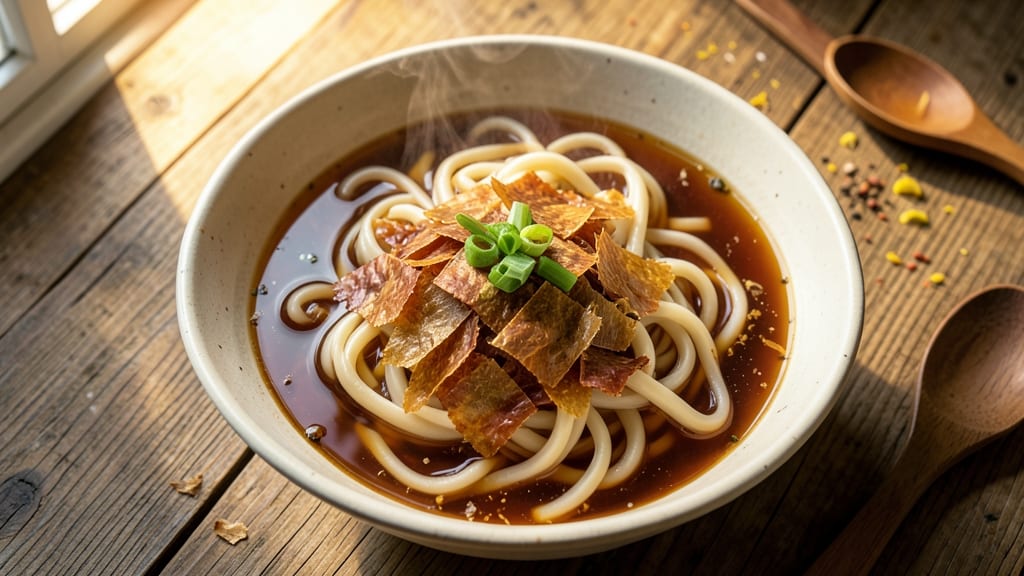
This authentic udon noodle soup recipe delivers the same rich, slurp-worthy comfort you’d find in a Tokyo izakaya—silky wheat noodles floating in a deeply savory dashi broth, topped with crisp tempura and fresh garnishes.
The secret lies in layering umami through slow-simmered kombu and bonito flakes, creating a broth so balanced it’s both delicate and deeply satisfying. I’ve perfected this method after years of testing, ensuring every sip carries that authentic Japanese restaurant quality at home.
The foundation starts with a foolproof dashi broth, where kombu seaweed and bonito flakes infuse the water with pure umami over 20 minutes of gentle simmering. Udon noodles—thick, chewy wheat strands—cook in batches to maintain their signature texture, never mushy.
Traditional toppings like tempura flakes, thinly sliced green onions, and crisp nori sheets elevate each bowl, balancing richness with freshness.
What you’ll end up with is a restaurant-quality bowl where every element works in harmony: the broth’s velvety depth, the noodles’ satisfying bite, and the toppings’ contrasting textures. The aroma alone—steaming hot, fragrant with dashi and soy—will have your kitchen smelling like a bustling Japanese street stall.
This isn’t just soup; it’s a complete, comforting experience that transports you to Japan with every slurp.
Perfect for chilly evenings or as a hearty lunch, this recipe scales effortlessly for one or a crowd. The key is patience—letting flavors meld slowly—and attention to traditional techniques like proper noodle cooking and garnish placement. Let’s get started on your first truly authentic udon.
Ingredients for authentic udon noodle soup
Silky wheat noodles, umami-rich dashi, and crisp toppings—here’s what brings Tokyo izakaya comfort home.
| Ingredient | Amount | Notes |
|---|---|---|
| Dried Kombu Seaweed 🍃 | 1 sheet | High-quality, no holes |
| Bonito Flakes 🐟 | ½ cup | Fresh, not powdered |
| Water 💧 | 8 cups | Filtered for clarity |
| Udon Noodles 🍜 | 8 oz | Fresh or dried, thick wheat |
| Soy Sauce 🍶 | ¼ cup | Japanese, reduced |
| Mirin 🍶 | ⅛ cup | Sweet cooking wine |
| Green Onions 🧅 | 4 whole | Thinly sliced, white and green parts |
| Tempura Flakes 🍟 | ¼ cup | Crispy, store-bought or homemade |
| Nori Sheets 🍜 | 4 sheets | Thin, crisp, cut into strips |
| Sesame Seeds 🌾 | 1 tbsp | Toasted, for garnish |
| White Pepper 🌶️ | ¼ tsp | Freshly ground |
| Dried Shiitake Mushrooms 🍄 | 4 whole | Rehydrated, sliced |
The kombu and bonito are non-negotiable for that authentic dashi depth. Japanese specialty stores like Mitama Market carry premium sheets—look for kombu with vibrant color and no tears. Bonito should smell fresh, not fishy. For shiitake mushrooms, dried from Asian markets rehydrate best; toss them in hot water for 20 minutes. Udon noodles? Fresh from the refrigerated section at Whole Foods or Trader Joe’s hold their chew perfectly—dried works too if you soak them 10 minutes.
No mirin? Substitute dry sherry plus 1 tsp sugar—it’s not identical, but close. Tempura flakes missing? Crispy fried wonton strips work in a pinch. Green onions can be swapped for chives or scallions, but the white part’s mild flavor is ideal. For extra umami, add 1 tsp fish sauce to the broth (though traditionalists may skip it). And if your nori sheets are too thick, toast them in a dry pan for 10 seconds to crisp up before serving.
Dashi keeps 3 days in the fridge—strain and store it separately to reuse. Udon noodles? Cook them fresh or store dried in an airtight container for 6 months. Tempura flakes lose crispness after 2 days, so make a fresh batch if possible. Garnishes like sesame seeds and nori can be prepped ahead—just toast seeds last minute to keep them fragrant. The whole bowl reheats beautifully; just add 2 tbsp water per bowl and simmer 2 minutes.
Why You'll Love This Recipe
- No-Chop Needed: I swear by this—just soak the kombu in hot water, sprinkle bonito flakes, and let the magic happen. No knife skills required, just pure umami in minutes.
- Umami Bomb: That first sip? The kombu and bonito flakes dissolve into the broth like a slow-dance of savory perfection. It’s the kind of flavor that makes you pause mid-slurp and go, "Wait, how is this so good?"
- Lunchbox Hero: Between us, this is my go-to for meal prep. Toss cooked udon into containers, stash the broth separately, and reheat with a splash—hot, comforting, and ready in seconds. (Yes, even on a Tuesday night.)
- Pocketbook Winner: A single sheet of kombu and a handful of bonito flakes stretch into enough broth for three bowls. Cheap, filling, and the kind of meal that makes grocery day feel like a victory.
Step-by-step instructions for authentic udon noodle soup
Here's how to craft a restaurant-quality udon broth that balances umami depth with delicate sweetness.
Infuse the Broth with Kombu and Bonito
Place the 1 sheet Dried Kombu Seaweed in a large pot and add the 8 cups Water. Bring to a gentle simmer over medium heat—you'll see bubbles form around the edges of the kombu. Let it steep for 10 minutes until the water takes on a rich, oceanic aroma. This step extracts the seaweed's natural glutamate, which creates that signature umami foundation.
Remove the kombu with tongs and discard. Add the 0.5 cup Bonito Flakes and simmer for 5-7 minutes until they dissolve completely. The broth should turn a beautiful amber color with tiny fish particles suspended throughout. This is where the authentic flavor develops—don't rush it. If you see any large flakes remaining after 7 minutes, strain them out for maximum clarity.
Build Depth with Shiitake and Seasonings
While the broth simmers, rehydrate the 4 whole Dried Shiitake Mushrooms in hot water for 20 minutes until pliable. Drain and slice them into ¼-inch thick pieces. Add them to the pot along with the 0.25 cup Soy Sauce and 0.125 cup Mirin. Simmer for 10 minutes until the mushrooms soften and the broth reduces slightly, concentrating the flavors.
Here's the thing—mirin isn't just for sweetness. It also contains enzymes that help break down proteins in the broth, creating that silky texture. Taste the broth now—it should be savory with a subtle sweetness. If it needs more depth, add a pinch of 0.25 tsp White Pepper and let it steep for another 2 minutes. The pepper will add a subtle warmth that balances the umami.
Prepare the Udon Noodles
Bring a separate pot of water to a rolling boil and cook the 8 oz Udon Noodles according to package instructions—typically 4-5 minutes for fresh udon or 6-8 minutes for dried. The noodles should be al dente with a slight bite. Drain them and rinse briefly under cold water to stop the cooking process. This prevents them from becoming mushy when added to the hot broth.
While the noodles cook, cut the 4 sheets Nori Sheets into ¼-inch wide strips and set aside. Thinly slice the 4 whole Green Onions into 1-inch long pieces, separating the white and green parts. Toast the 1 tbsp Sesame Seeds in a dry skillet over low heat for 1-2 minutes until fragrant—this adds a nutty depth to your final dish.
Assemble and Garnish for Maximum Impact
Divide the cooked udon noodles among 4 deep bowls. Ladle the hot broth over the noodles until each bowl is ¾ full. The broth should be steaming but not boiling—this maintains the delicate texture of the noodles. Add 1 tablespoon of the sliced shiitake mushrooms to each bowl along with 1 teaspoon of the sliced green onion whites.
Here's where it gets exciting—sprinkle each bowl with 1 tablespoon of the Tempura Flakes and 1 teaspoon of the toasted Sesame Seeds. The tempura flakes add a satisfying crunch that contrasts perfectly with the silky broth, while the sesame seeds bring a nutty finish. Top with the remaining green onion greens and a few strips of Nori Sheets for both color and a briny contrast.
Serve Immediately with Proper Technique
This dish is all about the experience—serve each bowl with chopsticks and a small bowl of extra broth on the side. The traditional way to eat udon is to slurp audibly, which actually helps cool the broth and release more aroma. I promise, there's a reason this is considered polite in Japan—it enhances the flavor.
For that authentic touch, place a small dish of Tempura Flakes on the table so everyone can add more to their bowls as they eat. The contrast between the warm broth and crispy flakes is what makes this dish truly special. Each spoonful should deliver a perfect balance of umami from the broth, chewiness from the udon, and crunch from the toppings.
Pro Tips For Making Authentic Udon Noodle Soup
- Simmer Kombu Low: After burning three batches of kombu, I finally learned to keep the heat at a bare simmer—just enough to see tiny bubbles, no rolling. Too much heat turns that rich umami broth bitter, and you’ll regret it when you taste the result.
- Toast Bonito Right: Use a dry, nonstick pan over medium heat and toast the bonito flakes until they’re sizzling but not smoking—about 30 seconds. If they burn, they’ll taste acrid, and no amount of broth will fix it.
- Salt the Water Early: Toss the kombu into the water first, then add a full tablespoon of salt (even if the recipe says less). The kombu needs time to release its flavor, and salting upfront lets it meld properly—no last-minute adjustments.
- Boil Noodles Separately: Udon thickens fast. Boil them in fresh, unsalted water for exactly the time on the package (usually 2-3 minutes), then drain and rinse with cold water. Tossing them into the broth too soon makes the soup gluey and dull.
Flavor customization for this authentic udon noodle soup
Spicy Miso Kick
For a bold twist, stir 1 tablespoon white miso paste into the simmering broth after removing the kombu. Add ½ teaspoon gochugaru (Korean chili flakes) for heat and a pinch of sesame oil for depth.
This fusion approach—inspired by Osaka-style udon—adds a fiery umami punch that pairs perfectly with the silky noodles. 🌶️
Smoky Yuzu Infusion
Brighten the broth with 2 tablespoons yuzu juice (or sub 1 tbsp lemon juice + 1 tsp orange zest) and a 1-inch strip of smoked salmon simmered for 5 minutes.
The citrus cuts through the richness while the salmon adds a delicate smokiness. Garnish with micro cilantro for a modern Japanese-inspired twist.
Creamy Sesame Swirl
Blend ½ cup hot broth with 2 tbsp tahini and 1 tsp honey until smooth, then swirl it into each bowl before serving. Top with crushed peanuts and thinly sliced jalapeños for a Thai-inspired udon fusion. This creamy contrast elevates the dish to restaurant-quality comfort.
Herb-Forward Garnish
Swap traditional toppings for chopped Thai basil, mint leaves, and crispy fried shallots. Add a drizzle of chili-lime oil (mix 2 tbsp neutral oil + 1 tsp lime zest + ½ tsp cayenne) for a Southeast Asian-inspired bowl.
The herbs add freshness while the oil brings a tangy kick.
Umami Bomb Boost
For maximum depth, simmer 2 dried anchovies (or 1 tbsp fish sauce) with the shiitake mushrooms. Finish each bowl with crumbled soft tofu and a sprinkle of furikake seasoning. This technique—used in high-end Tokyo izakayas—amplifies the broth’s natural umami without overpowering the delicate flavors.
Sweet Soy Glaze
Reduce ¼ cup soy sauce with 1 tbsp mirin and 1 tsp sugar until syrupy, then drizzle over assembled bowls. Top with caramelized onions and crispy fried onions for a sweet-savory contrast. This approach mimics the popular "tanuki udon" style, where richness meets crunch in every bite. 🍯
Nutrition facts
Frequently asked questions
Can I use instant udon noodles for this recipe?
While you can technically use instant udon, the texture won't be as authentic. Instant noodles tend to be thinner and softer, lacking the satisfying chew of traditional udon. For the best results, use either fresh udon from the refrigerated section or high-quality dried udon that requires soaking. The difference in texture is what makes this dish truly special!
How do I make the broth more flavorful if I don't have bonito flakes?
You can substitute bonito with ½ cup dried shiitake mushrooms (soaked and sliced) or 1 tbsp fish sauce for umami depth. For a vegetarian option, use ½ cup kombu extract or 1 tbsp soy sauce + 1 tsp dried dashi granules. The key is building layered flavors—simmer longer if needed to concentrate the taste.
Why does my udon turn mushy when added to the hot broth?
This happens when the noodles overcook in the broth. Always cook udon separately until just al dente (about 1 minute less than package instructions), then rinse briefly in cold water before adding to bowls. The broth should be steaming but not boiling when poured over the noodles to maintain their texture. Think "silky, not soggy"!
Can I prepare the broth ahead of time?
The dashi broth keeps well for 3 days in the fridge or 3 months in the freezer. Store it separately from the toppings. When reheating, warm gently on low heat—never boil—to preserve the delicate flavors. The noodles and toppings are best added fresh, but you can prep garnishes ahead and store them separately.
What's the best way to serve udon for a group?
For large gatherings, prepare the broth in batches and keep it warm in a slow cooker or chafing dish. Cook the noodles in batches and keep them covered to prevent drying. Set up a toppings bar with small bowls of tempura flakes, nori strips, green onions, and sesame seeds. This lets everyone customize their bowls—just like at a Japanese restaurant!