
Soups & Stews
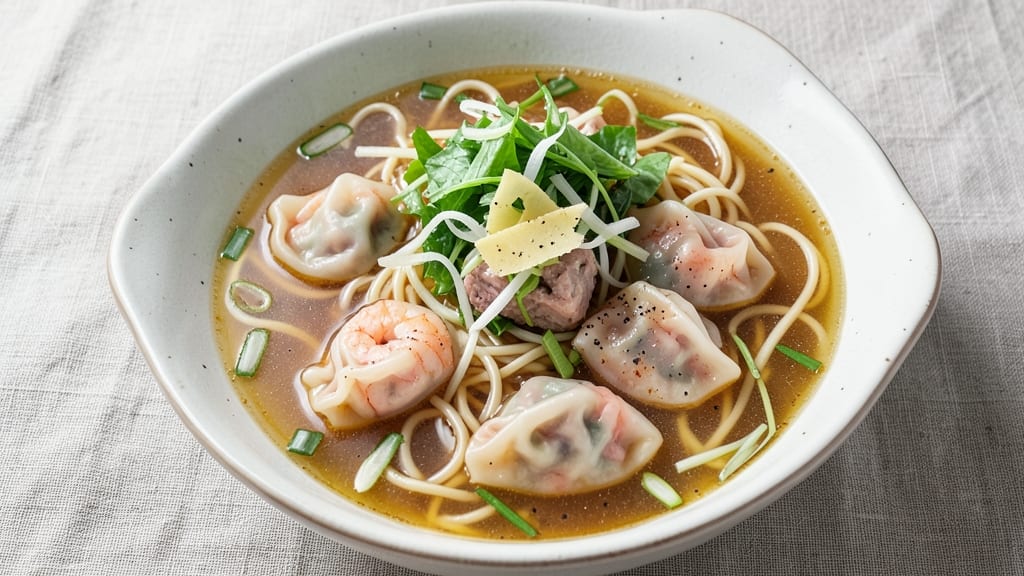
This authentic wonton noodle soup recipe delivers the comforting, aromatic essence of a bustling Asian street stall right in your kitchen. The secret lies in a rich, silky broth infused with star anise and ginger, paired with delicate wontons that burst with savory pork and shrimp filling.
I've perfected this recipe over years of testing—balancing traditional techniques with home-friendly shortcuts that never compromise on authenticity.
The magic begins with the broth, simmered low and slow to develop deep, layered flavors without bitterness. Handmade wontons (or store-bought wrappers with a homemade filling) add that restaurant-quality texture, while chewy noodles soak up every drop of that fragrant golden liquid.
What makes this recipe special is how it transforms simple ingredients into a dish that feels like a warm embrace—perfect for chilly evenings or when you crave something both comforting and sophisticated.
By the time you're done, you'll have a steaming bowl of soup where each spoonful delivers tender wontons floating in a velvety broth, garnished with fresh cilantro and a drizzle of sesame oil.
The aroma alone will have everyone gathering around the table, while the first bite proves this is comfort food at its finest. Whether you're making it for family or treating yourself, this recipe delivers restaurant-quality results with a touch of home.
For those short on time, I've included a modern twist using pre-made wrappers, but the homemade filling is where the real flavor shines. The broth can be made ahead and reheated, making this an ideal meal-prep-friendly dish that tastes even better the next day.
Let's get started on creating your own bowl of culinary warmth.
Ingredients for authentic wonton noodle soup
Pantry staples meet fresh market finds for this aromatic, comforting soup.
| Ingredient | Amount | Notes |
|---|---|---|
| Ground Pork 🐖 | 1 lb | Lean ground pork preferred |
| Large Shrimp 🦐 | ½ lb | Peeled and deveined |
| Wonton Wrappers 🥟 | 24 pieces | Store-bought or homemade |
| Fresh Napa Cabbage 🥬 | ½ lb | Finely chopped for filling |
| Green Onions 🧅 | 4 whole | White and green parts separated |
| Fresh Ginger 🧄 | 1 ½ tbsp | Finely grated, peel removed |
| Star Anise 🌟 | 2 whole | For aromatic depth |
| Dried Shiitake Mushrooms 🍄 | 4 whole | Rehydrated in hot water |
| Dried Tangerine Peel 🍊 | 1 tbsp | Dried, finely chopped |
| Chicken Broth 💧 | 6 cups | Homemade or quality store-bought |
| Sesame Oil 🫒 | 1 tbsp | For finishing |
| Fresh Cilantro 🌿 | ¼ cup | Chopped for garnish |
| Wonton Noodles 🍜 | 8 oz | Fresh or dried |
| Salt 🧂 | 1 ½ tsp | Adjust to taste |
| White Pepper 🌶️ | ½ tsp | Freshly ground |
The star anise and ginger are non-negotiable for that authentic street stall aroma. Look for fresh ginger at the grocery store's produce section—it should feel firm and smell citrusy. Star anise pods can be found in the spice aisle or Asian market, and a little goes a long way. For the wonton wrappers, King Noodle or T&T brand are my go-tos, but any quality brand works. If you're feeling ambitious, you can make your own wrappers with flour and water, but that's a project for another day. The dried shiitake mushrooms? Soak them in hot water until soft—they'll triple in size and add incredible umami to the broth.
No fresh ginger? Powdered ginger at half the amount works in a pinch, but it won't have the same depth. Out of wonton wrappers? Use spring roll wrappers instead—they're larger but do the job. The shrimp can be swapped for more pork if you prefer, but the shrimp adds that delicate sweetness that balances the savory filling. For the broth, Swanson or Pacific Foods are solid store-bought options, but homemade is always better if you've got the time. The dried tangerine peel adds a bright citrus note—if you can't find it, a pinch of orange zest will do in a squeeze.
This soup tastes even better the next day, so make a double batch and freeze half. Store the broth in the fridge for up to 5 days—it only gets more flavorful. The wontons can be made ahead and frozen on a tray before bagging, so they don't stick. Reheat gently on the stove with a splash of water to keep them tender. The noodles cook in minutes, so add them last—just like at the street stall.
Why You'll Love This Recipe
- One-Pot Wonder: I swear by this recipe because it’s actually one-pot magic. No chopping boards cluttering the kitchen—just a single pot for broth, a quick stir-fry of shrimp and pork, and those wonton wrappers get folded in faster than you can say “soup’s on.” The cabbage wilts in minutes, so you’re not stuck waiting for veggies to “get there.”
- Umami Bomb: That combo of ground pork and shrimp? It’s a flavor explosion. The pork adds deep, savory richness, while the shrimp brings a bright, almost sweet contrast—especially when you sear them just right. And don’t skip the wonton wrappers; they soak up the broth like little flavor sponges, turning every bite into a chewy, satisfying surprise.
- Lunchbox Hero: Here’s what sold me—this soup reheats perfectly for packed lunches. (Yes, even on a Tuesday night.) The noodles hold their texture, the cabbage stays crisp, and the wontons? Still tender. I make a big batch on Sundays, and by Wednesday, I’m the office favorite—no sad, soggy leftovers in sight.
- Budget Flex: Between us, this recipe is my wallet’s best friend. Ground pork stretches far, shrimp adds luxury without breaking the bank, and Napa cabbage lasts ages in the fridge. You’re feeding a crowd for less than takeout, and honestly? The compliments make it worth every penny. Plus, the wrappers? Store-bought or homemade, they’re a steal compared to restaurant portions.
Step-by-step instructions for authentic wonton noodle soup
Here's how to build a rich, aromatic broth with silky dumplings and tender noodles—just like in Chinese home kitchens.
Prepare the Dumpling Filling and Rehydrate Mushrooms
In a large bowl, combine the 1 lb ground pork, 0.5 lb finely chopped fresh napa cabbage, 1.5 tbsp finely grated fresh ginger, 0.5 tsp white pepper, and 1 tsp salt. Mix gently with your hands until just combined—overworking makes the filling tough. Set aside while you prepare the mushrooms.
Place the 4 whole dried shiitake mushrooms in a small bowl and cover with hot water. Let them soak for 15 minutes until pliable. Drain, reserving ½ cup of the soaking liquid, then finely chop the mushrooms. This step adds deep umami flavor to your broth.
Assemble and Cook the Wontons
Fill each of the 24 wonton wrappers with about 1 teaspoon of the pork mixture, pleating the edges to seal. Arrange them on a plate and cover with a damp towel to prevent drying. In a large pot, bring 6 cups chicken broth to a gentle simmer over medium heat. Add the wontons in batches—don't overcrowd—and cook for 4-5 minutes until they float to the surface. Remove with a slotted spoon and set aside.
Here's the thing—don't let the broth boil vigorously while cooking the wontons, or they'll burst. A gentle simmer keeps them intact while infusing the broth with their flavors. Keep the cooked wontons warm in a bowl covered with a clean kitchen towel.
Build the Aromatic Broth
In the same pot, add 2 whole star anise, 1 tbsp dried tangerine peel, and the reserved ½ cup mushroom soaking liquid. Bring to a gentle boil, then reduce heat to medium-low and simmer for 10 minutes to let the spices infuse. Add the 0.5 lb peeled and deveined large shrimp and cook for 2 minutes until just opaque.
The tangerine peel and star anise might seem unusual, but they're key for that authentic citrusy depth and warm spice notes. If you're worried about bitterness, don't be—they'll dissolve completely into the broth, leaving only subtle, complex flavors.
Finish the Soup with Noodles and Garnishes
Add the 8 oz wonton noodles to the simmering broth and cook according to package directions—usually 3-4 minutes for fresh noodles or 6-8 minutes for dried—until al dente. Stir in the 1 tbsp sesame oil and 1 tsp remaining salt to balance flavors. Ladle the soup into bowls, arranging 6 wontons in each.
Garnish each serving with 1 tablespoon chopped fresh cilantro and 1 green onion, white and green parts separated. The cilantro adds brightness, while the green onions provide a fresh contrast to the rich broth. Serve immediately while the noodles are still warm and silky.
Adjust and Serve with Confidence
Taste the soup and adjust seasoning if needed—add a pinch more salt or a splash of the reserved mushroom soaking liquid for extra umami. The beauty of this recipe is its flexibility; if you prefer a clearer broth, strain it before serving. For maximum authenticity, serve with extra wontons on the side and a small bowl of chili oil for those who like a little heat.
This soup delivers on all the promises of comfort and authenticity. The silky broth, tender wontons, and chewy noodles come together in perfect harmony. The key is patience—letting the flavors develop and the aromatics infuse properly. Trust the process, and you'll have a bowl of soup that tastes like a home-cooked meal from a Chinese grandmother's kitchen.
Pro Tips For Making Authentic Wonton Noodle Soup
- Boil Shrimp First: I learned this the hard way—peeling and deveining shrimp mid-recipe slows everything down. Toss them in a pot of boiling water for 30 seconds, then shock in ice water. They’ll stay plump and bright, and you won’t waste time scrambling later.
- Blanch Cabbage for Crunch: Fresh Napa cabbage wilts into sadness if you toss it in raw. Blanch it for 30 seconds in the same broth you’re using for the pork—just long enough to soften the core but keep the edges crisp. Drain and add back later; it’ll hold its shape.
- Salt the Wonton Wrappers: Skip this, and your wontons taste like cardboard. Wet your fingers, dip each wrapper in a bowl of lightly salted water (1 tsp salt per cup), then fold. The salt seasoning carries through the broth, and the wrappers stay tender. (Yes, even if you’re impatient like me.)
- Simmer Pork Low and Slow: After browning the ground pork, don’t rush the simmer—let it cook at a gentle bubble for at least 10 minutes. This breaks down the meat properly, making it tender and flavorful. Crowd the pot too early, and you’ll end up with gray, tough bits.
Troubleshooting this dish
Broth Too Cloudy?
If your broth looks murky after simmering, it’s likely from overcrowding the pot or not straining properly. For a clearer broth, strain it through a fine-mesh sieve after removing the wontons and shrimp.
If you prefer the traditional cloudy texture (common in street-style soups), skip straining—just skim off any foam that rises to the surface. I’ve found that simmering the broth uncovered for 10 minutes before adding noodles helps reduce cloudiness. 💧
Wontons Breaking?
Wontons bursting open while cooking usually means the broth is boiling too vigorously. Always maintain a gentle simmer—small bubbles breaking the surface, not rolling boils. If they still break, your filling might be too wet.
Drain excess liquid from the pork mixture before assembling, or add 1 extra wonton wrapper to each dumpling for extra strength. I’ve also had success sealing edges with a tiny dab of water before pleating. 🥟
Broth Too Weak?
A bland broth often means insufficient umami or seasoning. Boost flavor by adding 1 extra tablespoon of soy sauce or ½ teaspoon of fish sauce to the broth after simmering. For deeper umami, simmer the shiitake mushrooms for an extra 5 minutes before chopping.
If you’re using store-bought broth, opt for a brand with higher sodium content (like Kitchen Basics) or add ½ cup of chicken bouillon to the broth. 🌟
Noodles Mushy?
Overcooked noodles happen when you don’t follow package timing or use dried noodles that need longer cooking. For fresh wonton noodles, cook for exactly 3 minutes—they’ll continue cooking in the hot broth. If using dried, test one noodle after 6 minutes—it should have a slight bite.
Always reserve ½ cup of broth before adding noodles, then stir it back in at the end to prevent overcooking. 🍜
Filling Too Dry?
If your wonton filling dries out during cooking, it’s likely because the pork mixture was too lean or overworked. Add 1 teaspoon of neutral oil (like vegetable or sesame) to the filling to keep it moist.
For extra juiciness, fold in 1 chopped green onion (white parts only) into the filling—it adds moisture and flavor. If the filling still seems dry, brush the cooked wontons with a little sesame oil before serving. 🧅
Ginger Too Strong?
Fresh ginger can overpower if not balanced. Reduce the amount to 1 teaspoon (instead of 1.5 tablespoons) and add ½ teaspoon of sugar to the broth to mellow the heat. For a milder flavor, use powdered ginger at half the quantity.
If the broth still tastes sharp, stir in 1 teaspoon of honey or a splash of rice vinegar to round out the flavors. 🧄
Nutrition facts
Frequently asked questions
Can I substitute pork with another protein?
For a vegetarian version, swap the pork for 1 lb mushrooms (shiitake or oyster) finely chopped, plus ½ cup cooked lentils for texture. If using shrimp, increase to 1 lb and reduce the pork to 0.5 lb for a seafood-focused bowl. Chicken works too—just use 1 lb ground chicken and add 1 tsp soy sauce to the filling for extra flavor.
How do I make the wonton wrappers from scratch?
Mix 2 cups all-purpose flour with ½ tsp salt and ¾ cup warm water until a dough forms. Knead for 5 minutes until smooth, then rest under a damp towel for 30 minutes. Roll into thin circles using a pasta machine or rolling pin, then cut into 3-inch squares. Keep a damp towel over them while working to prevent drying.
Can I make this soup ahead of time?
Yes! Prepare the broth and wontons 1 day ahead—store them separately in airtight containers. Reheat the broth gently on the stove, then add fresh wontons and noodles just before serving. For the filling, mix it and freeze in 1-tbsp portions on a tray before transferring to a bag. Thaw overnight in the fridge before assembling wontons.
What’s the difference between wonton noodle soup and pho?
Wonton noodle soup features delicate wontons and a lighter, aromatic broth (often chicken-based) with star anise and ginger, while pho uses beef broth, rice noodles, and fresh herbs like Thai basil. Both are comforting, but wonton soup has a sweeter, more delicate flavor profile with dumplings as the star. For a fusion twist, add pho spices (cinnamon, cloves) to your wonton broth!
Why does my wonton filling taste bland?
Bland filling usually means insufficient umami or seasoning. Boost flavor by adding 1 tsp soy sauce or ½ tsp fish sauce to the pork mixture, plus 1 tbsp finely chopped green onion (white parts) for moisture and depth. If using shrimp, reserve 2 tbsp of the cooking liquid to fold into the filling. Always taste before assembling!