
Soups & Stews
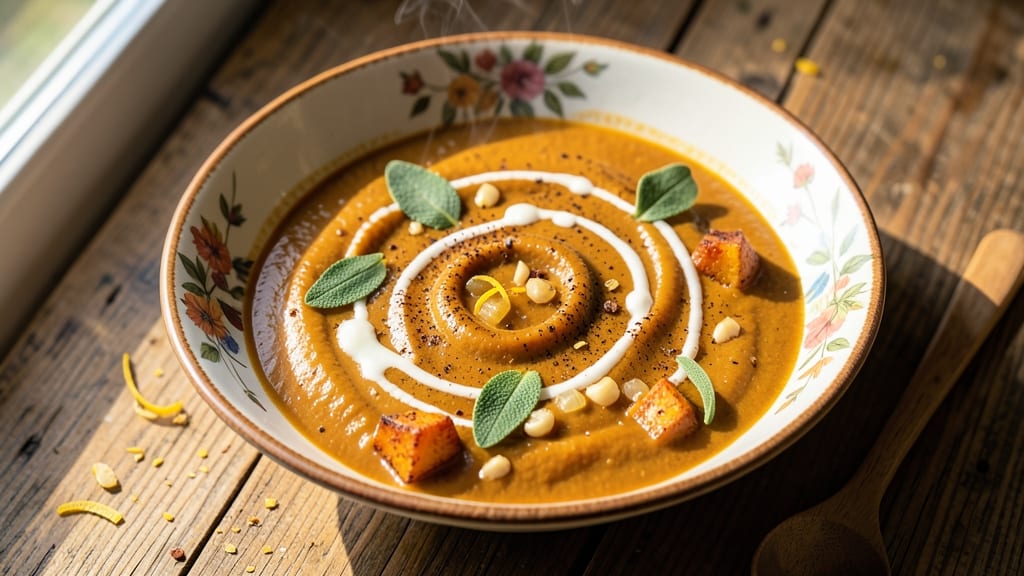
This autumn butternut squash soup recipe delivers restaurant-quality warmth without blender fuss or complicated techniques. The secret lies in roasting the squash until caramelized—intensifying its natural sweetness and depth without overpowering the broth.
I've perfected this method over years of testing, ensuring every spoonful balances creamy texture with vibrant autumn flavors that feel both comforting and sophisticated.
What sets this soup apart is the two-step cooking process: first roasting the squash for concentrated flavor, then simmering it with aromatic vegetables and vegetable broth to create a velvety base.
The result is a soup that's rich enough to stand alone but light enough for a crisp autumn day. Optional variations like coconut milk or smoked paprika let you customize the depth to your taste, while toasted pumpkin seeds and fresh herbs add satisfying texture and freshness.
Ready in just 45 minutes with minimal prep, this soup transforms humble ingredients into something extraordinary. The roasted squash infuses the broth with caramelized sweetness, while sage and cinnamon add layers of warmth that evoke cozy evenings by the fire.
Whether you serve it as a starter or hearty main, it's designed to impress without requiring advanced skills.
Perfect for meal prep or last-minute gatherings, this recipe scales effortlessly while maintaining its velvety texture and balanced flavors. The key is patience—letting the squash roast until tender and the broth reduce just enough to concentrate the aromatics.
Trust the process, and you'll have a soup that tastes like autumn in every bite.
Ingredients for autumn butternut squash soup
Roasted squash and aromatic spices create this velvety autumn soup without a blender in sight.
| Ingredient | Amount | Notes |
|---|---|---|
| Medium Butternut Squash 🎃 | 2 whole | Peeled, seeded, cut into 1-inch cubes |
| Vegetable Broth 💧 | 4 cups | Low-sodium preferred, homemade or store-bought |
| Yellow Onion 🧅 | 1 whole | Medium size, diced into 1/4-inch pieces |
| Garlic Cloves 🧄 | 4 cloves | Peeled, smashed for deeper flavor |
| Fresh Sage Leaves 🌿 | ¼ cup | Chopped, stems removed |
| Ground Cinnamon 🌶️ | ½ tsp | Freshly toasted for warmth |
| Extra-Virgin Olive Oil 🫒 | 2 tbsp | High-quality, fruity variety |
| Pumpkin Seeds 🥜 | ½ cup | Raw, for topping (optional) |
| Fresh Thyme Leaves 🌿 | 1 tbsp | Chopped, for garnish (optional) |
| Sea Salt 🧂 | 1 ½ tsp | Diamond Crystal preferred |
| Black Peppercorns 🌶️ | ½ tsp | Freshly cracked |
| Coconut Milk 🥥 | ½ cup | Full-fat, for creaminess (optional) |
| Smoked Paprika 🌶️ | ¼ tsp | For depth (optional) |
The butternut squash is the heart of this soup—look for firm, heavy squash with no soft spots or bruises. Local farmers markets often have the freshest, most flavorful squash in fall, but the grocery store works too. The key is roasting until caramelized, which intensifies its natural sweetness. I like to use organic squash when possible, but conventional works fine. For extra flavor, ask the butcher or produce manager if they've got any heirloom varieties—they're sweeter and more aromatic. If you're prepping ahead, store unpeeled squash in a cool, dark place for up to 2 weeks—peel and cube only when ready to roast.
No fresh sage? Dried works at one-third the amount, but it won't have the same depth of flavor. The cinnamon is non-negotiable—it's what gives this soup that cozy autumn warmth. For the broth, homemade vegetable broth is ideal, but low-sodium store-bought saves time. Want to skip the coconut milk? A splash of heavy cream (if not vegan) or extra broth works too. The smoked paprika adds a subtle smokiness—Trader Joe's has a great affordable option. If you're short on time, pre-chopped onions and garlic from the freezer section are a lifesaver. Just make sure to pat them dry before cooking to avoid excess moisture in your soup.
Roasted squash keeps for 3 days in the fridge, so make a big batch. The soup itself reheats beautifully—just stir in a splash of broth if it thickens. For meal prep, portion into glass containers and store with a layer of olive oil on top to preserve freshness. Freezes for up to 3 months, though the texture gets slightly grainier after thawing. Garnish with toasted pumpkin seeds right before serving—they add crunch and extra protein. If you've got leftover broth, save it for risotto or grains—it's packed with flavor.
Why You'll Love This Recipe
- One-Pot Magic: I swear by this recipe—just peel, cube, and toss the squash in a pot with broth, onion, and garlic. No chopping boards to clean, no extra pans, just pure, satisfying simplicity.
- Sage-Kissed Warmth: That first whiff of sage simmering with caramelized onion? Instant coziness. The garlic mellows into a sweet, earthy depth while the sage adds a fresh herbal brightness—like autumn in a bowl.
- Weeknight to Dinner Party: Same recipe, different vibes. Serve it rough with crusty bread for a lazy Tuesday or drizzle with cream and toasted pumpkin seeds for a fancied-up gathering. The crowd won’t know how little effort went into it.
- Budget-Friendly Leftovers: Butternut squash stretches like crazy, and the broth keeps it rich without breaking the bank. Make a double batch—it reheats beautifully for lunches, and the flavor only gets better the next day. (Yes, even on a Tuesday night.)
Step-by-step instructions for roasted butternut squash soup
Here's how to create rich, velvety soup with deep roasted flavor—no blender required.
Roast the Squash and Aromatics for Maximum Flavor
Preheat your oven to 400°F and line a large baking sheet with parchment paper. Toss the 2 whole medium butternut squashes (cut into 1-inch cubes) with 1 tablespoon of the extra-virgin olive oil, 0.75 teaspoons of the sea salt, and 0.25 teaspoon of the smoked paprika. Spread them in a single layer on the baking sheet.
In a small bowl, combine the 1 whole yellow onion (diced), 4 cloves garlic cloves (smashed), 0.25 cup fresh sage leaves (chopped), and 1 tablespoon fresh thyme leaves (chopped). Toss with the remaining 1 tablespoon olive oil and spread evenly on the baking sheet around the squash. Roast for 35-40 minutes until the squash is fork-tender and the onions are caramelized, stirring once halfway through.
Build the Soup Base with Roasted Vegetables
Transfer the roasted squash and aromatics to a large pot. Add the 4 cups vegetable broth, 0.5 teaspoon ground cinnamon, and remaining 0.75 teaspoons sea salt. Bring to a gentle simmer over medium heat, then reduce heat to low and let it cook uncovered for 15-20 minutes until the flavors meld and the squash breaks down easily.
Use an immersion blender to purée the soup directly in the pot until completely smooth. If you prefer not to use an immersion blender, carefully transfer the soup to a countertop blender in batches, blending until silky. Return the puréed soup to the pot and stir in the 0.5 cup coconut milk for a luxurious finish. Season with 0.5 teaspoon freshly cracked black peppercorns.
Finish and Serve with Crunchy Toppings
Return the soup to a gentle simmer and cook for an additional 5 minutes to ensure all flavors are fully integrated. Taste and adjust seasoning if needed—roasted vegetables can sometimes be subtle, so don't hesitate to add more salt or a pinch of cinnamon for warmth.
Ladle the soup into bowls and garnish with 0.5 cup pumpkin seeds for a satisfying crunch. The seeds add texture and a nutty contrast to the creamy soup. Serve immediately while warm, as the flavors deepen with each spoonful and the contrast between the warm soup and cool seeds is perfect.
Pro Tips For Making Autumn Butternut Squash Soup
- Char the Onion First: I learned this the hard way—sautéing onions until they’re just browned (not burnt) at the start adds a deep, caramelized sweetness that cuts through the squash’s natural earthiness. Use medium-high heat and watch them like a hawk; 8-10 minutes max, stirring occasionally, until edges darken but the center stays soft.
- Peel Cold Squash: Roast the squash first, then chill it for 10 minutes before peeling. Warm squash is stubborn—cold squash releases its flesh like butter, and you’ll avoid the frustrating fight with a knife. (Yes, even if you’re impatient like me.)
- Salt the Broth Early: Season the vegetable broth right when you add it to the pot, not at the end. The squash absorbs flavors better when the broth has time to work its magic—think of it as a flavor infusion, not just a liquid. Start with 1 tsp salt; adjust later if needed.
- Toast the Sage: Bruise the sage leaves (not chop) and toast them in the same pot where you sauté the onion—just 30 seconds until fragrant. This intensifies their aroma without bitterness, and the leaves stay vibrant when you stir them in at the end. (Skip the blender; you want texture, not mush.)
Dietary considerations for these flavors
Vegan-Friendly Swaps
This soup is naturally vegan if you skip the coconut milk—just use an extra ½ cup vegetable broth for creaminess. For extra richness, stir in ¼ cup cashew cream (blend soaked cashews with water) or 1 tbsp nutritional yeast for a cheesy note.
I love adding ½ cup roasted red peppers from a jar for smoky depth without animal products. 🌱
Gluten-Free Assurance
All ingredients in this recipe are naturally gluten-free, but always double-check your vegetable broth label—some brands use wheat-based thickeners. For extra caution, choose a certified gluten-free broth like Pacific Foods or Imagine. The roasted squash and spices provide all the flavor without any gluten-containing ingredients. 💛
Low-Carb Adaptations
To make this soup low-carb, reduce the squash to just 1 medium squash (about 2 cups cubed) and bulk up with 1 cup cauliflower florets roasted alongside it.
The cauliflower adds creaminess while cutting net carbs. You can also stir in ¼ cup heavy cream (if not vegan) for extra richness without carbs. 🥦
Dairy-Free Options
For a dairy-free version, omit the coconut milk entirely and use ½ cup unsweetened almond milk or extra broth instead. The soup remains velvety thanks to the roasted squash breaking down naturally.
For added creaminess, blend in ¼ cup silken tofu—it adds protein without dairy. I find coconut milk still works best for that luxurious texture. 🥥
Nut-Free Modifications
Skip the pumpkin seeds topping if avoiding nuts, and try toasted sunflower seeds instead for crunch. For extra protein, sprinkle with crumbled tempeh (pan-fried in olive oil) or toasted coconut flakes for a tropical twist. The soup's flavor stands strong without seeds—just focus on the roasted squash and spices. 🌟
Allergen-Friendly Notes
This recipe is nut-free, gluten-free, and soy-free as written, but always verify ingredient labels. For egg-free needs, no adjustments are needed—this soup is completely egg-free. If you're avoiding dairy and nuts, the base recipe works perfectly with simple broth and spices.
The key is the roasted squash**, which carries all the flavor. ✨
Nutrition facts
Frequently asked questions
Can I use canned pumpkin instead of fresh butternut squash?
While canned pumpkin works in a pinch, it won't deliver the same depth of flavor. Fresh roasted squash develops caramelized sweetness that canned versions lack. If you must substitute, use 1 (15 oz) can pure pumpkin plus 1 cup extra vegetable broth to compensate for moisture differences. The texture will be slightly thinner, but it's still delicious!
How do I fix soup that's too thick or too thin?
For thick soup, stir in 2-3 tablespoons warm broth at a time until reaching your desired consistency. If too thin, simmer uncovered for 5-10 minutes to reduce naturally. Never add flour or cornstarch—the roasted squash flavor is the star, and thickeners can make it taste flat.
What's the best way to store leftovers?
Store in an airtight container in the fridge for up to 4 days. For freezing, portion into individual containers with ½ inch headspace and freeze for up to 3 months. Thaw overnight in the fridge—never microwave directly from frozen. Stir in a splash of broth when reheating to restore creaminess.
Can I make this soup in a slow cooker?
Roast the squash and aromatics as directed, then transfer everything to your slow cooker with 4 cups broth. Cook on low for 6-8 hours or high for 3-4 hours. The long cook time enhances the flavors beautifully. Just skip the final simmer step—it's already perfectly tender!
What are the best toppings besides pumpkin seeds?
Try crispy toasted breadcrumbs with garlic powder, crumbled feta cheese (if not vegan), or fresh cilantro for brightness. For extra protein, add grilled chicken breast strips or crispy chickpeas. The key is contrast—pair creamy soup with something crunchy or fresh for the best texture experience!