
Soups & Stews
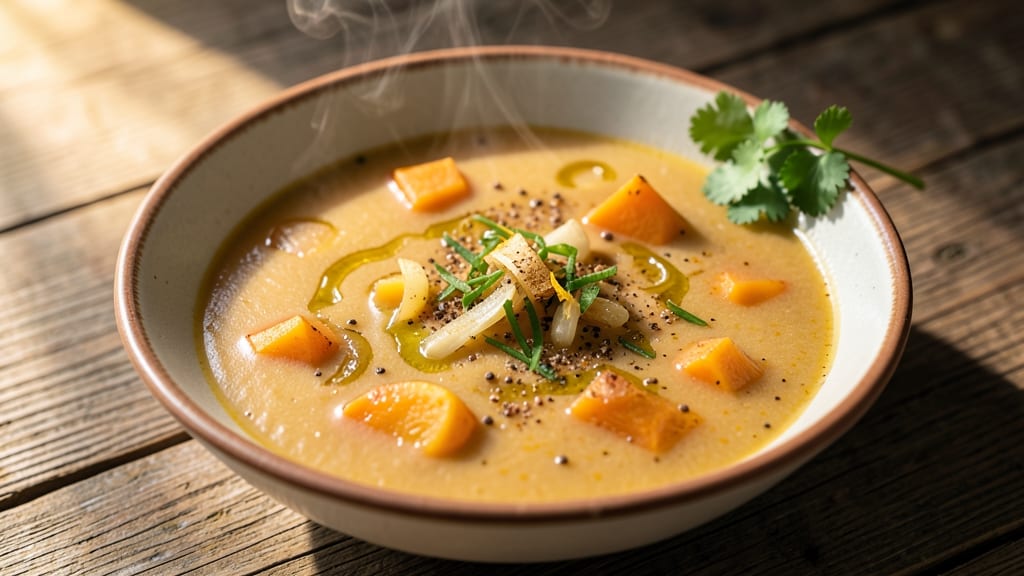
This Ayurvedic pumpkin soup recipe transforms simple ingredients into a deeply warming, spiced harmony that balances the mind and body. The golden broth, infused with turmeric and ginger, isn’t just comforting—it’s a traditional remedy for Vata dosha, grounding energy with every spoonful.
What sets this apart is the slow-simmered approach, which deepens flavors while preserving the soup’s natural sweetness and earthy depth.
The foundation lies in a trio of warming spices: turmeric for anti-inflammatory benefits, cumin for digestion, and fresh ginger to invigorate. Unlike quick soups, this one earns its richness through a 20-minute simmer, allowing the spices to meld into the pumpkin’s natural sweetness.
The result? A velvety texture with layers of complexity—savory, slightly sweet, and subtly spiced—perfect for chilly evenings or as a restorative meal.
What you’ll end up with is a bowl of golden, aromatic soup that’s as nourishing as it is delicious. The optional garnish of ghee, cilantro, and toasted spices adds texture and a final touch of warmth, making it both visually appealing and deeply satisfying.
This recipe bridges ancient wisdom and modern convenience, delivering Ayurvedic benefits without requiring specialized techniques.
Serve with crusty bread or a sprinkle of black pepper for an extra kick, and watch as it becomes the centerpiece of any meal. The best part?
It’s adaptable—use canned pumpkin for convenience or fresh for a deeper flavor, and adjust the spice level to your preference. Let’s make this soup.
Ingredients for ayurvedic pumpkin soup
Simple ingredients, profound Ayurvedic benefits—this golden soup balances Vata with warming spices and velvety texture.
| Ingredient | Amount | Notes |
|---|---|---|
| Fresh Pumpkin 🎃 | 2 lbs | Cubed, skin removed, organic preferred |
| Extra-Virgin Olive Oil 🫒 | ¼ cup | High-quality, cold-pressed |
| Yellow Onion 🧅 | 1 whole | Medium size, finely diced |
| Fresh Ginger 🌿 | 2 tbsp | Finely grated, organic preferred |
| Ground Turmeric 🌶️ | 1 tbsp | Freshly ground for potency |
| Ground Cumin 🌿 | 1 tsp | Toasted for enhanced flavor |
| Ground Coriander 🌿 | 1 tsp | For aromatic depth |
| Black Peppercorns 🌶️ | ½ tsp | Freshly cracked for intensity |
| Vegetable Broth 💧 | 4 cups | Low-sodium, homemade preferred |
| Coconut Milk 🥥 | ½ cup | Full-fat for creaminess |
| Ghee 🧈 | 2 tbsp | For garnish and richness |
| Fresh Cilantro 🌿 | ¼ cup | Chopped, for garnish |
| Clarified Butter 🧈 | 1 tbsp | Optional, for garnish |
| Sea Salt 🧂 | 1 tsp | Diamond Crystal preferred |
The foundation begins with organic pumpkin—its natural sweetness and earthy depth are essential for authentic Ayurvedic harmony. Most grocery stores carry fresh pumpkin in the fall, but Whole Foods or Trader Joe's often have it year-round. For convenience, canned pumpkin works too, though fresh yields richer flavor. The ginger and turmeric must be high-quality; Penzeys or bulk bins at natural markets offer the freshest options. Toast your spices lightly before grinding to release their aromatic oils—this step elevates the soup from ordinary to extraordinary.
No fresh ginger? Powdered ginger at half the amount suffices, though fresh is ideal. Substitute coconut milk with cashew cream for a dairy-free option, though coconut adds subtle sweetness that complements the pumpkin. The vegetable broth should be homemade if possible—store-bought versions often contain hidden sodium. For extra depth, infuse the broth with a bay leaf and a pinch of asafoetida (hing), a traditional Ayurvedic spice that mimics umami. The ghee and clarified butter for garnish are optional but add a luxurious finish—skip if avoiding dairy entirely.
Store the soup in airtight containers for up to 5 days in the fridge, though it tastes even better reheated the next day as flavors meld further. Freeze for 3 months by portioning into ice cube trays before transferring to a bag. To revive, thaw overnight in the fridge and reheat gently. The cilantro and spices should be added fresh before serving to preserve their vibrant color and aroma. This soup’s magic lies in its adaptability—adjust spice levels to your dosha needs, but never skip the slow simmer; it’s what transforms simple ingredients into Ayurvedic medicine.
Why You'll Love This Recipe
- One-Pot Magic: Honestly, I swear by this—just toss the pumpkin, onion, and ginger into a pot with olive oil, simmer until soft, then blend. No chopping boards to clean, no extra dishes. The turmeric does most of the work while you sip your tea.
- Golden, Earthy Depth: That first spoonful? Warm, velvety, with a slow burn from the ginger and turmeric. The pumpkin’s natural sweetness balances the sharpness—like autumn in a bowl. (Yes, even on a Tuesday night.)
- Meal Prep MVP: Between us, this is my go-to for lunches. Reheats beautifully, keeps for days in the fridge, and the flavors only get richer. Add a swirl of coconut milk for creaminess, or keep it light—it works either way.
- Budget Bright Spot: Fresh pumpkin’s the star, but it’s affordable, especially in season. A little olive oil, a knob of ginger, and turmeric stretch this into three or four servings. My wallet and my taste buds thank me.
Step-by-step instructions for Ayurvedic pumpkin soup
This method balances Ayurvedic principles with precise technique for a soup that's both nourishing and deeply flavorful.
Prepare and Sauté the Aromatics
Heat the 0.25 cup extra-virgin olive oil in a large pot over medium heat. Add the finely diced yellow onion and cook for 5 minutes until soft and translucent, stirring occasionally to prevent browning. This foundational step develops the soup's sweet, mellow base.
Add the 2 tablespoons finely grated fresh ginger and continue cooking for 1 minute until fragrant. The ginger should release its pungent aroma without turning bitter. Immediately stir in the 1 tablespoon ground turmeric, 1 teaspoon ground cumin, 1 teaspoon ground coriander, and 0.5 teaspoon freshly cracked black peppercorns. Toast the spices for 30 seconds while stirring constantly—their oils will bloom and infuse the oil with warmth.
Cook the Pumpkin Until Tender
Add the 2 lbs cubed fresh pumpkin to the pot and stir to coat evenly in the spiced oil. Pour in the 4 cups vegetable broth and bring to a gentle simmer. Reduce heat to medium-low and let the soup cook uncovered for 20-25 minutes, stirring occasionally, until the pumpkin is fork-tender with no resistance. The soup should have a velvety texture but not be mushy.
Here's the thing—don't rush this step. The pumpkin needs time to absorb the spices and develop depth. You'll know it's ready when a knife slides in easily and the edges begin to soften. If the soup reduces too much, add 1-2 tablespoons water to maintain the proper consistency.
Blend for Silky Texture
Use an immersion blender to purée the soup directly in the pot until completely smooth. For best results, work in batches if needed, ensuring no lumps remain. The texture should be velvety, almost custard-like, with no visible pumpkin pieces. If using a countertop blender, carefully transfer the hot soup in batches, blending until perfectly smooth before returning to the pot.
Strain the soup through a fine-mesh sieve if you prefer an ultra-smooth consistency, pressing gently with a spatula to extract all the flavor. This step ensures a luxurious mouthfeel that's characteristic of Ayurvedic soups, which prioritize easy digestion and nutrient absorption.
Finish with Coconut Milk and Season
Return the soup to the pot and stir in the 0.5 cup full-fat coconut milk over low heat. Simmer gently for 3-4 minutes until the soup is heated through and the coconut milk is fully incorporated. The soup should have a creamy, golden hue with a subtle sheen. Taste and adjust seasoning with the 1 teaspoon sea salt if needed—Ayurvedic soups often require careful balancing of salt to support digestion.
For the final touch, remove the pot from heat and stir in the 2 tablespoons ghee and 1 tablespoon clarified butter (if using). These fats not only add richness but also help the body absorb the fat-soluble vitamins in the pumpkin and spices. The ghee will create a delicate sheen on the surface, signaling the soup is ready to serve.
Garnish and Serve with Intentionality
Ladle the soup into warmed bowls and garnish immediately with 0.25 cup chopped fresh cilantro. The bright, citrusy notes of the cilantro contrast beautifully with the earthy pumpkin and warm spices, creating a balanced flavor profile that aligns with Ayurvedic principles of taste harmony.
Serve the soup while still steaming hot, as the warmth is essential for its digestive benefits. Pair it with a side of whole-grain bread or a simple kitchari (mung bean and rice dish) to complete the meal. The combination of these elements supports balanced digestion and nourishment according to Ayurvedic traditions.
Pro Tips For Making Ayurvedic Pumpkin Soup
- CHAR THE ONIONS LOW: Start with a slow simmer—no sizzling—once the onions hit the olive oil. I used to rush this and end up with bitter, caramelized bits that overpowered the pumpkin. Keep it gentle until the onions are translucent but still pale, then crank up the heat for the ginger.
- PEEL GINGER LIKE A PRO: Use a spoon to scrape the skin off in one long strip, not a knife. I learned this the hard way after chopping through half a root and wasting good ginger. Thin slices or a fine grate work best here—no need for chunks.
- ROAST THE PUMPKIN FIRST: Cut the pumpkin into 1-inch cubes, toss with a pinch of turmeric and olive oil, then roast at 400°F (200°C) for 20 minutes before blending. This deepens the flavor and prevents a watery soup—trust me, your blender will thank you.
- SALT THE WATER RIGHT: Add a generous pinch of salt to the cooking water if boiling the pumpkin, even if you’re not peeling it. The flesh absorbs flavor like a sponge, and skipping this step leaves the soup tasting bland. Yes, even if you’re using salted broth later.
Troubleshooting perfect results
Pumpkin Too Watery
If your soup ends up too thin after blending, don’t panic—this happens when pumpkin releases excess moisture. Simmer the soup uncovered for an additional 5-10 minutes over low heat to evaporate excess liquid.
For a quicker fix, stir in 1-2 tablespoons of coconut milk or ghee to thicken naturally. Avoid over-blending, as this can break down fibers and make the soup watery. 💧
Spices Too Overpowering
Ayurvedic spices pack a punch, but if your soup tastes too bold, balance it with 1-2 tablespoons of coconut milk or a splash of vegetable broth. The fat in coconut milk mellows spice intensity while adding creaminess.
For a milder flavor, reduce the turmeric or cumin by ½ teaspoon in future batches. Fresh ginger is more potent than powdered—use 1 teaspoon powdered ginger instead of 2 tablespoons fresh if needed. 🌶️
Grainy Texture After Blending
Lumpy soup often means uneven blending or fibrous pumpkin pieces. For a silky finish, strain the soup through a fine-mesh sieve after blending, pressing with a spatula to extract all liquid. If using an immersion blender, pulse in short bursts while moving the blender in small circles.
For stubborn lumps, add 1-2 tablespoons of coconut milk before blending again—its fat content helps emulsify the mixture. 🥄
Pumpkin Not Cooking Through
If your pumpkin remains undercooked after 25 minutes, cut it into smaller, even pieces (about 1-inch cubes) for faster cooking. Increase the heat slightly to medium-low and add ½ cup extra broth to maintain moisture.
Test doneness with a fork—it should slide in easily with no resistance. For tougher pumpkin varieties, simmer for 5-10 minutes longer, stirring occasionally to prevent sticking. 🔥
Broth Too Salty
Store-bought broth often overpowers the delicate flavors of Ayurvedic soup. If your broth tastes too salty, dilute it with ½ cup water or unsalted broth and adjust seasoning with ½ teaspoon sea salt at the end.
For homemade broth, reduce salt by ¼ teaspoon per cup. Taste as you go—Ayurvedic soups should balance salt with natural sweetness from pumpkin and warmth from spices. 🧂
Ghee Separating or Floating
Ghee can separate if added too early or if the soup isn’t hot enough. Stir in ghee and clarified butter only at the very end, when the soup is steaming hot. For a smoother finish, whisk vigorously for 30 seconds to emulsify.
If separation still occurs, drizzle a tiny bit of warm coconut milk over the top before serving—it helps bind the fats naturally. 🧈
Nutrition facts
Frequently asked questions
Can I make this soup with canned pumpkin instead of fresh?
Yes! Canned pumpkin works perfectly and saves time. Use 1 (15-ounce) can of pure pumpkin puree (no added sugar) and reduce the broth to 3 cups to maintain balance. The texture will be slightly smoother, but the flavor remains rich. Just simmer for 10 minutes after adding the pumpkin to let the spices meld.
How does this soup benefit my dosha?
This golden soup is especially nourishing for Vata dosha due to its warming spices (turmeric, cumin, ginger) and grounding fats (ghee, coconut milk). The pumpkin's natural sweetness balances Vata's dryness, while the slow simmer creates a calming, moist texture. For Pitta, reduce black pepper slightly, and for Kapha, add a pinch of cayenne for digestion.
Can I prepare this soup ahead of time?
This soup tastes even better the next day. Store in airtight containers for 5 days in the fridge or 3 months frozen. Reheat gently on low heat, stirring occasionally. Add a splash of water if it thickens too much. For serving, always garnish with fresh cilantro and ghee—this preserves the vibrant flavors and Ayurvedic benefits.
What if I don't have ghee or coconut milk?
No problem! For ghee, use extra-virgin olive oil or melted butter (though ghee has higher smoke point). For coconut milk, substitute with cashew cream (blend ½ cup soaked cashews + ½ cup water) or a splash of unsweetened almond milk. The soup will still be creamy, just with slightly different flavor notes.
How can I make this soup spicier?
Add ½ teaspoon cayenne pepper or 1 teaspoon freshly grated ginger during the sauté step. For depth, stir in ½ teaspoon asafoetida (hing)** when toasting spices—it adds umami without heat. For a smoky kick, finish with a pinch of smoked paprika. Always taste as you go, as spices intensify during simmering.