
Soups & Stews
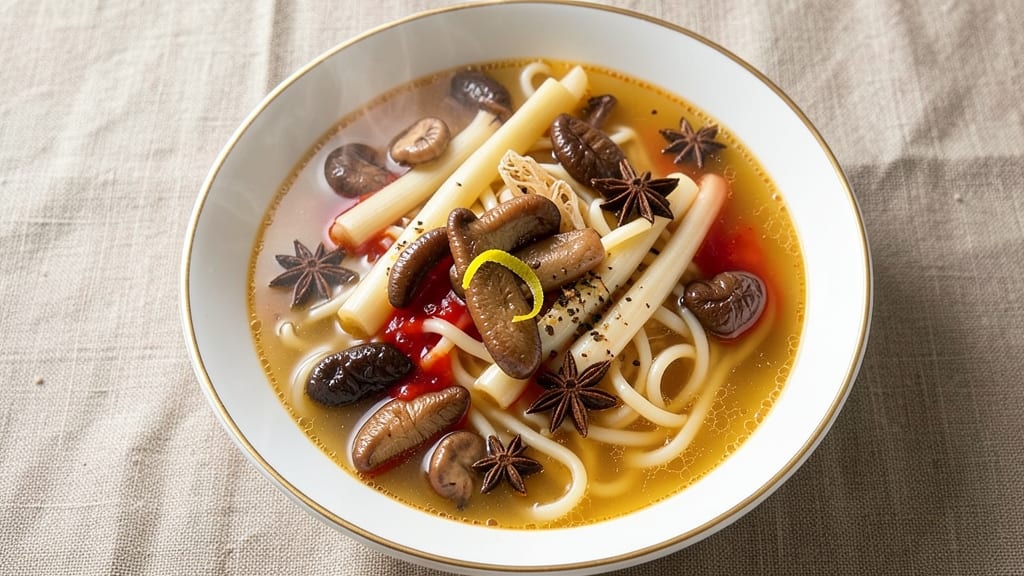
This basic hot and sour soup recipe delivers the perfect balance of tangy, spicy, and umami flavors in every silky bowlful. The secret lies in building a rich broth from mushrooms, bamboo shoots, and star anise, then carefully balancing it with vinegar and chili oil for that signature tangy heat.
I've perfected this version to be approachable yet deeply flavorful—ideal for weeknight dinners or meal prep.
The beauty of this recipe is its adaptability. Use firm tofu for a vegetarian version or swap in pork for a classic touch, all while maintaining that signature silky texture from egg noodles.
The soup simmers just long enough to develop deep, complex flavors without losing its vibrant colors or crisp vegetables. Every ingredient plays a role—from the earthy mushrooms to the bright vinegar that cuts through the richness.
What you'll end up with is a steaming bowl of soup where each spoonful delivers perfectly balanced flavors: the tang of vinegar, the gentle heat of chili oil, the umami depth of the broth, and the satisfying bite of fresh vegetables.
The noodles absorb the flavorful liquid while maintaining their tender bite, creating that ideal texture contrast.
This recipe scales beautifully for a crowd and tastes even better the next day as flavors meld further. Perfect for chilly evenings or when you crave something comforting yet exciting. Let's get cooking!
Ingredients for basic hot and sour soup
Mushrooms, bamboo shoots, and star anise build the umami base for this balanced hot and sour soup.
| Ingredient | Amount | Notes |
|---|---|---|
| Dried Shiitake Mushrooms 🍄 | ½ cup | Rehydrated in hot water |
| Bamboo Shoots 🌿 | 1 can | 14 oz can, drained |
| Star Anise 🌟 | 2 whole | For aromatic depth |
| Dried Wood Ear Mushrooms 🍄 | ¼ cup | Rehydrated and sliced |
| Egg Noodles 🍜 | 8 oz | Fresh or dried, wide |
| White Vinegar 🍶 | ½ cup | Distilled preferred |
| Chili Oil 🌶️ | ¼ cup | Homemade or store-bought |
| Green Onion 🧅 | ¼ cup | Sliced, for garnish |
| Garlic Cloves 🧄 | 4 cloves | Minced for aroma |
| Ginger Root 🌿 | 1 tbsp | Freshly grated |
| Chicken Broth 💧 | 4 cups | Low-sodium preferred |
| Sesame Oil 🫒 | 1 tbsp | For finishing |
| Salt 🧂 | 1 tsp | Adjust to taste |
| White Pepper 🌶️ | ¼ tsp | Freshly ground |
The mushrooms are the flavor foundation—shiitake for earthiness and wood ear for texture. Grab dried mushrooms from Asian markets if you want the most authentic taste, but the grocery store dried variety works fine too. Rehydrate them properly: soak in hot water for 20-30 minutes until pliable, then slice. Star anise adds that signature aromatic depth—don't skip it. For bamboo shoots, 14 oz cans are standard and widely available at most supermarkets. If you can't find them, water chestnuts make a decent substitute though they won't have the same texture.
No star anise? 1 cinnamon stick or 1 tsp anise seeds will work in a pinch, though the flavor won't be identical. The vinegar is crucial for that signature tang—distilled white vinegar gives the cleanest flavor, but rice vinegar adds a subtle sweetness if you prefer. For chili oil, homemade is best (chili flakes + neutral oil), but store-bought works if you're short on time. The green onions should be fresh—no wilting leaves. If you're making this vegetarian, simply swap the chicken broth for vegetable broth and add an extra 0.5 cup firm tofu for protein.
This soup tastes even better the next day as flavors meld further. Store leftovers in an airtight container in the fridge for up to 5 days. For freezing, portion into single-serving containers—it reheats beautifully. The noodles soften when reheated, so I like to undercook them slightly when initially boiling. Garnish with extra chili oil and sesame oil before serving for that restaurant-quality finish. The broth keeps well too—strain and freeze it separately for future use.
Why You'll Love This Recipe
- Pantry Magic: I swear by this recipe when I forget to grocery shop—just soak those dried shiitake and wood ear mushrooms overnight, and boom, umami bomb in a bowl. No fresh ingredients? No problem.
- Tangy Umami Fix: That star anise and bamboo shoots give it a depth I can’t get anywhere else—bright, funky, and just salty enough to make my taste buds do a happy dance. Honestly, the first sip always makes me pause.
- Leftover Superstar: Doubles easily, and reheats like a dream—better the next day, actually. I make a big batch on Sundays, and it’s my go-to for lazy nights or when friends drop by unannounced.
- Budget Soul Food: Dried mushrooms and bamboo shoots last forever, and a single star anise stretches across multiple bowls. For under $10, this soup feeds four and still leaves me feeling fancy. (Yes, even on a Tuesday night.)
Step-by-step instructions for balanced tangy hot and sour soup
This method delivers authentic flavor harmony—bright acidity, subtle heat, and umami depth in every spoonful.
Rehydrate and Prepare Mushrooms
Place the 0.5 cup dried shiitake mushrooms in a heatproof bowl and pour 2 cups boiling water over them. Let them soak for 15 minutes until softened, then drain while reserving the soaking liquid. Trim off and discard the tough stems, then slice the caps into ¼-inch pieces. Repeat the process with the 0.25 cup dried wood ear mushrooms, slicing them into thin strips after rehydration.
This rehydration step is crucial—it prevents the mushrooms from absorbing too much liquid later and turning mushy. The reserved soaking liquid adds extra umami to your broth. I like to use a fine-mesh strainer for this to catch all the tiny mushroom bits that pack serious flavor.
Build the Aromatic Base
In a large pot over medium heat, add 1 tablespoon sesame oil and the 4 cloves minced garlic. Sauté for 30 seconds until fragrant but not browned. Add the 1 tablespoon freshly grated ginger root and cook for another 30 seconds, stirring constantly. Toss in the 2 whole star anise and the sliced bamboo shoots, then pour in the 4 cups chicken broth. Bring to a gentle simmer.
The star anise should infuse the broth with subtle anise notes—don't skip this step. If you're using dried mushrooms, add them now along with their reserved soaking liquid. Let everything simmer uncovered for 10 minutes to allow the aromatics to meld into the broth.
Cook the Noodles and Balance Flavors
Add the 8 oz egg noodles to the simmering broth and cook according to package directions until al dente (usually 4-5 minutes). While the noodles cook, prepare the tangy-sweet mixture by combining 0.5 cup white vinegar, 0.25 cup chili oil, 1 teaspoon salt, and 0.25 teaspoon freshly ground white pepper in a small bowl. Whisk until fully emulsified.
Here's where the magic happens: the vinegar provides the signature tang, while the chili oil adds controlled heat. I like to adjust the pepper amount based on preference—start with the full 0.25 teaspoon and add more if you want extra kick. The white pepper complements the star anise beautifully without overpowering.
Finish and Garnish
Once the noodles are al dente, remove ½ cup of the broth and stir it into your tangy-sweet mixture to thin it slightly. Pour this back into the pot and stir gently to combine. Add the 0.25 cup sliced green onion and let everything simmer together for 2 minutes to meld the flavors. Remove the star anise pieces before serving.
The green onion adds freshness that cuts through the richness. Taste and adjust seasoning—you might need a touch more salt or vinegar depending on your broth's saltiness. Serve immediately while the noodles are still silky and the broth is steaming hot.
Pro Tips For Making Basic Hot And Sour Soup
- SOAK MUSHROOMS SEPARATELY: Dried shiitake and wood ear mushrooms need different soaking times—shiitake takes 20-30 minutes in hot water, while wood ear only needs 15-20. I used to soak them together and ended up with mushy wood ear and underhydrated shiitake. Trust the process, even if it feels fussy.
- STRAIN STAR ANISE: Crush the star anise lightly before adding it to the broth, but don’t pulverize it—just enough to crack the surface. Then, strain it out after simmering. I learned this the hard way when my soup tasted like licorice punch instead of balanced sour-spicy. A fine-mesh strainer works best.
- DON’T BOIL THE NOODLES: Add the egg noodles to the simmering soup (not boiling water) when you’re ready to serve. Boiling them first makes them mushy and dulls the broth’s flavor. I was skeptical—until I tried it and realized how much better the texture and taste were.
- SALT THE BROTH LATE: Wait until the very end to add salt—after the vinegar and chili crisp. Adding it early can mute the sour and spicy flavors. I used to salt early, and my soup always tasted flat. The last splash of salt ties everything together.
Regional styles of this basic hot and sour soup
Northern Chinese Style
In Northern China, hot and sour soup often features a heartier broth made with pork belly instead of tofu. I like to add 1 cup diced pork belly along with the mushrooms and bamboo shoots, simmering it until tender.
The result is a richer, more substantial soup that holds up well for leftovers. Serve with extra chili oil drizzled on top—this version tends to be spicier to balance the richness. 🌶️
Cantonese Adaptation
The Cantonese version focuses on lighter textures and brighter flavors. Swap the egg noodles for rice noodles (like those used in congee) and reduce the chili oil to 1 tablespoon for a milder heat.
Add 1 cup baby bok choy at the end for freshness, and finish with a drizzle of light soy sauce instead of extra vinegar. This version is perfect for hot summer days when you want something refreshing yet flavorful.
Sichuan Spicy Twist
For a Sichuan-inspired version, boost the heat with 1 tablespoon Sichuan peppercorns (toasted and ground) and 1 tablespoon doubanjiang (fermented chili bean paste). The peppercorns add a numbing spice that pairs perfectly with the tang.
I also recommend using dried tangerine peel (1-inch strip) in the broth for a floral, citrusy depth. Garnish with crushed peppercorns and extra chili oil for that signature Sichuan kick. 🔥
Vegetarian Version
This is my go-to vegetarian adaptation: replace the chicken broth with 4 cups vegetable broth and add 1 cup firm tofu (pressed and cubed) along with the mushrooms. For extra protein, stir in 2 tablespoons soy sauce and 1 tablespoon miso paste during the final simmer.
The miso adds a savory depth that mimics the umami of meat. Top with sesame seeds and extra green onions for a satisfying, plant-based bowl.
Winter Comfort Version
In colder months, I like to make this soup extra cozy by adding 1 cup shredded cabbage and 1 cup shiitake mushrooms (fresh or rehydrated). The cabbage adds a satisfying crunch and absorbs the broth beautifully.
For warmth, stir in 1 tablespoon goji berries (soaked in warm water) and finish with a drizzle of toasted sesame oil. This version is hearty enough to be a main dish and tastes even better the next day as flavors meld further. ❄️
Nutrition facts
Frequently asked questions
Can I make this soup without star anise?
Yes, but the flavor will be less aromatic. Substitute with 1 cinnamon stick or 1 tsp anise seeds for similar depth. If unavailable, skip it—the soup will still taste balanced, but you'll miss that subtle licorice note that complements the tangy heat.
How do I adjust the spice level?
Start with the full 0.25 cup chili oil for medium heat. For milder flavor, reduce to 2 tbsp and add 1 tsp sugar to balance. Want extra kick? Add 1 tsp chili flakes or 0.5 tsp cayenne when serving. Always taste before serving—you can adjust at the table too!
Can I use fresh mushrooms instead of dried?
Replace dried shiitake with 4 oz fresh shiitake caps (sliced) and skip rehydration. For wood ear mushrooms, use 1 oz fresh (torn into pieces) instead of dried. Fresh mushrooms add moisture, so you might need to simmer the broth slightly longer to concentrate flavors.
Why does my soup taste too vinegary?
This happens when the broth isn't flavorful enough to balance the acidity. Try adding 1 tsp soy sauce or 0.5 tsp sugar to round out flavors. For future batches, ensure your broth has enough umami from mushrooms and star anise before adding vinegar. A pinch of salt often helps too!
How long will leftovers keep?
Store in an airtight container in the fridge for up to 5 days. The flavors actually improve as they meld! For freezing, portion into single servings—reheat with 2 tbsp water per bowl to restore broth consistency. The noodles will soften slightly when reheated, so serve with extra chili oil for freshness.