
Soups & Stews
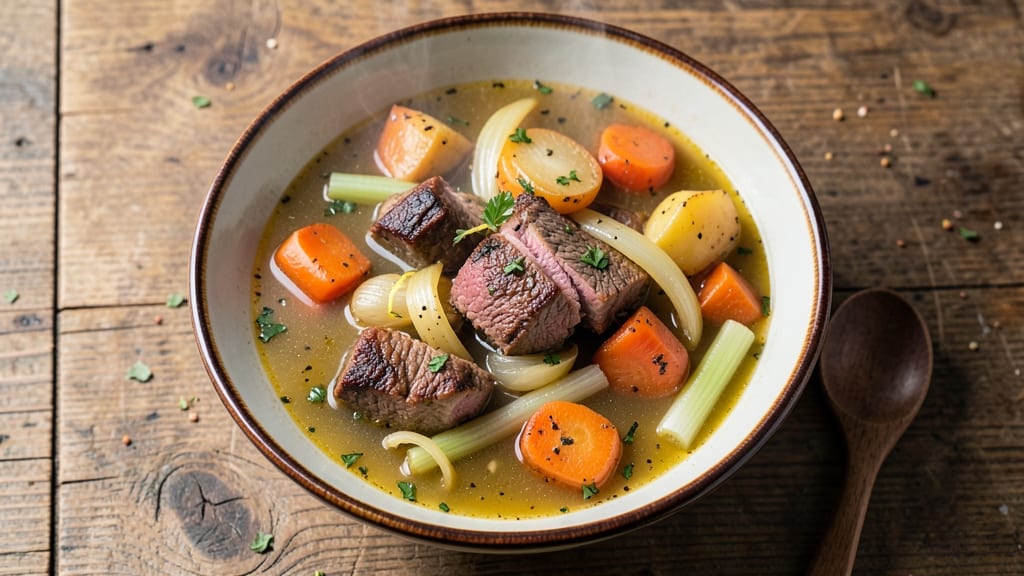
This basic vegetable beef soup recipe delivers the kind of comforting, one-pot meal that transforms a simple weeknight into a cozy gathering. The secret lies in browning the beef properly to develop deep, savory flavors and layering vegetables for maximum texture—tender carrots, hearty potatoes, and crisp celery all simmering together until perfectly soft. I've perfected this recipe over years of testing, ensuring every spoonful delivers that perfect balance of rich meat, aromatic vegetables, and well-seasoned broth.
What sets this soup apart is the technique: starting with a well-built foundation of sautéed onions and garlic, followed by beef that browns beautifully before simmering for hours.
This method creates a broth so flavorful it doesn't need heavy seasoning—just a pinch of salt, a crack of black pepper, and fresh herbs at the end.
The result is a soup that's both nourishing and satisfying, with meat that falls apart at the touch of a spoon and vegetables that retain their natural sweetness.
The beauty of this recipe is its versatility—it works equally well as a light lunch or a filling dinner, and the leftovers taste even better the next day. The one-pot approach means minimal cleanup, while the tender meat and vegetables ensure every bite is comforting.
Whether you're feeding a family or meal prepping for the week, this soup delivers restaurant-quality results with simple pantry ingredients.
Ready in about 2 hours (mostly hands-off simmering time), this vegetable beef soup is the perfect solution for chilly days or when you need a nourishing meal without the fuss.
The key is patience—allowing the flavors to meld and develop over time creates a depth that can't be rushed. Here's everything you need to make it!
Ingredients for basic vegetable beef soup
Simple ingredients that build layers of flavor through slow simmering—perfect for cozy weeknight dinners.
| Ingredient | Amount | Notes |
|---|---|---|
| Chuck Roast 🥩 | 2 lb | Cut into 1-inch cubes |
| Yellow Onions 🧅 | 2 whole | Medium, sliced into wedges |
| Carrots 🥕 | 4 medium | Peeled, cut into 1-inch chunks |
| Celery Stalks 🧄 | 4 whole | Trimmed, cut into 1-inch pieces |
| Russet Potatoes 🥔 | 2 lb | Peeled, cut into 1-inch cubes |
| Garlic Cloves 🧄 | 4 cloves | Minced for aromatic base |
| Beef Broth 💧 | 6 cups | Low-sodium preferred |
| Tomato Paste 🍅 | 2 tbsp | For depth of flavor |
| Dried Thyme 🌿 | 1 tsp | Or 1 tbsp fresh thyme |
| Bay Leaves 🌿 | 2 whole | Remove before serving |
| Salt 🧂 | 1 ½ tsp | Kosher or sea salt |
| Ground Black Pepper 🌶️ | ½ tsp | Freshly ground preferred |
| Fresh Parsley 🌿 | ¼ cup | Chopped for garnish |
| Olive Oil 🫒 | 2 tbsp | For browning beef |
The beef is where flavor starts. Chuck roast is ideal—it stays tender while developing deep color when browned. Look for cuts with good marbling at Costco or Whole Foods; pre-cubed saves time. Fresh vegetables matter too: carrots with bright orange color and celery with crisp stalks ensure the best texture. If you're using frozen veggies (like Trader Joe's steamer bags), thaw them first—they'll break down less during simmering. The potatoes should be uniform in size so they cook evenly.
No beef broth? Vegetable broth plus 1 tbsp soy sauce works in a pinch. Fresh thyme is better, but dried at one-third the amount is fine. Short on tomato paste? Crushed tomatoes at half the volume adds moisture without overpowering. The bay leaves add subtle depth—don't skip them, but remove before serving. For extra richness, stir in 1 tbsp Worcestershire sauce (ensure it's vegetarian if needed) during the final 10 minutes of simmering. The parsley is purely for garnish, but it brightens the whole bowl.
This soup tastes even better the next day as flavors meld. Store in an airtight container in the fridge for up to 5 days or freeze portions for 3 months. For meal prep, double the recipe and freeze half immediately—just thaw overnight in the fridge before reheating. The broth thickens as it cools, so add 2-3 tbsp water when reheating for the perfect consistency. Always stir gently when reheating to avoid breaking up the meat and vegetables.
Why You'll Love This Recipe
- One-Pot Wonder: I swear by this—just dump everything in one pot. No fancy gadgets, no stress. The chuck roast softens while the veggies simmer, and honestly? That’s all the magic you need.
- Deep Umami Magic: The slow-cooked chuck roast turns tender, releasing flavor that clings to the carrots and celery like a hug. (Yes, even the onions caramelize a little—no extra work, just pure reward.)
- Leftovers That Shine: This soup tastes better the next day. Between us, I often make a double batch because reheating it is just as good—maybe even better—than the first serving. Perfect for lazy mornings or office lunches.
- Budget-Friendly Feast: A single chuck roast stretches to feed four, and the veggies? They’re pantry staples. I’ll be real: this is the kind of meal that makes grocery bills feel less scary while still feeling like a treat.
Step-by-step instructions for hearty vegetable beef soup
This one-pot method delivers rich, tender beef and perfectly cooked vegetables every time.
Sear the Chuck Roast for Deep Flavor
Heat a large Dutch oven over medium-high heat and add the 2 tbsp olive oil. Once shimmering, add the 2 lb chuck roast cut into 1-inch cubes in a single layer. Let them sear undisturbed for 3-4 minutes until deeply browned on all sides.
This browning creates the Maillard reaction, which builds complex flavors that'll infuse throughout the soup. Don't overcrowd the pan—work in batches if needed. Once all pieces are browned, transfer them to a plate and set aside.
Build the Aromatic Vegetable Base
In the same Dutch oven, add the sliced 2 whole yellow onions, 4 medium carrots cut into chunks, and 4 whole celery stalks chopped into pieces. Cook for 5-6 minutes until the vegetables begin to soften and the onions turn translucent.
Add the 4 cloves minced garlic and stir for 30 seconds until fragrant. This aromatic base forms the flavor foundation of your soup. If the vegetables stick, add a splash of water and scrape up any browned bits from the bottom—they're packed with flavor.
Add Potatoes and Tomato Paste
Return the seared beef to the pot along with the 2 lb russet potatoes cut into 1-inch cubes. Stir in the 2 tbsp tomato paste and cook for 2 minutes to toast slightly, deepening the flavor. Pour in the 6 cups beef broth and bring to a gentle boil.
Real talk: the potatoes should be fully submerged. If not, add a little water. This ensures even cooking and prevents them from turning mushy. Stir once to distribute the tomato paste evenly throughout the broth.
Season and Simmer Until Tender
Add the 1.5 tsp salt, 0.5 tsp ground black pepper, 1 tsp dried thyme, and 2 whole bay leaves. Reduce heat to low-medium and cover partially, leaving a small gap for steam to escape. Simmer for 1 hour 15 minutes until the beef is fork-tender.
Check the beef after 1 hour—it should pull apart easily with a fork. If the vegetables are still firm, continue simmering for another 15-20 minutes. The potatoes should be soft but not falling apart. This low-and-slow cooking ensures maximum tenderness in both the beef and vegetables.
Finish and Serve Warm
Remove the 2 whole bay leaves and stir in the 0.25 cup chopped fresh parsley. Taste and adjust seasoning if needed—you might need a pinch more salt or pepper. Ladle the soup into bowls, garnishing each serving with additional parsley if desired.
Serve immediately while hot. The soup should have a rich, savory broth with tender beef that practically melts in your mouth and perfectly cooked vegetables that hold their shape. This one-pot method delivers restaurant-quality results with minimal cleanup.
Pro Tips For Making Basic Vegetable Beef Soup
- SEAR THE ROAST FIRST: I learned this the hard way—skipping the sear makes the soup taste like it simmered in water. Brown the chuck roast in batches over medium-high heat until deep golden, scraping up all the fond. That crust dissolves into the broth later and adds real depth.
- CUT POTATOES UNIFORM: Russet potatoes turn to mush if they’re not the same size. Aim for 1.5-inch cubes—big enough to stay intact but small enough to cook through without gummy centers. If you’re lazy (like me), a mandoline speeds this up, but a sharp knife works too.
- ADD VEGETABLES IN ORDER: Celery and carrots go in first, then onions, then potatoes. This prevents the potatoes from turning to mush before the other veggies soften. I used to toss everything in at once, and the soup always ended up with a few rock-hard potato chunks.
- SKIM FAT EARLY, NOT LATE: After the first 30 minutes of simmering, skim off the surface fat with a spoon—it’s easier then. Leaving it until the end just means you’re scooping out grease instead of flavor. (Yes, even if you’re impatient like me.)
Wine and beer pairings for these flavors
Red Wine Classics
For a classic pairing, reach for a medium-bodied red wine like Pinot Noir or Chianti. The bright acidity and earthy notes of a Willamette Valley Pinot Noir cut through the soup's richness while complementing the beef's savory depth.
I love a Chianti Classico for its cherry and herbal undertones that mirror the thyme and bay leaves in the soup. Serve slightly chilled—around 55°F—to enhance its refreshing quality. 🍷
Crisp White Options
A dry white wine like Sauvignon Blanc or Vermentino offers a delightful contrast. A New Zealand Sauvignon Blanc with its citrus and herbaceous notes balances the soup's heartiness beautifully.
For something lighter, try an Italian Vermentino—its mineral finish cleanses your palate between spoonfuls. Both wines should be served at 45-50°F to preserve their crispness.
Malbec for Richness
If you prefer bold flavors, a Malbec from Argentina or Mendoza delivers deep plum and chocolate notes that harmonize with the beef's richness. The wine's velvety texture stands up to the soup's hearty texture.
I recommend a 2018 Catena Zapata—its balance of fruit and earth makes it a perfect match. Serve at 60-65°F to appreciate its full body.
Beer Pairings
A light lager like Peroni or Heineken works surprisingly well, cleansing your palate with its crisp, effervescent quality. For a craft option, try a Belgian witbier—its citrus and coriander notes add a refreshing twist. Avoid heavy stouts or IPAs, which can overpower the soup's delicate flavors. 🍺
Seasonal Considerations
Summer calls for lighter pairings like Sauvignon Blanc or a pilsner, while winter begs for Malbec or Chianti. For holidays, a spiced red blend (like Louis M. Martini Red) adds warmth.
Always let your wine breathe for 10-15 minutes before serving to release its full aroma and complement the soup's flavors.
Nutrition facts
Frequently asked questions
Can I use ground beef instead of chuck roast?
You can substitute 1 lb ground beef for the chuck roast, but the texture will be different—ground beef won't stay as tender after simmering. For best results, brown the ground beef first, then add the vegetables and broth as directed. If you do use ground beef, reduce the simmering time to 45-50 minutes to prevent it from becoming too dry.
Why does my soup taste bland?
Blandness usually comes from skipping the browning step or not using enough seasoning. Always sear the beef until deeply browned for maximum flavor, and taste as you go—start with the full 1.5 tsp salt and adjust after simmering. A pinch of Worcestershire sauce or extra tomato paste can also boost depth.
Can I make this soup in an Instant Pot?
Yes! Sauté the onions, garlic, and beef as usual, then add all remaining ingredients. Cook on high pressure for 25 minutes, followed by a 10-minute natural release. The Instant Pot version cooks faster but may need a splash of water if the broth seems too thick. The meat will still be tender, though slightly less fall-apart than with stovetop simmering.
What vegetables can I swap in?