
Soups & Stews
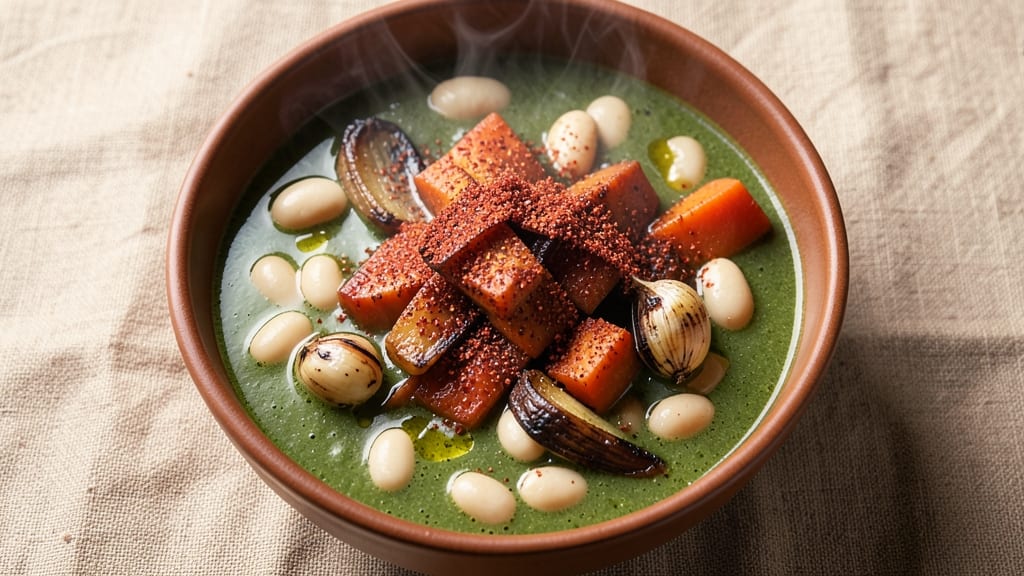
This Basque bean soup recipe transforms simple ingredients into a hearty, smoky masterpiece that captures the soul of Spanish cuisine. The secret lies in slow-roasting garlic and paprika until deeply aromatic, then simmering them with white beans and tomatoes until the flavors meld into a rich, velvety broth.
I developed this vegetarian version after discovering how the Basque region’s traditional fabada could shine without meat—just pure, concentrated flavor.
The dish begins with a dry roast of garlic and smoked paprika, which infuses the broth with an irresistible depth that’s both earthy and slightly sweet.
White beans soften into tender perfection while absorbing the smoky essence, and a touch of olive oil at the end creates a luxurious sheen on the surface. This isn’t just soup—it’s a comforting embrace in a bowl, perfect for chilly evenings or as a satisfying vegetarian main.
What sets this recipe apart is its balance of simplicity and sophistication. No complex techniques are required—just patience as the flavors develop over time. The result is a soup so rich and flavorful that even meat lovers won’t miss the chorizo.
Serve it with crusty bread to soak up every last drop of that aromatic broth, and you’ll understand why Basque cuisine is celebrated worldwide.
For those who prefer a lighter touch, you can reduce the paprika slightly or add a splash of lemon juice at the end for brightness.
The beauty of this recipe lies in its adaptability—whether you follow it exactly or make it your own, the foundation of slow-roasted garlic and paprika ensures a deeply satisfying result every time.
Ingredients for basque bean soup
Simple pantry staples and a few fresh ingredients create this smoky, hearty Basque bean soup.
| Ingredient | Amount | Notes |
|---|---|---|
| Dry White Beans 🌾 | 1 ½ cups | Rinsed before cooking |
| Garlic Cloves 🧄 | 8 whole | Unpeeled for roasting |
| Smoked Paprika 🌶️ | 2 tbsp | High-quality for smoky flavor |
| Medium Carrots 🥕 | 2 whole | Chopped into chunks |
| Medium Onion 🧅 | 1 whole | Diced for base |
| Extra-Virgin Olive Oil 🫒 | ½ cup | For roasting and finishing |
| Canned Diced Tomatoes 🍅 | 1 can | San Marzano preferred |
| Vegetable Broth 💧 | 4 cups | Low-sodium preferred |
| Bay Leaves 🍃 | 2 whole | For aromatic depth |
| Fresh Thyme 🌿 | ½ tbsp | Leaves only, chopped |
| Salt 🧂 | 1 ½ tsp | Adjust to taste |
| Black Pepper 🌶️ | ½ tsp | Freshly ground |
| Lemon Juice 🍋 | 1 tbsp | Optional for brightness |
The garlic and smoked paprika are non-negotiable—they build the soup's soul. Roast the garlic whole until caramelized for that sweet, jammy depth. Trader Joe's has the best smoked paprika, but any quality brand works. The white beans should be rinsed well to remove any dirt, and I always use cannellini or great northern beans for their creamy texture. If you're short on time, soak the beans overnight or use pre-cooked canned beans (just drain and rinse them).
No smoked paprika? Regular paprika plus a pinch of liquid smoke works in a pinch, though it won’t be as authentic. Fresh thyme is ideal, but dried thyme at one-third the amount gets you close. The tomatoes can be fresh if you prefer—just chop them instead of using canned. For a lighter touch, reduce the paprika to 1.5 tablespoons or add a splash of lemon juice at the end. And if you're feeling fancy, top with a drizzle of extra-virgin olive oil right before serving.
This soup tastes even better the next day as the flavors meld. Store leftovers in the fridge for up to 5 days—it reheats beautifully. For freezing, portion into airtight containers and keep for 3 months. The broth thickens as it cools, so add a splash of water or broth when reheating. I always make a double batch because it disappears so fast—perfect for meal prep or feeding a crowd.
Why You'll Love This Recipe
- I’ll be real: I used to dread soaking beans. Then I discovered this trick—just toss the dry white beans in a pot with cold water, add a pinch of salt, and let them simmer. Boom. Ready in under an hour, no fuss. That smoked paprika? It works its magic while you wait.
- No-Soak Needed: I’ll be real: I used to dread soaking beans. Then I discovered this trick—just toss the dry white beans in a pot with cold water, add a pinch of salt, and let them simmer. Boom. Ready in under an hour, no fuss. That smoked paprika? It works its magic while you wait.
- Smoky Depth Magic: Honestly, the smoked paprika transforms this soup. It’s not just flavor—it’s that rich, campfire-like warmth that lingers. Pair it with the caramelized onion and garlic, and you’ve got layers. My husband still asks, “What’s in it?” every time.
- Weeknight to Potluck: Between us, this soup is my secret weapon. Toss it together on a Tuesday night, and it’s still the star at Sunday brunch. The beans hold up, the carrots soften just right, and the paprika’s smokiness makes it feel special—no one guesses how easy it was.
Step-by-step instructions for Basque bean soup
Here's how to build rich, smoky flavors from scratch—no shortcuts needed.
Roast Garlic and Vegetables for Deep Flavor
Preheat your oven to 400°F. Peel the 8 whole garlic cloves but leave them whole, and chop the 2 medium carrots into 1-inch chunks. Toss them together with the 1 medium onion (cut into 1-inch chunks) and ½ cup extra-virgin olive oil on a baking sheet. Spread them in a single layer—crowding steams instead of roasting.
Roast for 30-35 minutes until the garlic cloves are golden brown and tender when pierced with a fork, and the carrots and onions are caramelized at the edges. The garlic should smell sweet and nutty—this is where the magic happens. Let them cool slightly before handling; hot garlic burns fingers.
Build the Smoky Base
In a large pot, heat 1 tablespoon of the reserved olive oil from the roasted vegetables over medium heat. Add the roasted garlic, carrots, and onions to the pot. Stir in the 2 tablespoons smoked paprika and cook for 2 minutes until fragrant—this activates the spices and deepens their flavor.
Add the 1 can diced tomatoes (with juices), 4 cups vegetable broth, 2 bay leaves, and ½ tablespoon fresh thyme. Bring to a boil, then reduce heat to medium-low and let it simmer for 15 minutes. This step develops the soup's base flavor—don't rush it. The tomatoes should break down slightly, and the spices should meld together.
Cook the Beans Until Tender
Rinse the 1½ cups dry white beans under cold water, then add them to the simmering pot. Stir well to combine, then add the 1½ teaspoons salt and ½ teaspoon black pepper. Bring the soup back to a gentle boil, then reduce heat to low and cover partially.
Simmer for 45-60 minutes, stirring occasionally, until the beans are tender but not mushy—they should hold their shape but be easy to crush between your fingers. If the soup gets too thick, add ½ cup water or broth to maintain the right consistency. The beans should absorb the flavors completely, becoming rich and hearty.
Finish with Brightness and Serve
Once the beans are tender, remove the 2 bay leaves and stir in the 1 tablespoon lemon juice. Taste and adjust seasoning—you might need a pinch more salt or pepper depending on your broth. The lemon juice brightens the smoky, earthy flavors and cuts through the richness.
Let the soup sit off the heat for 5 minutes before serving. This resting time allows the flavors to settle and the soup to thicken slightly. Ladle into bowls and garnish with a drizzle of extra-virgin olive oil and a sprinkle of fresh thyme. Serve with crusty bread to soak up every last drop of this comforting, smoky bean soup.
Pro Tips For Making Basque Bean Soup
- SOAK BEANS OVERNIGHT: Dry white beans take 2-3 hours to soften properly, but overnight soaking cuts that time in half. Toss them in cold water with a pinch of salt (yes, even for soaking) and let them sit—this prevents the soup from turning gummy later. I learned this the hard way after slurping a gluey batch that needed an extra 45 minutes of simmering.
- CHAR THE ONIONS LOW: Skip the high heat when cooking onions—slow and steady wins here. Let them caramelize gently over medium-low for 15-20 minutes until deep golden, not browned. That’s where the flavor lives, and rushing it just burns the edges. (Your nose will know the difference.)
- TOAST THE PAPRIKA: Smoked paprika loses its depth if just stirred in cold. Heat it in a dry pan for 30 seconds until fragrant—it’ll smell like a campfire. Then toss it into the soup with the garlic. This step makes the smoky flavor pop instead of fading into the background.
- DON’T SKIP THE SKIM: After the beans simmer, skim off the foam that rises to the top—especially in the first 20 minutes. It’s not just for clarity; it keeps the soup from getting bitter. I used to ignore it, and the result was a slightly off-tasting batch. (Your future self will notice.)
Essential equipment for this dish
Roasting Pan Essentials
Your roasting pan is the unsung hero of this recipe—it needs to handle 400°F heat without warping. I use a 13x9-inch heavy-duty stainless steel pan from All-Clad because it distributes heat evenly and resists rust.
If you don’t have one, a baking sheet with edges works too, but avoid non-stick pans—they can’t handle the high heat for roasting garlic properly. 🌡️
Heavy-Bottomed Pot
A 6-8 quart Dutch oven or enamel-coated pot is perfect for simmering the soup evenly. My go-to is a Le Creuset Signature because it retains heat beautifully and prevents scorching. If you’re on a budget, a stainless steel stockpot with a thick base works—just stir occasionally to prevent sticking.
Avoid thin aluminum pots, as they heat unevenly and can burn the bottom.
Immersion Blender
While this recipe doesn’t require blending, an immersion blender (like the Ninja Professional) comes in handy if you want to adjust the soup’s texture later. If you prefer a smoother consistency, blend a portion of the soup before adding it back to the pot.
For a rustic texture, skip blending entirely—this soup’s charm lies in its hearty, chunky goodness. ✨
Wooden Spoon
A long-handled wooden spoon is a must for stirring the soup without scratching your pot. I prefer olive wood because it’s gentle on non-stick surfaces and durable.
Avoid metal spoons—they can react with acidic ingredients like tomatoes or lemon juice over time. Keep it nearby while simmering to prevent sticking and ensure even cooking.
Ladle for Serving
Serve your soup with a heat-resistant ladle, ideally with a stainless steel or silicone handle. I love the OXO Good Grips because it stays cool and has a comfortable grip.
Avoid plastic ladles—they can melt or warp when exposed to high heat. A good ladle makes plating your soup effortless and keeps your hands safe from hot broth. 🍲
Nutrition facts
Frequently asked questions
Can I use canned beans instead of dry?
Yes! For convenience, use 2 (15-ounce) cans of white beans (cannellini or great northern) instead of 1.5 cups dry. Drain and rinse them thoroughly to remove excess sodium. You’ll save 45-60 minutes of cooking time, but the flavor will be just as rich. Just add them after the 15-minute simmer with the tomatoes and broth, then reduce heat to low and let them warm through for 10 minutes.
What makes this Basque bean soup different from other white bean soups?
The key lies in the smoked paprika and roasted garlic—these create a deep, smoky, slightly sweet base that’s signature to Basque fabada. Unlike many soups that rely on herbs alone, this recipe builds flavor through dry-roasting vegetables and slow simmering to let the spices meld. The lemon juice at the end also adds a bright contrast to the richness, balancing the dish perfectly.
Can I make this soup in an Instant Pot?
Sauté the roasted garlic, carrots, and onions in the Instant Pot on Sauté mode for 3 minutes. Add the paprika, tomatoes, broth, and thyme, then pressure cook for 20 minutes. Quick-release the pressure, add the beans and salt, then cook on High pressure for 5 minutes. Finish with lemon juice. The Instant Pot cuts cooking time to 35 minutes total—perfect for busy weeknights!
How do I prevent the soup from getting too thick?
Stir in ½ cup water or broth whenever the soup starts to thicken during simmering. If it’s already too thick, thin it with 1-2 tablespoons of water or broth while reheating. The beans release starch as they cook, which naturally thickens the broth. For a creamier texture, mash a few beans against the pot’s side with a wooden spoon while simmering.
What’s the best way to store leftovers?
Let the soup cool completely, then transfer it to airtight containers and refrigerate for up to 5 days. The flavors actually improve overnight as the ingredients meld further. For freezing, portion into containers and store for 3 months. Thaw in the fridge overnight—never microwave directly from frozen. Reheat gently on the stove with a splash of water or broth to restore the original consistency.