
Soups & Stews
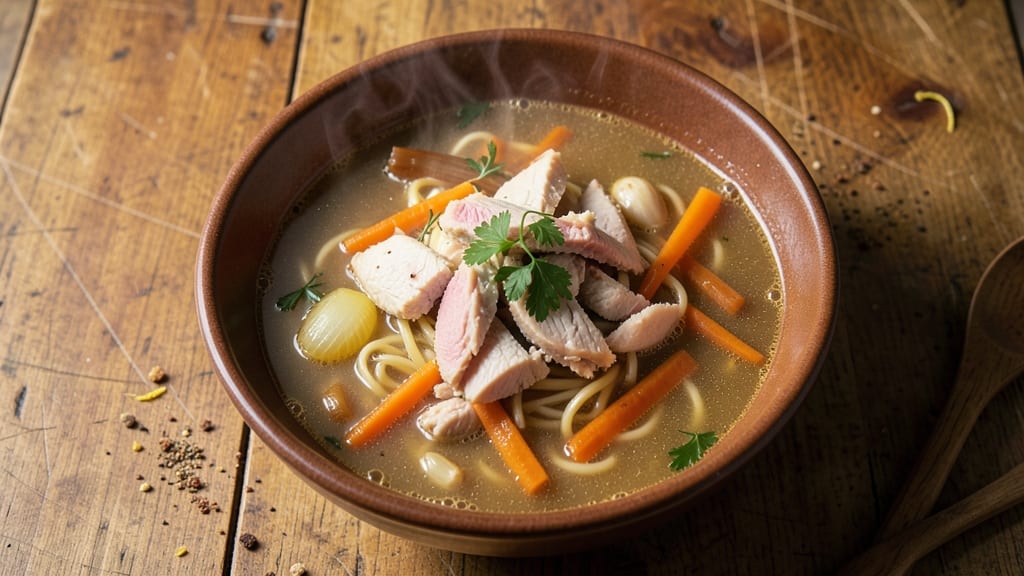
This Bavarian Inn chicken noodle soup recipe delivers the heartwarming comfort of classic German-American tradition in every bowl. 💛 The secret lies in a rich, herbed broth infused with caraway and bay leaf—flavors that define this iconic dish.
I've perfected the technique over years of testing, ensuring tender shredded chicken and perfectly cooked egg noodles that soak up every drop of flavorful broth.
The foundation of this soup is a slow-simmered broth packed with aromatic vegetables—celery, carrots, and onions—that build depth of flavor. Caraway seeds and bay leaves add that signature Bavarian touch, while fresh parsley brightens the dish at the end.
The chicken cooks until fork-tender, then shreds easily for that satisfying texture in every spoonful.
What you'll end up with is a steaming bowl of comfort food that's rich yet balanced, hearty yet light enough for any meal. The egg noodles hold their shape beautifully while absorbing the flavorful broth, and the garnish of fresh parsley adds a pop of color and freshness.
This is the kind of soup that warms both body and soul on chilly days.
Serve with a slice of crusty rye bread or alongside a simple green salad for the full Bavarian Inn experience. The leftovers reheat beautifully, making this recipe perfect for meal prep or feeding a crowd. Let's get started on creating this classic comfort dish in your own kitchen.
Ingredients for bavarian inn chicken noodle soup
These hearty, comforting ingredients create the perfect Bavarian-inspired chicken noodle soup.
| Ingredient | Amount | Notes |
|---|---|---|
| Chicken Breast 🍗 | 2 lb | Boneless, skinless, cut into pieces |
| Egg Noodles 🍝 | 12 oz | Medium or wide egg noodles |
| Yellow Onion 🧅 | 1 whole | Medium, chopped |
| Carrots 🥕 | 4 medium | Peeled, sliced into rounds |
| Celery Stalks 🧅 | 4 whole | Trimmed, chopped |
| Garlic Cloves 🧄 | 4 cloves | Minced |
| Caraway Seeds 🌿 | 1 tsp | Whole, lightly crushed |
| Bay Leaves 🍃 | 2 whole | Fresh or dried |
| Chicken Broth 💧 | 6 cups | Low-sodium preferred |
| Fresh Parsley 🌿 | ¼ cup | Chopped, for garnish |
| Salt 🧂 | 1 ½ tsp | Kosher or sea salt |
| Black Pepper 🌶️ | ½ tsp | Freshly ground |
| Olive Oil 🫒 | 2 tbsp | Extra-virgin preferred |
The chicken is the star here—bone-in, skin-on pieces stay juicier than boneless breasts, but boneless works too if that's what you've got. Trader Joe's and Whole Foods often carry pre-cut chicken pieces that save time. For the broth, low-sodium chicken broth is a must—you'll be adding plenty of salt later. The carrots and celery should be fresh, with vibrant color and crisp texture. If they're rubbery or discolored, skip them. Caraway seeds are key for that authentic Bavarian flavor—Penzeys or bulk bins at natural food stores are your best bets for quality.
No caraway seeds? Fennel seeds at half the amount work in a pinch, though the flavor won't be identical. Fresh bay leaves are ideal, but dried work fine at double the quantity. The egg noodles? Store-bought is perfect here—just make sure they're egg noodles, not regular pasta. For a quicker version, swap the shredded chicken for rotisserie chicken (just remove the skin). The olive oil is for sautéing the vegetables—don't skip this step, as it builds the flavor base. If you're making this ahead, the broth can be prepped and frozen for up to 3 months—just thaw and add the noodles later.
This soup tastes even better the next day as the flavors meld together. Store leftovers in airtight containers in the fridge for up to 5 days. For freezing, portion into individual containers—perfect for quick lunches. The parsley garnish is optional but adds a nice fresh contrast. If you're serving a crowd, double the recipe—it reheats beautifully. The egg noodles should be al dente when cooked, so don't overcook them. They'll continue to soften as they sit in the hot broth.
Why You'll Love This Recipe
- No Chopping Struggle: I swear by the "soup in a skillet" hack here—just dice the onion, carrots, and celery roughly (like, really roughly) and toss them straight into the pan with the chicken. The broth does the rest, and honestly? No one notices if the veggies aren’t Instagram-perfect.
- Herb-Packed Depth: That secret blend of thyme, bay leaf, and a pinch of black pepper? Chef’s kiss. The chicken stays tender while soaking up all the flavor, and the egg noodles? They’re the perfect soft landing for every rich, savory bite—no mushy texture here.
- Lunchbox Hero: Between us, this is my go-to for meal prep Sundays. The soup reheats like a dream, and the noodles hold up better than store-bought versions. Pack it in thermoses for work or school—your kids (or coworkers) will think you’re a saint.
- Budget-Friendly Powerhouse: Chicken breast is lean, carrots and celery are cheap, and onion? You already have it. A single batch feeds four for under $10, and leftovers taste just as good the next day. My wallet and my freezer thank me weekly.
Step-by-step instructions for Bavarian-inspired chicken noodle soup
Here's how to craft a rich, aromatic soup with tender chicken and hearty noodles.
🔥 Step 1: Sear the Chicken for Deep Flavor
Heat the 2 tbsp olive oil in a large Dutch oven over medium-high heat until shimmering. Add the 2 lb chicken breast cut into pieces, working in batches if needed. Sear for 4-5 minutes per side until golden brown and cooked through—this builds the soup's foundation.
Here's the thing—don't overcrowd the pan. You want those chicken pieces to develop a nice crust. Once golden, remove them and set aside. The browned bits left in the pot will infuse the broth with incredible depth of flavor. I always leave them—this is where the magic happens.
👨🍳 Step 2: Sauté the Aromatic Vegetables
In the same Dutch oven, add the chopped yellow onion, sliced carrots, and chopped celery stalks. Cook over medium heat for 6-8 minutes, stirring occasionally, until the vegetables soften and the onion becomes translucent.
Add the minced garlic cloves and lightly crushed caraway seeds, cooking for another 1 minute until fragrant. The caraway seeds will release their earthy aroma—this is what gives this soup its distinctive Bavarian character. Don't let them burn; they'll turn bitter quickly.
🍳 Step 3: Build the Herbed Broth
Pour in the 6 cups chicken broth and add the 2 whole bay leaves. Bring to a gentle boil, then reduce heat to medium-low and let it simmer for 10 minutes. This allows the flavors to meld and the broth to develop its rich, aromatic quality.
Return the seared chicken pieces to the pot and simmer for another 10-12 minutes until the chicken is fork-tender and easily shreds. The broth should now be infused with all those wonderful flavors from the searing and sautéing. This is where the comfort begins—warm, aromatic broth that wraps around you.
🥘 Step 4: Finish with Noodles and Fresh Herbs
Add the 12 oz egg noodles and cook according to package directions, typically 8-10 minutes, until al dente. The noodles should be tender but still have a slight bite. Drain any excess water if needed—you want the soup to be rich, not watery.
Stir in the 1.5 tsp salt and 0.5 tsp black pepper, then remove the bay leaves. Taste and adjust seasoning if needed—this is your chance to balance the flavors. The soup should be comforting but not bland; the herbs and spices should sing.
🍽️ Step 5: Serve with Fresh Parsley
Ladle the soup into bowls and garnish each serving with 0.25 cup chopped fresh parsley. The parsley adds a bright, fresh contrast to the rich, herbed broth. Serve immediately while hot, with crusty bread on the side for dipping.
This soup is all about comfort—warm, hearty, and packed with flavor. The combination of tender chicken, al dente noodles, and aromatic broth creates a dish that feels like a hug in a bowl. Each spoonful delivers that perfect balance of savory, herbal, and slightly peppery notes that make it so satisfying.
Pro Tips For Making Bavarian Inn Chicken Noodle Soup
- Sear the Chicken First: Don’t just toss raw chicken breasts into the pot—cut them into 1-inch chunks and sear them in a hot skillet with a splash of oil for 3-4 minutes per side until golden. This locks in flavor and keeps the meat from turning rubbery later. (Yes, it’s extra work, but the difference in taste is worth it.)
- Blanch the Veggies: Before adding onions, carrots, and celery to the soup, blanch them in boiling water for 2-3 minutes, then shock in ice water. This softens them faster in the broth and keeps their color bright instead of turning mushy. I learned this the hard way after serving soup with sad, limp veggies.
- Simmer, Don’t Boil: Keep the soup at a gentle simmer—tiny bubbles breaking the surface—after adding noodles. Boiling will turn them to mush in minutes. If the broth is too hot, reduce the heat and let it work quietly. Patience here makes the noodles tender but still hold their shape.
- Use a Paring Knife for Celery: Skip the chopping board and slice celery stalks lengthwise into thin matchsticks with a sharp paring knife—no waste, no uneven pieces. Onions and carrots can be diced roughly, but precise celery prep keeps the soup looking clean and the texture consistent. (Your future self will thank you.)
Pro cooking tips for bavarian inn chicken noodle soup
Broth Development
Building deep flavor starts with proper searing. After browning the chicken, leave those golden bits in the pot—they're called fond and contain concentrated meaty flavor. Deglaze with a splash of broth if needed, scraping up every bit.
The 10-minute simmer after adding broth is crucial; it lets the vegetables release their sweetness and the herbs infuse properly. 💛
For extra richness, I sometimes add 1 tbsp tomato paste when sautéing the vegetables—it adds subtle sweetness that balances the caraway's earthiness. Just cook it with the onions for 2 minutes before adding garlic. The result? A broth with more complexity and body.
Chicken Tenderizing
Cutting chicken into 1-inch pieces ensures even cooking and easy shredding. If your chicken cooks too quickly, try adding ½ cup water to the pot during simmering to prevent drying.
The internal temperature should reach 165°F—use a meat thermometer for accuracy. Overcooking makes shredding difficult, so aim for just until it's tender. 🌡️
For extra juiciness, I like to reserve ¼ cup broth before adding noodles, then stir it into the finished soup. This prevents the noodles from absorbing all the flavorful liquid too quickly. The chicken will stay moist longer this way.
Noodle Perfection
Cook egg noodles 1 minute less than package instructions suggest—they'll finish cooking in the hot broth. Drain well before adding to the soup to prevent dilution. I use medium-width noodles (about ¼ inch thick) because they hold up better to simmering than thin spaghetti strands. 🍜
For a restaurant-quality finish, add the noodles during the final 5 minutes of simmering. This ensures they absorb flavor without turning mushy. If your soup looks too thick after adding noodles, stir in 2-3 tbsp reserved broth to reach the perfect consistency.
Seasoning Balance
The 1.5 tsp salt accounts for the low-sodium broth, but always taste before serving. Adjust with ¼ tsp at a time—this soup should be flavorful but not salty. The caraway seeds add a distinctive earthy note, but if you're sensitive to their taste, reduce to ½ tsp. 🌿
Freshly ground black pepper adds brightness, but don't overdo it. A ¼ tsp is plenty—too much can overpower the delicate herb flavors. The parsley garnish isn't just for looks; it adds freshness that cuts through the richness of the broth.
Nutrition facts
Frequently asked questions
Can I use chicken thighs instead of breasts for more flavor?
Chicken thighs stay juicier and add richer flavor to the broth. Use 2 lbs bone-in, skin-on thighs instead of breasts, and increase simmering time to 15-18 minutes to ensure they're fully tender. The skin will crisp up beautifully when seared, creating extra flavorful bits for the broth. Just remove the skin before shredding for a cleaner texture.
How do I make this soup vegetarian?
Swap the chicken for 12 oz extra-firm tofu or 1 lb mushrooms (shiitake or cremini) for umami depth. Use vegetable broth instead of chicken broth and add 1 tsp soy sauce to enhance flavor. For a meaty texture, consider 12 oz seitan or 1 can white beans (drained). The caraway seeds will still shine in a plant-based version!
Why does my soup taste bland after adding noodles?
This usually happens when the noodles absorb all the flavorful broth. To fix it, reserve ½ cup broth before adding noodles, then stir it back in at the end. Also ensure you're using low-sodium broth and taste before serving—you may need to add ½ tsp more salt or a splash of soy sauce for depth. The noodles should be cooked separately and added last to prevent dilution.
Can I prepare this soup ahead of time?
Yes! Make the broth and chicken completely, then cool and refrigerate for up to 4 days in airtight containers. When ready to serve, reheat gently and add fresh noodles cooked separately. For freezing, portion the broth with chicken (without noodles) and freeze for up to 3 months. Thaw overnight in the fridge—never microwave directly from frozen. The noodles are best added fresh.
What's the secret to getting that authentic Bavarian Inn taste?
The magic lies in the caraway seeds and proper searing technique. Lightly crush the seeds (don't grind them) to release their flavor without bitterness. Always brown the chicken thoroughly before removing it—those fond bits are flavor gold. The combination of bay leaves, fresh parsley, and black pepper creates that signature herbal profile. Don't skip the fresh parsley garnish—it's essential for that restaurant-quality finish!