
Soups & Stews
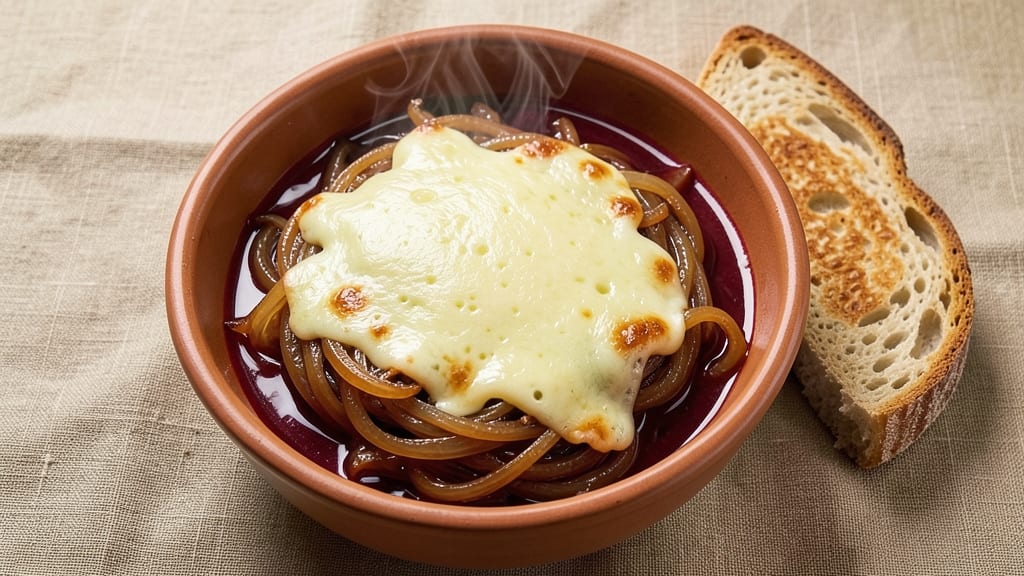
This Bavarian onion soup recipe delivers the perfect balance of rich, caramelized onions and perfectly toasted bread crowned with melted Gruyère—a dish that feels both rustic and refined.
The secret lies in slow-cooking onions until they're deep golden and sweet, then building a velvety broth that transforms simple ingredients into something extraordinary. Every spoonful carries layers of flavor that make this soup worth the effort.
What sets this recipe apart is the crispy Gruyère crown that becomes the star of the dish. We'll show you how to toast the bread just enough to create a sturdy base that supports the melted cheese without turning soggy.
The slow simmering process develops deep, complex flavors in the onions, while the broth absorbs all the aromatic goodness. This isn't just soup—it's a comforting, flavorful experience that transports you to a cozy Bavarian tavern.
The result is a bowl of soup where each element plays its part: tender onions swimming in rich broth, perfectly toasted bread slices, and a blanket of golden, bubbly Gruyère that adds both texture and flavor.
The cheese melts into a silky layer while maintaining enough crispness at the edges to provide contrast. It's the kind of dish that feels indulgent yet balanced, hearty yet refined—a perfect match for chilly evenings or special occasions.
While traditional recipes can be time-consuming, we've streamlined the process without sacrificing authenticity. You'll still achieve that perfect caramelization and rich flavor, but with clearer steps and professional techniques.
Whether you're serving this as an appetizer or a main course, it's sure to impress your guests with its depth of flavor and elegant presentation.
Ingredients for bavarian onion soup
Six large onions and a few key ingredients transform into this legendary Bavarian masterpiece.
| Ingredient | Amount | Notes |
|---|---|---|
| Yellow Onions 🧅 | 6 large | Peeled, halved lengthwise |
| Unsalted Butter 🧈 | ¾ cup | Cold, cubed for caramelizing |
| Dry White Wine 🍷 | 1 cup | Bold, dry variety preferred |
| Beef Broth 🥫 | 4 cups | Homemade or quality store-bought |
| Gruyère Cheese 🧀 | 2 cups | Freshly grated, aged variety |
| Sourdough Bread 🍞 | 1 baguette | Crust removed, sliced 1/2-inch thick |
| Olive Oil 🫒 | ¼ cup | For toasting bread slices |
| Fresh Thyme 🌿 | ¼ cup | Leaves only, chopped fine |
| Garlic Cloves 🧄 | 4 cloves | Minced for flavor depth |
| Salt 🧂 | 2 tsp | Kosher or sea salt preferred |
| Black Pepper 🌶️ | ½ tsp | Freshly ground for best flavor |
| Bay Leaves 🍃 | 2 whole | For aromatic depth in broth |
| Worcestershire Sauce 🥫 | 1 tbsp | For umami richness |
Those onions are the soul of this dish—yellow onions with vibrant color work best. Grab the sweetest, freshest ones you can find, preferably from the produce section at Whole Foods or your local farmers market. The Gruyère? Aged Gruyère from Switzerland is ideal, but a good-quality American version works too. If you're feeling fancy, Costco sells pre-grated Gruyère that saves time. For the bread, sourdough baguettes from the bakery section give you that perfect chewy texture—none of that sad pre-sliced stuff. The butter should be cold when you start caramelizing, or it'll turn into soup instead of golden fond.
No white wine? Chicken broth with a splash of vinegar works in a pinch. Fresh thyme is ideal, but dried thyme at half the amount gets you close. The Worcestershire sauce adds that umami punch—Lea & Perrins is the classic choice, but any good-quality brand works. For the onions, don't rush the caramelization. It's worth the 45-60 minutes of slow cooking to get them deep golden and sweet. If you're short on time, you can speed it up with a splash of water or broth, but traditionalists will tell you patience is key here. The bread slices should be toasted until they're golden but still hold their shape—don't let them burn or they'll turn to crispy bits instead of a sturdy base.
This soup tastes even better the next day as the flavors meld together. Store the broth and onions in the fridge for up to 3 days, and toast the bread fresh before serving. The cheese crown? Make it just before serving—it loses its crispy edge if prepped too early. For a crowd, double the recipe, but keep the portions manageable. Each bowl should have 3-4 slices of toasted bread and 1/3 cup grated cheese for that perfect ratio of soup to crown. Leftovers? The broth reheats beautifully—just add a splash of water if it's too thick. The toasted bread stays fresh for 2 days if wrapped tightly in foil.
Why You'll Love This Recipe
- One-Pot Magic: I swear by this recipe because it’s literally one pan, one pot, no extra dishes. Caramelize those onions low and slow in butter, deglaze with wine, and boom—you’ve got a rich base with zero cleanup. (Yes, even on a Tuesday night.)
- Wine-Infused Depth: That splash of dry white wine? It’s not just for show—it cuts through the sweetness of the onions and adds this bright, almost floral note that makes the broth sing. Trust me, skipping it is a crime.
- Crowd-Pleaser Flex: This soup works for game days, chilly evenings, or even a fancy-ish dinner when you’re too tired to fuss. Top it with Gruyère for a gooey, melty finish, or serve it plain—everyone will be happy. (My picky teenager included.)
- Budget-Friendly Luxury: Gruyère might sound fancy, but a little goes a long way, and the rest of the ingredients are pantry staples. You’ll get leftovers that taste just as good reheated—no sad, watery soup here. The kind of meal that makes you feel like you’re treating yourself without breaking the bank.
Step-by-step instructions for Bavarian onion soup
Here's how to create that perfect golden caramel and crispy cheese topping everyone craves.
Caramelize the Onions Slowly
Place the 6 large yellow onions cut in half lengthwise in a large Dutch oven. Add the 0.75 cup cold cubed unsalted butter and set over medium-low heat. Let the butter melt completely before stirring the onions occasionally with a wooden spoon.
This is where patience pays off—caramelizing takes 45-60 minutes. You're looking for deep golden brown color with sweet, jammy texture. If onions start to brown too quickly, reduce heat immediately. The butter should bubble gently without browning. Stir in the 2 whole bay leaves halfway through cooking for subtle aromatic depth.
Deglaze and Build the Fond
Once onions are beautifully caramelized, increase heat to medium-high and add the 1 cup dry white wine. Scrape up all those delicious browned bits from the bottom of the pot—they're packed with flavor. Let the wine simmer for 3-4 minutes until mostly evaporated.
Add the 4 cups beef broth, 1 tbsp Worcestershire sauce, 2 tsp salt, and 0.5 tsp black pepper. Stir in the 0.25 cup chopped fresh thyme and 4 cloves minced garlic. Bring to a gentle simmer and let cook uncovered for 20 minutes to develop rich flavors. The soup should be reduced by about 1/3—this concentrates the onion flavor beautifully.
Prepare the Gruyère Crowns
While the soup simmers, remove the crusts from the 1 baguette sourdough bread and slice into ½-inch thick pieces. Brush both sides generously with 0.25 cup olive oil and sprinkle lightly with salt. Arrange slices on a baking sheet in a single layer.
Bake at 375°F for 8-10 minutes until golden and crisp. Flip slices and bake another 5-7 minutes until perfectly browned. Keep warm while you finish the soup. The crispy bread is what makes this dish truly special—don't skip this step!
Assemble and Melt the Cheese
Ladle the onion soup into 6 oven-safe bowls or a large serving dish. Place 2-3 bread slices in each bowl, then sprinkle generously with 2 cups freshly grated Gruyère cheese. The cheese should be distributed evenly for that perfect melted blanket effect.
Transfer to a 400°F preheated broiler for 3-5 minutes until cheese is bubbling and golden brown with crispy edges. Watch carefully—the cheese melts quickly and can burn. For even browning, rotate bowls halfway through. The cheese should form a beautiful crown around each slice of bread.
Serve Immediately
Remove from the broiler and let sit for 1-2 minutes—this helps the cheese set slightly before serving. The soup should be hot, the bread perfectly crispy, and the cheese forming that irresistible golden crust. Serve each portion with a spoon for the rich onion fond underneath.
This is where the magic happens—each bite delivers crispy bread, melted Gruyère, and that sweet caramelized onion broth. The contrast of textures and temperatures makes every spoonful unforgettable. Don't forget to remove the bay leaves before serving!
Pro Tips For Making Bavarian Onion Soup
- Sweat, Don’t Burn: Onions need patience—cook them over medium-low heat for 20-25 minutes until deep golden, not blackened. I used to rush this, and the soup always tasted bitter. Keep the lid off so moisture evaporates; stir occasionally to avoid sticking.
- Use Cold Butter: Add unsalted butter to the pan cold—it takes longer to melt and prevents onions from scorching. I learned this the hard way after a charred batch ruined a dinner. Let it melt slowly, then stir in onions.
- Deglaze with Wine: Once onions are caramelized, pour in white wine all at once and let it bubble for 2 minutes before scraping up browned bits. Skipping this step means missing out on the rich, nutty depth those bits add.
- Grate Cheese Fresh: Skip pre-shredded Gruyère—it’s coated with anti-caking agents that make the cheese clump and taste off. Grate it yourself just before serving, and sprinkle it generously so every bite gets that melty, gooey payoff.
Flavor customization for this dish
Sweet vs. Savory Balance
Traditional Bavarian onion soup leans sweet from caramelization, but you can adjust the flavor profile. For a savory twist, add 1 tbsp soy sauce to the broth for umami depth.
For extra sweetness, stir in 1 tbsp honey during the final simmer—this works beautifully with the Gruyère's richness. 🍯
Cheese Variations
While Gruyère is classic, try Comté for a nuttier flavor or Emmental for a milder, creamier melt. For a vegetarian option, swap beef broth for mushroom broth and use Parmesan or Pecorino Romano—just add ½ tsp nutmeg to mimic Gruyère's depth.
Pre-grated cheese? Pulse it in a food processor to restore texture.
Spice Level Control
Add ½ tsp smoked paprika to the caramelized onions for a subtle smoky note. For heat, sprinkle ¼ tsp cayenne over the cheese crown before broiling. If you prefer warmth without spice, infuse the broth with 1 cinnamon stick during simmering—it pairs surprisingly well with the onions. 🌶️
Herb Infusions
Swap thyme for rosemary (use 1 sprig) for an earthier profile, or add 1 tsp dried tarragon to the broth for a French-Bavarian fusion. Fresh herbs like chives or parsley can be sprinkled on top for brightness.
Tarragon works best with white wine—just reduce the wine to ½ cup if using it.
Texture Contrasts
For extra crunch, top the cheese with toasted breadcrumbs or crushed potato chips (trust me, it works!). For creaminess, stir ¼ cup heavy cream into the finished soup. If you love texture play, try crispy fried shallots on top—they add a delicate onion crunch that complements the caramelized base.
Regional Twists
In Alsace, they often add 1 tbsp Dijon mustard to the broth for tang. For a Swiss touch, replace wine with apple cider and top with raclette cheese. The cider adds a fruity contrast that balances the caramelization beautifully. 🗺️
Nutrition facts
Frequently asked questions
Why does Bavarian onion soup require such slow caramelization?
The 45-60 minute caramelization transforms onions from sharp to sweet and jammy through natural sugar breakdown. This process creates the rich, deep flavor that defines the soup. Patience here builds complex flavors that quick cooking can't replicate—think of it as making onion jam!
Can I make this soup ahead of time?
Prepare the caramelized onions and broth up to 2 days ahead—store in the fridge. Reheat gently and toast the bread fresh before serving. The cheese crown should always be made just before serving to maintain crispiness. The flavors actually improve overnight as they meld together.
What's the best way to prevent soggy bread?
Toast the bread slices until golden and crisp at 375°F for 8-10 minutes per side. For extra insurance, broil for 1-2 minutes before adding cheese. The key is getting the bread perfectly browned while still sturdy enough to support the melted cheese crown. Don't skip this crucial step!
Can I substitute Gruyère with another cheese?
Yes! Comté adds nutty depth, while Emmental offers a milder melt. For vegetarian versions, use Parmesan with ½ tsp nutmeg to mimic Gruyère's flavor. Just remember—pre-grated cheese loses texture, so pulse it in a food processor first for better results.
How do I fix burnt cheese on top?
Watch the broiler closely—cheese melts quickly! If it burns, remove immediately and cover with a clean kitchen towel for 1 minute to trap heat. For next time, keep bowls 6 inches from the broiler element and rotate halfway through. The cheese should be bubbly and golden, not browned.