
Soups & Stews
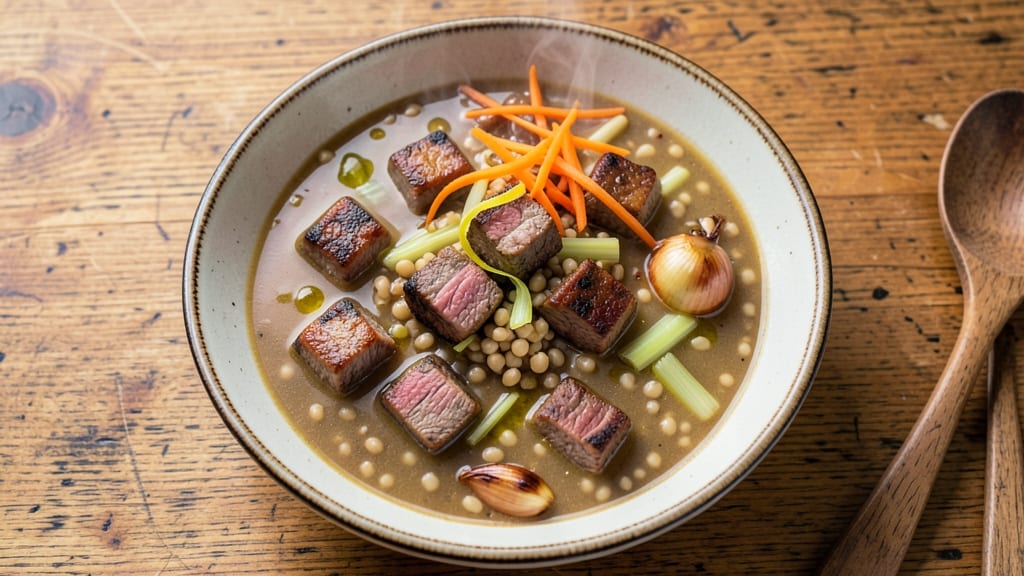
This beef barley soup recipe from Alton Brown delivers the kind of savory depth and chewy barley bites that transform a simple pot into a hearty centerpiece. The secret lies in slow-simmered beef broth, perfectly seared meat, and vegetables that melt into rich, umami-packed layers.
I’ve refined this version to balance Alton’s signature techniques with home-cook simplicity—no shortcuts, just restaurant-quality flavor built layer by layer.
The magic starts with browning the beef for deep caramelization, then simmering it with barley until tender yet still holding its shape. Carrots, celery, and onions form the aromatic base, while a splash of red wine adds brightness.
The result? A soup that’s comforting yet sophisticated, with barley that stays delightfully chewy and broth so rich it coats every spoonful.
What sets this apart is the textural contrast—tender beef, al dente barley, and silky broth working together. It’s the kind of dish that feels like a hug in a bowl, perfect for chilly evenings or when you need a meal that’s both nourishing and impressive.
The instructions walk you through each step to ensure foolproof results, even for beginners.
Serve it with crusty bread to soak up every last drop, or pair it with a simple green salad for balance. The leftovers reheat beautifully, making it ideal for meal prep. Let’s get started—your kitchen will smell like home before the first bite.
Ingredients for beef barley soup recipe alton brown
Restaurant-quality beef barley soup starts with these 15 ingredients—each playing its part in that perfect chewy texture and deep savory flavor.
| Ingredient | Amount | Notes |
|---|---|---|
| Chuck Roast 🥩 | 1 ½ lb | Cut into 1-inch cubes, trimmed of fat |
| Pearl Barley 🌾 | 1 cup | Uncooked, rinsed thoroughly |
| Yellow Onion 🧅 | 1 whole | Medium, diced into 1/4-inch pieces |
| Carrots 🥕 | 3 medium | Peeled, cut into 1/2-inch slices |
| Celery Stalks 🧄 | 3 whole | Trimmed, cut into 1/2-inch pieces |
| Garlic Cloves 🧄 | 4 cloves | Peeled, smashed with side of knife |
| Dry Red Wine 🍷 | ½ cup | Bold Cabernet or Merlot, no sugar |
| Beef Broth 💧 | 6 cups | Homemade or high-quality low-sodium |
| Tomato Paste 🍅 | 2 tbsp | Smooth, no added salt |
| Fresh Thyme 🌿 | 2 tbsp | Leaves only, chopped finely |
| Fresh Parsley 🌿 | ¼ cup | Flat-leaf, chopped for garnish |
| Olive Oil 🫒 | 2 tbsp | Extra-virgin, for searing |
| Kosher Salt 🧂 | 1 ½ tsp | Diamond Crystal preferred |
| Ground Black Pepper 🌶️ | 1 tsp | Freshly cracked |
| Bay Leaves 🍃 | 2 whole | Dried, removed before serving |
The chuck roast is non-negotiable here—it's what gives you that melt-in-your-mouth beef. Look for well-marbled cuts at Whole Foods or your butcher shop; the fat renders down to create rich, silky broth. If you're using pre-cubed chuck from the grocery store, pat it dry with paper towels before searing—this ensures a better crust. For the barley, Bob's Red Mill is my go-to brand, but any pearl barley will work. The key is rinsing it thoroughly before cooking to remove any surface starch. As for the red wine, any bold, dry red works here—Cab Sauv, Merlot, whatever's open. Just avoid sweet wines like Port or Zinfandel.
No fresh thyme? Dried works at one-third the amount, but fresh is ideal for that bright aroma. Running short on beef broth? Substitute with water plus 2 beef bouillon cubes, but add them after the soup simmers to avoid bitterness. The tomato paste can be swapped for 1/4 cup crushed tomatoes if you prefer, though paste gives better depth. For the vegetables, baby carrots work fine if you're in a pinch, but the flavor is better with fresh, whole carrots. And if you're worried about the barley getting mushy, test it at 25 minutes—it should still have a slight bite. The secret to chewy barley is never overcooking it.
This soup tastes even better the next day as the flavors meld together. Store leftovers in the fridge for up to 5 days, or freeze portions for 3 months. I always make double batches—portion into containers with a splash of broth so they reheat beautifully. The barley reheats well too, just add a little extra broth when warming. For serving, I like to garnish with fresh parsley and a drizzle of olive oil right before eating—that final touch makes all the difference. And if you're meal prepping, freeze the broth separately and reheat it first to prevent the barley from turning to mush.
Why You'll Love This Recipe
- Slow-Cooker Savior: I swear by this when I forget to thaw the roast. Toss the chuck roast in the slow cooker raw—no pre-browning needed—and let it tenderize itself all day. That deep, smoky flavor? Pure magic from the long cook.
- Umami Bomb: The combo of pearl barley and carrot-celery base creates this rich broth that tastes like it simmered for hours (even if it didn’t). Honestly, the barley soaks up all the beefy goodness—no bland bites here.
- Lunchbox Legend: Between us, this soup is my go-to for meal prep. I make a double batch on Sundays, and by Wednesday, I’m still pulling jars out of the fridge. The barley holds up perfectly, and the beef stays juicy—no sad, dry leftovers.
- Budget Stretch: A 3-pound chuck roast feeds six for under $15 at my grocery store. That’s $2.50 per bowl, and it’s the kind of meal that makes you feel like you’re eating at a fancy restaurant. (Yes, even on a Tuesday night.)
Step-by-step instructions for Alton Brown's beef barley soup
Here's how to build layers of rich flavor and chewy texture in this classic soup.
Sear the Chuck Roast for Deep Flavor
Pat the chuck roast dry with paper towels and cut it into 1-inch cubes, trimming any excess fat. Heat 2 tablespoons olive oil in a large Dutch oven over medium-high heat until shimmering. Working in batches to avoid crowding, add the chuck roast and sear for 3-4 minutes per side until deeply browned. This step creates the Maillard reaction that builds the soup's foundational flavor.
Remove the seared meat and set it aside. Don't wipe out the Dutch oven—those browned bits are pure flavor gold. They'll form the base of your soup's rich, caramelized foundation. If the oil starts smoking excessively, reduce the heat slightly to maintain control without losing the sear.
Sauté the Vegetable Base
In the same Dutch oven, add the diced yellow onion, carrots, and celery stalks. Cook over medium heat for 5-6 minutes, stirring occasionally, until the vegetables soften slightly and begin to release their natural juices. This process, called sweating, helps draw out their flavors without browning.
Add the 4 smashed garlic cloves and cook for 30 seconds until fragrant. You'll know it's ready when the kitchen fills with that unmistakable garlic aroma. Immediately pour in the ½ cup dry red wine and scrape up any browned bits from the bottom of the pot. Let the wine simmer for 2 minutes until reduced by half, intensifying its flavor.
Build the Soup Foundation
Stir in the 2 tablespoons tomato paste and cook for 1 minute to toast its flavors slightly. Add the 6 cups beef broth, 1.5 teaspoons kosher salt, 1 teaspoon ground black pepper, and 2 whole bay leaves. Bring the mixture to a gentle boil, then reduce heat to low and return the seared chuck roast to the pot.
Partially cover the Dutch oven and let the soup simmer for 1 hour, stirring occasionally. This initial cooking time allows the meat to begin breaking down and infusing the broth with its rich, beefy essence. The barley will absorb some of the liquid during this phase, so we'll add it later to ensure proper texture.
Add Barley and Finish Cooking
After the initial hour, add the 1 cup rinsed pearl barley and the 2 tablespoons chopped fresh thyme. Increase the heat to medium and bring the soup back to a gentle simmer. Cook uncovered for 30-40 minutes, stirring occasionally, until the barley is tender but still chewy—it should hold its shape when bitten but be noticeably softened.
Taste and adjust seasoning if needed. The barley should be fully infused with the beefy broth, creating those signature chewy bites that make this soup so satisfying. If the soup is too thick, add ½ cup water to reach your preferred consistency.
Garnish and Serve
Remove the 2 whole bay leaves and discard them. Ladle the soup into bowls and garnish each serving with 2 tablespoons chopped fresh parsley. The bright green color provides a beautiful contrast to the rich, golden broth and adds a fresh herbal note that cuts through the heartiness.
Serve immediately while the barley is still warm and the flavors are at their peak. Each spoonful should deliver a perfect balance of tender beef, chewy barley, and aromatic vegetables. For best results, let the soup sit for 10 minutes after cooking—this allows the flavors to meld even more deeply, resulting in a truly comforting bowl.
Pro Tips For Making Beef Barley Soup Recipe Alton Brown
- SEAR THE ROAST HARD: Alton’s method isn’t wrong, but if you’re short on time, crank the heat to medium-high and let that chuck roast develop a deep brown crust—no need to rush. I used to walk away too soon, and the soup never tasted as rich. Two minutes per side, until it’s dark and sticky, makes all the difference in flavor.
- SALT THE WATER LIKE THE OCEAN: Pearl barley needs time to soften, but it won’t absorb flavor if the broth is bland. Toss in 2 tablespoons of kosher salt with the barley and aromatics—yes, even if the recipe doesn’t say it. I learned this the hard way when my soup tasted like watered-down broth.
- DON’T SKIP THE SIMMER: After the initial boil, drop the heat to a gentle simmer—low enough that tiny bubbles barely break the surface. I used to let it bubble hard, and the barley turned mushy while the beef stayed tough. Patience here keeps everything tender without falling apart.
- USE THE VEGETABLE WATER: Save the starchy water from peeling carrots and celery—it’s liquid gold for broth depth. Add it to the pot when you strain the soup later; it thickens the broth naturally and cuts down on extra flour or cornstarch. (Yes, even if you’re not a soup snob like me.)
Pro cooking tips for perfect results
Sear Like a Pro
For maximum flavor, sear the chuck roast in batches to avoid crowding the pan—this ensures a deep, golden crust through the Maillard reaction. Use a heavy-bottomed Dutch oven like the All-Clad Stainless to distribute heat evenly.
I swear by a meat thermometer to check internal temps—aim for 160°F before removing it from the pot. 🔥
Don’t skip the fat trimming! Excess fat can make the broth greasy, but leave just enough to self-baste the meat. If your roast is particularly fatty, pat it dry with paper towels before searing—this helps create a better crust.
And here’s my secret: reserve ¼ cup of the rendered fat after searing to finish the soup for extra richness.
Vegetable Prep Matters
Cut your onion, carrots, and celery into even-sized pieces—this ensures uniform cooking. I like to use a mandoline for precise slices, but a sharp chef’s knife works too.
The goal is sweating, not browning, so keep the heat at medium and stir frequently. If your veggies start to color too quickly, reduce the heat slightly. 🥕
For extra depth, char the garlic lightly for 30 seconds after adding it—this adds a smoky note that elevates the entire soup. And if you’re short on time, pre-chop all your veggies before starting; this keeps the process smooth and stress-free.
Barley Texture Control
The key to chewy barley is adding it late—after the meat has simmered for 1 hour. This prevents it from turning mushy.
I recommend Bob’s Red Mill pearl barley because it holds its shape beautifully. Rinse it thoroughly before adding to remove excess starch, which can make the soup gummy. 🌾
Test the barley at 25 minutes—it should be al dente with a slight bite. If it’s still firm, cook another 5-10 minutes. Overcooking is the #1 mistake; the barley should be tender but still hold its shape when bitten.
Broth Boosting
For maximum umami, use homemade beef broth if possible, but Swanson’s low-sodium is a great store-bought alternative. If your broth tastes flat, add 1 teaspoon soy sauce or ½ teaspoon Worcestershire sauce—just don’t overdo it, or the soup will taste salty. 💧
If you’re using bouillon cubes, add them after simmering to avoid bitterness. And if your soup needs more body, mash 1-2 cooked barley pieces and stir them in—they’ll thicken the broth naturally without altering the texture.
Nutrition facts
Frequently asked questions
Can I substitute regular barley for pearl barley in this recipe?
No, don't use regular barley—they're completely different! Pearl barley has been pearled (outer layers removed), which gives it a shorter cooking time and that signature chewy texture. Regular barley takes much longer to cook (up to 2 hours) and can turn mushy. Stick with pearl barley for Alton Brown's signature texture.
How do I prevent the barley from turning mushy?
Add the barley late—after the meat has simmered for 1 hour—and cook it uncovered for just 30-40 minutes. Test at 25 minutes—it should hold its shape when bitten. Never overcook it, and always rinse the barley first to remove excess starch. If your soup gets too thick, add ½ cup water instead of overcooking the barley.
Can I make this soup in a slow cooker?
Yes, but with adjustments: brown the meat first in a skillet, then add everything to the slow cooker. Cook on low for 6-7 hours or high for 3-4 hours. The key is adding the barley only in the last 30 minutes of cooking. The texture will be slightly different but still delicious. Just check the barley frequently—slow cookers can overcook grains.
What's the best way to reheat leftovers?
Reheat gently on the stove over low heat with a splash of broth or water to prevent the barley from drying out. Never microwave directly—it makes the barley rubbery. For best results, reheat just until hot (2-3 minutes), then let it sit covered for 2 minutes to redistribute the heat. Leftovers keep well for 5 days in the fridge or 3 months in the freezer.
Can I use ground beef instead of chuck roast?
Not ideal—ground beef lacks the rich, tender texture that makes this soup special. If you must substitute, use stew meat (like chuck shoulder) cut into small cubes. Ground beef will make the soup greasier and less flavorful. The slow cooking time is what tenderizes the meat, so don't rush it even with smaller pieces.