
Soups & Stews
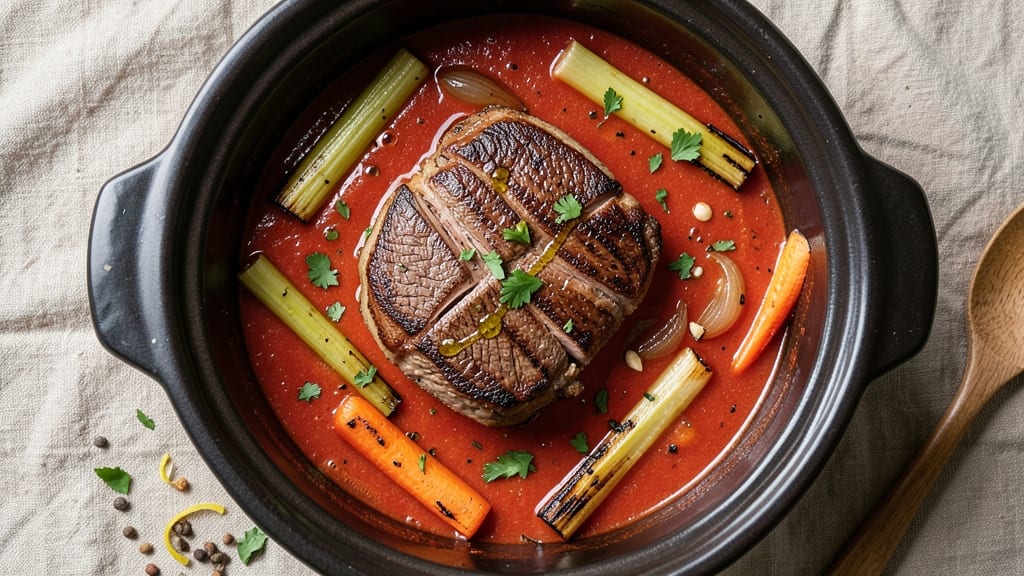
This crock pot beef stew with tomato soup recipe transforms tough cuts into melt-in-your-mouth tenderness while building layers of tomato-sweetened depth. The slow-cooking process unlocks rich, caramelized flavors that transform simple ingredients into a hearty meal that feels like a restaurant classic.
What makes this recipe special is the harmony between the beef stew's savory depth and the tomato soup's velvety sweetness—both developed simultaneously in your crock pot for maximum convenience and flavor.
The beauty of this method lies in its simplicity: you brown the beef first to develop deep, meaty flavors, then combine everything with canned tomato soup as the base.
This shortcut creates an ultra-rich, velvety sauce that coats every piece of beef and vegetable, while the slow cooker does all the work for you. The result is a dish that's not only comforting but also restaurant-quality, with minimal effort and maximum flavor development.
By the time it's done, you'll have perfectly tender beef chunks swimming in a rich, tomato-infused broth, served alongside a creamy tomato soup that's equally satisfying. The combination creates a meal that's hearty enough for a cold evening but simple enough for a weeknight dinner.
The best part? Everything cooks together, so you only need one pot and minimal cleanup.
This recipe works beautifully as a standalone meal or served with crusty bread for soaking up every last drop of that flavorful broth. The tomato soup adds a velvety contrast that balances the stew's richness, creating a complete dining experience that's both comforting and impressive.
Let's get started on creating this slow-cooked masterpiece.
Ingredients for beef stew with tomato soup crock pot
Six hearty ingredients transform into a restaurant-worthy slow-cooked masterpiece.
| Ingredient | Amount | Notes |
|---|---|---|
| Chuck Roast 🥩 | 3 lb | Pre-cut into 1.5-inch chunks |
| Yellow Onion 🧅 | 2 whole | Chopped into wedges |
| Carrots 🥕 | 4 whole | Cut into 2-inch pieces |
| Celery Stalk 🥬 | 3 whole | Cut into 1-inch pieces |
| Garlic Cloves 🧄 | 6 cloves | Minced for depth |
| Canned Tomato Soup 🍅 | 2 cans | 15 oz each, unsweetened |
| Beef Broth 💧 | 2 cups | Low-sodium preferred |
| Dry Red Wine 🍷 | 1 cup | Bold variety like Cabernet |
| Tomato Paste 🍅 | 2 tbsp | For concentrated flavor |
| Worcestershire Sauce 🧂 | 2 tbsp | Vegan if needed |
| Bay Leaves 🌿 | 2 whole | Remove before serving |
| Fresh Thyme 🌿 | 1 tbsp | Or 1 tsp dried thyme |
| Salt 🧂 | 1 ½ tsp | Diamond Crystal preferred |
| Black Pepper 🌶️ | 1 tsp | Freshly ground |
| Olive Oil 🫒 | 2 tbsp | For searing beef |
The chuck roast is your flavor anchor—look for well-marbled cuts at Costco or your local butcher. Pre-cut chunks save time, but if you're buying a whole roast, ask for it to be cubed. Trader Joe's often has great pre-cut options too. For the vegetables, don't stress about perfection—roughly chopped carrots and celery work just fine. The garlic and fresh thyme are non-negotiable though; they build that aromatic depth that makes this taste homemade. Pro tip: Toast your spices in the crock pot for 10 minutes before adding beef—it releases their oils and amps up the flavor.
No red wine? Beef broth with an extra splash of balsamic vinegar works perfectly. Short on tomato paste? Crushed tomatoes at half the amount stretch it out. Worcestershire sauce missing? Soy sauce or liquid aminos add that umami punch. The canned tomato soup is the secret weapon here—Muir Glen or Rao's are my go-tos, but any good-quality brand does the trick. For the beef broth, low-sodium is key—you'll be adding plenty of salt later. And if you're watching calories, use olive oil spray instead of the full 2 tablespoons for searing.
This stew only gets better with time—4-6 hours on low is ideal, but it's even more flavorful after 8 hours. Store leftovers in airtight containers for 5 days in the fridge or freeze for 3 months. I always make a double batch because it reheats beautifully. For serving, a sprinkle of fresh parsley brightens it up, and crusty bread soaks up every last drop of that velvety broth. The tomato soup base actually improves overnight, so don't be afraid to let it sit if you can.
Why You'll Love This Recipe
- Tomato-Garlic Magic: That can of tomato soup? It’s the secret weapon. The acidity cuts through the richness of the beef, and the garlic cloves? They turn the whole thing into something so deeply savory it tastes like a hug in a bowl. (Yes, even on a Tuesday night.)
- Leftovers That Don’t Suck: Honestly, this stew only gets better the next day. The flavors meld into something richer, and reheating it is zero effort. Pack it for lunches, freeze portions, or just eat it straight from the pot—no judgment here.
- Budget Beef Boost: A chuck roast is cheap, but this recipe makes it feel like a fancy dinner. The carrots and celery stretch the meal, and the tomato soup adds depth without breaking the bank. My wallet and my family thank me for this.
Step-by-step instructions for slow-cooked beef stew with tomato harmony
Here's how to build layers of flavor in your crock pot for a stew that's rich, tender, and perfectly balanced.
Sear the Chuck Roast for Deep Flavor
Heat a large skillet over medium-high heat and add the 2 tablespoons olive oil. Once shimmering, add the 3 lb chuck roast in a single layer and sear for 4-5 minutes per side until deeply browned. This step is non-negotiable—it develops the Maillard reaction that creates that incredible depth of flavor we're after.
As you sear, you'll notice the meat releases its natural juices. Don't drain these—they're pure flavor. Once browned on all sides, transfer the meat to your crock pot. The goal is to create a rich, caramelized crust that will slowly infuse into the stew as it cooks.
Build the Flavor Base with Aromatics
In the same skillet (no need to clean it—those browned bits are flavor gold), add the chopped 2 whole yellow onions, 4 whole carrots, and 3 whole celery stalks. Cook for 5-6 minutes, stirring occasionally, until the vegetables begin to soften and the onions turn translucent. This process releases their natural sugars and creates a sweet, caramelized foundation for your stew.
Add the 6 cloves minced garlic and cook for another 30 seconds until fragrant. The garlic should smell intense but not burn—this is when it starts to turn bitter. Immediately transfer everything to the crock pot with the seared beef. The residual heat will continue cooking the vegetables slightly, but we want to preserve their texture.
Layer the Liquid Ingredients for Perfect Balance
Pour in the 2 cans canned tomato soup, 2 cups beef broth, 1 cup dry red wine, 2 tablespoons tomato paste, and 2 tablespoons Worcestershire sauce. Stir gently to combine, making sure the tomato paste dissolves completely into the liquid. The wine will add acidity that brightens the rich flavors, while the tomato soup and paste create that signature depth we associate with tomato-based stews.
Add the 2 whole bay leaves, 1 tablespoon fresh thyme, 1.5 teaspoons salt, and 1 teaspoon black pepper. Give everything a final stir, then place the lid on your crock pot. The herbs will infuse their aromatic qualities, while the salt and pepper balance the flavors. This is where the magic begins—all those ingredients will meld together over time.
Cook Low and Slow for Maximum Tenderness
Cook on low heat for 8 hours or high heat for 4-5 hours. The low-and-slow approach is crucial here—it breaks down the tough connective tissue in the chuck roast, transforming it into fork-tender perfection. You'll know it's ready when you can easily pierce the beef with a fork and the vegetables are completely tender.
Here's the thing—I know it's tempting to check on your stew early, but resist the urge. Every time you lift the lid, you release heat and moisture, which can actually increase your cooking time. Trust the process and let that crock pot do its thing. The longer it cooks, the more flavorful it becomes.
Finish and Serve with Perfect Texture
Once the beef is fork-tender, remove the 2 bay leaves (they can be quite bitter if left in too long) and give the stew one final taste. Adjust the seasoning if needed—you might need a touch more salt or a splash of red wine to balance the flavors. The stew should be rich but not overpowering, with a perfect balance of tomato sweetness and beefy depth.
Serve immediately with crusty bread or over mashed potatoes. The stew will continue to improve as it sits, so if you're serving a crowd, you can keep it warm in the crock pot on low heat. Each bite should deliver that perfect harmony of tender beef, sweet vegetables, and rich tomato flavors that make this stew so irresistible.
Pro Tips For Making Beef Stew With Tomato Soup Crock Pot
- SEAR THE ROAST FIRST: Sear the chuck roast in a hot skillet with oil until it’s deep brown on all sides—this isn’t just for looks. The crust locks in flavor and keeps the meat from drying out in the crock pot later. (Yes, even if you’re tempted to skip it.)
- CHOP ONIONS SMALLER THAN YOU THINK: I used to slice onions into big chunks, thinking they’d soften enough. Wrong. Dice them into ¼-inch pieces—they’ll melt into the stew instead of sitting as tough, identifiable bits. Same goes for celery: smaller = better.
- DON’T OVERLOAD THE CROCK POT: Fill the crock pot no more than halfway with ingredients. Too much liquid or too many veggies? The stew will turn into soup, and the beef won’t tenderize properly. Aim for a 2-inch liquid layer over the meat when you start.
- SALT THE MEAT BEFORE SEARING: Season the chuck roast with salt before you sear it—let it sit for 10 minutes while you prep the veggies. This ensures the salt penetrates the meat, not just the surface. (I learned this the hard way when my stew tasted bland.)
Essential equipment for perfect results
Crock Pot Essentials
Your 6-quart crock pot is the star of this recipe—it's perfect for slow-cooking large batches without drying out the beef. I recommend a programmable model like the Hamilton Beach 6-Quart for precise temperature control.
If you're on a budget, the Cuisinart 6-Quart is a great alternative. The key is a pot with a tight-fitting lid to lock in moisture and flavors during those long cooking hours. 🌡️
Searing Tools
For that crucial first step, you'll need a heavy-bottomed skillet—I use a Lodge 10-inch cast iron because it retains heat beautifully and creates those perfect caramelized crusts. If you don't have cast iron, a stainless steel skillet like All-Clad works just as well.
The goal is to get that beef seared to a deep brown, so avoid nonstick pans—they won't develop the same rich flavors. A meat thermometer is also helpful here to ensure your beef reaches 145°F before adding it to the crock pot.
Knife & Cutting Prep
A sharp 8-inch chef's knife and cutting board are essential for prepping your vegetables efficiently. I like the Wüsthof Classic for its precision and durability. For the chuck roast, ask your butcher to cut it into 1.5-inch chunks—this ensures even cooking.
If you're cutting it yourself, use a meat mallet to tenderize the pieces slightly before searing. A microplane comes in handy for the garlic, as it creates a fine texture that distributes evenly throughout the stew.
Measuring & Mixing
Accurate measurements make all the difference, so grab your liquid measuring cups and dry measuring spoons. For the tomato paste, I recommend a small offset spatula to scrape every last bit from the tube—those leftover bits add up!
A wooden spoon is perfect for stirring the stew without scratching the crock pot's interior. Don't forget a fine-mesh strainer if you want to remove any bay leaves or herb stems before serving. 💡
Optional Upgrades
For next-level flavor, consider a garlic press to minced the garlic more efficiently. A mortar and pestle can also help crush dried herbs if you're using them instead of fresh. If you love crusty bread, a baguette from your local bakery adds the perfect touch.
For serving, a ladle with a long handle makes it easy to dish out portions without burning yourself. And if you're feeling fancy, a kitchen torch can add a final char to the bread or garnish with fresh herbs.
Nutrition facts
Frequently asked questions
Can I make this recipe without red wine?
Replace the 1 cup dry red wine with either 1 cup beef broth plus 1 tablespoon balsamic vinegar or 1 cup apple cider. The acidity from the vinegar or cider helps brighten the tomato flavors, just like wine would. For extra depth, add 1 teaspoon soy sauce to mimic the umami notes of wine.
How do I know when the beef is tender enough?
Use a fork to pierce the largest piece of beef—it should slide in easily with no resistance. The internal temperature should reach 203°F for perfect tenderness. If you're unsure, cook it 1 more hour on low heat; chuck roast continues cooking slightly after removal from the crock pot.
Can I prepare the tomato soup separately in the crock pot?
Yes! Cook the tomato soup separately by combining 2 cans tomato soup, 1 cup broth, 1/2 cup heavy cream, and 1/2 teaspoon sugar in the crock pot on high for 1 hour. Then add the stew ingredients to the same pot and cook as directed. This creates a smoother, creamier soup while keeping the stew's hearty texture.
What if my crock pot is smaller than 6 quarts?
Reduce the recipe by half or cook in batches. For a 3-4 quart crock pot, use 1.5 lbs beef, 1 can tomato soup, and 1 cup broth/wine. Cook on low for 6 hours instead of 8. The smaller volume concentrates flavors, so you may need to adjust seasoning slightly after cooking.
How can I make this dish ahead of time?
This stew tastes even better the next day! Cook it fully, then refrigerate in an airtight container for up to 5 days. Reheat on low for 2-3 hours or in a saucepan over medium heat until warmed through. For freezing, portion into containers and freeze for up to 3 months. Thaw overnight in the fridge before reheating.