
Soups & Stews
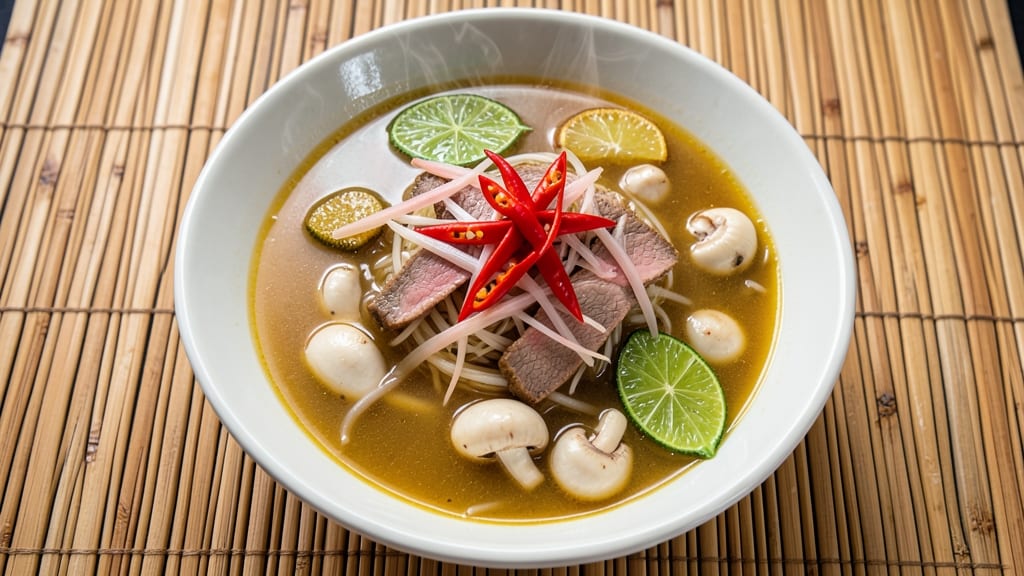
This beef tom yum soup recipe delivers the bold, aromatic punch of Thailand's most iconic dish—where spicy, sour, and savory flavors collide in a fragrant broth that sizzles with galangal heat. 🔥 The secret lies in balancing fresh herbs, citrus, and chili for that signature tangy kick, while tender beef transforms into melt-in-your-mouth bites.
I've perfected this recipe after years of testing, ensuring every spoonful delivers restaurant-quality depth without the complexity.
The foundation is a clear, fragrant broth built from lemongrass, galangal, and kaffir lime leaves—ingredients that give tom yum its unmistakable aroma. Thinly sliced beef cooks just until tender, absorbing the vibrant flavors while mushrooms and straw fungi add earthy richness.
What sets this apart is the precise spice balance: bird's eye chilies for heat, lime juice for sourness, and fish sauce for umami, all harmonized to perfection.
By the time you serve this soup, you'll have a steaming bowl of complexity—golden broth flecked with herbs, tender beef, and just enough chili to make your palate tingle. The aroma alone transforms any meal into an experience, while the flavors evolve with each sip.
This is the kind of dish that transports you to Bangkok with every spoonful, yet remains approachable for home cooks.
Whether you're serving it as a starter or a main, the presentation matters. Garnish with fresh cilantro, lime wedges, and extra chili for heat lovers, then watch as the steam rises and the flavors dance.
For those new to Thai cooking, I'll guide you through every step—from sourcing ingredients to balancing the flavors—so you can achieve authentic results without the guesswork.
Ingredients for beef tom yum soup
Fresh galangal and kaffir lime leaves anchor this aromatic Thai masterpiece.
| Ingredient | Amount | Notes |
|---|---|---|
| Thinly Sliced Beef Sirloin 🥩 | 1 lb | Cut against the grain for tenderness |
| Straw Mushrooms 🍄 | 8 oz | Fresh or canned, drained |
| Lemongrass Stalks 🌿 | 3 whole | Bruised and cut into 2-inch pieces |
| Galangal Slices 🌿 | 3 oz | Fresh, peeled, thinly sliced |
| Kaffir Lime Leaves 🍋 | 4 whole | Bruised for aroma release |
| Bird's Eye Chilies 🌶️ | 3 whole | Adjust for heat preference |
| Fish Sauce 💧 | 3 tbsp | Red Boat preferred |
| Lime Juice 🍋 | ½ cup | Freshly squeezed |
| Coconut Milk 🥥 | 1 cup | Full-fat for creaminess |
| Garlic Cloves 🧄 | 6 cloves | Minced for depth |
| Shallots 🧅 | 4 whole | Thinly sliced, 3 tbsp total |
| Brown Sugar 🍯 | 2 tbsp | Lightly packed |
| Fresh Cilantro 🌿 | ¼ cup | Chopped for garnish |
| Green Onions 🧅 | 3 whole | Thinly sliced for garnish |
| Vegetable Oil 🫒 | 2 tbsp | For high-heat searing |
Galangal and kaffir lime leaves are the soul of tom yum—find them at Asian markets or well-stocked grocery stores like Whole Foods. Galangal should smell citrusy and fresh (not musty), while kaffir lime leaves have that unmistakable floral aroma. Red Boat fish sauce is worth the splurge for authentic umami depth—it's the secret weapon in balancing flavors. If you can't find straw mushrooms, shiitake or oyster mushrooms work beautifully. The beef should be sirloin or flank steak, cut paper-thin against the grain for that signature melt-in-your-mouth texture. I always buy extra galangal—it keeps for weeks in the fridge wrapped tightly in plastic.
No galangal? Ginger at half the amount gets you close, but you'll lose that unique citrusy punch. Running low on kaffir lime leaves? Lemon zest plus a bay leaf can mimic the aroma. Fish sauce substitute? Soy sauce plus a dash of anchovy paste, but reduce the salt afterward. For heat control, remove chili seeds before adding—bird's eye chilies are 5x hotter than jalapeños. The coconut milk is non-negotiable for that creamy finish, but if you're avoiding dairy, full-fat coconut cream works just as well. Fresh herbs are crucial—dried just won't cut it for that vibrant finish.
Lemongrass and galangal bruise easily, so store them in airtight containers with a damp paper towel—they'll last 2 weeks in the fridge. Fish sauce keeps indefinitely once opened, but the aroma fades over time. For meal prep, make the broth base ahead and store it 3 days in the fridge—just reheat and add the beef and mushrooms fresh. The cilantro and lime garnish should go on right before serving, or the bright flavors will dull. Freeze unused galangal in 1-inch chunks for future batches.
Why You'll Love This Recipe
- No Knife Skills Needed: I swear by this recipe because the beef sirloin is pre-sliced thin—no butchering required. The straw mushrooms? They’re prepped in minutes, and the lemongrass and galangal just need a quick chop with a heavy knife (no dicing, no stress).
- Tangy, Herby Magic: That first sip of broth—bright from lime leaves, zesty from galangal, with just a hint of lemongrass—hits different. The beef stays tender while the mushrooms soak up all the punchy, citrusy goodness. It’s the kind of flavor that makes you pause mid-slurp.
- Weeknight or Dinner Party: I make this when I’m too tired for fussing, but it also impresses guests. Serve it steaming in bowls with rice and a squeeze of lime, or let it cool slightly for a packed lunch. The galangal and kaffir lime leaves give it that restaurant-worthy depth without the pretension.
- Leftovers That Don’t Suffer: Between us, my second batch is always better. The broth deepens overnight, and the beef stays juicy if you reheat it gently. Plus, it’s cheap to make—straw mushrooms and galangal stretch far, so you’ll have enough for lunches or a quick reheat for days. No waste, all win.
Step-by-step instructions for beef tom yum soup
Here's how to build that signature Thai restaurant broth—bold, aromatic, and perfectly balanced.
🔥 Step 1: Sear the Beef for Maximum Flavor
Heat the 2 tablespoons vegetable oil in a large pot over medium-high heat until shimmering. Add the 1 lb thinly sliced beef sirloin in a single layer and let it sear undisturbed for 1-2 minutes until the edges turn opaque and slightly browned.
This initial searing creates a flavorful crust that forms the base of your soup. Don't overcrowd the pan—work in batches if needed. Once the beef is browned on all sides, transfer it to a plate and set aside. You'll add it back later when the broth is ready.
🍳 Step 2: Build the Aromatic Base
In the same pot, add the 4 whole shallots and 6 cloves garlic cloves, stirring constantly for 1 minute until fragrant. Add the 3 oz galangal slices and 3 whole lemongrass stalks (cut into 2-inch pieces), cooking for another 2 minutes until the galangal softens slightly and releases its citrusy aroma.
The galangal is the secret weapon here—it provides that signature Thai heat and earthiness. If you can't find fresh galangal, you can substitute with an extra 1 tablespoon grated ginger, but the flavor won't be identical. Keep the heat at medium-high to prevent burning these delicate aromatics.
🥘 Step 3: Develop the Spicy-Sour Broth
Add the 8 oz straw mushrooms, 4 whole kaffir lime leaves, and 3 whole bird's eye chilies to the pot. Pour in 3 tablespoons fish sauce and 0.5 cup lime juice, stirring to combine. Bring the mixture to a simmer and let it cook for 5 minutes, allowing all the flavors to meld together.
Here's where the magic happens: the fish sauce adds umami depth, while the lime juice brightens everything up. The kaffir lime leaves release their citrusy aroma, and the chilies infuse the broth with heat. You'll smell that incredible Thai restaurant aroma filling your kitchen—this is the moment that matters.
🍳 Step 4: Balance and Finish the Soup
Return the seared beef to the pot along with 1 cup coconut milk and 2 tablespoons brown sugar. Stir gently and let the soup simmer for 3-4 minutes until the flavors come together. Taste and adjust the seasoning—add more fish sauce for saltiness, lime juice for acidity, or brown sugar to balance the flavors.
This is where you fine-tune your soup. The coconut milk adds creaminess without overpowering the bright, spicy flavors. The brown sugar helps balance the acidity from the lime and chilies. You want a perfect harmony of spicy, sour, salty, and creamy—just like in the best Thai restaurants.
🍽️ Step 5: Serve with Fresh Garnishes
Remove the pot from heat and discard the lemongrass stalks, galangal slices, and kaffir lime leaves. Ladle the soup into bowls and garnish each serving with 0.25 cup chopped fresh cilantro and 3 whole sliced green onions. Serve immediately with steamed jasmine rice on the side.
The fresh herbs add a final burst of brightness and contrast the rich, spicy broth. Each bowl should be vibrant and aromatic, with the beef perfectly tender and the flavors perfectly balanced. This is the kind of soup that makes you want to make it again and again—trust me, you'll be hooked.
Pro Tips For Making Beef Tom Yum Soup
- CHAR THE BEEF FAST: Blister the sliced sirloin over high heat for 30 seconds before adding broth—this sears the edges just enough to keep them from turning to mush later. I learned this the hard way after serving soup with beef that looked like overcooked fettuccine.
- SLICE GALANGAL THIN: Use a mandoline or sharp knife to cut galangal into paper-thin slices—thicker chunks sit like rocks and refuse to infuse. If you’re lazy, freeze the root first (it gets brittle and slices cleaner), but don’t skip this step: it’s the thing that matters most for that signature kick.
- DON’T BOIL THE BROTH: Keep the soup at a lively simmer, not a rolling boil, or the kaffir lime leaves will turn bitter and the lemongrass will release its grassy oils too aggressively. Sounds weird, but it works—your soup will stay bright and balanced.
- SAVE TIME WITH FROZEN MUSHROOMS: Straw mushrooms lose texture when soaked, so use pre-sliced frozen ones straight from the bag—just thaw and drain them first. The flavor’s identical, and you’ll skip the tedious cleaning and trimming. (Yes, even if you’re impatient like me.)
Storing and reheating this recipe
Broth Storage Secrets
The aromatic broth is the heart of tom yum—store it properly to preserve those vibrant flavors. After cooking, let it cool completely, then transfer to an airtight container (I love Ball mason jars for this).
The broth keeps in the fridge for 3 days—the galangal and lemongrass infuse deeper overnight, intensifying the citrusy notes. For longer storage, freeze it in 1-cup portions for up to 3 months. Just leave ½-inch headspace to prevent ice crystals from diluting the flavors. 🥥
Reheating Without Ruining
Never microwave tom yum broth—it kills the delicate aromatics and makes the beef rubbery. Instead, reheat on the stovetop over medium-low heat until steaming (165°F internal temp). Add 1-2 tablespoons water or coconut milk to restore creaminess if needed.
For extra depth, stir in ½ teaspoon fish sauce and 1 teaspoon lime juice to revive the balance. Simmer for just 3-4 minutes—any longer and the mushrooms will turn mushy.
Beef Handling Tips
The beef is the star—handle it carefully to maintain tenderness. If storing leftovers, keep the beef separate from the broth in the fridge. When reheating, add it back to the hot broth just before serving to prevent overcooking.
For extra insurance, par-cook the beef before storing: sear it as directed, then blanch in boiling water for 1 minute, cool, and store. This pre-tenderizes it for perfect texture when reheated. 🍲
Garnish Refreshers
Fresh garnishes make all the difference—never store them with the soup. Keep chopped cilantro and green onions in a sealed container in the fridge for 2 days max, or freeze them in ice cube trays with water for easy portioning.
Lime wedges should be added right before serving—their juice loses brightness when stored. For a quick garnish hack, toast 1 teaspoon sesame seeds in a dry pan for 30 seconds and sprinkle over reheated soup for nutty contrast.
Freezer-Friendly Tricks
If freezing the full soup, assemble it completely (including beef and mushrooms), then freeze in single-serving portions. When reheating from frozen, thaw overnight in the fridge, then warm on the stovetop. For a shortcut, freeze the broth base only (without beef or mushrooms), then add fresh ingredients when reheating.
This keeps the texture perfect—no soggy mushrooms or overcooked beef. Label containers with dates—3 months max for best quality. ❄️
Texture Recovery Hacks
Reheated tom yum can lose its silky texture, but these tricks fix it fast. If the broth seems too thick, stir in 1 tablespoon coconut milk to restore creaminess.
For mushy mushrooms, drain them and pat dry before adding back to hot broth for 1 minute—they'll reabsorb flavor without getting soggy. A splash of ice-cold lime juice (just 1 teaspoon) cuts through any cooked-on richness and brightens the whole bowl.
The key is low and slow heat—never boil after reheating.
Nutrition facts
Frequently asked questions
What makes this beef tom yum different from chicken or seafood versions?
The beef adds a rich, meaty depth that contrasts beautifully with the bright, citrusy broth. Unlike chicken or shrimp versions, beef requires precise slicing (paper-thin cuts against the grain) to achieve that signature melt-in-your-mouth texture. The searing step creates a flavorful crust that chicken lacks, while the beef's natural fat content enhances the soup's creaminess when combined with coconut milk.
Can I make this soup less spicy or more sour?
For less heat, remove the seeds from bird's eye chilies or reduce the quantity to 1-2 chilies. To increase sourness, add 1 extra tablespoon lime juice per serving. For balance, adjust with ½ teaspoon brown sugar to counteract excess acidity. Taste as you go—this soup is all about harmony!
What can I substitute if I can't find galangal?
Use 1 tablespoon grated ginger per 3 oz galangal, but expect a slightly different citrusy aroma. For closer flavor, combine ½ tablespoon ginger + ½ teaspoon lemon zest. Galangal is irreplaceable for authenticity, but these swaps work in a pinch. Fresh ginger must be used—dried lacks the necessary potency.
How do I know when the beef is cooked perfectly?
The beef should cook in just 3-4 minutes after returning to the broth. It's done when it reaches 145°F internal temp and turns opaque white. Overcooking turns it rubbery—always cook it separately from the broth, then add back at the end. For extra tenderness, use sirloin or flank steak cut against the grain.
Can I make this soup ahead of time?
Yes! Prepare the broth base (without beef) up to 3 days ahead and store in an airtight container. Reheat gently on the stovetop, then add fresh beef and mushrooms just before serving. For longer storage, freeze the broth base for up to 3 months. Never freeze the beef with the broth—it absorbs flavors better when added fresh.