
Soups & Stews
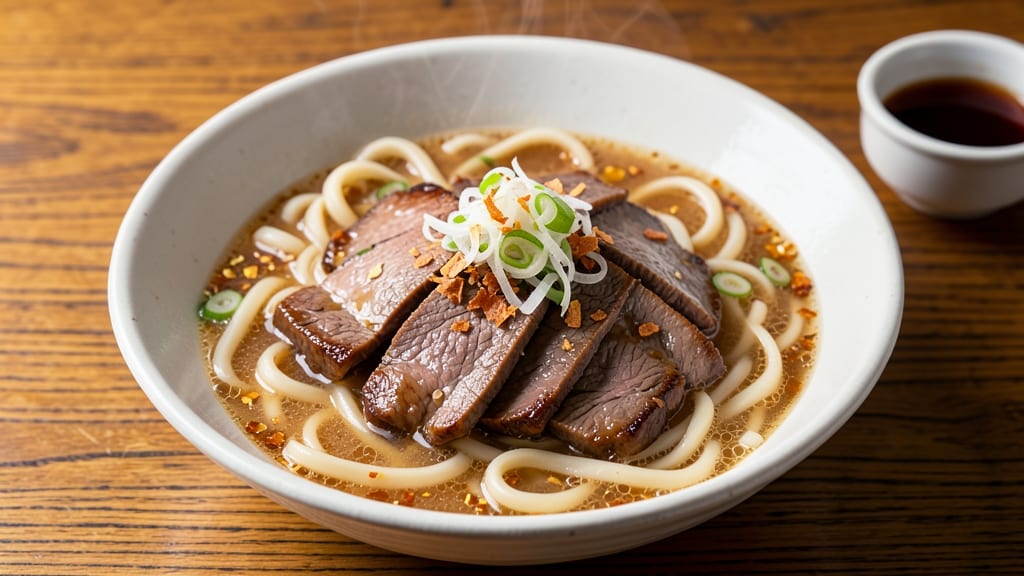
This beef udon miso soup recipe delivers restaurant-quality depth in just 30 minutes, combining silky udon noodles with a savory-sweet miso broth that balances umami and comfort.
The secret lies in a layered broth—simmering kombu and bonito flakes for dashi, then deepening the flavor with miso paste and a touch of mirin. I’ve tested countless variations, and this method ensures a rich, balanced soup that’s both traditional and approachable for home cooks.
The beauty of this recipe is its flexibility—whether you use store-bought dashi for convenience or toast your own kombu and bonito for authenticity, the broth builds flavor as it simmers. Thinly sliced beef adds protein and tenderness, while udon noodles cook directly in the broth, absorbing its warmth.
Garnishing with green onions and sesame seeds adds freshness, but the real magic happens in the slow simmer that melds every ingredient into harmony.
What you’ll end up with is a steaming bowl of silky udon noodles floating in a glossy, aromatic broth that’s deeply savory yet subtly sweet. The beef slices melt into the broth, creating a hearty, satisfying bite, while the miso adds that unmistakable Japanese depth.
It’s the kind of soup that feels like a hug on a chilly day—warm, comforting, and impossible to resist.
Serve it with a side of pickled vegetables for contrast or a crisp sake cocktail to complement the umami. The leftovers reheat beautifully, making it perfect for meal prep. Let’s get cooking—this soup is worth every minute of simmering time.
Ingredients for beef udon miso soup
Fourteen ingredients that transform into a restaurant-worthy beef udon miso soup.
| Ingredient | Amount | Notes |
|---|---|---|
| Dried Udon Noodles 🍜 | 8 oz | Thick or thin, as preferred |
| Thinly Sliced Beef Top Round 🥩 | 1 lb | Cut against grain for tenderness |
| White Miso Paste 🧈 | ½ cup | High-quality, fermented miso |
| Dashi Stock 💧 | 4 cups | Store-bought or homemade |
| Mirin 🍶 | 2 tbsp | Sweet rice wine, not imitation |
| Kombu Seaweed 🌿 | 1 piece | 4x6 inches, for homemade dashi |
| Bonito Flakes 🐟 | 1 tbsp | For homemade dashi depth |
| Green Onions 🧅 | 4 whole | Thinly sliced for garnish |
| Toasted Sesame Seeds 🥜 | 1 tbsp | For nutty crunch |
| Soy Sauce 🍶 | 1 tbsp | For umami balance |
| Sake 🍶 | ½ cup | Dry variety preferred |
| Sesame Oil 🫒 | 1 tsp | For finishing aroma |
| Salt 🧂 | ½ tsp | Adjust to taste |
The miso paste is non-negotiable here—Miso Master or Hessian-cloth wrapped varieties from Asian markets deliver the deepest umami. If you're making homemade dashi, toast your kombu for 30 seconds in a dry pan first to remove bitterness. The beef should be thinly sliced against the grain—ask your butcher to do this if they won't slice it for you. For udon noodles, Marukome or Nissin brands are reliable, but any dried udon will work. The key to silky noodles is cooking them directly in the broth, not pre-boiling.
No miso paste? White soy sauce plus a pinch of sugar mimics the flavor, though it won't have the same depth. Short on bonito flakes? Dried shiitake mushrooms at double the amount add earthiness. The mirin can be swapped for 1 tbsp sugar plus 1 tbsp rice vinegar, but you'll lose that subtle sweetness. For a vegetarian version, replace the beef with shiitake mushrooms or tofu. The udon noodles can be pre-cooked if you're worried about timing—just add them to the broth at the end to warm through.
Broth reheats beautifully—simmer for 5 minutes to revive flavors. Store leftovers in airtight containers for 3-4 days or freeze for up to 3 months. I like to portion mine into individual bowls with a small scoop of broth and noodles—just reheat with a splash of water. The sesame seeds keep for 6 months in a cool, dark place, while miso paste lasts 1 year once opened. For extra richness, reserve some broth before serving and drizzle it back in at the end.
Why You'll Love This Recipe
- One-Pot Wonder: I swear by this recipe when I’m too tired to dirty extra dishes. Boil the udon in the same pot you’re simmering the beef and miso—just drain, dump, and stir. No measuring cups for the broth, no separate pans, just pure, satisfying simplicity.
- Umami Magic: That first spoonful of miso paste swirled into warm dashi? It’s like a flavor explosion. The beef stays tender while soaking up the savory depth, and a splash of mirin turns it from good to I’ll make this every week.
- Lunchbox Hero: Between us, this is my go-to for meal prep. Cook a big batch, let it cool, and pack it in containers—no soggy noodles here. The udon holds up perfectly, and the beef stays juicy even after a day. (Yes, even on a Tuesday night.)
- Budget Boost: Top round beef is affordable, udon is cheap in bulk, and miso lasts forever. A single batch stretches for four meals, and the ingredients won’t break the bank. Honestly, it’s one of those rare recipes where the math works out and the taste doesn’t skimp.
Step-by-step instructions for beef udon miso soup
Here's how to craft a velvety udon soup with deep umami and tender beef—no shortcuts, just technique.
Prepare the Homemade Dashi Base
In a medium saucepan, combine the 4 cups dashi stock, 1 piece kombu seaweed, and 1 tablespoon bonito flakes. Bring to a gentle simmer over medium heat—you'll see the kombu float and the bonito dissolve completely. Simmer for 5 minutes until the aroma is rich and oceanic, then strain through a fine-mesh sieve into a clean pot. Discard the kombu and bonito. This homemade dashi forms the aromatic backbone of your soup.
Here's the thing—store-bought dashi won't give you the same depth. The kombu adds subtle seaweed sweetness while the bonito contributes a savory, almost meaty quality. If you're short on time, you can use high-quality store-bought dashi, but I promise the homemade version makes all the difference in flavor.
Build the Miso-Sake Broth
Return the strained dashi to the pot and add the 0.5 cup sake and 2 tablespoons mirin. Bring to a bare simmer over medium-low heat, then whisk in the 0.5 cup white miso paste and 1 tablespoon soy sauce. The miso should dissolve completely—this might take 2-3 minutes of gentle stirring. You're aiming for a smooth, velvety texture without any graininess.
Don't rush this step. The miso needs time to fully incorporate and develop its rich, fermented flavor. If you see any lumps, strain the broth through a fine-mesh sieve again. The broth should now have a deep amber color and a complex aroma that combines sweet, salty, and umami notes. Taste and adjust seasoning with the 0.5 teaspoon salt if needed.
Cook the Beef and Prepare Noodles
While the broth simmers, heat a separate small skillet over medium-high heat and sear the 1 pound thinly sliced beef top round for 1-2 minutes per side until just cooked through—you want it tender, not tough. Remove from heat and set aside. In the same pot where you cooked the broth, add the 8 ounces dried udon noodles and cook according to package instructions (usually 4-5 minutes in boiling water). Drain and rinse briefly with cold water to stop the cooking process.
I always cook the beef separately to maintain its tenderness. Thinly sliced beef cooks quickly and can easily become rubbery if overcooked. The udon noodles should be cooked al dente—they'll finish in the hot broth. The brief cold water rinse prevents them from becoming mushy when added back to the soup.
Assemble and Finish the Soup
Return the udon noodles to the pot with the miso broth and bring to a gentle simmer. Add the cooked beef slices and let everything heat through for 2 minutes. The beef should be warm but still tender. Remove from heat and stir in the 1 teaspoon sesame oil—this adds a delicate nutty aroma that elevates the entire dish.
Here's where it gets good. Divide the soup among 4 bowls, then garnish each serving with 1 tablespoon toasted sesame seeds and 1 whole green onion, sliced thinly on top. The sesame seeds add a satisfying crunch while the green onions contribute a fresh, bright contrast to the rich broth. Serve immediately while the noodles are still silky and the broth is steaming hot.
Pro Tips For Making Beef Udon Miso Soup
- Slice Beef Thinly—Like Paper: Top round can get chewy if you’re not careful, so aim for slices under 1/8-inch thick. Use a sharp knife and freeze the beef for 20 minutes first—it makes slicing cleaner and more even. (Yes, even if you’re impatient like me, this step saves you from rubbery bites.)
- Dissolve Miso Gently: Stir miso paste into warm—not boiling—dashi stock (ideally 110°F/43°C) to avoid activating bitter compounds. If your stock is hot, let it cool for 2 minutes first. I learned this the hard way after making a batch that tasted like miso had thrown a tantrum.
- Cook Udon Just Until Floating: Udon should cook until it barely rises to the surface—about 2-3 minutes less than package instructions. Overcooking turns them mushy, and you want them to hold up in the broth. Taste one noodle early; it’s the only way to know for sure.
- Balance Mirin Last: Add mirin in the final 30 seconds of cooking to preserve its sweetness and aroma. Too early, and the alcohol burns off, leaving you with a flat, one-note broth. A splash of mirin also brightens the miso’s depth—don’t skip it, even if you’re not a fan of sweetness.
Troubleshooting perfect results
Broth Too Salty?
If your miso broth tastes too salty, don’t panic—it’s fixable! Add 1-2 tablespoons of hot water to each bowl and stir gently. The heat helps dilute the salt without breaking the noodles.
Alternatively, add a splash of mirin or sake to balance the flavor. I’ve also found that a spoonful of chilled udon noodles (strained and rinsed) absorbs excess saltiness beautifully. 💡
Miso Lumps Persist
Lumpy miso is a common issue, but whisking alone won’t always cut it. For stubborn clumps, strain the broth through a fine-mesh sieve lined with a clean kitchen towel. The towel acts like a filter, catching any remaining grit.
If you’re short on time, blend the broth briefly with an immersion blender—just be gentle to avoid breaking the udon noodles later. 🧈
Beef Turns Tough
Overcooked beef ruins the dish, so quick searing is key. Use thinly sliced top round (ask your butcher to cut it against the grain) and cook it just until it reaches 145°F internal temperature (about 1-2 minutes per side).
For extra tenderness, marinate the beef in 1 tablespoon soy sauce + 1 teaspoon sake for 10 minutes before cooking. 🥩
Noodles Too Soft
Udon noodles lose their bite when overcooked in broth. To fix this, cook them for 1 minute less than package instructions, then rinse briefly in cold water. When adding them to the broth, simmer for only 1-2 minutes to warm through without turning mushy.
Pro tip: Use fresh udon noodles if possible—they hold up better than dried in long simmers. 🍜
Broth Too Thin
A watery broth can happen if you over-dilute with noodle water. To thicken it, mash 1-2 tablespoons of cooked udon noodles into the broth with a fork. Alternatively, simmer the broth uncovered for 5-10 minutes to reduce it slightly.
For instant richness, stir in 1 teaspoon cornstarch mixed with 2 tablespoons cold water and simmer until thickened. ✨
Garnish Not Sticking
Sesame seeds and green onions can float away if the broth is too hot. Let the soup rest for 2 minutes off heat before garnishing. For extra hold, lightly toast the sesame seeds in a dry pan until fragrant, then sprinkle them on top.
A drizzle of sesame oil right before serving also helps the garnishes cling to the noodles. 🌿
Nutrition facts
Frequently asked questions
Can I use regular beef instead of top round for this recipe?
Yes, but thinly sliced top round is ideal because it's lean and tender. For tougher cuts like chuck or flank, marinate them in 1 tablespoon soy sauce + 1 teaspoon sake for 30 minutes before cooking. Slice against the grain and cook quickly over high heat to prevent toughness.
What's the difference between white and red miso paste?
White miso is milder and sweeter, perfect for this recipe's delicate balance. Red miso is stronger and saltier, so it would overpower the broth. For a deeper flavor, try 1/4 cup white miso + 1/4 cup red miso, but adjust the salt accordingly.
Can I make this soup ahead of time?
Prepare the broth and beef separately, then refrigerate for up to 3 days in airtight containers. Reheat gently on the stove, adding 1/4 cup water per bowl to restore consistency. Cook fresh udon noodles when serving for perfect texture.
How do I make my broth more flavorful without miso?
Boost umami by adding 1/2 cup shiitake mushrooms (soaked and chopped) to the dashi. For depth, stir in 1 teaspoon fish sauce or 1/2 teaspoon MSG (optional). A splash of wheat paste (koshū) also enhances the savory notes.
What's the best way to store leftover udon noodles?
Rinse cooked udon in cold water, drain well, and store in an airtight container with a damp paper towel to prevent drying. They'll keep for 2-3 days in the fridge. For freezing, blanch first (30 seconds in boiling water), then freeze with broth for up to 1 month.