
Soups & Stews
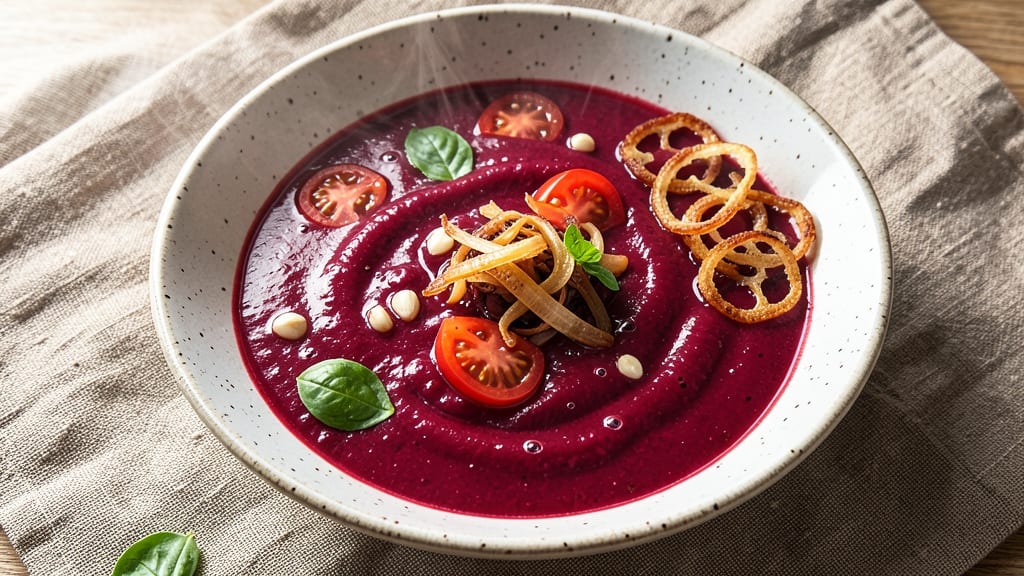
This beetroot tomato soup transforms humble ingredients into a velvety, earthy-sweet masterpiece that's both comforting and deeply satisfying. The secret lies in roasting the vegetables first—caramelizing their natural sugars while developing complex flavors that no blender could achieve alone.
With just 15 minutes of prep and 45 minutes of simmering, you'll have a soup so rich and balanced it rivals restaurant versions, all while keeping it completely plant-based.
The magic happens when roasted beets and tomatoes meet aromatic garlic, onions, and fresh herbs, creating a flavor profile that's both familiar and unexpectedly sophisticated.
Unlike many vegan soups that rely on heavy cream substitutes, this version achieves its luxurious creaminess through proper technique—simmering until the vegetables break down naturally and blending just until smooth. The result?
A soup with depth that lingers, where each spoonful delivers layers of sweetness from the beets and bright acidity from the tomatoes.
What makes this recipe truly special is its versatility—serve it as a light lunch with crusty bread, as a starter for dinner parties, or even as a hearty meal when paired with a simple green salad.
The colors alone make it visually stunning, with deep ruby hues from the beets contrasting beautifully against the golden broth. And with no dairy or animal products, it's packed with nutrients while still delivering that satisfying, restaurant-quality texture.
The best part? This soup tastes even better the next day as the flavors continue to meld. Store it in the refrigerator for up to 5 days, or freeze for 3 months—perfect for meal prep or when you want to impress guests with minimal effort. Let's get cooking!
Ingredients for beetroot tomato soup
Roasted beets and tomatoes create this velvety, plant-based masterpiece with earthy-sweet depth and restaurant-quality creaminess.
| Ingredient | Amount | Notes |
|---|---|---|
| Medium Beets 🍠 | 2 whole | Organic preferred, peeled and cubed |
| Roma Tomatoes 🍅 | 1 ½ lb | Fresh, halved, organic preferred |
| Yellow Onion 🧅 | 1 whole | Yellow or white, diced |
| Garlic Cloves 🧄 | 4 cloves | Fresh, peeled, minced |
| Extra-Virgin Olive Oil 🫒 | ½ cup | Cold-pressed, fruity variety |
| Vegetable Broth 💧 | 4 cups | Low-sodium, homemade preferred |
| Fresh Thyme 🌿 | ¼ cup | Leaves only, stems removed |
| Fresh Rosemary 🌿 | ⅛ cup | Finely chopped, sprigs removed |
| Fresh Basil 🌿 | ⅛ cup | Chopped, for finishing |
| Lemon Juice 🍋 | 1 tbsp | Freshly squeezed, organic |
| Maple Syrup 🍯 | 1 tbsp | Pure, grade B preferred |
| Salt 🧂 | 1 ½ tsp | Diamond Crystal kosher salt |
| Black Pepper 🌶️ | ½ tsp | Freshly ground, coarse |
| Coconut Milk 🥥 | ¼ cup | Full-fat, for creaminess |
The beets and tomatoes are the heart of this soup, so choose organic produce when possible—it's noticeably sweeter and more vibrant. For the beets, look for deep ruby varieties at specialty markets like Whole Foods or Trader Joe's, where they're often pre-washed and ready to use. Roma tomatoes are ideal for their meaty texture and concentrated flavor, but any ripe heirloom or vine-ripened variety works. The key is to roast them until caramelized—this develops the complex, almost smoky sweetness that sets this soup apart from canned versions. If you're short on time, a 400°F oven for 30 minutes does the trick, though 45 minutes yields deeper flavor.
No organic produce? Conventional is fine—just give them a thorough rinse. Short on basil or rosemary? Fresh parsley works in a pinch for finishing, though it lacks the same depth. The coconut milk adds luxurious creaminess without dairy, but cashew cream (blended soaked cashews) is even richer if you want to splurge. For the broth, homemade vegetable stock elevates the soup, but low-sodium store-bought is perfectly acceptable. The maple syrup balances acidity—grade B has a more robust flavor than grade A, but any pure maple works. Need to substitute? Agave nectar at the same amount keeps it vegan, though maple's deeper notes are preferred.
This soup tastes even better the next day as flavors meld. Store in an airtight container in the fridge for up to 5 days, or freeze in portion-sized containers for 3 months. For meal prep, double the batch—leftovers reheat beautifully and make quick lunches. To preserve the vibrant color, add a thin layer of olive oil on the surface before sealing. The herbs can be prepped ahead and stored in the fridge for 3 days, though fresh basil is best used within 2 days of purchase for peak flavor. Garnish with extra herbs and a drizzle of olive oil just before serving to keep it fresh-tasting.
Why You'll Love This Recipe
- No Chopping Stress: I swear by this—just roast the beets whole, peel them after, and slice the onions in half. The tomatoes? Toss them in as-is. Minimal prep, maximum flavor.
- Earthy-Sweet Magic: That caramelized beet and tomato blend? It’s like summer in a bowl. The roasted garlic ties it all together—rich, slightly smoky, with just enough brightness to keep it fresh.
- Leftover Hero: This soup tastes even better the next day. I make a big batch on Sundays, and by Wednesday, it’s still the star of my lunch. Freezes like a dream too—just reheat and serve.
- Budget Pantry Win: Onions, garlic, and olive oil are staples. Add a few beets and tomatoes, and boom—you’ve got a restaurant-quality soup for pennies. No fancy ingredients, just pure satisfaction.
Step-by-step instructions for beetroot tomato soup
Master this velvety blend where earthy beets and sweet tomatoes unite in a rich, velvety embrace.
Sauté Aromatics to Build Flavor Foundation
Heat the 0.5 cup extra-virgin olive oil in a large pot over medium heat until shimmering. Add the 1 whole diced yellow onion and cook for 5-6 minutes until softened and translucent. This gentle cooking prevents bitterness and develops sweetness.
Add the 4 minced garlic cloves and cook for 30 seconds until fragrant—not browned, just aromatic. The garlic should perfume the kitchen without adding bitterness. Here's where it gets important: add the 0.25 cup fresh thyme and 0.125 cup finely chopped fresh rosemary now. These herbs will infuse their earthy notes into the oil before the vegetables arrive.
Roast Vegetables for Deep Caramelization
Increase heat to medium-high and add the 2 cubed medium beets and 1.5 lb halved Roma tomatoes. Cook for 8-10 minutes, stirring occasionally, until the tomatoes begin to soften and release their juices. The beets will develop a slight caramelization—this is your signal to proceed.
Pour in the 4 cups vegetable broth and bring to a gentle simmer. Here's the thing—adding liquid now prevents the vegetables from burning while allowing their flavors to meld. Partially cover the pot and simmer for 20-25 minutes until the beets and tomatoes are fork-tender. You'll know they're ready when they collapse easily under gentle pressure.
Blend Until Silky Smooth
Remove the pot from heat and let the contents cool for 5 minutes. This cooling period prevents splattering when blending. Using an immersion blender, blend directly in the pot until completely smooth. For a restaurant-quality finish, strain through a fine-mesh sieve to remove any remaining skins or seeds.
Return the soup to the pot and stir in the 1 tbsp lemon juice and 1 tbsp maple syrup. The lemon brightens the earthy flavors while the maple syrup enhances the natural sweetness of the tomatoes. Season with 1.5 tsp salt and 0.5 tsp black pepper, tasting as you go. The soup should balance sweet, tangy, and savory notes perfectly.
Finish with Creamy Depth
Reduce heat to low and gently stir in the 0.25 cup coconut milk. The coconut milk adds a luxurious creaminess without overpowering the vegetable flavors. Let the soup simmer for 5 minutes to allow the coconut milk to fully incorporate and develop a velvety texture.
Garnish with 0.125 cup chopped fresh basil just before serving. The basil adds a final herbal note that elevates the dish. Serve immediately while warm, with crusty bread to soak up every last drop of this velvety, earthy-sweet creation. The contrast between the warm soup and cool basil leaves creates a sensory experience that's truly memorable.
Pro Tips For Making Beetroot Tomato Soup
- PEEL BEETS AFTER COOKING: Raw beet peels are stubborn—roast or boil them whole first, then slip off the skins while still warm. I used to peel them raw and waste half the flesh; now I save time and get cleaner results.
- CHOP ONIONS SMALL: Tiny diced onion (1/8-inch pieces) melts into the soup without leaving texture. Skip the rough chop—this is where the sweetness actually dissolves into the broth.
- SAUTÉ GARLIC LOW: Burnt garlic ruins everything. Cook it in the olive oil at medium-low until just golden—about 30 seconds. I’ve learned this the hard way with bitter, acrid soup.
- BLEND IN STAGES: Pulse the soup in batches if your blender’s small. Overfilling leads to splatter and a half-blended mess. Start with half the soup, then blend the rest—smooth every time.
Pro cooking tips for beetroot tomato soup
Roasting for Depth
Roasting the beets and tomatoes at 400°F for 30-45 minutes unlocks their natural sweetness through the Maillard reaction—this caramelization transforms them from simple vegetables into complex, flavorful stars. I like to toss them with 1 tablespoon olive oil and a pinch of salt before roasting to enhance browning.
For even deeper flavor, add a whole garlic clove to the roasting pan—its aroma infuses the vegetables as they cook. 🔥
Blending Like a Pro
An immersion blender is my go-to tool for this soup because it keeps everything contained and makes cleanup effortless. If using a countertop blender, work in 2 batches to avoid overflow—this soup is thick!
For an ultra-smooth texture, strain through a fine-mesh sieve after blending to remove any stubborn beet skins or tomato seeds. The result? A velvety consistency that feels restaurant-worthy. ✨
Balancing Flavors
The lemon juice and maple syrup are where the magic happens—these two ingredients create the perfect balance between bright acidity and natural sweetness. I recommend tasting as you go: add the lemon first, then adjust sweetness with maple syrup.
For a smoky twist, swap half the maple syrup for 1 teaspoon smoked paprika—it adds depth without overpowering. 💫
Creamy Without Dairy
The coconut milk adds richness without dairy, but if you want to take it to the next level, make a cashew cream by blending ½ cup soaked cashews with ½ cup water until smooth.
Stir this into the soup at the end for a silkier texture. For extra protein, add 1 scoop vegan protein powder (neutral flavor) while blending—it dissolves completely and boosts nutrition. 🥥
Simmering Secrets
Low and slow is key here—simmering at medium-low heat for 20-25 minutes after adding broth ensures the vegetables break down just enough to create a luscious texture.
If the soup looks too thick after blending, thin it with warm vegetable broth, 1 tablespoon at a time, until you reach your desired consistency. Never rush this step; patience pays off with a soup that’s deeply flavorful. 💡
Garnish for Freshness
Fresh herbs make all the difference—toss the soup with chopped basil just before serving to brighten the flavors. For a pop of color, add toasted pumpkin seeds or crispy fried shallots on top.
A drizzle of extra-virgin olive oil and a sprinkle of flaky sea salt elevate the dish to next-level sophistication. Serve immediately to enjoy the full aroma and texture. 🌿
Nutrition facts
Frequently asked questions
Can I use canned tomatoes instead of fresh?
Yes, but roasting fresh tomatoes creates deeper flavor. If using canned, choose whole peeled tomatoes (not diced) and roast them in their juice at 400°F for 20 minutes to concentrate their sweetness. For best results, drain and reserve the juice to add back later—this prevents a watery soup.
How do I make this soup spicier?
Add ½ teaspoon red pepper flakes when sautéing the aromatics, or stir in 1 tablespoon hot sauce at the end. For smoky heat, swap half the maple syrup for 1 teaspoon smoked paprika. Always taste first—you can adjust, but you can't take out spice!
Why does my soup look orange instead of deep red?
The color comes from roasted beets and tomatoes—it should be a rich ruby-orange, not bright red. If it's pale, your beets may not have roasted long enough (30+ minutes at 400°F is ideal). For extra depth, add 1 teaspoon beet powder or a splash of pomegranate juice before serving.
Can I make this soup ahead of time?
This soup tastes even better the next day as flavors meld. Store in an airtight container in the fridge for up to 5 days, or freeze for 3 months. Reheat gently on low heat, stirring occasionally, and add a splash of water if it thickens. Garnish fresh herbs just before serving to keep flavors vibrant.
What's the best way to reheat leftovers?
Reheat on low heat with a splash of vegetable broth to restore creaminess. For microwave reheating, cover and heat for 1-2 minutes, then stir well. Avoid boiling—this can make the coconut milk separate. If the soup thickens too much, thin with warm water or broth.