
Soups & Stews
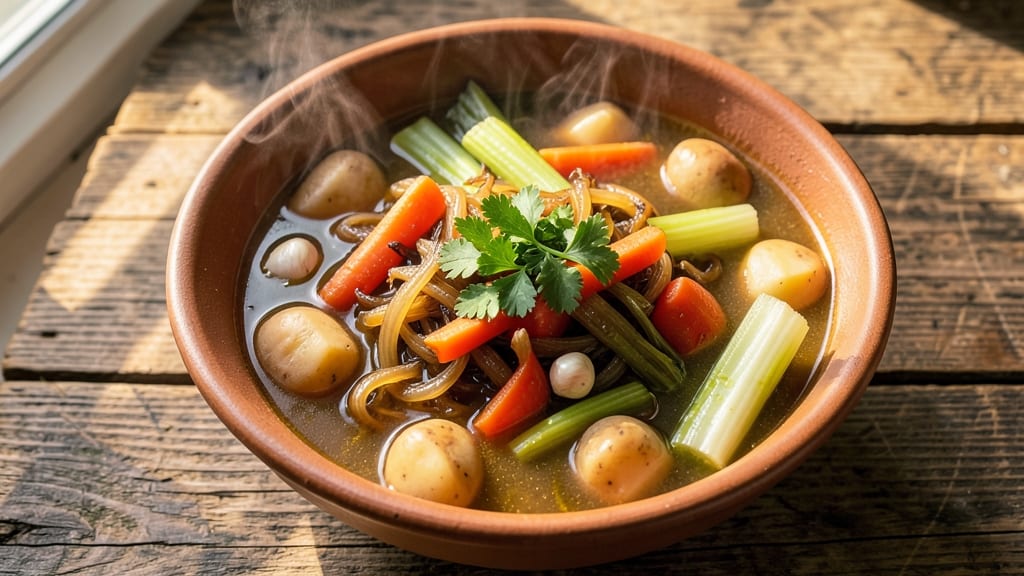
This flavorful vegetable soup recipe delivers restaurant-quality depth with caramelized roots and umami-packed broth—no shortcuts, just layered flavor. The secret lies in slow-sautéed onions and garlic until golden, then building complexity through toasted spices and reduced vegetable stock.
Every spoonful balances earthy roots, bright vegetables, and savory depth that lingers long after the last bite.
What sets this apart is the technique: caramelizing root vegetables before adding liquid creates natural sweetness that transforms simple ingredients into something extraordinary. A splash of red wine vinegar at the end brightens the broth, while fresh herbs at serving add freshness without overpowering the rich base.
The result? A soup so flavorful, even vegetarians will crave seconds.
This recipe works as a standalone vegetarian meal or easily adapts for non-vegetarians by adding protein like chickpeas, lentils, or shredded chicken. The 30-minute prep and 1-hour simmer make it perfect for busy weeknights, while the leftovers reheat beautifully—flavors deepen overnight.
Serve with crusty bread to soak up every last drop of that umami-rich broth.
For extra depth, toast whole spices (cumin, coriander) in the pot before adding liquid—they release aromatic oils that infuse the entire soup. The balance of textures (creamy carrots, tender potatoes, crisp herbs) makes each bite satisfying.
Ready in under 90 minutes, this soup proves home cooking can rival the best restaurant bowls.
Ingredients for best flavorful vegetable soup
Caramelized roots and umami-rich broth make this soup a flavor explosion—no shortcuts, just layered depth.
| Ingredient | Amount | Notes |
|---|---|---|
| Yellow Onions 🧅 | 2 whole | Thinly sliced for caramelization |
| Garlic Cloves 🧄 | 6 cloves | Minced, not pressed |
| Carrots 🥕 | 1 ½ lb | Peeled, cut into chunks |
| Celery Stalks 🥬 | 4 whole | Trimmed, chopped |
| Russet Potatoes 🥔 | 2 lb | Peeled, cut into cubes |
| Vegetable Stock 💧 | 6 cups | Homemade or quality store-bought |
| Red Wine Vinegar 🍷 | 2 tbsp | For brightness, not sweetness |
| Tomato Paste 🍅 | ½ cup | High-quality, no salt added |
| Ground Cumin 🌿 | 1 tbsp | Toasted for deeper aroma |
| Ground Coriander 🌿 | 1 tbsp | Toasted with cumin |
| Dried Thyme 🌿 | 1 tsp | Or 1 tbsp fresh thyme |
| Salt 🧂 | 1 ½ tsp | Diamond Crystal preferred |
| Black Peppercorns 🌶️ | ½ tsp | Freshly cracked |
| Fresh Parsley 🌿 | ¼ cup | Chopped for garnish |
| Extra-Virgin Olive Oil 🫒 | ½ cup | For sautéing and finishing |
The onions and garlic are non-negotiable for that deep, caramelized foundation. Yellow onions (not red or white) develop the best sweetness when slow-cooked. Grab the biggest, firmest ones from Whole Foods or the produce section at Trader Joe's—they caramelize more evenly. Garlic? Fresh is a must—jarred minced has a metallic aftertaste. Toast the whole spices (cumin and coriander) in the olive oil first—they release oils that infuse every bite. This isn't just a soup; it's a flavor journey that starts with these aromatic bases.
No vegetable stock? Mushroom broth or even well-seasoned water works in a pinch, but the umami difference is noticeable. Prefer fresh thyme? Use double the amount of dried—it's more concentrated. The tomato paste can be swapped for crushed tomatoes (1 cup), but paste gives that deeper, sweeter base. For extra richness, stir in 1 tbsp nutritional yeast at the end—it adds a cheesy note without dairy. Carrots and celery? Baby carrots and heart celery work too, but the flavor intensity drops slightly.
This soup tastes even better the next day as flavors meld. Store in airtight containers for up to 5 days or freeze for 3 months—portion into single servings for easy reheating. The caramelized onions keep well too; store them separately in the fridge for 5 days. For extra depth, make a double batch and freeze half—perfect for lazy weeknights. The herbs? Add them fresh at serving so they stay vibrant.
Why You'll Love This Recipe
- One-Pot Wonder: I swear by this—no extra bowls, no fuss. Just chop the onions, celery, and carrots (about 10 minutes max), toss them in with the potatoes and garlic, and let the broth work its magic. The potatoes soften just enough to thicken the soup naturally, so you’re not left with a watery mess.
- Garlic-Glazed Magic: That moment when you pull the pot off the stove and the garlic’s sweet, caramelized aroma hits you? Chef’s kiss. Sautéing the onions and garlic until they’re golden-brown before adding the broth builds layers of flavor that turn a simple veggie soup into something dangerously addictive.
- Meal Prep MVP: Between us, this is my go-to for busy weeks. Make a big batch on Sunday, and you’ve got lunch sorted for three days—no reheating drama, just hearty, flavorful bites. The potatoes hold up perfectly, and the carrots stay tender, not mushy, even after reheating.
- Budget-Friendly Staples: Honestly, this recipe uses ingredients I always have on hand. Yellow onions, carrots, celery, potatoes—they’re cheap, they’re versatile, and they stretch into a meal that feels special. Plus, the leftovers? Even better the next day because the flavors deepen as it sits. Win.
Step-by-step instructions for umami-packed vegetable soup with caramelized roots
Here's how to build layers of deep flavor—starting with caramelized aromatics and ending with a velvety, umami-rich broth.
Develop the Flavor Foundation with Caramelized Vegetables
Heat the 0.5 cup extra-virgin olive oil in a large Dutch oven over medium-low heat. Add the 2 whole yellow onions, sliced thinly, and cook for 15-20 minutes until they turn a deep golden brown—this is where the magic happens. The onions should be soft enough to break apart with a spoon but still hold their shape.
Push the onions to one side of the pot and add the 6 cloves garlic cloves, minced. Stir for 30 seconds until fragrant—don't let it burn! Then add the 1.5 lb carrots and 4 whole celery stalks, chopped into ½-inch pieces. Cook for another 8-10 minutes, stirring occasionally, until the carrots soften slightly and the celery begins to release its natural oils. This slow cooking builds complex sweetness that forms the soul of your soup.
Toast the Spices and Deepen the Flavor Profile
Reduce the heat to low and add the 1 tbsp ground cumin and 1 tbsp ground coriander. Toast them for 30 seconds until you can smell their warm, earthy aroma—this step is non-negotiable for that restaurant-quality depth. Immediately add the 1 tsp dried thyme and stir for 10 seconds to distribute the spices evenly.
Next, stir in the 0.5 cup tomato paste and cook for 2-3 minutes until it darkens slightly and loses its raw taste. This creates a rich, concentrated base that will carry the umami throughout the soup. Here's the thing—don't rush this step. The tomato paste needs time to develop its full flavor potential, so keep your eye on the pot and resist the urge to speed things up.
Build the Broth with Layered Ingredients
Add the 2 lb russet potatoes, cut into 1-inch cubes, and pour in the 6 cups vegetable stock. Bring to a gentle boil, then reduce heat to medium-low and let it simmer for 15 minutes partially covered. This allows the potatoes to soften while the broth begins to absorb all those caramelized flavors from the vegetables.
After 15 minutes, stir in the 2 tbsp red wine vinegar and 1.5 tsp salt. The vinegar brightens the soup while cutting through the richness, and the salt enhances all the flavors. Taste the broth at this point—it should be developing complexity, with layers of sweetness from the carrots, earthiness from the celery, and depth from the spices. If it needs more salt, adjust now before adding the pepper.
Finish with Umami and Fresh Herbs
Crack the 0.5 tsp black peppercorns directly into the pot and let the soup simmer uncovered for another 10-15 minutes until the potatoes are fork-tender. The peppercorns will infuse the broth with subtle heat and complexity. You'll know it's ready when the potatoes collapse easily under gentle pressure and the broth has reduced slightly, intensifying its flavor.
Remove the pot from heat and stir in the 0.25 cup fresh parsley. This final touch adds freshness that balances the rich, earthy flavors. Let the soup sit off the heat for 5 minutes to allow the flavors to meld completely. The parsley will wilt slightly, releasing its bright, citrusy notes into the broth. Serve immediately while hot, garnished with additional parsley if desired—this is when your soup truly shines.
Pro Tips For Making Best Flavorful Vegetable Soup
- Sweat the Onions Properly: I learned this the hard way—rushing the onions with garlic means you’ll just taste raw bite, not sweetness. Cook them on medium-low heat for 8-10 minutes until they’re translucent and just starting to caramelize (yes, even if you’re impatient like me). That’s where the depth of flavor hides.
- Cut Potatoes Evenly: Uneven potato pieces mean some will turn to mush while others stay hard. Aim for 1.5-inch cubes—big enough to hold shape but small enough to cook through without gummy centers. And resist the urge to overcrowd the pot later; give them space to steam properly.
- Add Celery Last: Celery’s bitterness softens fast—if you toss it in early, you’ll end up with a watery, flavorless mess. Drop it in the last 10 minutes of cooking so it stays crisp and bright, not sad and limp. (Your future self will notice the difference.)
- Season the Water First: This isn’t the prettiest method, but it’s the tastiest: Salt the broth before adding the veggies, and add a splash of vinegar (1 tbsp white or apple cider) to brighten the carrots and potatoes. The flavor penetrates better, and you won’t end up with bland soup that needs a salt shaker at the table.
Regional styles of these flavors
French Rustic Approach
In France, vegetable soups like this become a rustic "potage", often thickened with mashed potatoes instead of broth reduction. Use Bintje or Yukon Gold potatoes for creaminess, and finish with a swirl of crème fraîche and a sprinkle of fresh chives.
The French version also incorporates leeks (2 stalks, white parts only) and parsnips (1 lb) for deeper sweetness. Serve with crusty baguette to soak up the broth—this is how they do it in Provence. 🥖
Italian Creamy Twist
Italian vegetable soups transform into minestrone with added beans (white or kidney) and ditalini pasta. Swap the tomato paste for San Marzano crushed tomatoes (1 cup) and add 1 zucchini (diced) and 1 cup cannellini beans (drained).
Finish with grated Parmesan (1/4 cup) and fresh basil. The Italians also use rosemary (1 sprig) instead of thyme for a piney aroma. This version is heartier and perfect with a glass of Chianti. 🍷
Spanish Tortilla-Inspired
Spanish cooks elevate vegetable soups with a potato and egg twist—think of it as a creamy tortilla soup. After simmering the base, stir in 4 beaten eggs and let them gently cook until just set (about 3 minutes on low heat).
Add 1/2 cup crumbled feta and 1/4 cup chopped scallions for brightness. The Spanish version also includes smoked paprika (1/2 tsp) for depth. Serve with toasted country bread for dipping. 🥔
German Hearty Style
German vegetable soups like Kartoffelsuppe are rich and filling, often with smoked sausage (optional for vegetarians, use vegetable sausage). Add 1 cup chopped sauerkraut (drained) and 1/2 cup chopped apples (like Braeburn) for tangy-sweet contrast.
The Germans also use marjoram (1 tsp) instead of thyme and finish with a dollop of sour cream. This version is perfect with dark rye bread and a cold Helles Lager. 🍺
Middle Eastern Spiced
Middle Eastern soups like Shorbat Badinjān (eggplant soup) or Mujadara (lentil and carrot) take this base to new heights. Swap potatoes for 1 large eggplant (diced) and add 1 cup cooked lentils and 1/2 cup pine nuts.
Toast 1 tsp cumin and 1/2 tsp cinnamon with the spices for warmth. Finish with lemon juice (1 tbsp) and toasted pomegranate seeds for crunch. Serve with warm pita bread and a side of hummus. 🌿
American Comfort Twist
The American version often includes corn kernels (1 cup, fresh or frozen) and black-eyed peas (1 cup, cooked) for a Southern-inspired touch. Add 1/2 tsp smoked paprika and 1/4 tsp cayenne for subtle heat.
Top with shredded cheddar (1/4 cup) and chopped green onions. This version pairs perfectly with honey butter biscuits and a cold sweet tea. 🍯
Nutrition facts
Frequently asked questions
Can I make this vegetable soup without caramelizing the onions?
You can, but you'll miss the sweet depth that caramelized onions bring! For a quicker version, sauté the onions for just 5-7 minutes until soft (not brown). The flavor will still be rich, but less complex. If you're short on time, try using 1 tbsp onion powder instead—it adds sweetness without the wait.
How can I make this soup more filling for a meal?
Add hearty proteins or starches! For vegetarians, stir in 1 cup cooked lentils or 1 can chickpeas (drained) at the end. Non-vegetarians can add 1 cup shredded chicken or ½ lb smoked sausage. For extra staying power, serve with crusty bread, grilled cheese sandwiches, or a side of quinoa.
Why does my vegetable soup taste bland even after following the recipe?
Blandness usually means one of three things: under-seasoned broth, missing acidity, or not enough fat. Taste your broth before adding vegetables—it should be noticeably savory. Add ½ tsp more salt if needed, and don't forget the red wine vinegar (or sub lemon juice) for brightness. For richness, stir in 1 tbsp olive oil or 1 tbsp nutritional yeast at the end.
Can I use frozen vegetables instead of fresh?
Yes! Frozen veggies work well, especially carrots and celery. Just thaw them first and pat dry to avoid diluting the broth. For best texture, use fresh potatoes (they hold up better when simmered). If using frozen, add them with the potatoes during the 15-minute simmer—they'll cook faster than fresh.
How do I store and reheat leftovers?
Store in airtight containers for up to 5 days in the fridge or 3 months in the freezer. For reheating, warm on the stove over medium-low heat, stirring occasionally. If the soup seems thick, add a splash of water or vegetable stock. For extra flavor, stir in a pat of butter or a splash of vinegar when reheating—it revives the brightness!