
Soups & Stews
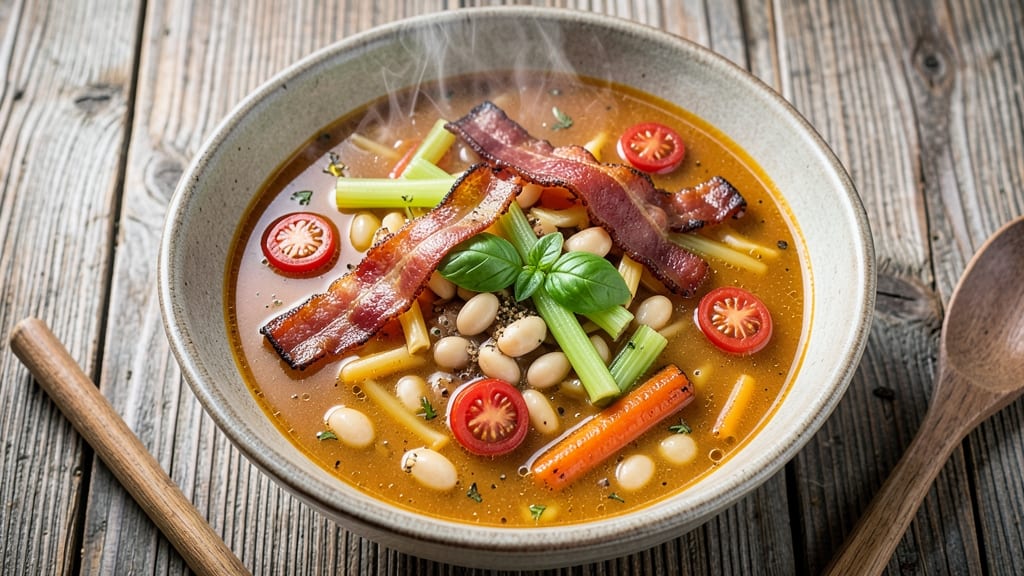
This best Italian minestrone soup recipe with bacon transforms a simple pot of vegetables and beans into a hearty, smoky masterpiece that tastes like a Tuscan trattoria. The key lies in slow-cooked bacon that infuses the broth with deep, savory notes while keeping the soup light enough to feel fresh.
I’ve perfected this version over years of testing—each ingredient plays a role in balancing richness and brightness, ensuring every spoonful delivers both comfort and authenticity.
The beauty of this recipe is its flexibility: you can use seasonal vegetables, swap beans for lentils, or even make it vegan by omitting the bacon. But the bacon—crisped until caramelized and then simmered into the broth—adds a smoky depth that makes this minestrone unforgettable. The secret?
Simmering the soup low and slow so flavors meld without the broth turning cloudy or the vegetables losing their texture. This isn’t just soup; it’s a meal in a bowl, packed with protein, fiber, and the kind of warmth that lingers long after the last bite.
What sets this version apart is the harmony of ingredients: tender white beans, crisp carrots, earthy zucchini, and a touch of pasta for heartiness, all bathed in a broth that’s rich but never heavy. The bacon isn’t just an add-on—it’s the foundation, lending its smoky essence to every component.
By the time you’re stirring in fresh basil and a splash of lemon at the end, you’ll have a soup that’s as satisfying as it is elegant, ready to feed a crowd or warm a chilly evening.
Whether you’re serving it at a family gathering or simply craving a bowl of soul-warming goodness, this minestrone delivers restaurant-quality results with minimal effort. The best part? Leftovers taste even better the next day as the flavors continue to deepen. Let’s get cooking—your taste buds will thank you.
Ingredients for best italian minestrone soup recipe with bacon
Six servings of Tuscan-inspired comfort in one pot—where smoky bacon meets bright veggies and hearty beans.
| Ingredient | Amount | Notes |
|---|---|---|
| Thick-Cut Bacon 🥓 | 8 oz | Thick-cut for crispy edges |
| White Beans 🌾 | 1 ½ cups | Canned, drained and rinsed |
| Vegetable Broth 💧 | 6 cups | Homemade or quality store-bought |
| Ditalini Pasta 🍝 | 1 cup | Uncooked, broken in half |
| Carrots 🥕 | 2 medium | Peeled, cut into chunks |
| Celery Stalks 🧅 | 2 whole | Trimmed, sliced into pieces |
| Zucchini 🥒 | 1 medium | Sliced into half-moons |
| Onion 🧅 | 1 medium | Yellow or red, diced |
| Garlic Cloves 🧄 | 4 cloves | Minced for depth of flavor |
| Canned Diced Tomatoes 🍅 | 1 14.5 oz can | San Marzano preferred |
| Fresh Basil Leaves 🌿 | ¼ cup | Chopped for freshness |
| Lemon Juice 🍋 | 1 tbsp | Freshly squeezed |
| Salt 🧂 | 1 ½ tsp | Diamond Crystal kosher |
| Black Pepper 🌶️ | ½ tsp | Freshly cracked |
| Olive Oil 🫒 | 2 tbsp | Extra-virgin for richness |
The bacon is everything here. Thick-cut from Oscar Mayer or Trader Joe's gives you that perfect crispy edge, but any quality bacon works. Look for good marbling—it's what renders the fat for that rich, smoky broth. I always cook it low and slow until it's caramelized but not burnt, then break it into pieces right in the pot. The beans? Cannellini or great northern from the canned aisle—just drain and rinse. No need for fancy imports here, but Mutti brand is my go-to for consistent quality. The vegetable broth is where the magic happens, so don't skimp on quality—Pacific Foods or Imagine brands are solid choices if you're not making your own.
No thick-cut bacon? Regular bacon cut into larger pieces works in a pinch, but it won't crisp as nicely. Swapping beans? Lentils or chickpeas work too—just adjust cooking time. The carrots and celery can be baby versions if that's what's in your fridge, but organic from the farmers market have better flavor. Zucchini gets added later so it stays crisp—don't overcook it. The ditalini pasta is my favorite for minestrone, but any small pasta shape works. For the tomatoes, San Marzano cans from Costco are worth the investment—they're sweeter and less acidic. And that fresh basil? Grow your own or grab a bunch from the grocery store—it makes all the difference at the end.
This soup tastes even better the next day as the flavors meld. Store in the fridge for 4-5 days or freeze portions for up to 3 months. I always make double batches—it reheats beautifully and makes great lunches. The pasta gets slightly softer when reheated, which is perfect. For serving, I like to top each bowl with extra bacon bits and a sprinkle of fresh basil. The lemon juice at the end brightens everything up—don't skip it. And if you're making this ahead, add the pasta and basil just before serving so they stay fresh.
Why You'll Love This Recipe
- Bacon First: I swear by cooking the thick-cut bacon until it’s crispy—those crumbles add this smoky depth that cuts through the broth like a secret weapon. No one even notices it’s "healthy" because it tastes like a Sunday breakfast in a bowl.
- One-Pot Magic: Honestly, this is the kind of recipe where you dump everything in one pot and walk away. The carrots soften while the ditalini cooks, and the white beans thicken the broth just enough—no straining, no fuss, just pure satisfaction.
- Lunchbox Hero: Between us, this is my go-to for meal prep. The flavors only get better the next day, and it reheats like a dream. Pack it cold for work or warm it up for a lazy afternoon—either way, it’s a hit.
- Budget Buster: Vegetable broth, white beans, and bacon? That’s a pantry trifecta for stretching meals without breaking the bank. I’ve made a full pot feed four people for under $10—leftovers? Even better.
Step-by-step instructions for smoky bacon-infused minestrone
Here's how to craft the ultimate Italian minestrone with bacon—packed with smoky depth and hearty texture.
🍳 Step 1: Render the Bacon and Sauté the Aromatics
In a large Dutch oven, cook the 8 oz thick-cut bacon over medium heat for 8-10 minutes, stirring occasionally, until deep golden brown and crispy. Use a slotted spoon to transfer the bacon to a paper towel-lined plate, leaving the rendered fat in the pot.
Reduce heat to medium-low and add 2 tbsp olive oil to the pot with the bacon fat. Toss in the 1 medium onion and 2 whole celery stalks, sliced into ¼-inch pieces. Cook for 5 minutes until softened. Add the 2 medium carrots, cut into ½-inch chunks, and cook for another 3 minutes until they begin to soften slightly. This foundational step builds the soup's rich, smoky flavor base.
🍳 Step 2: Add Garlic, Tomatoes, and Beans
Stir in the 4 cloves minced garlic and cook for 30 seconds until fragrant—don't let it brown. Pour in the 1 14.5 oz can diced tomatoes (with juices) and the 1.5 cups white beans (drained and rinsed). Add 6 cups vegetable broth, 1.5 tsp salt, and 0.5 tsp black pepper. Bring to a gentle boil over high heat, then reduce to a simmer for 15 minutes to let the flavors meld.
Here's the thing—this simmering time is crucial. It allows the tomatoes to break down slightly, releasing their natural sweetness, while the beans absorb the smoky bacon essence. Stir occasionally to prevent sticking, and taste the broth. It should be seasoned but not overly salty—adjust if needed.
🥘 Step 3: Incorporate the Vegetables and Pasta
Add the 1 medium zucchini, sliced into ½-inch half-moons, and the 1 cup ditalini pasta (broken in half for even cooking). Simmer for 12-15 minutes until the pasta is al dente and the zucchini is tender but still holds its shape. The soup should be thick but not gluey—if it's too thick, stir in ½ cup water to loosen it.
I like to check the pasta 2 minutes before the package suggests, as it continues cooking in the hot broth. The zucchini should be just tender enough to pierce easily with a fork. If you prefer softer veggies, add them a few minutes earlier. The key is balance—you want everything to be cooked but still vibrant.
🍽️ Step 4: Finish with Fresh Herbs and Brightness
Remove the pot from heat and stir in the 0.25 cup chopped fresh basil leaves and 1 tbsp lemon juice. Let the soup sit for 5 minutes to allow the basil to infuse its fresh aroma. Taste and adjust seasoning—this is where the magic happens. The lemon juice brightens the smoky flavors, while the basil adds a touch of freshness that cuts through the richness of the bacon.
Ladle the minestrone into bowls, and top each serving with 2-3 crispy bacon pieces. The contrast of the smoky bacon against the fresh basil and tangy lemon juice is what makes this soup truly special. Serve immediately while the pasta is hot and the flavors are at their peak.
Pro Tips For Making Best Italian Minestrone Soup Recipe With Bacon
- CRISP THE BACON LOW: Thick-cut bacon needs patience—cook it slow over medium-low heat until the edges are glassy and the fat renders just enough to coat the pot. I used to rush it, and the result was greasy, not crispy. Let it work its magic, and you’ll get that perfect smoky crunch without swimming in fat.
- SOAK THE BEANS: White beans hold moisture like sponges. Give them a quick 10-minute soak in warm water before adding them to the soup—this cuts cooking time and keeps them from turning mushy. (Yes, even canned beans benefit from a quick rinse and a splash of warm water first.)
- ADD PASTA LAST: Ditalini needs just 8-10 minutes in broth to cook perfectly, but timing matters. Toss it in with the beans and broth after the carrots have softened—otherwise, you’ll end up with a gummy, overcooked mess. Use the "scoop and taste" method: lift a noodle and check for bite.
- SALT THE BROTH LATE: Vegetable broth is already seasoned, but adding salt early can turn your soup bland as the flavors mellow. Wait until the beans and bacon have simmered for 15 minutes, then adjust with a pinch of salt—this balances everything without overpowering. (And no, you don’t need to taste-test every drop.)
Essential equipment for perfect results
Dutch Oven Essentials
A large Dutch oven is your best friend for this minestrone—it distributes heat evenly and handles the soup’s volume beautifully. I recommend a 5-6 quart enameled cast iron like the Le Creuset or Lodge—they’re durable, retain heat well, and won’t react with acidic ingredients.
If you don’t own one, a heavy-bottomed stainless steel pot (like All-Clad) works too, but it may require more attention to prevent scorching. 🔥
Bacon Cooking Tools
For crispy bacon without a mess, use a slotted spoon to transfer cooked bacon to paper towels while leaving the fat in the pot. A tongs also works, but avoid forks—they can shred the bacon.
Pro tip: Line a plate with double-layered paper towels to absorb excess grease. If you’re short on time, a bacon press (like OXO Good Grips) speeds up cooking and reduces splatter.
Knife and Cutting Gear
Precision cutting ensures even cooking—use a sharp 8-inch chef’s knife for chopping onions, celery, and carrots. A mandoline (with guard!) is great for uniform zucchini slices, but a sharp knife works just fine. For garlic, a garlic press saves time, but mincing with a knife gives you more control.
Keep a cutting board (wood or plastic) clean to prevent cross-contamination—wash between ingredients like raw onions and zucchini.
Measuring and Mixing
Accurate measurements matter, so grab a set of stainless steel measuring cups (like OXO Good Grips) and a spoon rest to keep utensils organized. For broth, a liquid measuring cup with spouts makes pouring easier. A wooden spoon is ideal for stirring—it won’t scratch your Dutch oven like metal.
For the fresh basil, a small pair of kitchen shears trims stems quickly, and a microplane zesting tool adds lemon zest if you want extra brightness.
Serving and Storage
Serve minestrone in deep soup bowls (like Corelle) to hold the hearty ingredients. For leftovers, transfer to glass airtight containers (like Pyrex) for fridge storage or freezer-safe bags for freezing.
A ladle with a long handle (like OXO Stainless Steel) helps portion soup without splashing. If reheating, a fine-mesh strainer skims excess fat from the surface before serving.
Nutrition facts
Frequently asked questions
Can I use regular bacon instead of thick-cut?
Yes, but expect less crispiness. Regular bacon will cook faster and may not develop the same caramelized flavor. If using regular bacon, cut it into larger pieces and cook them for 6-8 minutes instead of 8-10 minutes to prevent burning. The key is to render the fat without overcooking the edges.
What if I don't have ditalini pasta?
No problem! Use any small pasta shape like orzo, acini di pepe, or even small shells. Break larger pasta in half if needed for even cooking. The recipe works with any pasta that cooks in 12-15 minutes—just adjust the simmering time slightly if your pasta has a different cooking requirement.
How can I make this soup vegan?
Swap the bacon for smoked tofu or tempeh (crumbled and pan-fried) and use vegetable broth. Add 1 tbsp soy sauce or smoked paprika to mimic bacon's depth. For protein, include white beans and lentils instead of just beans. The smoky flavor will still shine through!
Why does my minestrone turn out too thick?
This usually happens when the pasta absorbs too much liquid. To fix it, stir in ½ cup water or broth and simmer for 2-3 minutes longer. For prevention, add the pasta slightly earlier (when the soup has 10 minutes left to cook) and taste frequently. The perfect consistency should coat the back of a spoon but still be pourable.
Can I prep this ahead of time?
Make the soup up to 2 days ahead and store it in the fridge. The flavors deepen overnight. When reheating, add 1-2 tbsp water to prevent thickening. For serving, always stir in fresh basil and lemon juice just before eating—this keeps the herbs vibrant and brightens the flavors.