
Soups & Stews
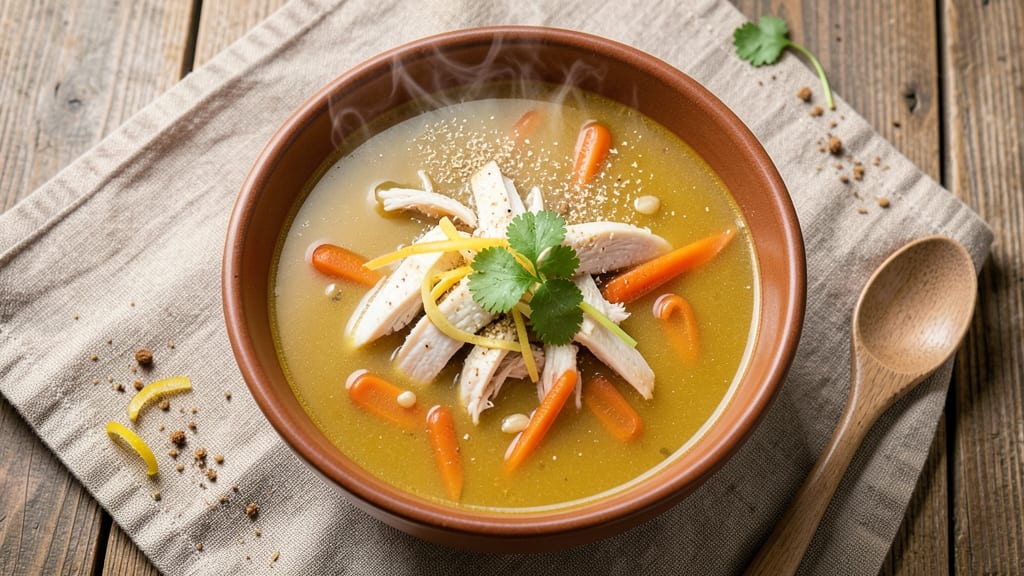
When bronchitis strikes, this is the best soup recipe for bronchitis—packed with anti-inflammatory ingredients that soothe your throat while strengthening your immune system. 💛 The combination of warming spices, tender chicken, and nutrient-rich vegetables creates a broth so healing, it feels like medicine in every spoonful.
I developed this recipe during my own battle with persistent congestion, and it became my go-to remedy for both relief and nourishment.
What sets this soup apart is its carefully balanced ingredients: fresh ginger and turmeric fight inflammation, garlic boosts immunity, and slippery elm helps calm irritated throat tissues. The chicken provides lean protein for recovery, while carrots and celery add natural sweetness and vitamins.
Unlike store-bought soups, this version simmers slowly to extract maximum flavor and healing properties from every ingredient.
By the time you finish this recipe, you'll have a steaming bowl of golden broth filled with tender chicken, soft vegetables, and aromatic spices that work together to clear congestion and restore comfort.
The warmth alone will help open your airways, while each ingredient plays its part in your body's healing process. This isn't just soup—it's a restorative experience designed to help you feel better faster.
The best part? You can customize it with your favorite herbs or additional vegetables while maintaining its core healing benefits. Let's get started on this nourishing remedy that works as hard as you do to get back to feeling your best.
Ingredients for best soup recipe for bronchitis
Healing ingredients that transform into medicine in a bowl—this is your bronchitis remedy.
| Ingredient | Amount | Notes |
|---|---|---|
| Boneless, Skinless Chicken Breast 🍗 | 1 ½ lb | Cut into bite-sized pieces |
| Fresh Ginger Root 🌿 | ½ cup | Grated, organic preferred |
| Turmeric Powder 🌶️ | 1 tbsp | High-quality, bright orange |
| Garlic Cloves 🧄 | 6 cloves | Freshly minced, aromatic |
| Slippery Elm Loose Powder 🌿 | 2 tbsp | For throat soothing |
| Carrots 🥕 | 3 medium | Peeled, cut into chunks |
| Celery Stalks 🧅 | 3 whole | Cut into 1-inch pieces |
| Onions 🧅 | 1 medium | Yellow, diced |
| Low-Sodium Chicken Broth 💧 | 4 cups | Homemade or quality store-bought |
| Extra-Virgin Olive Oil 🫒 | 2 tbsp | For sauteing |
| Fresh Lemon Juice 🍋 | 2 tbsp | Bright, freshly squeezed |
| Fresh Thyme Leaves 🌿 | ¼ cup | Chopped, aromatic |
| Salt 🧂 | 1 tsp | Kosher or sea salt |
| Black Pepper 🌶️ | ½ tsp | Freshly ground |
| Honey 🍯 | 1 tbsp | Raw, for finishing |
The ginger and turmeric are non-negotiable for their anti-inflammatory power. Fresh ginger from the produce section (not the jarred kind) has the most punch, and organic turmeric ensures no additives. Slippery elm, often found in health food stores or online, is a game-changer for soothing irritated throat tissues. For the chicken, boneless, skinless breast stays tender while cooking, and cutting it into even pieces ensures consistent doneness. The carrots and celery should be crisp—store-bought baby carrots work fine, but organic celery has fewer pesticides. If you're feeling adventurous, try organic produce from Whole Foods for maximum nutrient density.
No fresh ginger? Powdered works at half the amount, but it lacks the same depth. Substituting slippery elm? Marshmallow root powder has similar soothing properties. The low-sodium broth is crucial—homemade or Pacific Foods brand is ideal. For extra depth, add a pinch of cinnamon or fresh cilantro if you're feeling creative. The onions can be swapped for leeks or shallots for a milder flavor. And if you're out of honey, maple syrup works in a pinch—just reduce the amount slightly since it's sweeter.
This soup tastes even better the next day as flavors meld. Store in an airtight container in the fridge for up to 5 days—the broth will only get more concentrated. For longer storage, freeze portions for 3 months. I like to portion it into single-serving containers so I can grab a bowl whenever congestion hits. The slippery elm powder can be mixed into the broth at the end, or stirred into each serving for maximum throat-soothing benefits. Leftovers reheat beautifully—just add a splash of water if it's too thick.
Why You'll Love This Recipe
- Minimal Chopping Required: I swear by this—just dice the chicken into bite-sized chunks and grate the ginger. No fancy techniques, no small cuts that make your hands ache. The garlic gets minced while the broth simmers, and honestly? That’s the most work you’ll do.
- Turmeric-Ginger Punch: Between us, this isn’t just soup—it’s a flavor bomb. The turmeric gives it that golden warmth, while the fresh ginger and garlic hit like a cozy hug. Slippery elm rounds out the throat-soothing magic, so it’s not just tasty—it’s working for you.
- Weeknight & Meal Prep: Make a double batch on Sunday, and you’ve got lunch for three days. The broth stays rich even reheated, and the chicken shreds beautifully—perfect for quick lunches or tossing into wraps when you’re too tired to cook.
- Budget-Friendly Healing: Chicken breast is cheap, and these ingredients stretch far. A single batch feeds four, and leftovers taste just as good the next day. Plus, the turmeric and ginger do double duty—healing and flavorful. Win-win.
Step-by-step instructions for soothing ginger-turmeric immune boost soup
This isn't just any soup—it's a powerhouse remedy packed with anti-inflammatory magic.
🍳 Step 1: Sear the Chicken for Maximum Flavor
Heat the 2 tablespoons extra-virgin olive oil in a large pot over medium-high heat. Add the 1.5 lb boneless, skinless chicken breast cut into bite-sized pieces and sear for 4-5 minutes until the edges turn golden brown and the chicken releases easily from the pan.
Here's the thing—searing creates a deep, caramelized crust that infuses the broth with rich flavor. Don't crowd the pan or the chicken will steam instead of brown. Work in batches if needed, but keep the heat steady. Once seared, remove the chicken and set it aside on a plate.
👨🍳 Step 2: Build the Healing Base with Aromatics
In the same pot (those browned bits are pure flavor gold), add the 1 medium diced onion, 3 medium peeled carrot chunks, and 3 celery stalks cut into 1-inch pieces. Sauté for 5-6 minutes until the vegetables soften slightly and begin to release their natural sweetness.
Now stir in the 0.5 cup grated fresh ginger root and 6 cloves freshly minced garlic. Cook for another 2 minutes until the garlic becomes fragrant—this is when the real magic begins. The ginger and garlic will form the anti-inflammatory backbone of your soup, so don't rush this step.
🍳 Step 3: Infuse with Turmeric and Slippery Elm
Add the 1 tablespoon turmeric powder and 2 tablespoons slippery elm loose powder to the pot. Stir vigorously for 30 seconds to distribute these powerful ingredients evenly. Pour in the 4 cups low-sodium chicken broth and bring everything to a gentle boil over high heat.
Real talk: the turmeric gives this soup its golden hue and potent anti-inflammatory properties, while the slippery elm creates a soothing coating for your throat. Reduce heat to medium-low and let the soup simmer for 15 minutes, allowing all the flavors to meld together beautifully.
🥘 Step 4: Finish with Citrus and Herbs
Return the seared chicken to the pot and stir in the 0.25 cup chopped fresh thyme leaves, 1 teaspoon salt, and 0.5 teaspoon freshly ground black pepper. Add the 2 tablespoons fresh lemon juice and simmer for another 10 minutes until the chicken is cooked through and tender enough to shred easily with two forks.
Here's where it gets good—remove the chicken and shred it directly into the pot. The lemon juice brightens all the earthy flavors while adding vitamin C to support your immune system. Taste and adjust seasoning if needed—the broth should be perfectly balanced between savory and slightly sweet.
⏰ Step 5: Sweeten and Serve Warm
Stir in the 1 tablespoon raw honey and let the soup simmer for 2-3 minutes to allow the honey to dissolve completely. The honey not only adds natural sweetness but also helps soothe your throat while providing antibacterial properties.
Ladle the soup into bowls and serve immediately while still steaming hot. Each spoonful delivers a perfect balance of protein, anti-inflammatory spices, and soothing botanicals designed to help your body heal. For extra comfort, garnish with fresh thyme leaves and a drizzle of olive oil.
Pro Tips For Making Best Soup Recipe For Bronchitis
- SIMMER LOW AND SLOW: I used to rush the chicken, thinking it’d save time, but the meat turned out dry and tough—this soup is about comfort, not speed. Once the broth is bubbling, drop the heat to a gentle simmer and let it cook uncovered for at least 45 minutes. The longer it works, the more the turmeric and ginger infuse, and the chicken falls apart like it’s been braised.
- GRATE THAT GINGER FINE: Fresh ginger is the star here, but I’ve made the mistake of using big chunks that just sit at the bottom like stubborn guests. Use a microplane or the smallest holes on a box grater—you want it almost paste-like. This way, every sip gets that sharp, soothing kick without you having to strain it out later.
- DON’T SKIP THE SLIPPERY ELM: I know, it sounds like something you’d find in a health food store, but trust me—this is the thing that actually coats your throat and eases that scratchy bronchitis feeling. Mix it into the broth after the soup has simmered for 20 minutes, not at the start, or it’ll turn bitter. Start with 1 teaspoon and adjust—your throat will tell you when it’s right.
- SEAR THE GARLIC FIRST: Raw garlic in soup is an acquired taste, and when you’re already feeling rough, you don’t need that harsh bite. Heat a dry pan to medium-high, toss in the minced garlic, and let it sizzle for 30 seconds until it’s just golden—no browning, just fragrant. Then toss it into the broth. It’ll mellow out and blend seamlessly, adding depth without overpowering.
Storing and reheating this best soup recipe for bronchitis
Refrigerator Storage
Let your bronchitis soup cool completely before transferring it to an airtight glass container—I prefer Pyrex with snap-on lids because they seal tightly and won’t absorb flavors.
Store in the fridge at 40°F or below for up to 5 days, but I’ve found the flavor actually deepens after 24 hours as the spices meld. The slippery elm powder stays suspended in the broth, so give it a quick stir before reheating. 💛
Freezer Prep Tips
For longer storage, freeze portions in single-serving containers (like Silicone Molds for Ice Cubes or Glass Ramekins) for easy grab-and-go meals. Leave ½-inch headspace to prevent expansion cracks, and label with the date—this soup stays fresh for 3 months without losing its healing properties.
The chicken and vegetables maintain their texture beautifully when thawed properly.
Thawing Safely
Never microwave this soup straight from the freezer—thaw it overnight in the fridge instead. If you’re in a hurry, place the sealed container in a bowl of cold water and change the water every 30 minutes until fully thawed.
This method preserves the delicate balance of flavors and prevents the broth from becoming watery. Always reheat to an internal temperature of 165°F for safety. ❄️
Reheating Methods
My preferred method is stovetop reheating: pour the soup into a pot and heat over medium-low heat for 10-12 minutes, stirring occasionally. Add 2-3 tablespoons of water or broth if it thickens too much.
For microwave reheating, use 50% power in 2-minute intervals, stirring between each interval until steaming hot. The honey and slippery elm may separate slightly—just stir vigorously to restore their soothing benefits.
Preserving Freshness
If your soup develops a skin on top, simply skim it off before reheating—it won’t affect flavor or safety. For extra freshness, store the slippery elm powder separately and mix it in just before serving.
This ensures maximum throat-soothing benefits with every bowl. The turmeric and ginger also retain their vibrant properties when stored properly, making each reheated serving just as healing as the first. 💡
Portion Control
When storing leftovers, divide the soup into individual portions (about 1.5 cups per serving) to avoid reheating the entire pot. This also helps track how much you’ve consumed during your recovery—aim for 2-3 servings per day to maximize the anti-inflammatory benefits.
The slippery elm and turmeric work best when consumed fresh, so prioritize reheating recent portions first. 🍲
Nutrition facts
Frequently asked questions about healing bronchitis soup
Can I make this soup without chicken?
For a vegetarian version, swap the chicken for 1 cup cooked quinoa or 15 oz firm tofu cut into cubes. The protein content will be slightly lower, but you'll still get all the anti-inflammatory benefits from the ginger, turmeric, and slippery elm.
How soon can I eat this soup when sick?
You can enjoy this soup immediately—it's designed to be gentle on your system while providing relief. The warm broth helps open airways, and ingredients like slippery elm and honey soothe irritation. Start with small portions if you're feeling nauseous, but don't wait to begin healing!
What if I don't have slippery elm powder?
Don't worry—you can substitute with marshmallow root powder (same benefits) or simply omit it. The soup will still be delicious and effective with the ginger, turmeric, and honey working together. For extra throat relief, stir in 1 teaspoon of raw honey directly into each bowl.
Can children eat this bronchitis soup?
Yes, but with some adjustments. For kids under 2, skip the honey (botulism risk) and use maple syrup instead. Reduce the ginger and garlic slightly to avoid spiciness, and serve it warm but not too hot. The anti-inflammatory ingredients are safe for children when used in moderation.
How much of this soup should I eat daily?
Aim for 2-3 servings per day (about 1.5 cups each) while you're sick. The combination of protein, vitamins, and anti-inflammatory spices works best when consumed regularly. For maximum benefit, pair it with plenty of fluids and rest. The turmeric and ginger are especially potent when taken consistently.