
Soups & Stews
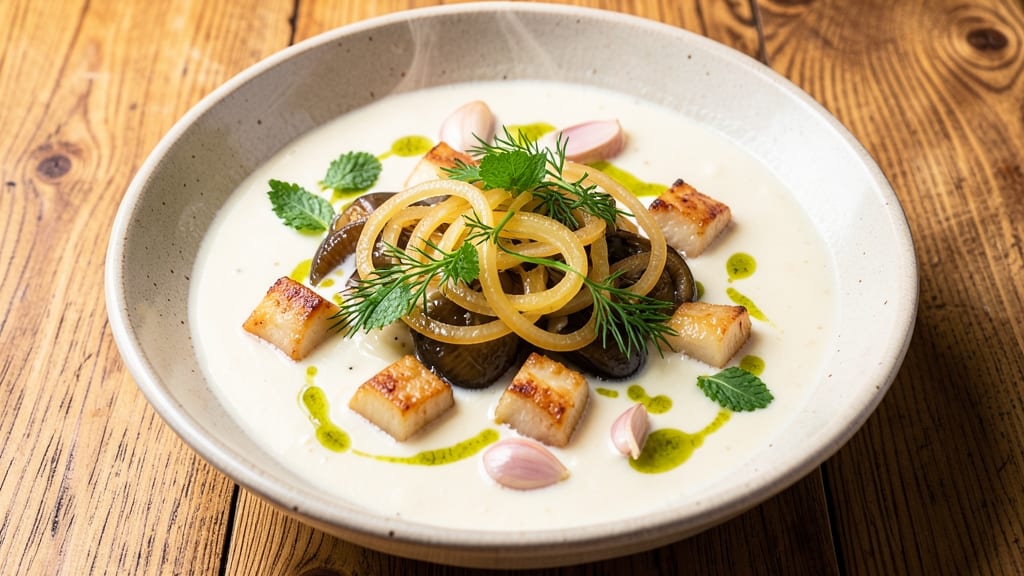
This Beyran soup recipe brings the creamy, herb-infused comfort of Armenian cuisine to your table with just 15 minutes of active prep. The secret lies in blending thick yogurt with fresh dill and mint, creating a velvety base that envelops tender vegetables like eggplant and tomatoes.
What makes this soup truly special is its vegetarian nature—packed with protein from the yogurt and nutrients from seasonal produce, yet light enough for any meal.
The preparation is straightforward: sauté onions and garlic until fragrant, then add chopped vegetables and simmer until tender. Stir in the yogurt mixture slowly to prevent curdling, then fold in fresh herbs for brightness.
The result is a smooth, cooling soup with just the right balance of tangy and fresh flavors—perfect for warm days or as a comforting starter. This recipe delivers restaurant-quality results without requiring advanced techniques.
What sets Beyran soup apart is its adaptability. Use summer squash or zucchini when eggplant isn’t in season, or swap green peppers for red for a sweeter twist. The yogurt base ensures a naturally thick consistency, but you can adjust with a splash of water if needed.
Serve it chilled with crusty bread or warm with a sprinkle of paprika for extra depth.
Beyond its deliciousness, Beyran soup carries cultural significance as a traditional Armenian dish often enjoyed during gatherings. Its creamy texture and vibrant herbs make it a standout vegetarian option that’s equally satisfying as a main or side. Ready to create this velvety delight? Let’s get started.
Ingredients for beyran soup
Fifteen minutes of prep brings creamy Armenian comfort to your table with yogurt, herbs, and seasonal vegetables.
| Ingredient | Amount | Notes |
|---|---|---|
| Plain Whole-Milk Yogurt 🥛 | 2 cups | Thick, unsweetened, full-fat preferred |
| Fresh Dill 🌿 | ½ cup | Chopped stems and leaves |
| Fresh Mint Leaves 🍃 | ¼ cup | Lightly crushed for aroma |
| Yellow Onion 🧅 | 1 whole | Thinly sliced, about 1 cup |
| Garlic Cloves 🧄 | 4 cloves | Minced, not pressed |
| Extra-Virgin Olive Oil 🫒 | ¼ cup | For sautéing, fruity variety |
| Eggplant 🍆 | 1 lb | Diced into 1-inch pieces |
| Roma Tomatoes 🍅 | 4 whole | Chopped, seeds removed |
| Green Bell Pepper 🌶️ | 1 whole | Diced, about 1 cup |
| Vegetable Broth 💧 | 2 cups | Low-sodium preferred |
| Lemon Juice 🍋 | 1 tbsp | Freshly squeezed |
| Salt 🧂 | 1 tsp | Diamond Crystal kosher |
| Ground Black Pepper 🌶️ | ¼ tsp | Freshly ground |
| Sweet Paprika 🌶️ | ½ tsp | For garnish, optional |
| Crusty Bread 🍞 | 4 slices | For serving, optional |
The yogurt is the foundation—full-fat Greek-style works best for that velvety texture. Grab the thickest tub you can find (the kind that barely drips). Fresh dill and mint are non-negotiable here; Middle Eastern markets often have better quality than grocery stores. If you can't find fresh mint, substitute half the amount of dried mint, but it won't be the same. The eggplant should be firm—avoid any with soft spots. For the broth, low-sodium versions prevent over-salting, but if you can't find them, just reduce the added salt later.
No fresh herbs? Dried dill at one-third the amount works in a pinch, but the flavor won't be as bright. Swap eggplant for zucchini or summer squash if you prefer milder vegetables. The bell pepper can be red or orange for a sweeter profile. For extra richness, stir in 1 tbsp tahini at the end. The lemon juice is key—don't skip it, but if you're sensitive to acidity, reduce to 1 tsp. The paprika is optional but adds beautiful color; smoked paprika gives a different depth if you're feeling adventurous.
This soup tastes even better the next day as flavors meld. Store in an airtight container in the fridge for up to 3 days. For longer storage, freeze portions for 2 months—just thaw overnight in the fridge. The yogurt base thickens when chilled, so a splash of water or broth may be needed when reheating. Serve immediately after reheating for the creamiest texture. The crusty bread is perfect for soaking up every last bit of that velvety goodness.
Why You'll Love This Recipe
- No-Chop Nightmare: I swear by this recipe when I’m too tired to dice onions properly. Just rough-chop the garlic and onion, let them soften in the pot—no precision needed. The yogurt does the work for you.
- Herb Magic: That bright dill and mint combo? It’s like a cool breeze in a bowl. The garlic caramelizes just enough to tie everything together without overpowering—creamy, fresh, and ridiculously satisfying.
- Picnic or Pasta: Between us, this soup doubles as a dip for crusty bread or a tangy sauce for grilled meats. I’ve served it at summer potlucks (chilled!) and as a side for weeknight dinners—same effort, endless uses.
- Budget Buster: A single onion and a few cloves of garlic stretch across multiple servings, and yogurt is cheaper than takeout. Honestly, I make this when I’m broke or busy—same delicious result either way.
Step-by-step instructions for Turkish yogurt and herb velvety delight
Here's the authentic method to create Beyran's signature creamy, herb-infused texture that defines this Turkish classic.
Sauté the Aromatic Base
Heat the 0.25 cup extra-virgin olive oil in a large pot over medium heat. Add the 1 whole yellow onion (thinly sliced) and cook for 5 minutes until softened and translucent. This foundational step builds flavor without browning, which could make the soup bitter.
Add the 4 cloves minced garlic and cook for 30 seconds until fragrant. The garlic should smell pungent but not burn—this is your signal to move to the next ingredient. Stir constantly to prevent scorching, as garlic burns quickly at high heat.
Cook the Vegetable Mixture
Add the 1 lb diced eggplant, 4 whole chopped Roma tomatoes, and 1 whole diced green bell pepper to the pot. Cook for 8-10 minutes over medium heat, stirring occasionally, until the vegetables soften and release their juices. The eggplant should break down slightly but retain some texture—this ensures a velvety soup without mushiness.
Season with the 1 tsp salt and 0.25 tsp ground black pepper now. This early seasoning allows flavors to meld throughout the cooking process. If the vegetables release too much liquid, reduce heat slightly to prevent boiling over.
Build the Yogurt Base
Pour in the 2 cups vegetable broth and bring the mixture to a gentle simmer. Reduce heat to low and let it cook for 5 minutes to blend all flavors. Remove from heat and let cool for 5 minutes—this prevents the yogurt from curdling when added later.
In a separate bowl, whisk together the 2 cups plain whole-milk yogurt and 1 tbsp lemon juice. Slowly pour this mixture into the vegetable broth while stirring continuously. The acidity from the lemon juice helps stabilize the yogurt, preventing separation. Return the pot to low heat and cook for 3-4 minutes, stirring constantly, until the soup reaches 160°F—just warm enough to meld flavors without cooking the yogurt.
Finish with Herbs and Garnish
Remove the pot from heat and stir in the 0.5 cup chopped fresh dill and 0.25 cup lightly crushed fresh mint leaves. These herbs should be added last to preserve their vibrant color and fresh aroma. Taste and adjust seasoning if needed—Beyran should be creamy, tangy, and slightly savory.
Ladle the soup into bowls and garnish with a sprinkle of 0.5 tsp sweet paprika (optional) and serve with 4 slices crusty bread on the side. The bread helps balance the soup's richness and adds a satisfying textural contrast. Let the soup sit for 5 minutes before serving to allow flavors to fully develop.
Pro Tips For Making Beyran Soup
- Whisk the Yogurt Slowly: If you dump cold yogurt into hot broth, you’ll end up with curdled soup—trust me, I’ve done it. Instead, temper the yogurt by whisking it into a small ladle of the warm broth first, then slowly mixing it back into the pot. This keeps the texture creamy and smooth without turning it into glue.
- Pulse the Herbs: Fresh dill and mint are the stars here, but overchopping them turns the soup into a green sludge. Pulse them in a food processor for 3-4 seconds—just enough to break them down while keeping some texture. This releases the flavor without sacrificing the bright, fresh bite.
- Sauté the Onion Until Golden: Skip the pale, al dente onion stage—you want it deep golden, almost caramelized, before adding the garlic. This adds a rich, sweet depth that cuts through the yogurt’s tang. (Yes, it takes 8-10 minutes, but it’s worth it.)
- Strain the Broth First: If you’re using homemade broth, strain it through a fine-mesh sieve or cheesecloth before mixing in the yogurt. Even a few stray bits of meat or veggies can curdle the dairy when heated. (Pro move: Chill the broth slightly afterward—cold yogurt soup is a whole other level.)
Regional styles of this recipe
Armenian Homestyle
Beyran soup originated in Armenia as a cooling summer dish, traditionally served during hot months or festive gatherings. The Armenian version often includes fresh herbs like cilantro alongside dill and mint, creating a brighter flavor profile.
I’ve found that using homemade yogurt (if available) adds a deeper tang that store-bought can’t match. For an authentic touch, serve with lavash bread—its crisp texture contrasts beautifully with the creamy soup. 🌿
Turkish Adaptations
In Turkey, Beyran is often thickened with a bit of flour or cornstarch for a smoother texture, especially in regions like Gaziantep where it’s a staple. I’ve noticed Turkish versions sometimes include roasted red peppers instead of green for a sweeter, jammy depth.
The Turks also love topping it with crumbled feta or sumac for extra complexity. A splash of pomegranate molasses (about 1 tsp) adds a fruity tang that’s become popular in modern Turkish kitchens. 🍅
Azerbaijani Twists
Azerbaijani Beyran often incorporates dried herbs like sumac or savory into the yogurt mixture for a more earthy flavor. The Azerbaijanis also prefer their soup slightly thicker, sometimes using a small amount of tahini (about 1 tbsp) to enrich the base.
I’ve experimented with adding diced cucumber at the end for a refreshing crunch—a technique I picked up from Baku’s street food vendors. The Azerbaijani version is often served chilled, making it perfect for hot afternoons. 🥒
Modern Fusion Takes
For a contemporary twist, I’ve seen Beyran reinvented with smoked paprika-infused olive oil or even a touch of miso paste (about ½ tsp) for umami depth. Some chefs add grilled chicken or lamb to make it heartier, though purists argue that keeps it from being truly vegetarian.
I love adding toasted pine nuts (about 2 tbsp) for crunch—it’s a nod to Middle Eastern mezze culture. For a spicy kick, stir in ½ tsp Aleppo pepper at the end. 🌶️
Seasonal Variations
In summer, Beyran shines with zucchini and cherry tomatoes, while winter versions often feature roasted butternut squash and carrots. I’ve made a spring adaptation with asparagus and peas—the bright flavors pair perfectly with the yogurt’s creaminess.
For fall, swap eggplant for acorn squash and add sage to the herb mix. Each season brings new possibilities while keeping the dish’s signature velvety texture intact. ⚡
Nutrition facts
Frequently asked questions
Can I make Beyran soup without yogurt?
The yogurt is essential for that signature creamy texture and tangy flavor. If you're avoiding dairy, try substituting with 2 cups coconut yogurt or 1 cup silken tofu blended with 1 cup vegetable broth—though the texture will differ. For a non-vegetarian version, some regional adaptations use a light chicken broth base instead of yogurt.
Why did my Beyran soup separate?
This usually happens when the yogurt gets too hot or isn't whisked properly. Always warm the yogurt mixture on low heat (never above 160°F) and stir constantly. The lemon juice helps stabilize it—add 1 extra tbsp if you notice curdling. For a quick fix, whisk in 1 tsp cornstarch mixed with water to thicken and blend the separated yogurt back in.
How can I make Beyran soup spicier?
Add heat with ½ tsp Aleppo pepper or ¼ tsp cayenne when stirring in the herbs. For smoky depth, swap the sweet paprika garnish for smoked paprika. A dash of harissa paste (½ tsp) works wonders too—just stir it in at the very end to preserve its vibrant color. If you like it extra spicy, add diced jalapeños when sautéing the vegetables.
Can I prepare Beyran soup ahead of time?
Yes! This soup tastes even better the next day as flavors meld. Store in an airtight container in the fridge for up to 3 days. For longer storage, freeze portions for 2 months. When reheating, add a splash of water or broth to restore creaminess. Never microwave it directly from frozen—thaw overnight in the fridge first. The yogurt base thickens when chilled, so adjust consistency with a little liquid when serving.
What's the best way to serve Beyran soup?
Serve it chilled or at room temperature for the best texture and flavor. Pair with crusty bread or lavash for dipping, and garnish with extra herbs, a drizzle of olive oil, or a sprinkle of sumac. For a complete meal, add a side of grilled vegetables or a simple green salad. The cooling nature makes it perfect for hot days or as a light lunch.