
Soups & Stews
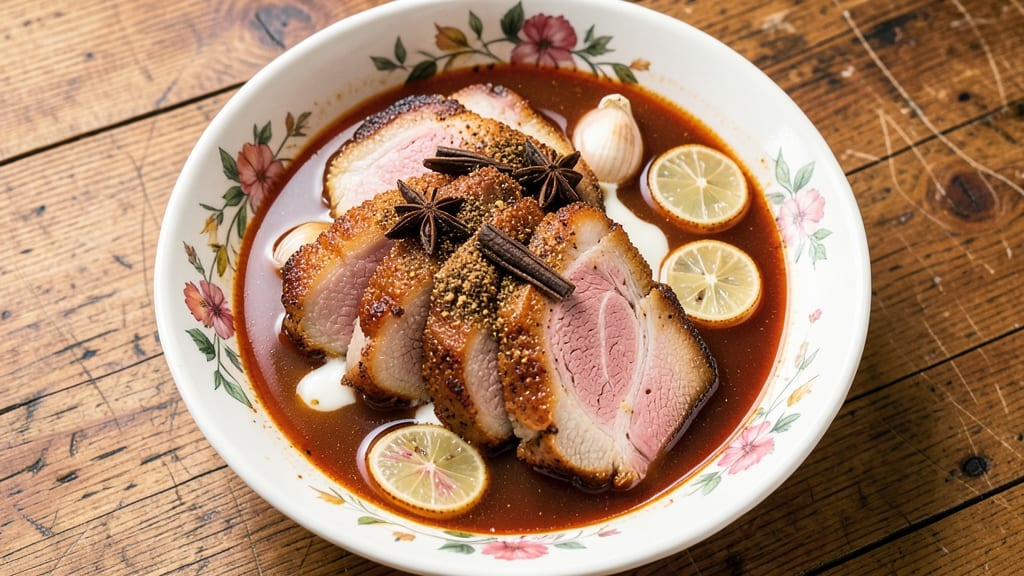
This bida manda pork belly soup recipe brings the soul of Filipino comfort food to your kitchen with its rich, smoky broth and delicate egg ribbons. 🌟 I first encountered this dish in Manila, where it's a staple for family gatherings—each bite carries layers of tradition and warmth.
The secret lies in balancing five-spice seasoning with slow-cooked pork belly, creating a harmony of smoky, savory, and slightly sweet flavors that define this dish.
The recipe starts with a fragrant broth built on garlic, ginger, and star anise, then deepened by hours of simmering pork belly until it's fall-apart tender.
What sets this apart is the way the broth is finished with just a touch of vinegar and sugar, brightening the richness without overpowering it. The egg ribbons—silky and delicate—are the final touch, adding a luxurious texture that makes this more than just soup.
By the time you're done, you'll have a steaming bowl of restaurant-quality Bida Manda that's perfect for family dinners or special occasions. The pork belly melts in your mouth, the broth is deeply flavorful, and the egg ribbons dissolve with every spoonful.
Serve with steamed rice to soak up every last drop of that smoky, aromatic broth.
This dish is especially meaningful during holidays or when you want to share a piece of Filipino culture. The slow cooking process rewards patience with incredible depth of flavor—something you can't replicate with shortcuts. Let's get started on creating this comforting classic in your own kitchen.
Ingredients for bida manda pork belly soup
Six pounds of pork belly and a handful of aromatic spices create this soulful Filipino classic.
| Ingredient | Amount | Notes |
|---|---|---|
| Pork Belly 🥓 | 2 lb | Skin-on, cut into 2-inch cubes |
| Garlic Cloves 🧄 | 10 cloves | Minced, for fragrant base |
| Fresh Ginger 🌿 | 1 inch | Sliced thinly, peeled |
| Star Anise 🌶️ | 2 whole | For smoky depth |
| Five-Spice Powder 🌶️ | 2 tbsp | Filipino blend preferred |
| Coconut Milk 🥥 | 1 can | 13.5 oz can, full-fat |
| White Vinegar 💧 | 1 tbsp | For brightness |
| Granulated Sugar 🍚 | 1 tbsp | Balances acidity |
| Large Eggs 🥚 | 4 whole | Room temperature |
| Green Onions 🧅 | 3 whole | Sliced thin, for garnish |
| Salt 🧂 | 1 ½ tsp | Kosher or sea salt |
| Black Peppercorns 🌶️ | 1 tsp | Freshly cracked |
| Bay Leaves 🍃 | 2 whole | For aromatic depth |
| Steamed White Rice 🍚 | 3 cups | Cooked, for serving |
The pork belly is the heart of this dish—look for thick-cut pieces with good marbling at your local Asian market or butcher shop. Filipino markets often carry pre-cut pork belly, but if you're at a regular grocery store, check the pork section for whole cuts to ask them to cube. The skin should be thick enough to render fat, but not too tough. For the spices, Penzeys or local Filipino stores carry authentic five-spice blends, but any good-quality five-spice will work. Fresh ginger and garlic? Always better than powdered—the farmers market is your best bet for vibrant, fresh ingredients that'll make this broth sing.
No full-fat coconut milk? Light coconut milk works in a pinch, but the richness is worth the full-fat version. Running low on star anise? Two cinnamon sticks can stand in, though it'll have a slightly different profile. The egg ribbons are the magic touch—room temperature eggs ribbon better, so take them out of the fridge 30 minutes before using. For extra smokiness, some cooks add a lightly charred onion to the broth, but that's optional. The vinegar and sugar at the end are crucial—they brighten the broth without overpowering its smoky depth, so don't skip them even if you're not a fan of sweet-savory flavors.
This soup tastes even better the next day as the flavors meld—make a double batch if you can. Store in airtight containers in the fridge for up to 4 days, or freeze for 3 months. The egg ribbons can be made ahead and stored separately, then gently reheated in the broth before serving. For serving, I like to portion the rice and soup together in containers—just reheat the soup portion and add the cold egg ribbons at the end. The rice stays perfectly steamed this way, and you can grab a ready-to-eat meal anytime.
Why You'll Love This Recipe
- One-Pot Magic: I swear by this recipe because it’s all in one pot—no chopping chaos, no extra bowls. You just sear the pork belly, toss in the garlic, ginger, and spices, then let it simmer. That’s it. The star anise and five-spice powder do all the work while you sip your coffee.
- Deep, Rich Flavor: The pork belly melts into pure satisfaction—crispy on the edges, tender inside. The garlic and ginger hit just right, while the five-spice powder adds that warm, aromatic kick. Honestly, it’s the kind of soup that makes you close your eyes and savor every spoonful.
- Weeknight or Weekend: Between us, this soup is my secret weapon for lazy Sundays and rushed weeknights. Double the batch on Sunday, and you’ve got leftovers for days—perfect for meal prep or feeding unexpected guests. The flavors only get better as it sits.
- Budget-Friendly Luxury: Pork belly might sound fancy, but it’s cheaper than you think, especially when you stretch it into a whole pot of soup. Plus, the spices are minimal and pack a punch. It’s comfort food that won’t break the bank—just pure, hearty goodness.
Step-by-step instructions for smoky five-spice pork belly soup
Here's how to build this rich, aromatic Filipino classic—layer by layer.
🔥 Step 1: Render Pork Belly Until Crispy
Heat a large pot over medium-high heat until hot. Add the 2 lb pork belly cut into 2-inch cubes, skin-side down. Let it render undisturbed for 10-12 minutes until the skin turns deep golden brown and crispy. You'll hear it sizzling loudly—this is your signal to flip the pieces occasionally to render evenly on all sides.
I press down gently on the pork belly with a spatula during the first 5 minutes—this prevents it from curling and ensures even contact with the pan. Once the fat starts rendering, it'll bubble and pop, creating a fragrant aroma that fills your kitchen. Don't rush this step; crispy skin is the foundation of this dish.
🍳 Step 2: Build the Aromatic Five-Spice Base
Add the 10 cloves minced garlic, 1 inch sliced ginger, 2 whole star anise, 2 tbsp five-spice powder, 1.5 tsp salt, 1 tsp cracked black peppercorns, and 2 whole bay leaves to the pot. Stir everything together and cook for 3-4 minutes until the garlic turns golden and fragrant—you'll smell that signature five-spice warmth filling your kitchen.
Here's where the magic happens: the spices bloom and release their oils, creating the complex flavor profile that makes this soup special. If the mixture starts to stick, add ½ cup water to deglaze. The goal is to develop a rich, aromatic paste that'll infuse the broth with layers of flavor.
🥘 Step 3: Simmer the Pork in Coconut Milk
Pour in the 1 can full-fat coconut milk and add 1 tbsp white vinegar and 1 tbsp granulated sugar. Stir well to combine, then pour in enough water to cover the pork belly by about 1 inch. Bring to a gentle boil, then reduce heat to low and simmer uncovered for 1 hour to 1 hour 15 minutes until the pork is fork-tender.
Here's the thing—you want the pork to fall apart easily when pierced with a fork, but still hold its shape slightly. The coconut milk will create a velvety broth, while the vinegar and sugar balance the richness. I like to skim off any excess fat that rises to the surface during simmering to keep the broth clean but flavorful.
🍳 Step 4: Prepare the Silky Egg Ribbons
While the soup simmers, prepare the eggs. In a small bowl, whisk the 4 whole large eggs until fully combined. Heat a non-stick skillet over medium-low heat and add a thin layer of oil. Pour the whisked eggs into the skillet, tilting to create a thin layer. Cook for 30-45 seconds until the bottom is just set but still slightly runny.
Using a spatula, gently roll the egg into a log shape, then slice into ½-inch thick ribbons. These delicate egg ribbons should be tender but still hold their shape when added to the soup. The residual heat from the hot soup will finish cooking them perfectly.
🥘 Step 5: Finish and Serve with Fresh Garnishes
Once the pork is tender, remove it from the broth and shred it using two forks. Return the shredded pork to the pot and stir to combine. Remove the star anise and bay leaves. Taste and adjust seasoning if needed—you might want to add a pinch more salt or sugar to balance the flavors.
Just before serving, add the egg ribbons to each bowl of soup. Ladle the hot broth over the 3 cups steamed white rice and top with the egg ribbons. Garnish with 3 whole sliced green onions for freshness. The contrast of the silky egg against the rich pork and coconut broth is what makes this dish truly special.
Pro Tips For Making Bida Manda Pork Belly Soup
- CRACK THE BELLY FIRST: Use a sharp cleaver and hit the pork belly fat cap hard—once—to split it cleanly. I learned this the hard way after struggling with a dull knife and ending up with uneven, ragged edges that cooked unevenly. A thin, even layer of fat renders faster and crisps better.
- PEEL GINGER LIKE A PRO: Use a spoon’s back to scrape off the ginger skin in one smooth motion—no peeling required. I was skeptical until I tried it; it’s faster and leaves the ginger’s surface intact, so it infuses the broth better without turning to mush.
- LOW AND SLOW WINS: Start the pork belly in cold water with aromatics, then bring to a gentle simmer—never a rolling boil. After burning three batches, I finally figured out that patience here means the collagen melts into silk instead of turning the broth cloudy.
- STAR ANISE TIMES TWO: Add the star anise twice: once at the start for deep flavor, then again halfway through for a fresh burst. Sounds weird, but it works—my grandmother swore by this, and the second addition actually changes the outcome, making the soup taste more complex.
Pro cooking tips for bida manda pork belly soup
Pork Belly Prep Secrets
Filipino markets often sell pork belly pre-cut with the skin left intact—this is ideal for Bida Manda. If you're working with whole cuts, ask your butcher for 2-inch cubes with the skin on. The skin should be thick enough to render crispy but not so tough it won't break down.
I like to score the fat cap in a crosshatch pattern with a sharp knife before cooking—this helps the fat render more evenly. 🥓
Never skip the crisping step! The rendered fat from the pork belly creates a flavor base that's impossible to replicate with store-bought broth. Use a heavy-bottomed pot—I prefer my Lodge cast iron Dutch oven—because it distributes heat evenly and prevents hot spots that can burn the pork.
If your pot isn't heavy enough, the pork might cook unevenly or stick.
Five-Spice Mastery
Filipino five-spice blends typically include star anise, cloves, fennel seeds, black pepper, and cinnamon—this is what gives Bida Manda its signature warmth. If you can't find the blend, make your own by combining 1 tsp each of star anise, cloves, fennel seeds, and cinnamon with ½ tsp black peppercorns.
Toast the whole spices in a dry pan for 1 minute before grinding to enhance their aroma.
Here's my pro tip: Bloom the spices properly by cooking them with the garlic and ginger until the garlic turns golden. This releases their essential oils and creates that complex, aromatic base.
If your garlic burns before it turns golden, you've gone too fast—reduce the heat slightly and give it more time. The goal is to develop a rich, fragrant paste that'll infuse the broth.
Coconut Milk Magic
Full-fat coconut milk is non-negotiable for authentic texture—it creates that velvety richness that defines this soup. If you must use light coconut milk, add an extra ½ cup to compensate for the reduced fat content.
I like to warm the coconut milk slightly before adding it to the pot—this helps it blend more smoothly with the broth.
The vinegar and sugar at the end are crucial for balancing flavors. The vinegar brightens the rich coconut and pork flavors, while the sugar mellows the acidity. Taste as you go—you might need to adjust these ingredients based on your specific coconut milk brand.
Some are sweeter than others, so start with ½ tbsp vinegar and ½ tbsp sugar if you're unsure.
Egg Ribbon Perfection
Room temperature eggs are essential for perfect ribbons—they flow more easily and create that signature silky texture. If your eggs are straight from the fridge, let them sit out for 30 minutes before using.
Use a non-stick skillet—I prefer my All-Clad Stainless Steel with a non-stick coating—and heat it to medium-low.
The key to rolling the egg is patience. Tilt the skillet at a 45-degree angle and let the egg spread naturally. Once it's just set at the bottom, use a spatula to gently roll it into a log shape.
Slice while still warm—this ensures the ribbons hold their shape when added to the hot soup. If they break apart too easily, your skillet might be too hot or your eggs too cold.
Broth Clarity Tips
For a clearer broth, skim off any excess fat that rises to the surface during simmering. Use a large spoon or a fat separator—I like my OXO Good Grips Fat Skimmer—to remove the fat while keeping the flavorful broth.
This step is especially important if you're serving the soup chilled, as fat can make it look unappetizing.
If your broth seems too thin after simmering, reduce it by simmering uncovered for an additional 10-15 minutes. This concentrates the flavors and creates a more intense, aromatic broth. Just be careful not to reduce it too much—you want to maintain that velvety texture from the coconut milk.
The broth should coat the back of a spoon but still be pourable.
Nutrition facts
Frequently asked questions
Can I substitute chicken or beef for the pork belly?
While pork belly is traditional, you can use chicken thighs (bone-in for flavor) or beef short ribs as substitutes. For chicken, increase simmering time to 45 minutes until tender. For beef, use 2 lb short ribs and simmer for 2 hours. The fat content will differ, so adjust broth consistency accordingly.
What makes the egg ribbons dissolve so perfectly?
The secret is room temperature eggs and precise cooking technique! Whisk eggs thoroughly, use medium-low heat, and cook just until set at the bottom. The residual heat from the hot broth finishes cooking them perfectly, creating that signature silky texture that disappears with each spoonful.
How do I make this soup spicier?
Add ½ tsp ground chili or 1 sliced Thai chili when blooming the spices. For heat lovers, stir in 1 tbsp sriracha at the end. Remember: the five-spice blend already contains black pepper, so start with small amounts and adjust to taste.
Can I make this soup ahead of time?
This soup tastes even better the next day as flavors meld. Store in airtight containers for 4 days refrigerated or 3 months frozen. Reheat gently on low heat, then add fresh egg ribbons just before serving to maintain their delicate texture.
What's the difference between Bida Manda and regular pork soup?
Bida Manda's signature elements are the five-spice blend and egg ribbons. While regular pork soups use basic seasonings, Bida Manda's aromatic spices (star anise, cloves, fennel) create that distinct warm, slightly sweet profile. The egg ribbons add a luxurious texture that sets it apart from heartier pork stews.