
Soups & Stews
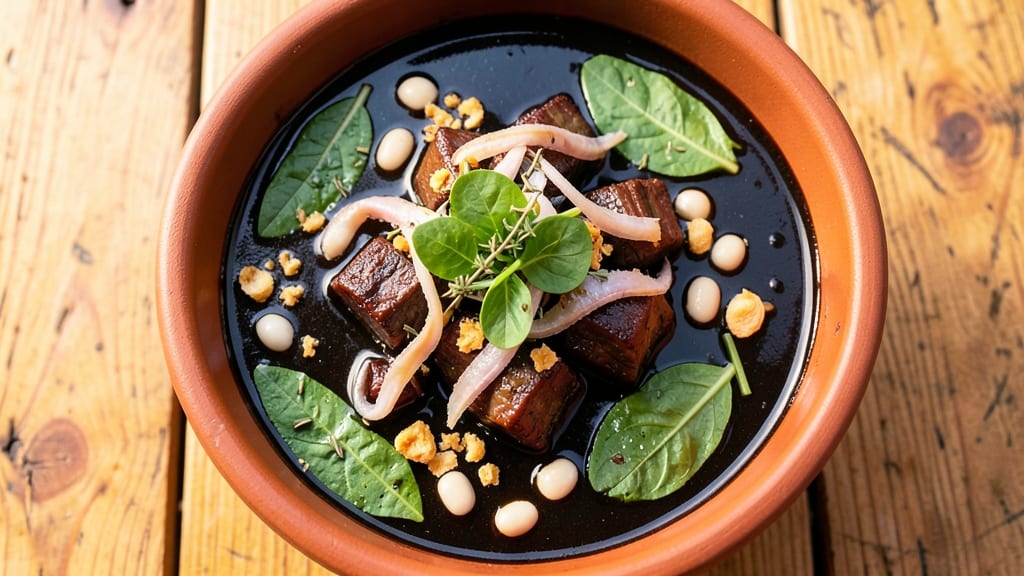
This traditional Nigerian black soup delivers bold, earthy flavors that define West African cuisine. The deep umami richness comes from slow-cooked leafy greens, peanuts, and aromatic spices that create a velvety, hearty broth perfect for special occasions.
What makes this dish truly special is its cultural significance—often served at celebrations and family gatherings, where every spoonful carries generations of tradition.
The recipe begins with soaking black-eyed peas and peanuts to develop their nutty depth, then blending leafy greens like spinach or bitterleaf into a smooth paste. Simmering with fish or meat infuses the broth with rich, savory notes while maintaining its signature dark hue.
The slow cooking process transforms simple ingredients into a complex, flavorful soup that's both comforting and impressive.
By the end, you'll have a thick, aromatic black soup with tender meat or fish, creamy peanuts, and vibrant leafy greens—each component balancing perfectly to create a dish that's both hearty and elegant.
The texture is velvety yet substantial, with layers of flavor that make it a standout centerpiece for any meal.
Pair it with traditional Nigerian sides like pounded yam, rice, or eba to complete the experience. This recipe isn't just about the flavors—it's about connecting with the heritage and warmth of Nigerian cuisine. Let's get started on creating this iconic dish.
Ingredients for black soup nigerian
Sixteen ingredients transform into a velvety, umami-rich black soup bursting with West African tradition.
| Ingredient | Amount | Notes |
|---|---|---|
| Black-Eyed Peas 🌱 | 1 cup | Dried, soaked overnight |
| Peanuts 🥜 | 1 cup | Raw, unsalted, soaked overnight |
| Fresh Spinach 🌿 | 2 cups | Packed, stems removed |
| Bitterleaf 🌿 | 2 cups | Fresh leaves, chopped |
| Smoked Fish 🐟 | 1 lb | Dried or smoked stockfish |
| Beef or Goat Meat 🥩 | 1 ½ lb | Cubed, lean cuts preferred |
| Red Palm Oil 🫒 | ½ cup | For authentic color |
| Fresh Ginger 🧄 | 2 tbsp | Grated, aromatic |
| Garlic Cloves 🧄 | 6 cloves | Peeled, minced |
| Scotch Bonnet Pepper 🌶️ | 1 whole | Seeds removed for mild heat |
| Locust Beans 🌱 | ½ cup | Dried, soaked overnight |
| Salt 🧂 | 1 ½ tsp | Adjust to taste |
| Black Pepper 🌶️ | 1 tsp | Freshly ground |
| Stockfish or Dried Shrimp 🦐 | ½ cup | For umami depth |
| Palm Kernel Oil 🫒 | ¼ cup | For cooking meat |
The leafy greens are the heart of this soup—bitterleaf is traditional but spinach or waterleaf work too. African markets carry bitterleaf fresh, or look for frozen packs online. The peanuts and black-eyed peas need overnight soaking—this develops their nutty depth. For the smoked fish, stockfish or dried mackerel is essential; avoid pre-cooked varieties. The red palm oil gives the signature dark hue—African grocery stores stock it, or use carrot juice in a pinch for color (though flavor will differ).
No bitterleaf? Kale or collard greens add earthiness, though texture will change. Running short on peanuts? Cashews or almonds at half the amount work, but expect a milder flavor. The Scotch bonnet pepper is non-negotiable for authentic heat—jalapenos or habaneros can substitute, but reduce to half the quantity. For meat, goat is traditional, but beef or chicken work fine. The locust beans (iru) are key for umami—find them at African markets or online. If unavailable, mushroom powder or soy sauce adds depth, though not identical.
The soaked beans and peanuts keep 3 days refrigerated in their soaking liquid. Fresh leafy greens stay crisp 2 days wrapped in damp paper towels. The cooked soup reheats beautifully—2-3 minutes on the stove restores its velvety texture. For gatherings, double the broth and freeze portions. The palm kernel oil solidifies when cool; store it in a sealed jar at room temperature—it’ll last 6 months this way.
Why You'll Love This Recipe
- One-Pot Magic: I swear, this soup comes together in a single pot—no chopping marathons, no messy sauces. Just toss in the black-eyed peas, smoked fish, and bitterleaf, then let the peanuts and spinach work their flavor while you sip tea.
- Umami Bomb: That smoked fish? Absolute game-changer. The peanuts add a nutty crunch, and the bitterleaf—don’t skip it—cuts through with a sharp, earthy punch. It’s the kind of dish where every spoonful feels like a hug.
- Leftovers That Beg for More: Honestly, I make this on Sundays just so I can reheat it all week. The flavors deepen overnight, and the peanuts stay crispy even when warmed. My kids actually ask for the leftovers—rare.
- Budget Meal for Crowds: Black-eyed peas and smoked fish stretch this soup into a feast for four (or more) without breaking the bank. Plus, spinach and bitterleaf are often cheaper than fancy greens. Feed a house, impress everyone, and still have change left.
Step-by-step instructions for black soup Nigerian recipe
Master this rich, umami-packed stew with traditional techniques and bold flavors.
Prepare the Base Ingredients
Begin by soaking the 1 cup black-eyed peas and 1 cup peanuts overnight in separate bowls of water. This ensures they soften properly and blend smoothly into the soup. The next morning, drain and rinse both ingredients thoroughly. For the 1.5 lb beef or goat meat, cut into 1-inch cubes and set aside. You'll notice the meat will darken slightly as it soaks up the flavors from the other ingredients.
In a separate bowl, combine the 0.5 cup locust beans with fresh water to cover and let them soak for at least 4 hours. This step is crucial—they'll soften and develop a nutty flavor that complements the peanuts. Meanwhile, prepare the 2 cups fresh spinach and 2 cups bitterleaf by washing thoroughly and chopping the bitterleaf into small pieces. The spinach can be left whole or roughly chopped, depending on your preference for texture.
Cook the Meat and Build the Broth
Heat 0.25 cup palm kernel oil in a large pot over medium-high heat. Add the cubed beef or goat meat and sear for 5-7 minutes, stirring occasionally, until the meat develops a deep brown crust. This step is essential for building flavor—don't rush it. Remove the meat and set it aside temporarily.
In the same pot, add 0.5 cup red palm oil and allow it to heat until it shimmers. Add the 6 minced garlic cloves, 2 tbsp grated ginger, and the scotch bonnet pepper (with seeds removed for milder heat). Sauté for 2 minutes until the garlic becomes fragrant and the oil turns slightly aromatic. Be careful not to burn the spices—they should dance in the oil without darkening.
Simmer the Soup Base
Return the seared meat to the pot and add 4 cups of water (enough to cover the meat by about 2 inches). Bring to a boil, then reduce heat to low and let it simmer uncovered for 45 minutes. This initial cooking phase allows the meat to tenderize and the broth to develop a rich foundation. Skim off any foam that rises to the surface during this time—it prevents cloudiness in the final soup.
After 45 minutes, add the drained black-eyed peas, peanuts, and locust beans to the pot. Stir well to combine, then add the 1 lb smoked fish and 0.5 cup stockfish or dried shrimp. These ingredients will infuse the soup with deep umami flavors as they cook. Let the mixture simmer for another 30 minutes, stirring occasionally to prevent sticking. The soup should begin to thicken slightly as the beans and peanuts break down.
Incorporate Leafy Greens and Season
Add the chopped bitterleaf and 2 cups fresh spinach to the pot. Stir gently to distribute the greens evenly throughout the soup. Simmer for an additional 10-15 minutes until the bitterleaf wilts and the spinach softens. The greens should be tender but still vibrant—overcooking will turn them mushy. Taste the broth and adjust seasoning with 1.5 tsp salt and 1 tsp black pepper as needed. The soup should have a balanced flavor profile with a hint of spice from the scotch bonnet.
If the soup is too thick, add ½ cup hot water at a time until it reaches your desired consistency. The final texture should be rich but still allow for easy spooning. Let the soup simmer uncovered for another 5 minutes to allow the flavors to meld together. The aroma at this stage should be deeply savory, with notes of peanuts, smoked fish, and the earthy greens.
Serve Warm with Traditional Accompaniments
Remove the pot from heat and let the soup rest for 5 minutes before serving. This resting period allows the flavors to settle and ensures each spoonful is perfectly balanced. Serve the black soup hot, accompanied by pounded yam, fufu, or swallow to soak up the rich broth. The contrast between the smooth, starchy sides and the hearty soup creates a satisfying meal that's both comforting and deeply flavorful.
For an authentic experience, garnish each serving with a sprinkle of freshly cracked black pepper and a few chopped peanuts on top. The soup can be stored in the refrigerator for up to 3 days and reheated gently on the stove—just add a splash of water if it thickens too much. The longer it sits, the more the flavors develop, making it even more delicious the next day.
Pro Tips For Making Black Soup Nigerian
- BLANCH BITTERLEAF FIRST: I learned this the hard way—tossing raw bitterleaf into the pot makes the soup taste bitter and slimy. Instead, blanch it in boiling water for 2-3 minutes, then drain and rinse under cold water. This softens it and removes that stubborn bitterness before it even hits the pot.
- CRUSH PEANUTS UNIFORMLY: Skip the food processor—hand-crushing peanuts in a mortar (or heavy bag with a rolling pin) gives you that classic Nigerian texture. Aim for 70% fine powder, 30% tiny chunks. Too fine? The soup turns gluey. Too chunky? You’ll taste each nut instead of a smooth base.
- LOW AND SLOW FOR FISH: Smoked fish breaks apart when rushed. After adding it to the simmering soup, reduce heat to the lowest setting and let it melt into the broth for 10-15 minutes. Stir occasionally—this distributes flavor without shredding the fish into oblivion.
- SALT THE PEAS LAST: Black-eyed peas absorb salt like sponges. Add them to the soup after seasoning everything else, and let them cook for just 5 minutes. This keeps them tender without turning them into flavorless mush. (Yes, even if you’re impatient like me.)
Wine and beer pairings for this recipe
West African Red Wine
For black soup's deep, earthy flavors, I recommend a South African Pinotage—this bold red wine mirrors the dish's smoky, spicy notes while standing up to its richness. The grape's natural acidity cuts through the peanuts and leafy greens, while its dark fruit complements the umami from smoked fish.
Serve slightly chilled (55-60°F) to highlight its complexity. 🍷
Malty Nigerian Lager
Nothing beats a crisp Nigerian Guinness or Star Lager with this soup. The dark lager's roasted malt notes enhance the peanuts and locust beans, while its effervescence cleanses your palate between rich spoonfuls.
For a lighter option, Guinness Extra Smooth provides a smoother, less bitter contrast that won't overpower the dish. 🍺
Herbal Infusions
Fresh hibiscus tea (zobo) or ginger-infused water with lemon creates a refreshing palate cleanser between bites. The tartness of hibiscus balances the soup's richness, while ginger water echoes the dish's natural spices.
Brew hibiscus tea by steeping 2 tbsp dried flowers in 4 cups boiling water for 10 minutes. 🌿
Spiced Rum Pairing
For a celebratory touch, serve a Nigerian gin like Three Star or a spiced rum such as Appleton Estate on the side. The rum's caramel and cinnamon notes harmonize with the peanuts and smoked fish, while the gin's botanicals complement the leafy greens.
Sip neat or over ice with a twist of lime. 🥃
Non-Alcoholic Option
For a vibrant non-alcoholic pairing, try hibiscus-ginger lemonade. Mix 1 cup hibiscus tea (cooled), 2 tbsp fresh ginger juice, 3 tbsp lemon juice, and 1 tbsp honey to taste. Serve over ice—its bright acidity refreshes the palate between hearty spoonfuls of soup. ✨
Nutrition facts
Frequently asked questions about Nigerian black soup
Can I make this soup without goat meat?
While goat is traditional, you can substitute with beef, chicken, or even hearty fish like tilapia or catfish. For a vegetarian version, use extra stockfish or mushrooms to maintain umami depth. The key is ensuring the protein has enough time to tenderize during the 45-minute simmer.
Why does my black soup taste bitter?
Bitter flavor usually comes from overcooked bitterleaf or insufficient seasoning. Simmer the greens for only 10-15 minutes after adding them, and always taste before serving. If needed, balance with a pinch of sugar or extra peanuts—these naturally sweeten the broth. The red palm oil should also be fresh, as old oil can develop bitter notes.
How do I store leftovers?
Store in an airtight container in the fridge for up to 3 days. Reheat gently on low heat, adding 1-2 tbsp water if it thickens too much. The soup actually improves overnight as flavors meld! For longer storage, freeze portions for up to 3 months—just thaw in the fridge before reheating.
Can I substitute bitterleaf with other greens?
Yes! Use spinach, waterleaf, or collard greens—they'll provide a milder taste but still work well. For authentic texture, combine 1 cup bitterleaf with 1 cup spinach. Avoid kale or cabbage, as they can make the soup too fibrous. The key is using fresh, vibrant greens for the best flavor.
What's the secret to making it extra creamy?
Blend ½ cup of the cooked soup with ¼ cup peanuts and return it to the pot. Simmer for 5 more minutes to thicken naturally. For extra richness, stir in 1 tbsp palm kernel oil at the end. The peanuts add natural creaminess while balancing the earthy flavors.