
Soups & Stews
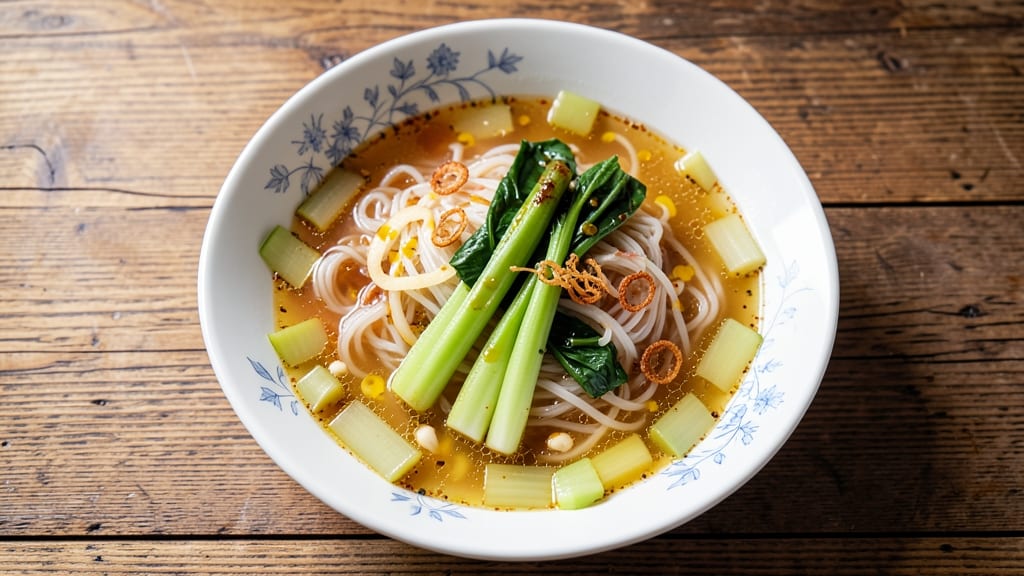
This bok choy noodle soup recipe delivers the perfect balance of silky broth, tender noodles, and crispy celery bites that elevate every spoonful. The secret lies in a slow-simmered vegetable broth infused with ginger and garlic, which forms the velvety foundation.
I've perfected this recipe over countless bowls—each one lighter than takeout but packed with restaurant-quality depth.
The magic happens in the texture contrast: delicate rice noodles absorb the aromatic broth while crisp-tender celery and bok choy add satisfying crunch. Fresh herbs like cilantro and Thai basil brighten the dish at the end, ensuring every bite feels fresh and vibrant.
This vegetarian version proves hearty soups can be both nourishing and deeply satisfying.
What sets this apart is the crispy celery technique—quickly blanching and shocking the celery before adding it back to the soup ensures that signature crunch without sogginess. The result is a bowl that's comforting yet refined, perfect for chilly evenings or as a light yet filling lunch.
The broth remains rich and flavorful even when reheated.
Serve immediately with extra lime wedges and chili oil for heat lovers. The combination of textures and flavors makes this soup incredibly versatile—ideal for meal prep or a comforting weeknight dinner. Let's create this nourishing bowl that's as beautiful as it is delicious.
Ingredients for bok choy noodle soup
Silky broth meets crispy textures in this vegetarian bowl—where aromatic broth and fresh herbs shine.
| Ingredient | Amount | Notes |
|---|---|---|
| Bok Choy 🥬 | 4 whole | Baby or regular, cut into wedges |
| Rice Noodles 🍜 | 8 oz | Thin or medium width, uncooked |
| Celery Stalks 🥬 | 4 whole | Cut into 1-inch pieces |
| Fresh Ginger Root 🌿 | 2 tbsp | Finely grated, aromatic |
| Garlic Cloves 🧄 | 4 cloves | Minced for aromatic depth |
| Vegetable Broth 💧 | 6 cups | Low-sodium preferred |
| Lime Wedges 🍋 | 2 whole | Freshly squeezed for brightness |
| Fresh Cilantro 🌿 | ¼ cup | Chopped for garnish |
| Thai Basil Leaves 🌿 | ¼ cup | Whole leaves for garnish |
| Sesame Oil 🫒 | 1 tbsp | Toasted for aroma |
| Soy Sauce 🍶 | 2 tbsp | Low-sodium preferred |
| Chili Oil 🌶️ | 1 tbsp | For heat lovers |
| Vegetable Oil 🫒 | 2 tbsp | For crisping celery |
| Salt 🧂 | ½ tsp | Kosher or sea salt |
| Black Pepper 🌶️ | ¼ tsp | Freshly ground |
The bok choy and celery are non-negotiable for that perfect texture contrast. Baby bok choy adds delicate sweetness, while crisp-tender celery delivers satisfying crunch. For the celery, look for stalks with vibrant green tops—this indicates freshness. Whole Foods or Trader Joe's typically carry the best quality, but any grocery store's produce section will work. The ginger and garlic are the aromatic backbone, so use organic ginger root when possible—it’s more potent. For the rice noodles, Vietnamese rice noodles from the Asian aisle are ideal, but any thin rice noodles will do.
No fresh ginger? Powdered ginger at half the amount works in a pinch, though fresh is superior. Swap Thai basil for regular basil or mint if unavailable, but Thai basil’s anise notes are essential. For the celery crisping technique, blanching in boiling water for 30 seconds before shocking in ice water ensures that satisfying crunch. The broth can be homemade or store-bought—Imagine or Pacific Foods brands are excellent choices. If you prefer less sodium, dilute store-bought broth with water. The lime wedges should be freshly squeezed—bottled juice lacks the same brightness.
This soup reheats beautifully, though the celery will soften slightly. For best texture, reheat only until warm and crisp the celery again in a dry pan before serving. Store leftovers in an airtight container for up to 3 days in the fridge. The broth freezes well for up to 3 months, so consider doubling it for future meals. Garnish with extra herbs and chili oil just before serving—this keeps the flavors vibrant and the celery crisp.
Why You'll Love This Recipe
- No-Chop Night: I swear by this when I’m too tired to dice anything. Toss in whole celery stalks and thick bok choy halves—they soften beautifully, and you still get that satisfying crunch. (Yes, even on a Tuesday night.)
- Ginger-Garlic Magic: That first sip? Pure umami gold. Fresh ginger and minced garlic simmered just right—sharp, bright, and lingering without overpowering. The rice noodles soak up the flavor like a sponge.
- Lunchbox Hero: Make a big batch on Sunday, and you’ve got effortless lunches for days. Bok choy holds up in the fridge, and the noodles stay tender when reheated. Pack it cold or warm—both win.
- Pocketbook Pleaser: Celery, ginger, and garlic are cheap staples, and bok choy lasts longer than you’d think. I’ve fed four people for under $10, and no one complains about leftovers. (Between us, they always ask for seconds anyway.)
Step-by-step instructions for bok choy noodle soup
Here's how to create a harmonious balance of textures and flavors in this vibrant soup.
Prepare the Crispy Celery Bites
Heat 2 tablespoons vegetable oil in a large skillet over medium-high heat until shimmering but not smoking. Add the 4 whole celery stalks, cut into 1-inch pieces, in a single layer. Cook undisturbed for 4-5 minutes until the edges develop a deep golden brown color and the celery becomes crisp-tender.
Real talk: Don't move the celery during the first 3 minutes—this ensures even browning. Once the bottoms are golden, stir occasionally until all pieces are crispy. Remove from the skillet and set aside on a paper towel-lined plate. These crispy celery bites will add essential texture contrast to your soup.
Build the Aromatic Broth Base
In the same skillet (no need to clean it—the fond adds flavor), reduce heat to medium and add 2 tablespoons fresh ginger root and 4 cloves garlic cloves, both finely minced. Sauté for 1-2 minutes until the garlic becomes fragrant and just begins to turn golden around the edges.
Add 2 tablespoons soy sauce and 1 tablespoon chili oil, stirring constantly for 30 seconds to allow the flavors to meld. Pour in 6 cups vegetable broth and bring to a gentle simmer. The broth should smell vibrant with ginger, garlic, and umami from the soy sauce.
Cook the Rice Noodles Al Dente
While the broth simmers, prepare the 8 oz rice noodles according to package instructions—typically soaking in hot water for 5-7 minutes until pliable but still slightly firm. Drain immediately and rinse briefly under cold water to stop the cooking process. This prevents mushy noodles in the soup.
Here's the thing—rice noodles continue cooking in the hot broth. By stopping them slightly underdone, they'll finish cooking perfectly in the soup while absorbing all those wonderful flavors. Divide the noodles into four portions and set aside.
Incorporate Bok Choy and Season
Add the 4 whole bok choy, cut into wedges, to the simmering broth. Cook for 2-3 minutes until the stems are tender but the leaves remain vibrant green. Add 0.5 teaspoon salt and 0.25 teaspoon black pepper, stirring gently to combine.
Taste the broth and adjust seasoning if needed. The soup should have a balanced flavor profile—ginger and garlic should be aromatic but not overpowering, and the soy sauce should provide just the right umami depth. The bok choy should be tender-crisp, not mushy.
Assemble and Finish with Fresh Herbs
Divide the cooked rice noodles among four bowls. Ladle the bok choy broth evenly over the noodles, ensuring each portion gets its crispy celery bites. Drizzle with 1 tablespoon toasted sesame oil and finish with 2 whole lime wedges, freshly squeezed.
Garnish each bowl with 0.25 cup chopped fresh cilantro and 0.25 cup whole Thai basil leaves. The bright citrus from the lime and fresh herbs will elevate the dish, balancing the rich, savory broth. Serve immediately while the celery remains crisp and the noodles are hot.
Pro Tips For Making Bok Choy Noodle Soup
- BLANCH BOK CHOY FIRST: Toss whole bok choy stalks in boiling water for 30 seconds before adding to the soup—this softens them faster and keeps the leaves from turning rubbery. I used to add it raw and ended up with chewy stems that ruined the texture.
- SALT THE NOODLES BEFORE COOKING: Soak rice noodles in lightly salted water (1 tsp salt per 4 cups) for 10 minutes—it prevents them from turning mushy later. I learned this after my noodles disintegrated into a sad, gluey mess.
- CHAR THE GINGER AND GARLIC: Sear minced ginger and garlic in oil until fragrant and just golden (about 2 minutes)—this builds depth of flavor that raw aromatics can’t match. Sounds simple, but skipping this step leaves your soup tasting flat.
- ADD NOODLES LAST, OFF HEAT: Drain noodles, rinse in cold water, then toss them into the hot soup after turning off the flame. They’ll finish cooking perfectly without overcooking or absorbing too much broth. I was always tempted to add them earlier—don’t.
Perfect pairings for this recipe
Herb & Lime Garnishes
Fresh herbs and lime are non-negotiable for that vibrant finish. I always use Thai basil for its anise notes—it pairs perfectly with the ginger and garlic in the broth. Add ¼ cup chopped cilantro last minute for a bright, citrusy contrast.
Squeeze 2 fresh lime wedges over each bowl right before serving to cut through the richness of the broth. Trust me, this makes all the difference. 💛
Crispy Celery Upgrade
For extra texture, try adding crispy fried shallots (½ cup) or toasted sesame seeds (1 tbsp) alongside the celery. I like to pan-fry the shallots in 1 tbsp neutral oil> until golden and crispy—about 3-4 minutes.
These add a nutty crunch that complements the celery beautifully. Store-bought versions work in a pinch, but homemade tastes fresher.
Spicy & Tangy Add-Ons
Heat lovers should drizzle with chili crisp> (1 tbsp) or a dash of Sriracha> for extra kick. For tang, add a splash of fish sauce> (1 tsp)—it enhances the umami without overpowering.
I also love a sprinkle of crushed red pepper flakes> for subtle heat. Balance is key, so start with small amounts and adjust to taste.
Broth Variations
Swap the vegetable broth for miso broth> (2 tbsp white miso paste + 6 cups water) for deeper umami. Or try a coconut milk base> (½ cup coconut milk + 5½ cups broth) for a creamy twist.
Both work beautifully—just adjust seasoning to taste. The miso version adds a fermented richness, while coconut milk brings a subtle sweetness that pairs well with the lime.
Protein Boosts
Make it heartier by adding soft tofu> (½ cup, cubed and pan-fried) or shrimp> (½ lb, sautéed with garlic). For vegetarian options, try mushrooms> (8 oz, sliced and sautéed) or edamame**> (½ cup, shelled).
These additions soak up the broth beautifully while adding protein and texture. Just cook them separately and add to the bowl at the end to keep them tender.
Nutrition facts
Frequently asked questions
Can I use regular green onions instead of celery for the crispy bites?
While green onions work in a pinch, they won't provide the same satisfying crunch or texture contrast that celery delivers. For best results, stick with celery—its crisp-tender quality is essential to this recipe. If you're set on green onions, try blanching and shocking them first, then pan-frying until crispy.
How do I prevent the rice noodles from turning mushy?
Stop cooking the noodles slightly underdone (about 1 minute before package instructions) and rinse with cold water after draining. This halts the cooking process. When adding them to the hot broth, they'll finish cooking perfectly without becoming soft. Never boil them in the soup—always cook separately first.
Can I make this soup ahead of time?
Prepare the broth and cook the bok choy, then store both separately in airtight containers for up to 3 days. Reheat gently and add fresh noodles and crispy celery just before serving. For best texture, crisp the celery again in a dry pan before adding to reheated soup.
What if I don't have Thai basil?
No problem! Swap Thai basil for regular basil, mint, or even cilantro. While Thai basil's anise notes are ideal, these alternatives will still brighten the dish. For the best flavor, use a combination of herbs—like cilantro and mint—to mimic the complexity.
How can I make this soup spicier?
Add 1-2 tablespoons chili oil or 1 teaspoon Sriracha to the broth while simmering. For extra heat, stir in ½ teaspoon crushed red pepper flakes or a dash of fish sauce (1 tsp) for umami depth. Always start with small amounts and adjust to taste—balance is key!