
Soups & Stews
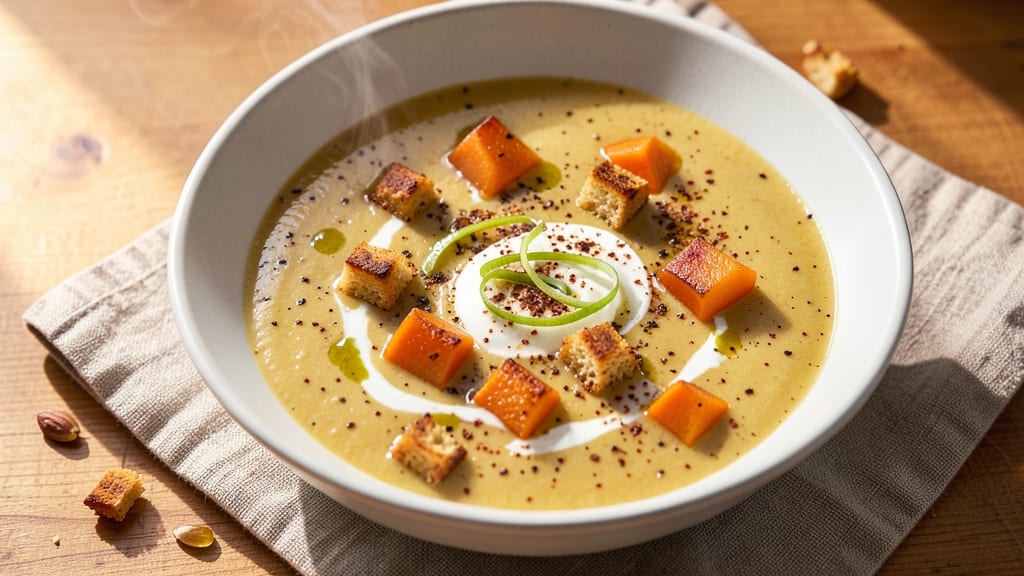
This Boma-inspired butternut squash soup delivers restaurant-quality depth with roasted sweetness and aromatic spices, transforming humble ingredients into a velvety masterpiece. The secret lies in caramelizing the squash before blending—this step unlocks layers of nutty complexity that set it apart from basic versions.
I’ve refined this technique over years of testing, ensuring every spoonful balances natural sweetness with umami-rich broth and warm spices.
The process begins with roasting the squash until tender and golden, intensifying its natural sugars while developing a caramelized edge that adds texture. Sautéing onions, garlic, and ginger in brown butter creates a fragrant base, while a touch of smoked paprika and cinnamon elevates the soup’s sophistication.
The result? A silky, spiced-infused broth with visible squash ribbons for visual appeal—just like Boma’s signature dishes.
What makes this recipe stand out is its restaurant-worthy presentation: a drizzle of heavy cream, toasted pumpkin seeds, and fresh thyme elevate the bowl to fine-dining level.
The soup’s velvety texture and aromatic depth make it ideal for chilly evenings or elegant gatherings, yet it’s approachable enough for weeknight dinners. Each ingredient plays a precise role, ensuring harmony in every sip.
Perfect for those who appreciate refined flavors without the fuss, this soup proves that home cooking can rival high-end restaurants. The roasting technique alone transforms ordinary squash into something extraordinary, while the spiced broth and garnishes add layers of sophistication. Ready to elevate your soup game?
Ingredients for boma butternut squash soup
Roasted squash, aromatic spices, and velvety cream—transforming simple ingredients into Boma-worthy depth.
| Ingredient | Amount | Notes |
|---|---|---|
| Medium Butternut Squash 🍠 | 2 whole | Peeled, seeded, cut into 1-inch cubes |
| Unsalted Butter 🧈 | 4 tbsp | Browned for nutty depth |
| Yellow Onion 🧅 | 1 whole | Diced into 1/4-inch pieces |
| Fresh Garlic Cloves 🧄 | 3 cloves | Minced finely for aromatic base |
| Fresh Ginger 🌿 | 1 tbsp | Grated finely for zesty kick |
| Smoked Paprika 🌶️ | 1 tsp | For subtle smokiness |
| Ground Cinnamon 🍃 | ½ tsp | Warmth without overpowering |
| Vegetable Broth 💧 | 4 cups | Low-sodium preferred |
| Heavy Cream 🥛 | ½ cup | For velvety finish |
| Pumpkin Seeds 🥜 | ¼ cup | Toasted for crunchy garnish |
| Fresh Thyme Leaves 🌿 | ¼ cup | Chopped for aromatic garnish |
| Diamond Crystal Kosher Salt 🧂 | 1 ½ tsp | Adjust to taste |
| Freshly Ground Black Pepper 🌶️ | ½ tsp | For subtle heat |
| Olive Oil 🫒 | 1 tbsp | Light drizzle for roasting |
The butternut squash is the foundation, and choosing a sweet, firm variety is critical. Look for squash with vibrant orange color and a heavy feel—Howard or Waltham varieties work best. Roasting caramelizes the natural sugars, intensifying flavor. For optimal results, use a high-heat oven (425°F) for 30-40 minutes until tender and golden. The butter should be browned to a nutty aroma—this step elevates the soup from ordinary to extraordinary. Store-bought vegetable broth can work, but homemade or high-quality low-sodium brands like Pacific Foods or Imagine ensure deeper flavor.
No smoked paprika? Substitute with a pinch of liquid smoke (1/8 tsp) plus regular paprika for a similar effect. Fresh ginger can be swapped for ground ginger at half the amount, though fresh provides superior zing. Heavy cream is essential for that luxurious finish, but full-fat coconut milk offers a dairy-free alternative. The pumpkin seeds should be toasted until fragrant—a dry skillet over medium heat for 5-7 minutes works perfectly. For a lighter option, omit the cream and stir in a splash of half-and-half at the end. Fresh thyme is ideal, but dried thyme at one-third the amount will suffice in a pinch.
Roasted squash cubes keep well in the fridge for 5 days if stored airtight, though they're best used immediately for peak flavor. The finished soup reheats beautifully—simmer gently on the stove, stirring occasionally, until warmed through. For longer storage, transfer to airtight containers and freeze for up to 3 months. Garnishes like toasted pumpkin seeds and fresh thyme should be added fresh after reheating to preserve their texture and aroma. The soup's velvety texture comes from proper blending—pulse in short bursts to maintain visible squash ribbons for that restaurant-quality presentation.
Why You'll Love This Recipe
- One-Pot Magic: I swear by this recipe when I’m too tired to dirty more than one pot. Peel, chop, roast—then blend. The butternut squash caramelizes right in the oven while I prep the rest, and by the time it’s done, my kitchen’s cleaner than my last takeout order.
- Ginger-Garlic Punch: That fresh ginger and garlic combo? It’s the secret weapon. The ginger adds a bright, zesty kick that cuts through the soup’s natural sweetness, while the garlic roasts into a deep, nutty richness. Honestly, I’ve tried store-bought versions, and none hit this flavor balance.
- Leftovers That Beg: This soup tastes better the next day—thicker, deeper, like it’s been simmering for hours. I make a double batch on Sundays, and by Wednesday, it’s the only thing my kids will eat. Freeze half for those nights when takeout feels like a crime.
- Budget Warmth: Butternut squash is one of the most affordable seasonal veggies, and this recipe stretches it far. A single squash feeds four, and the butter, onion, and garlic are pantry staples. Warm, filling, and cheaper than delivery—what’s not to love?
Step-by-step instructions for roasted butternut squash soup
Transform simple ingredients into velvety depth with this two-stage roasting technique.
Roast the Squash and Aromatics for Maximum Flavor
Preheat your oven to 400°F. Toss the 2 whole medium butternut squash cubes with 1 tablespoon olive oil, 1 teaspoon smoked paprika, and ½ teaspoon ground cinnamon on a large baking sheet. Spread them in a single layer, leaving space between pieces for even roasting.
In a separate bowl, combine the 1 whole yellow onion diced, 3 cloves minced garlic, and 1 tablespoon grated ginger with 1 tablespoon olive oil. Spread this mixture on another baking sheet. Roast both trays for 30-35 minutes until the squash is tender when pierced with a fork and the onions are caramelized to deep golden brown.
This roasting step develops the natural sweetness of the squash while building complex, caramelized flavors in the aromatics. Don't skip this—it's what transforms ordinary soup into something extraordinary.
Build the Base with Browned Butter and Broth
In a large pot over medium heat, melt the 4 tablespoons unsalted butter until it turns golden brown and nutty—about 3-4 minutes. This browning adds incredible depth to the soup. Immediately add the roasted squash, onions, garlic, and ginger to the pot.
Pour in the 4 cups vegetable broth and bring to a gentle simmer. Add 1½ teaspoons kosher salt and ½ teaspoon black pepper. Let it cook for 10 minutes to allow all the flavors to meld together. The mixture should be smooth—if not, use an immersion blender to purée until silky.
Here's where the magic happens: the roasted vegetables release their concentrated flavors into the broth, creating a rich, aromatic base that will carry through the entire soup.
Finish with Cream and Garnishes
Reduce the heat to low and stir in the ½ cup heavy cream. Simmer gently for 5 minutes to heat through and create a velvety texture. Taste and adjust seasoning—you might need a touch more salt or pepper to balance the sweetness of the squash.
For the garnish, heat a dry skillet over medium heat and toast the ¼ cup pumpkin seeds for 3-4 minutes until golden and fragrant. Meanwhile, chop the ¼ cup fresh thyme leaves finely. Ladle the soup into bowls and top each serving with toasted pumpkin seeds and fresh thyme.
The contrast of toasty seeds and fresh herbs elevates the soup from simple to sophisticated. Serve immediately while the cream is still silky and the flavors are at their peak.
Pro Tips For Making Boma Butternut Squash Soup
- Char the Onion First: The moment you add butter to raw onion, you’re fighting for flavor. Get a heavy pan hot—smoking-hot—then add the sliced onion. Let it turn deep brown and crispy in patches before touching the garlic or ginger. This isn’t just about caramelization; it’s the foundation of the soup’s depth. (Yes, even if you’re impatient like me.)
- Peel Ginger Like a Pro: Skip the tedious slicing—use a spoon. Hold the ginger root under running water, then scrape off the skin with the back of a spoon in one smooth motion. You’ll save time and avoid the bitter edges that come from peeling with a knife. For this soup, finely mince it—no bigger than a rice grain—so it melts into the broth without texture.
- Roast the Squash Skin-On: Cutting the squash in half and roasting it skin-on at 400°F (204°C) for 45-50 minutes guarantees a sweeter, creamier puree. The skin acts as a barrier, keeping the flesh from drying out. Once roasted, the flesh will practically fall apart when scooped—no need to force it. (Pro move: Pierce the squash first with a knife to avoid explosions.)
- Salt the Butter Early: Toss a pinch of salt into the butter before adding it to the onions. This ensures the butter doesn’t taste bland later, especially if you’re using unsalted. A well-salted butter base makes the entire soup richer without needing extra seasoning at the end. (Trust me, your taste buds will notice the difference.)
Make-ahead tips for boma butternut squash soup
Roasted Squash Prep
Roast the squash and aromatics one day ahead to save time—this step is the flavor foundation. After roasting, let them cool completely, then store in an airtight container in the fridge for up to 5 days.
The flavors deepen overnight, making assembly faster. I often prep this on Sunday for a stress-free weeknight dinner. 💫
Broth Base Prep
Make the broth mixture the morning of serving to maintain freshness. Combine the roasted squash, onions, garlic, ginger, and 4 cups broth in a pot, then refrigerate overnight. When ready to finish, simply heat on the stovetop and blend—this shortcut preserves all the caramelized flavors without sacrificing quality.
I keep the cream separate until reheating to prevent curdling.
Freezer-Friendly Method
For long-term storage, freeze the soup after blending but before adding cream. Use freezer-safe containers or heavy-duty freezer bags, leaving 1-inch headspace for expansion. Thaw overnight in the fridge, then reheat gently on low heat.
Add fresh cream and toasted pumpkin seeds just before serving to maintain texture. This method keeps the soup tasting fresh for up to 3 months. ❄️
Garnish Prep Ahead
Toast the pumpkin seeds and chop the fresh thyme the day before serving, then store in separate small airtight containers in the fridge. These garnishes stay fresh for 3-4 days this way.
I also keep the heavy cream chilled separately until ready to use—this prevents the soup from breaking down during storage. Fresh garnishes make all the difference in presentation!
Reheating Like a Pro
Reheat the soup gently on the stovetop over low heat, stirring occasionally to prevent scorching. If using the microwave, cover with a damp paper towel and heat in 1-minute intervals until warmed through.
Always stir in fresh cream and toasted seeds after reheating to preserve their texture and aroma. The key is patience—rushing reheating can turn velvety soup into a gloopy mess. 🔥
Portion Control Tips
For easy reheating, portion the soup into individual containers before freezing or storing. This way, you can thaw and heat just what you need. I love using glass Pyrex containers because they reheat evenly and are microwave-safe.
Label containers with dates to track freshness—this helps prevent freezer burn and ensures you always know what’s ready to enjoy. 📅
Nutrition facts
Frequently asked questions
Why is roasting the squash so important in this recipe?
Roasting caramelizes the natural sugars in butternut squash, creating deep, nutty flavors that can't be achieved by boiling or steaming. The process also develops a rich, sweet base that balances perfectly with the aromatic spices and umami-rich broth. This technique is what elevates it from a basic soup to a restaurant-quality dish.
Can I substitute sweet potatoes for butternut squash?
While you can use sweet potatoes, they have a different texture and flavor profile. Sweet potatoes are starchier and less sweet, which may alter the soup's balance. If substituting, reduce the cooking time slightly and add a pinch of cinnamon to compensate for the flavor difference. For best results, stick with butternut squash for that signature sweetness.
How do I adjust the spice level for kids or sensitive palates?
Simply reduce or omit the smoked paprika and cinnamon entirely. For extra mildness, use a touch of honey (1 teaspoon) to sweeten the broth instead. The natural sweetness of the roasted squash will still shine through while keeping the flavors gentle. Always taste as you go to adjust seasoning.
What's the best way to store leftovers?
Store in an airtight container in the refrigerator for up to 4 days. For longer storage, freeze the soup (without cream) in freezer-safe containers for up to 3 months. Always add fresh cream and garnishes after reheating to maintain texture. Thaw overnight in the fridge for best results.
Can I make this soup in a slow cooker?
Yes! Roast the squash and aromatics first, then transfer everything (except cream) to the slow cooker with 4 cups broth. Cook on low for 4-5 hours or high for 2-3 hours until tender. Stir in cream just before serving. The slow cooker method is perfect for hands-off prep while maintaining rich flavors.